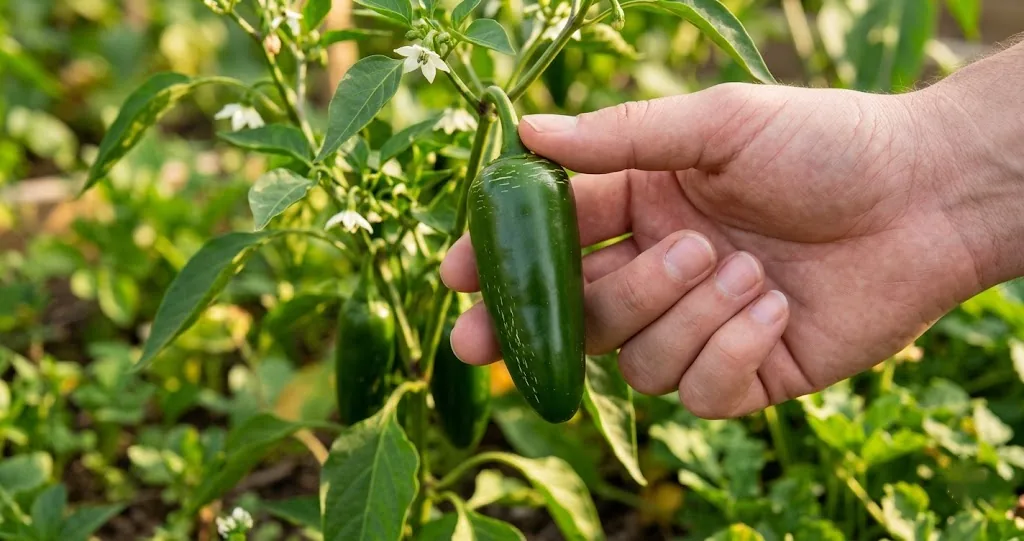
Jalapeño peppers bring crisp texture, grassy flavor, and manageable heat to dips, brined vegetables, and cooked dishes. They are easy to recognize by their thick-walled green pods, which ripen red if left on the plant.
Jalapeños are Capsicum annuum. They are a practical choice when you want more warmth than a bell pepper without the intensity of a habanero. For a broader comparison, see this guide to types of chili peppers.
Quick Facts About Jalapeño Peppers
Before exploring flavor nuances and kitchen techniques, here is a concise overview of key horticultural and culinary specifications:
- Botanical name: Capsicum annuum
- Scoville Heat Units (SHU): 2,500 to 8,000 SHU (mild to medium)
- Pod Dimensions: 2 to 3.5 inches (5 to 9 cm) long; 1 to 1.5 inches wide
- Shape and Texture: Thick-walled, smooth, conical to blunt-tipped cylinder
- Ripening Progression: Glossy deep green maturing to vivid bright red
- Name: Named for Xalapa, Veracruz, a historic production center
- Culinary Hallmarks: Fresh sauces, pickling, chipotle smoking, stuffed poppers
How Hot Are Jalapeño Peppers on the Scoville Scale?
Jalapeño heat commonly falls around 2,500 to 8,000 Scoville Heat Units. The range matters more than a single number because cultivar and growing conditions affect a pod’s heat. Oregon State University lists this variety as 2,500 to 8,000 SHU, while Oklahoma State notes that genetics, water, and temperature can shift where a pepper falls within its range.
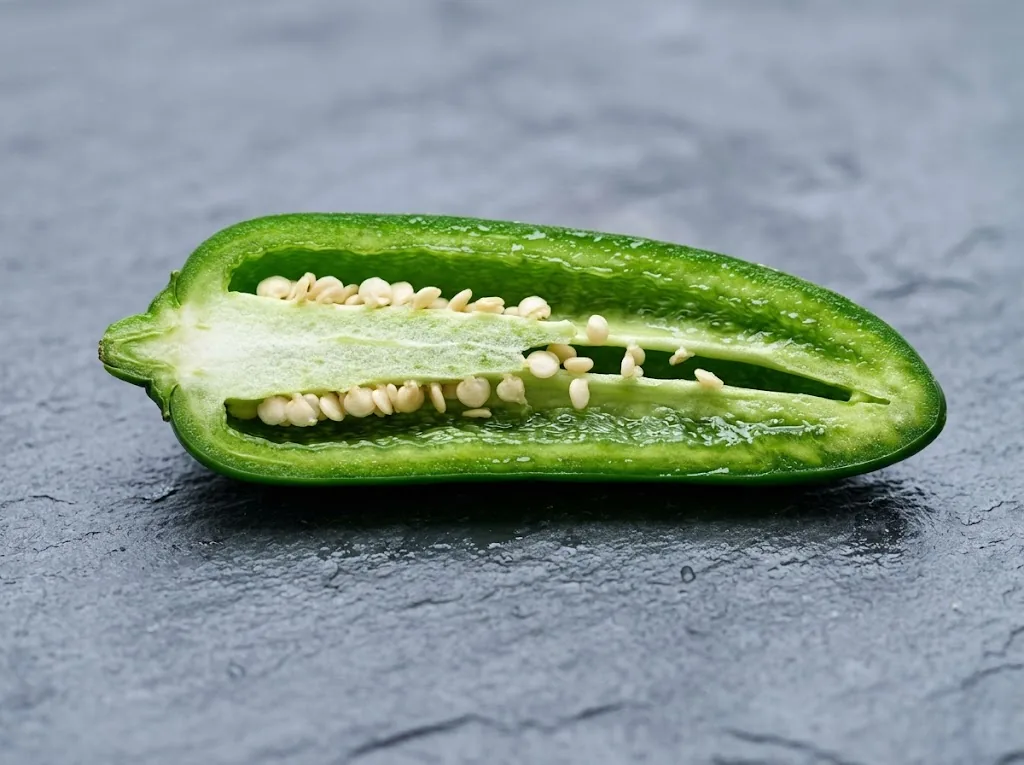
Capsaicin is concentrated largely in the pale inner membranes. The seeds do not make the heat themselves, but they can carry it from contact with those membranes. For a milder dish, remove the membranes and seeds together.
Heat varies from pod to pod, so taste a small amount before committing one to a fresh salsa, vinegar brine, or family meal. Mild cultivars such as TAM Mild differ from standard hot selections, and garden stress can influence the result.
Flavor Profile: Crisp Green Versus Sweet Ripe Red
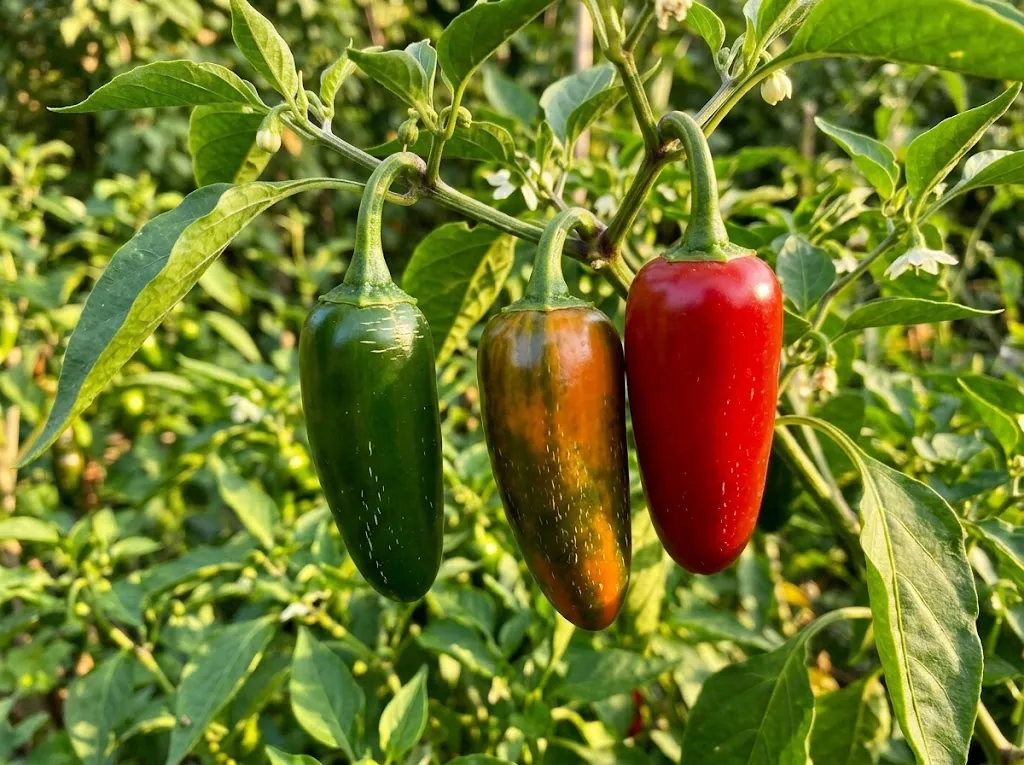
Most commercial pods arrive at grocery stores in their immature green state. In this phase, the thick flesh offers a bright, grassy, slightly astringent flavor accented by an assertive vegetal crunch. It cuts cleanly through rich meats, melted cheese, and creamy avocado, which explains why green ones are standard in fresh Mexican sauces and pub appetizers.
If left on the vine to complete its full growing season, the pod matures to a bright red hue. As green pods ripen toward full maturity, sugars accumulate within the pepper walls while the harsh vegetal sharpness softens into a sweeter, fruitier, more complex profile. Ripe red pods retain their signature warmth but gain deep berry-like undertones that shine in sweet pepper relishes, fermented hot sauce bases, and gourmet marinades.
Fine tan skin cracking, often called corking, is common on many cultivars as fruit matures. Oregon State Extension describes it as a maturity trait, not spoilage. Choose pods that are firm, glossy, and free of soft spots.
Choose a pod for the heat level you want
Look for a firm pod with taut skin and a fresh green stem. Green fruit has a brisk, vegetal flavor that works well in pico de gallo, nachos, and quick preserve. Red fruit is sweeter and useful when you want a fuller flavor in a relish, hot sauce, or marinade. A little goes a long way, so add it gradually and taste as you cook.
Scoville Heat Units, or SHU, describe a range rather than a promise for one pepper. Many hotter peppers exist, including the Carolina Reaper, but individual pods still vary. If someone at your table is sensitive to spicy food, serve sliced peppers on the side and offer dairy, avocado, or a mild starch with the meal.
For a reliable substitute, use a poblano when you want less heat and the slimmer alternative only when you are comfortable with a hotter result. The two peppers are not interchangeable in equal amounts. Start with half the amount of the hotter option, then adjust to taste.
Origin and history
The name means “from Xalapa,” Veracruz. Mexico’s agriculture ministry identifies Xalapa as the traditional production center behind the name. This is a naming story, not proof that every modern cultivar originated in the city.
Ripe red pods can be smoke-dried to make chipotle. The Academia Mexicana de la Lengua traces smoked chile to Nahuatl chilpoctli, meaning smoked chile.
How it compares with lookalike peppers
In grocery bins and farm stands, these peppers occasionally get mixed up with other green chile varieties. Recognizing distinct physical traits and heat differences helps home cooks select the right pepper for each recipe:
- Serrano peppers: While serrano peppers share a similar deep green color and crisp texture, they are distinctly thinner, more cylindrical, and pack two to four times more heat (10,000 to 23,000 SHU). Substituting one for one will dramatically raise a dish’s overall heat level.
- Fresno Peppers: Fresno chiles look remarkably similar in shape and size to red pods. However, Fresno pods taper to a sharper point, possess slightly thinner walls, and typically grow pointing upward on the plant rather than hanging downward.
- Poblano Peppers: Poblanos are much larger, heartier, heart-shaped peppers with dark forest-green skin. They carry very gentle warmth (1,000 to 2,000 SHU) and are primarily roasted and peeled for stuffing as chiles rellenos rather than sliced raw into table salsas.
- Anaheim Peppers: Long, pale green, and mild (500 to 2,500 SHU), Anaheim pods have thinner walls and an elongated profile suited for roasting and canning green chiles.
Brine, roast, or stuff: recipes and poppers
This pepper works well across Mexican cooking, Tex-Mex feasts, and American barbecue. Its firm structure holds up remarkably well whether you slice, blister, stuff, or put whole pods into vinegar brine.
Fresh table condiments represent its most frequent role. Finely mince a fresh pod and combine with diced roma tomatoes, white onion, fresh cilantro, and lime juice to build authentic pico de gallo. Folded into mashed ripe avocados alongside a pinch of sea salt, it elevates basic guacamole into a lively party dip for crispy tortilla chips. Sliced thin into rounds, it provides a vivid spicy garnish over warm nachos, street tacos, enchilada platters, savory enchiladas, and spicy chorizo bowls.
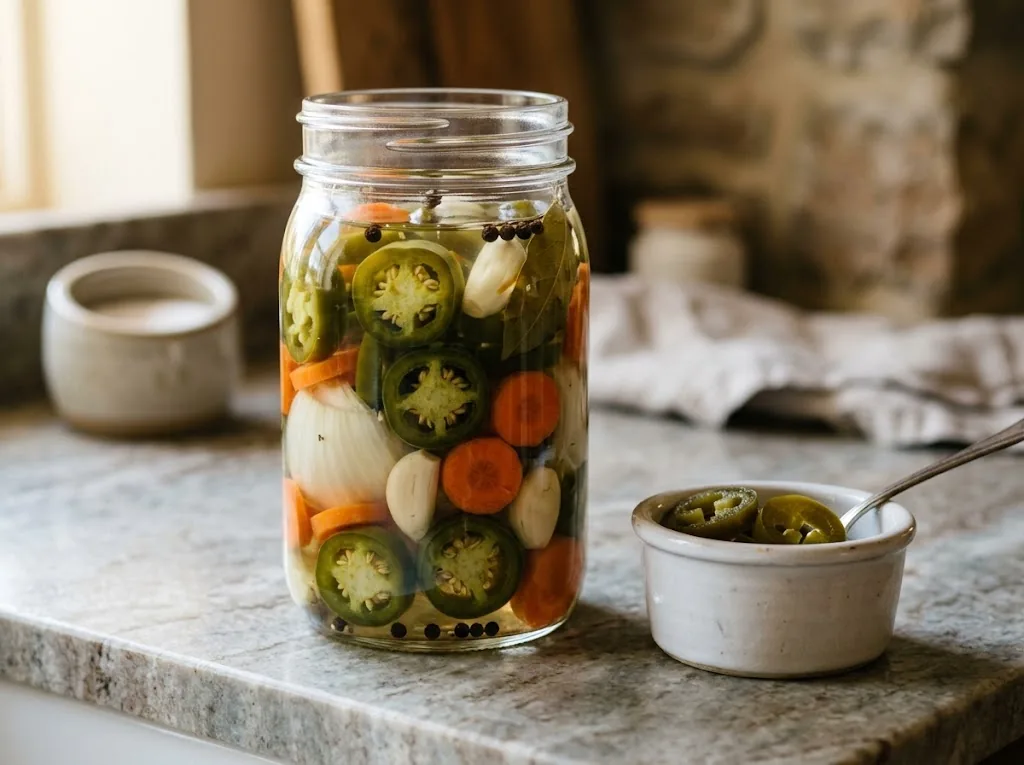
Brining is another classic preparation. In Mexican gastronomy, chiles en escabeche combines sliced peppers with rounds of carrot, pearl onions, bay leaves, Mexican oregano, garlic cloves, and white vinegar. The acid preserves the crunch while distributing the warmth throughout the brine, creating an everyday condiment found in taquerias everywhere. Those rings also pair naturally with hamburger patties, smoked barbecue brisket, and crisp dill pickles.
For a crowd-pleasing option, the iconic baked jalapeno poppers remain unrivaled. Halved lengthwise and cored, each pod becomes a popper that forms a sturdy boat filled with softened cream cheese, shredded cheddar cheese, minced chive, and fragrant spices. Wrapped in smoky, crispy bacon and baked until golden brown and sizzling, or breaded and fried, poppers provide a luxurious contrast of rich melted dairy against spicy, tender pepper flesh.
Handle hot peppers safely
Handling hot peppers requires basic kitchen precautions. When prepping raw pods, capsaicin oils readily transfer to cutting surfaces, knife blades, and fingers. Touching sensitive facial areas, lips, or eyes afterward causes painful contact dermatitis, often called pepper burn.
Wear disposable food-safe gloves when slicing many hot peppers, and wash your hands with soap before touching your face. If your mouth burns after eating hot dishes, Cleveland Clinic notes that milk can work better than water because its casein helps break down capsaicin. Seek medical care for severe symptoms or an eye injury.
Spicy dishes can be uncomfortable for some people. Start with a small amount, pair it with a meal you tolerate well, and stop if it causes symptoms that concern you.
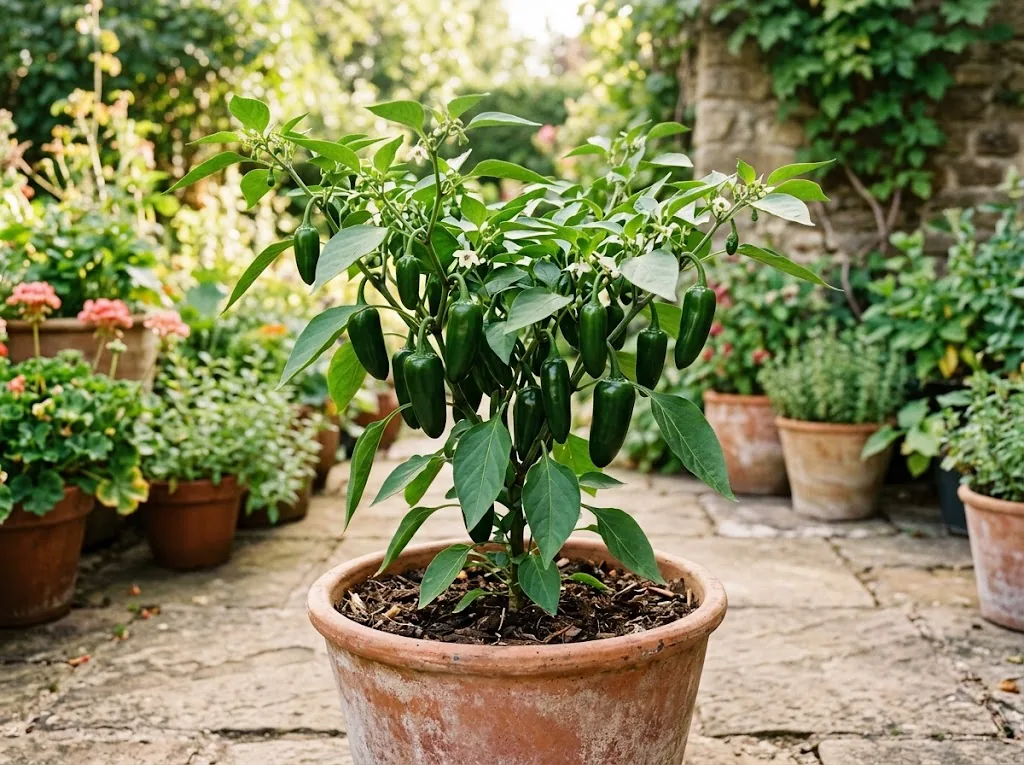
Growing Habit and Garden Care Overview
These plants are compact warm-season vegetables with dark green leaves, white flowers, and fruit that turns from green to red. Give them sun, well-drained soil, steady moisture, and warm conditions. Corking on a maturing pod is normal.
Growing results depend on cultivar and climate, so use the days-to-maturity and spacing guidance supplied with your seed or transplant. Keep foliage dry when practical, rotate peppers away from other nightshades, and choose a sunny site with good air circulation. For a full growing plan, see starting chili seeds indoors.
Harvest, store, and preserve the pods
Getting the best flavor out of your peppers starts with careful harvesting and storage techniques:
- Harvesting and Selection: Harvest pods with clean shears when they feel firm, glossy, and heavy for their size. Stems should look fresh and green rather than dry or blackened. Avoid specimens with soft spots, deep bruising, or shriveled skin. Fine tan brown lines across the skin indicate mature, fully developed pods loaded with flavor.
- Refrigerator storage: Keep unwashed peppers dry in the refrigerator, then wash them just before use. Discard pods that become soft, moldy, or damaged.
- Freezing: Wash and dry the pods, then freeze them whole or sliced in an airtight container. They work best later in cooked dishes because thawing softens the texture.
- preserve and drying: Use a tested recipe for water-bath canning. Dry ripe red pods until fully brittle before grinding, and store the finished flakes in an airtight container.
Get the best flavor from each stage
Green and red pods taste different because ripening changes the balance of vegetal and sweet notes. Use green ones when you want clean flavor and a crisp bite. Let red fruit take the lead in a cooked sauce, relish, or smoked chile-style preparation. A small taste test of the raw flesh is the safest way to judge both flavor and heat before you season a whole pot.
For weeknight cooking, freeze sliced pieces in a single layer before packing them. They will soften after thawing, so reserve them for soups, stews, eggs, and sauces rather than a fresh garnish. If you preserve them, use a tested recipe and the processing time it specifies. Store fresh pods dry and cold, and buy only those that feel firm and look unwrinkled.
Frequently asked questions
Why are some pods significantly hotter than others?
Heat levels fluctuate due to genetics, pod maturity, and growing conditions. Plants grown in hot weather with modest water deficit concentrate more capsaicin within their inner membranes than well-watered plants grown in cooler climates. Older pods left longer on the vine also accumulate higher heat than young, small green peppers.
Are red pods hotter than green ones?
Red pods often taste sweeter and fruitier than green ones because they have spent longer ripening. Heat is variable, however, so color alone does not predict exactly how hot one pod will be.
Can you eat the seeds, and should they be removed?
The seeds are completely edible and non-toxic. However, because they are coated in pungent capsaicin oils from adjacent placental tissue, leaving them in a recipe increases the heat level. If you prefer a milder dip or appetizer, slicing open the pepper and scraping out the seeds and white ribs using a small spoon lowers the heat while preserving fresh flavor.
How can you tone down the heat of a dish that is too spicy?
Dairy can soften perceived burn because milk contains casein. A squeeze of lime, avocado, or a little sugar may balance a dish’s flavor, but they do not make every pepper taste mild.
