
Among all the hot chilies cultivated across the globe, few carry the mythic reputation of the ghost pepper. Known historically in Northeast India as Bhut Jolokia, this legendary cultivar stunned the horticultural world when it shattered existing heat benchmarks. For years, the habanero was widely accepted as the ceiling of human culinary endurance. When the ghost chili arrived on international tables, it rewrote what growers, chefs, and scientists believed a hot pepper could produce. It became the first cultivated variety to officially test beyond one million Scoville heat units, securing a celebrated Guinness World Records place in 2007 as the world’s hottest chili pepper.
Today, botanical breeding has produced even hotter cultivars, but this variety remains the defining benchmark of the super hot category. Often described as a naturally occurring interspecific hybrid involving Capsicum chinense and Capsicum frutescens, this formidable pod offers far more than sheer pungency. The original HortScience study reported this hybrid interpretation, so treat it as a botanical description rather than a fixed cultivar label. Behind its blistering fire sits a complex flavor profile: earthy, smoky, and surprisingly sweet with floral undertones. When used in cooking with respect and careful technique, even a small sliver elevates homemade hot sauce, fiery marinades, and bold barbecue glazes. Within the wider landscape of types of chili peppers, the ghost pepper stands as an iconic classic that forever expanded our appreciation of heat and flavor.
Quick Facts: Ghost Pepper at a Glance
Before examining heat ratings, heritage, and kitchen safety, here is a concise summary of the ghost pepper cultivar:
- Botanical Classification: Capsicum chinense hybrid with Capsicum frutescens ancestry
- Heat Rating: About 855,000 to 1,001,304 SHU in published measurements, with heat varying by growing conditions and line. Published horticultural research documents both figures.
- Heat Classification: Super hot (extremely pungent)
- Pod Dimensions: 2.5 to 3.5 inches (6 to 9 cm) long; 1 to 1.2 inches (2.5 to 3 cm) wide
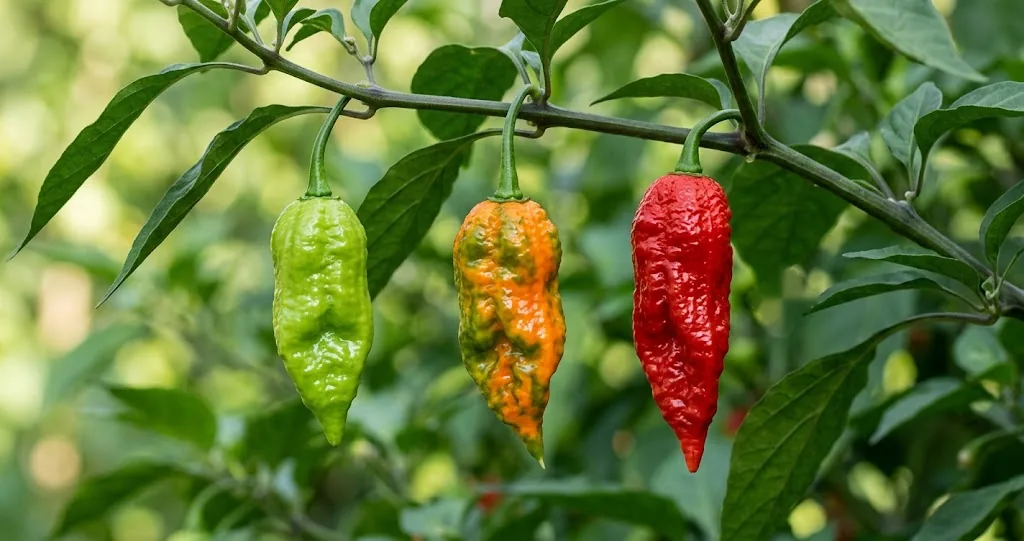
- Skin Texture: Thin, deeply dimpled, wrinkled, and undulating surface tapering to a point
- Ripening Color Progression: Glossy lime green to orange, maturing to vivid scarlet red
- Geographic Origin: Northeast India (Assam, Nagaland, and Manipur)
- Traditional Regional Names: Bhoot Jolokia, Bih Jolokia, Naga Jolokia, Raja Mircha
- Primary Culinary Uses: Fermented sauces and salsas, spicy recipes, dry rubs, and chutneys

How Hot Is a Ghost Pepper? Heat Rating and Pungency Scale
Published measurements place Bhut Jolokia in the super-hot range, from about 855,000 to 1,001,304 SHU, although a pod’s heat varies with genetics and growing conditions. Horticultural research reports both figures. Capsaicin is concentrated mainly in placental tissue, but these extreme cultivars can also contain capsaicinoids in other fruit-wall tissues.
To understand what one million Scoville units actually feels like, consider everyday reference points in the world of spicy food:
- Jalapeño Pepper: A standard green jalapeño measures between 2,500 and 8,000 units. At its peak, a ghost pepper is over 100 to 400 times hotter than a jalapeño.
- Tabasco Red Pepper Sauce: Classic tabasco sauce measures roughly 2,500 to 5,000 units. A single pod delivers pungency equivalent to hundreds of drops of tabasco.
- Orange Habanero: Standard habaneros measure between 100,000 and 350,000 units. The ghost pepper is three to ten times hotter than common habanero pods.
- Modern Super Hots: Later record holders like the Trinidad Moruga Scorpion (1.2 to 2.0 million units) and the record-holding Reaper push higher on paper, but in the mouth, the ghost pepper delivers an equally overwhelming sensation.
What makes this pepper especially treacherous for the unwary eater is its delayed physiological response. When you taste a milder pod like a cayenne, the sting registers immediately on your lips and the tip of your tongue. The ghost pepper behaves differently. The initial bite tastes surprisingly sweet, fruity, and smoky. For ten to fifteen seconds, you might wonder why everyone warned you about the heat. Then the active compounds bind firmly to TRPV1 neuro-receptors in your throat, palate, and esophagus. The sensation builds relentlessly, climbing in intensity for five to ten minutes, triggering perspiration, endorphin release, and rapid heartbeat before slowly tapering over half an hour. Only those who can truly handle the heat should attempt tasting raw slivers.
Ghost Pepper vs. the Reaper and Other Super-Hot Varieties
Pepper enthusiasts often compare the ghost pepper against other legendary contenders in the gardening world. While all belong to the upper echelon of super-hot cultivars, distinct differences define their heat delivery and kitchen utility.
In a direct Carolina Reaper versus ghost pepper matchup, the Reaper takes the scientific heat crown with an average rating exceeding 1.6 million units and peak pods over 2.2 million units. The Reaper pod is rounder, bumpy, and features a distinctive scorpion-like tail, whereas the ghost pepper is longer, pendulous, and heavily wrinkled without a stinger. In flavor, the South Carolina cultivar provides intense citrus sweetness before unleashing violent, instantaneous fire. By contrast, the ghost pepper offers a deeper, earthier, and smokier background that many artisan condiment makers prefer for savory flavor balance.
Comparing the ghost pepper to ancestral varieties like the Scotch bonnet or Red Savina shows how dramatically pepper breeding accelerated after the millennium. When the Red Savina held the Guinness mark at 577,000 units, experts believed capsicum plants had reached their biological cap. This Indian pepper proved that natural landrace genetics, refined over centuries in subtropical river valleys, could double that pungency without laboratory intervention.

Origin and History: From Northeast India to Global Acclaim
Long before western pepper enthusiasts discovered it, the ghost pepper grew as an indigenous landrace originating from India, cultivated across the fertile, humid states of Assam, Nagaland, and Manipur. Local communities referred to the pod by several indigenous names. In Assamese, Bhut translates directly to ghost or spirit, though some botanists note it may historically reference the Bhutia people who traded goods down from mountainous Bhutan into the Assam plains. It was also called Bih Jolokia (poison pepper, reflecting its lethal bite), Naga Jolokia (associated with the warrior tribes of Nagaland), and Raja Mircha (king of chilies).
In rural Assam, traditional farmers discovered ingenious practical applications for this intense heat. Smallholders paste fresh pepper mash along wooden fences or burn dried pods in outdoor smoke bombs to keep wild elephants from trampling paddy fields and vegetable gardens. The pungent botanical smoke deters the sensitive trunks of elephants without causing permanent injury. Later, defense researchers from the Indian Army developed non-lethal pepper spray canisters and aerosol devices utilizing pungent pepper extracts for security and crowd dispersal.
Bhut Jolokia gained wider scientific attention in the 2000s. The 2007 HortScience study by Paul Bosland and Jit Bahadur Baral reported a measured heat level of 1,001,304 SHU and described it as a putative naturally occurring interspecific hybrid. That work helped establish the pepper’s place in the modern super-hot category. Guinness World Records recognized Bhut Jolokia as the world’s hottest chili pepper in 2007, before later varieties surpassed it.
Flavor Profile: Beyond the Intense Heat
Because its fiery reputation dominates headlines, casual cooks often assume the ghost pepper has no culinary merit beyond stunt challenges. Experienced hot sauce artisans know better. Beneath the scorching pungency lies a genuinely unique flavor profile that distinguishes this fiery fruit from almost all other chili peppers in the world.
When sliced open, fresh ripe pods emit a pungent aroma combining ripe tropical fruit, subtle stone fruit, and an unmistakable undertone of woodsmoke. Unlike habaneros, which lean bright and tropical, ghost peppers feature a deep, savory, slightly bitter complexity. This earthy character pairs remarkably well with smoked meats, slow-simmered stews, dark chocolate, and sweet and spicy barbecue glazes. When cooked into slow-fermented vinegars or blended with sweet fruits like mango or roasted peaches, the pepper’s natural sweetness blossoms, yielding a rounded condiment rather than pure chemical burn.

How to Handle and Cook with Ghost Peppers Safely
Working with super-hot pods requires strict kitchen discipline. Capsaicin is an irritant, not a caustic chemical, but it can cause intense skin, eye, and airway discomfort. Treat the pepper and any residue with care, especially when chopping, blending, or cooking it.
Follow these mandatory culinary safety precautions whenever prepping ghost peppers:
- Wear Disposable Gloves: Use gloves when cutting these pods and discard them before touching your face. University of Minnesota Extension notes that pepper oils can cause extreme skin irritation.
- Protect Eyes and Lungs: Wear protective glasses when trimming, seeding, or blending pods. Never lean directly over a food processor, blender, or simmering pot; airborne pepper vapor causes coughing fits, throat spasms, and severe eye irritation.
- Sanitize Prep Surfaces and Knives: Use non-porous ceramic, stainless steel, or glass prep surfaces rather than wood. Wash all utensils, knives, and countertops thoroughly with warm water and grease-cutting dish soap immediately after use.
- Neutralize Skin Contact Correctly: If pepper oils touch bare skin, water alone will merely spread the hydrophobic substance. As dermatologists and poison control centers advise, immediately scrub the affected area with whole milk, vegetable oil, or concentrated liquid dish soap to dissolve and lift the oil.
- Observe the Finger Rule: Never touch your face, contact lenses, or children after handling hot pods until you have washed your hands repeatedly and discarded your gloves.
When integrating the ghost pepper into home cooking, remember the golden culinary guideline: measure in slivers, not whole pods. A single paper-thin sliver minced into a large pot of stew, chicken curry, or tomato base infuses warm back-palate warmth without overpowering your guests. For homemade blends, combining one or two pods with sweet onions, garlic, carrots, cider vinegar, and ripe mango creates a balanced condiment that lets both fruit and fire shine.
Growing Ghost Peppers at a Glance
Backyard gardeners looking to produce their own ghost pepper harvest should prepare for a patient, warm-season journey. Reflecting their sub-tropical monsoon origin, ghost pepper plants demand high heat, intense sunshine, and a long frost-free growing window.
Ghost pepper seeds are slow to germinate and benefit from steady warmth. A seed supplier’s super-hot pepper guide gives 80 to 85 degrees Fahrenheit (27 to 29 degrees Celsius), roughly 14 to 35 days for germination, and about 120 to 150 days from transplanting to ripe fruit as useful planning ranges. Use the guide as a starting point, then adjust for your own season and cultivar line.
Frequently Asked Questions About Ghost Peppers
Can eating a ghost pepper cause permanent physical damage?
Ghost peppers can cause intense pain, sweating, hiccups, nausea, and stomach discomfort. Do not treat a pepper-eating challenge as harmless: a published case report describes an esophageal rupture after severe vomiting during a ghost-pepper contest. Avoid raw challenges, and seek urgent medical care for chest pain, trouble breathing, persistent vomiting, or symptoms that feel severe.
What is the difference between Bhut Jolokia and Naga Jolokia?
The names refer to closely related regional selections of the same interspecific hybrid landrace from Northeast India. Bhut Jolokia is the traditional name used in Assam, while Naga Jolokia and Raja Mircha are names commonly used in neighboring Nagaland and Manipur. While minor variations in pod length or wrinkling exist among heirloom lines, both represent the same botanical lineage.
How do you store fresh ghost peppers?
Freshly harvested pods keep in a breathable container in the refrigerator for two to three weeks. For long-term preservation, ghost peppers can be frozen whole in airtight freezer bags, dehydrated into shelf-stable crushed flakes and seasoning powder, or fermented in a 3 to 5 percent salt brine for artisanal condiment crafting.
