
The small pepper behind the world-famous bottled condiment has its own story long before it ever meets a bottle. It is a frutescens landrace from the lowland Mexican state of Tabasco, an upright-fruiting type that grows on a shrubby plant, ripens from pale yellow-green through orange to bright red, and lands between a ripe jalapeño and a common orange habanero on the Scoville scale. Gardeners grow it for the looks and the burn. Cooks reach for it when they want a clean, spicy heat that builds without burying the dish. This guide covers where the pods came from, how the plant grows, how hot it really is, and what to do with a harvest that is bigger than you expected.
Where the variety comes from
This variety is older than the brand on the shelf, and the brand is named after the pods rather than the other way around. Tabasco is a small state on the Gulf coast of Mexico, and the local landrace has been grown in that lowland region for centuries. Long before any bottle existed, the pods were a regional staple, eaten fresh, sun-dried, and stirred into vinegary table sauces the way chilies are used everywhere they grow.
In the 1860s, Edmund McIlhenny, a banker who had moved to Louisiana after the Civil War, began working with pods that came from Tabasco. He raised the crop on Avery Island, mashed the ripe pods with salt, aged the mash in wooden barrels, and bottled the result under his own name. The McIlhenny Company still runs that operation on Avery Island today, and it still grows the crop from stock that traces back to those original Mexican pods.
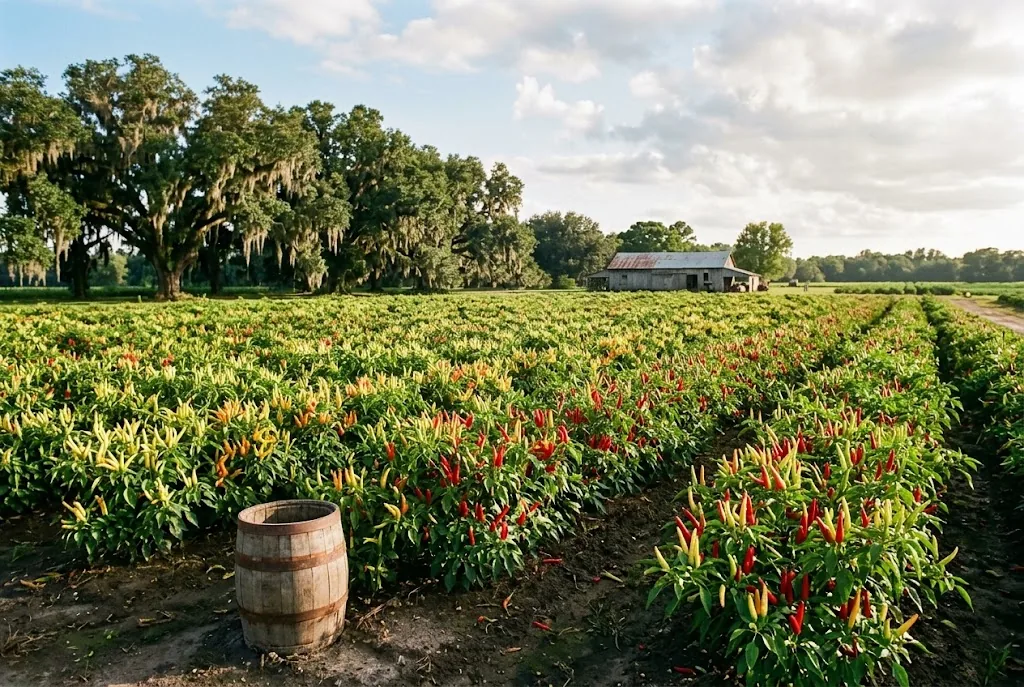
The name confusion goes the other way, too. Most people meet the pods through the bottle first, so it is easy to assume the brand gave the pepper its name. The truth is the reverse: the brand borrowed the Mexican state’s name because that is where the original pods came from.
Botany: this species and what sets it apart
Most of the peppers in catalogs, jalapeños, bells, and cayennes, belong to Capsicum annuum. The Tabasco pepper is a different species, and the difference shows up in the plant’s habit, the flowers, and the way the pods sit on the stem.
The two species are easy to tell apart once you see them side by side:
- Pod position. The pods grow straight up, pointing at the sky, with the calyx gripping the stem. Capsicum annuum pods usually dangle downward.
- Flower color. Frutescens flowers tend toward greenish-white rather than pure white, and they often appear two or more per node rather than singly.
- Plant habit. The shrub is tall, usually 60 to 120 cm (about 2 to 4 feet), with strong vertical stems that flop under the weight of a heavy fruit set.
The pods are slim, taper to a point, and measure 3 to 5 cm (roughly 1.25 to 2 inches) at full size. They start pale yellow-green, then move through orange and into a clear, glossy red at full ripeness. The flesh is thin compared to a jalapeño, which is why the pods dry quickly and crush easily into a coarse mash. That thin wall is one reason the original mash ferments and ages so well.

One point worth clearing up: frutescens is closely related to annuum, and the two species will cross if grown close together. Save pods from a single isolated specimen and expect mostly true-to-type Tabasco pepper pods the next year. Grow a jalapeño in the same bed and save from this one and expect surprises.
How hot is the Tabasco pepper?
The pods land at roughly 30,000 to 50,000 Scoville Heat Units. That puts them well above a ripe jalapeño, which usually sits between 2,500 and 8,000 SHU, and a step below a common orange habanero, which lands in the 100,000 to 350,000 SHU range. For everyday cooking that means the heat is unmistakable without overwhelming the other ingredients.
Scoville numbers are ranges, not fixed points, and they move around for a few reasons:
- Plant stress. Stressed specimens, with less water, less nitrogen, or more sun, tend to run hotter than pampered ones.
- Ripeness. A red, fully ripe pod usually carries more capsaicin than a green or orange one, although the difference is smaller than in some other species.
- Pod part. The placental tissue and the seeds carry almost all the heat. The flesh is mild by comparison.
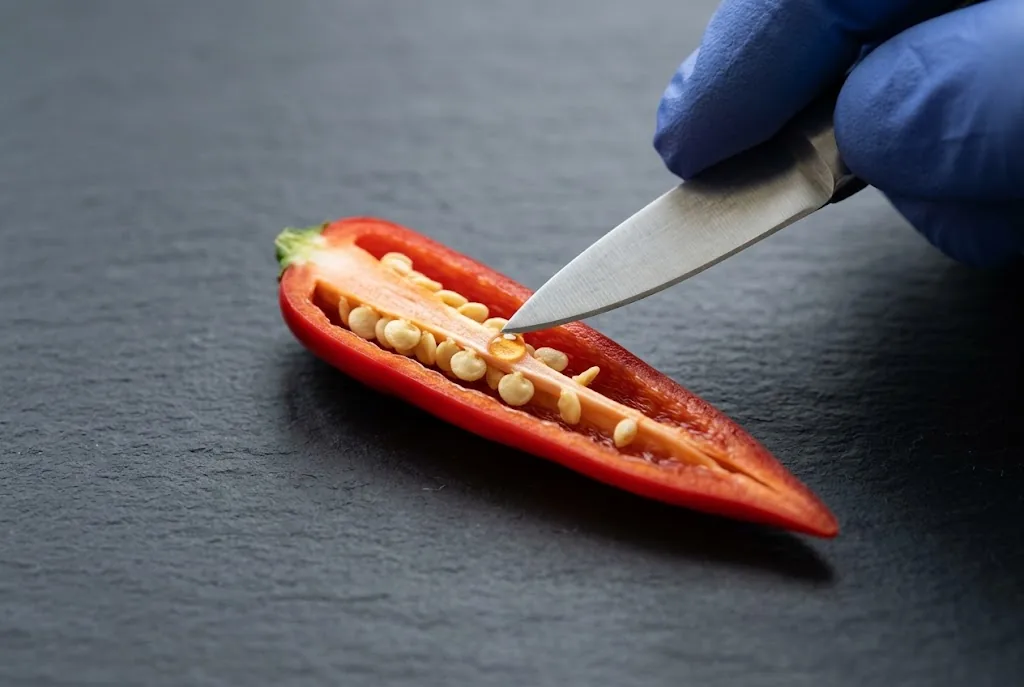
If you want a steadier number, trust a lab-tested bottle. The pods themselves will move a little either way, and that is normal.
Growing from sowing to harvest
The shrubs are not hard to grow, but they are slow to start and they want a long warm season. Treat them the way you would any other small-fruited type, with a few adjustments for the frutescens habit. For the broader stage-by-stage guide, see our full primer on growing peppers; the notes below cover what is specific to this variety.
Starting indoors
Tabasco pepper seed germinates slowly compared to annuum types. Plan on 14 to 21 days from sowing to cotyledons, sometimes longer if the medium runs cool. Aim for a steady 27 to 32 degrees C (about 80 to 90 F) at the surface. A heat mat under the tray is the single most useful tool here.
Sow 6 mm (a quarter inch) deep in a fine starting mix, keep the surface moist but not waterlogged, and give seedlings strong light the moment they break the surface. Stretchy, leggy seedlings under low light is the most common reason later yields disappoint.

Transplanting and bed setup
Wait until the soil has warmed to at least 18 C (65 F), and until nights have settled above 12 C (54 F). The shrubs resent cold roots and will stall badly if set out too early. Space 45 to 60 cm (18 to 24 inches) apart in a bed, or one specimen per 20-liter (about 5-gallon) container.
Soil matters more than people give it credit for. A loose, fertile loam with steady moisture and a pH between 6.0 and 6.8 will carry a heavy fruit set without crashing. Waterlogged ground is the bigger risk. If the garden bed holds water after a heavy rain, plant on a slight mound or switch to containers.
Sun, water, and feeding
Full sun is the rule, at least six hours of direct light, with eight to ten hours being better in cooler climates. Water deeply and let the surface dry slightly between soakings; frutescens tolerates short dry spells better than cold, wet feet. A balanced organic feed at planting, followed by a low-nitrogen, higher-potassium blend once flowering starts, keeps leafy growth from crowding out fruit.
If you want a side-by-side growing comparison with a related pepper, cayenne peppers are a useful reference, since both are slim-podded hot types, but the Tabasco pepper runs hotter and finishes later in the season.
Days to maturity and harvest
From transplant, plan on 80 to 100 days to first ripe fruit. From an indoor sowing, count on 120 to 140 days. Northern growers often pick the bulk of the harvest in late summer and early fall, just before the first frost. In a long, hot summer, the same specimen will set and ripen pods continuously until something stops it, usually cold or a hard prune.
Harvesting and handling safely
Pick when fully colored, which means deep orange to red for most strains. A fully red pod has the most developed taste and the most capsaicin. Wear nitrile gloves when picking in volume, and wash your hands before touching your face or eyes.
The upright pod habit makes harvest quick. Snip or pinch with a short stem attached. The shrub will keep flowering and setting new pods from the same nodes as long as you keep picking. If you stop, fruit set slows, and the plant eventually drops flowers instead of pushing new ones.
A common question is whether the leaves and stems are toxic. They are not, but they are bitter and unpleasant to eat raw. Keep gloves on while you strip shrubs at the end of the season, and consider long sleeves if you are sensitive to skin contact with capsaicin.
Storing, drying, and preserving the harvest
Fresh pods do not keep long once picked. Plan to use, dry, ferment, or freeze them within a week of harvest for the best result. The thin walls make them well suited to several preservation paths:
- Freezing. Whole pods freeze well on a sheet pan and then move into a freezer bag. Frozen ones lose their crisp texture but keep their heat and taste for cooked condiments and stews.
- Drying. Air-dry on a screen in a warm, well-ventilated room, or use a dehydrator at 50 to 55 C (120 to 130 F). Whole dried pods crush into flakes or powder and keep for a year in a sealed jar away from light.
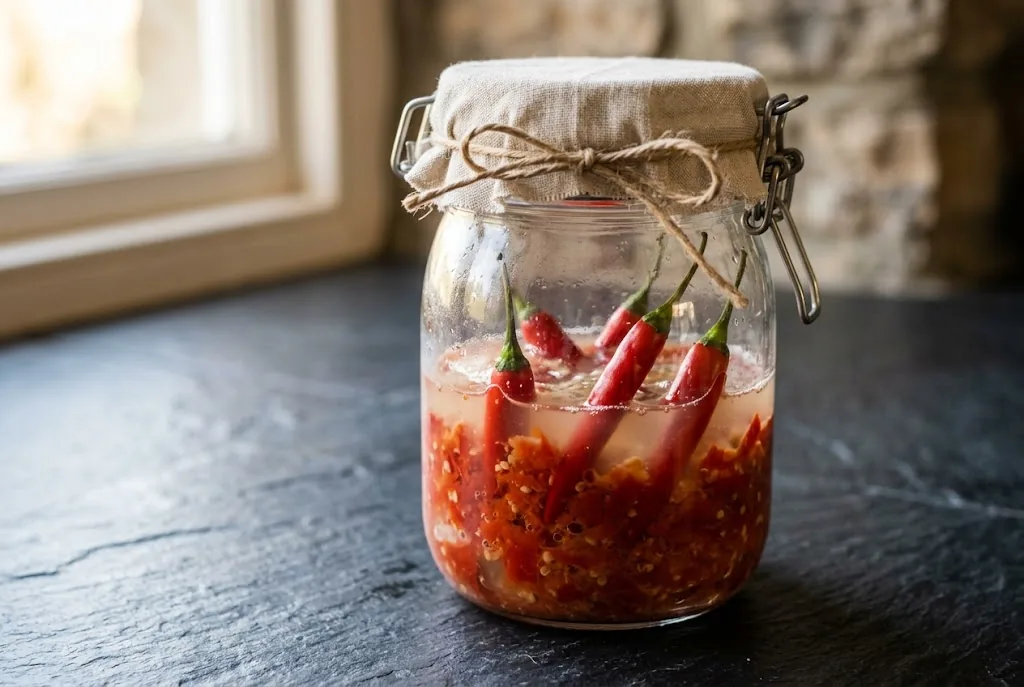
- Brining and fermenting. Pack whole pods into a 3 to 5 percent salt brine, weight them under the liquid, and ferment at room temperature for 7 to 14 days. The result is a tangy, complex mash that blends into a finished condiment after a final stir with a splash of acid.
For a step-by-step method including mash, ferment, and bottle, see our guide to how to make fermented chili condiment from fresh pods. The pods covered here are among the easiest peppers to ferment because their thin walls break down quickly and their taste pairs naturally with a clean white acid.
Culinary uses
These pods shine in any dish that wants a clear, sharp heat without sweetness. The flavor is bright, slightly fruity, and more straightforward than a habanero’s tropical notes. They sit comfortably in the same recipes as the famous bottled product that shares their name, which is a useful starting point, but they are flexible enough to use in fresh and cooked applications.
Some ways to put a harvest to work:
- Quick pepper condiment. Simmer 250 g of ripe red pods with 250 ml of white wine, a crushed garlic clove, and a teaspoon of salt for 10 minutes. Blend, strain, and bottle. Keeps for months in the fridge.
- Fermented mash. Pack pods with 4 percent salt by weight, weight under brine, ferment 10 days, blend with a splash of the brine and a little acid. The result is deeper than a quick version.
- Pickled rings. Slice into thin rings and pack into a hot brine of equal parts white wine and water with a teaspoon of sugar. Eat within a month.
- Dry spice. Dry fully ripe pods, then crush or grind. A teaspoon adds a steady heat to soup, beans, and rice.
The pods pair well with seafood, eggs, beans, rice, tomato-based dishes, and any acid-forward dressing. They are less suited to recipes that want a sweet or smoked pepper, like ancho or chipotle, where a different dried type will give a better result. They are also a strong choice in salsas where you want the heat to come through without softening the fresh taste of the other ingredients.
Are these pods right for your garden?
If you want a hot pepper with a long harvest window, an upright fruit habit that looks striking in the bed, and pods that dry, freeze, or ferment into a usable condiment, this is a sound pick. It is not the easiest choice for a short, cool season, since the days to harvest run long, and the seedlings are slower than most annuum types. If your season is short, start indoors eight to ten weeks before your last frost date and plan to bring pots inside for the first week or two outside.
For a one-line summary: this is a true frutescens landrace from the Mexican state of the same name, it lands between a jalapeño and a habanero on the Scoville scale, it grows as an upright shrub covered in small hot pods, and it makes a sharp vinegar-forward condiment that has earned its place on more tables than any other pepper in the world.
