
When the Komodo Dragon pepper arrived in British supermarkets, it carried a striking claim: a rating above one million on the Scoville scale. The fruit was grown in Bedfordshire, England, and sold as a British supermarket superhot. Here is what reliable sources say about its history, appearance, cultivation, handling, and uses, along with the limits of what is known.
For a wider overview of the many shapes and uses in this group, see our guide to pepper varieties.
Where did Komodo Dragon come from?
The pepper was introduced in a retailer announcement dated August 12, 2015. Trade coverage in Fresh Produce Journal identified Salvatore Genovese of Love My Chillies as its grower in Bedfordshire. It was sold as a UK superhot, which is a retail claim, not a world record: Guinness World Records recognizes Pepper X as the hottest pepper in the world, based on an average reading of 2,693,000 SHU, a record it took from the Carolina Reaper.
Public sources reviewed for this profile do not establish a documented parentage or detailed breeding history. Some sellers name possible parent varieties, but without a breeder record or consistent sourcing, those claims are not settled facts. Despite the name, it was grown in England, not Indonesia. Before buying seed, check that the listing names the species and says which line it is.
Appearance and species
Komodo Dragon belongs to Capsicum chinense, the species behind many of the hottest peppers. A specialist live-plant listing describes the pods as about 2 inches long, wrinkled, bright red when ripe, and tapered to a point. It says they start green and turn red. Seed lines can vary, so use these traits as a guide rather than a guarantee that every fruit will look identical.

The same seller describes a compact, bushy plant around 2 feet tall. That is a seller estimate, not a fixed maximum. Container size, light, warmth, and the seed line can all change the mature size.
How hot is the Komodo Dragon pepper?
Trade coverage put it at about 1.4 million Scoville heat units (SHU), and some seed sellers still repeat that figure. Other websites now list higher ratings without pointing to a directly comparable lab test. The sources checked here do not establish a reliable tested range, so treat that figure as a reported rating, not a promise about every pod.
Pepper Joe’s describes a fruity flavor before the burn builds. Try only a tiny amount if you are unfamiliar with a batch, and wait before adding more. This variety suits experienced cooks looking for a superhot ingredient. If a superhot is more than your recipe needs, Byadgi peppers are a dried chili from Karnataka, India, prized for deep red color and a far milder bite.
How to grow it at home
This superhot needs a long, warm season to ripen. The University of Minnesota Extension suggests starting pepper seeds indoors about eight weeks before outdoor planting. Keep the starting mix at 80 F to 90 F until seeds germinate, then give seedlings bright overhead light. A heat mat can speed emergence, but check moisture because it can dry the mix faster.
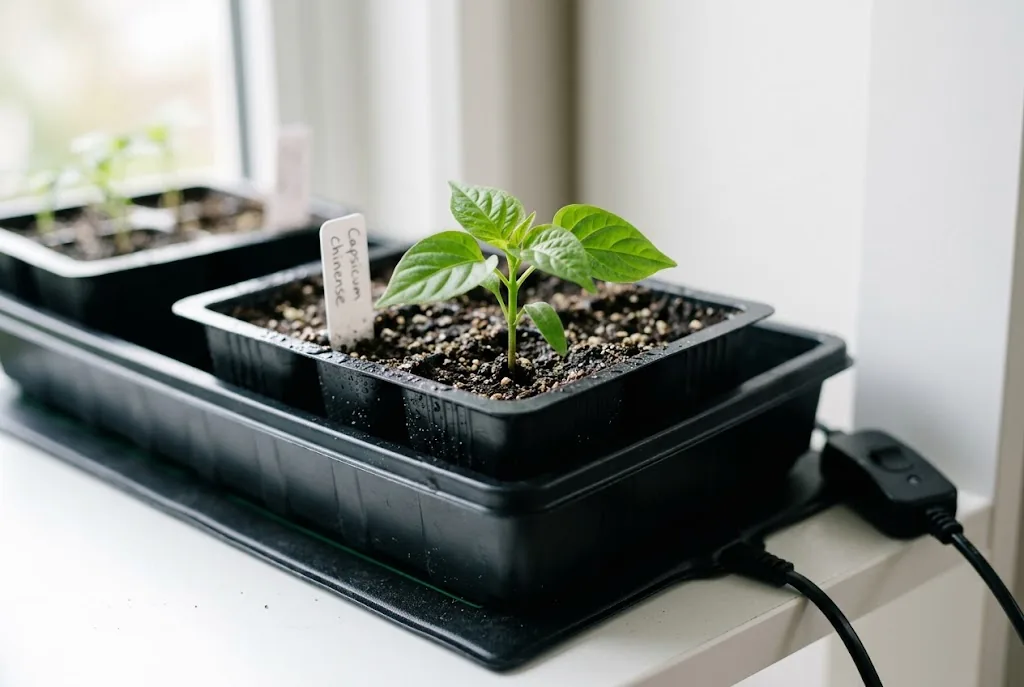
Harden seedlings off gradually, then transplant after frost danger has passed and night temperatures are suitable for peppers. Set each seedling at the soil line it had in its pot. Choose a sunny, sheltered spot with fertile, well-drained soil. In a cool or short-season area, use a greenhouse or a large container that you can move under cover as nights cool.
Pepper Joe’s estimates 90 to 110 days from transplant for its Komodo Dragon plants and lists mature plants at about 2 feet. These are estimates for that seller’s line. Weather and growing conditions affect ripening, so use your packet’s directions and allow extra time in a cool season.
Harvest and handle it safely
Use clean snips to cut ripe fruit from the branch. Wear disposable gloves while cutting or seeding it, avoid touching your eyes or face, and wash tools and hands when you finish. Poison Control notes that capsaicin from hot peppers can irritate skin and cause intense pain if it gets into the eyes. Keep fresh fruit, scraps, and used gloves away from children and pets.

Store, dry, or freeze extra fruit
Refrigerate fresh peppers and check them often for soft spots. For longer storage, freeze whole or chopped pods in a sealed freezer container. Utah State University Extension says properly packaged peppers held at 0 F or below keep for about a year.
Ripe pods can also be dried for seasoning. The same extension guide advises drying chile pieces in a dehydrator until brittle, then storing them in a glass jar or plastic bag at room temperature. Wear gloves when preparing them, and keep the container clearly labeled. For canning or pickling, follow a tested recipe and its processing directions; do not improvise a shelf-stable sauce or brine.
Ways to use it in the kitchen
Add a very small amount to a sauce, salsa, or stew, then taste before adding more. Finely chopped fruit spreads its pungency through a dish; a whole pod simmered briefly is easier to remove. Warn guests before serving, and keep a milder portion aside for anyone who does not want superhot food.
If a superhot is more than you want to grow, Aji Pineapple peppers are a citrus-flavored Capsicum baccatum with a milder bite.
