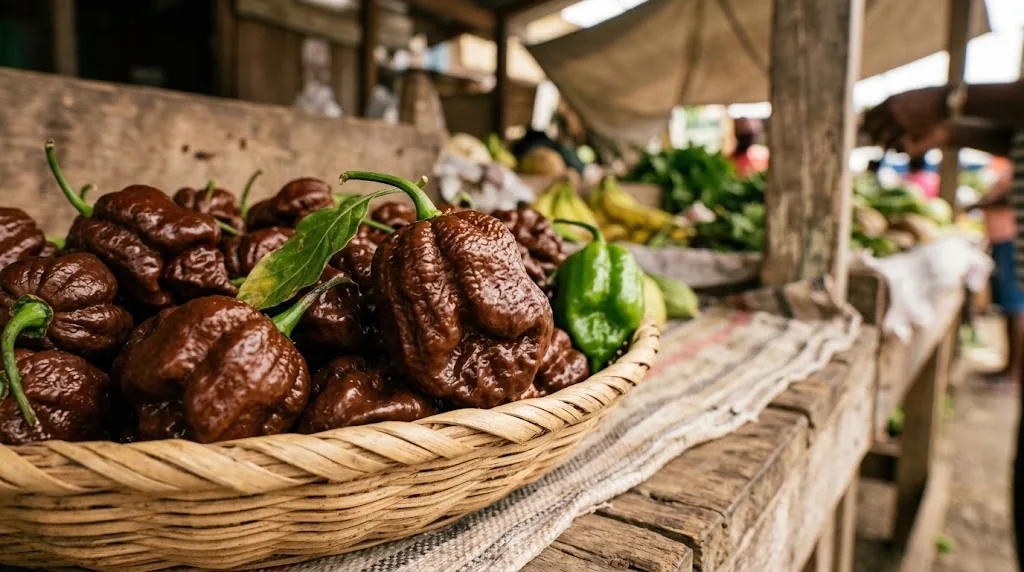
The 7 Pot Douglah, a brown-fruited selection of Capsicum chinense, is prized for its unusual ripe color and long-lasting burn. Expect variation between growers’ lines, especially in pod shape and pungency. Give it a long, warm season, harvest fully colored fruit for the mature flavor, and treat each pod as an extreme superhot.
Origin and the name
The variety comes from Trinidad in the Caribbean, where growers developed a family of highly pungent peppers. The “7 Pot” name is commonly explained as a kitchen saying: one fruit can season 7 pots of stew. That is folklore, not a tested recipe or measured serving size.
Grower collections also use names such as 7 Pot Brown and Chocolate 7 Pot, but sellers do not apply them consistently. The word “Dougla” has a complex history in the Caribbean and can refer to people of mixed African and Indian ancestry; academic writing describes its varying meanings and connotations. The pepper’s name origin is not settled by a botanical registry, so do not assume its ripe color explains the label. When comparing varieties, keep the source and generation with your notes.
If you want to see how this variety fits among other shapes, species, and heat levels, browse our guide to the main types of chili peppers.
Plant and pod features
Like other C. chinense peppers, this one favors warmth and a long season. The bush branches freely and bears small pale flowers. Its pods usually have irregular shoulders, deep folds, and a bumpy surface. Immature fruit is green; ripe fruit reaches a rich cocoa color. Grower references describe pods around 1.5 to 2 inches long, though size and shape vary with the line and conditions.
Color helps identify the variety, but it does not prove a pod’s identity. Other dark-fruited superhots can look similar. Do not assume saved seed will produce identical plants if other peppers flower nearby.

How hot is a 7 Pot Douglah pepper?
Published estimates commonly place its pungency at about 923,000 to 1,854,000 Scoville heat units (SHU). The University of Delaware Botanic Gardens’ 2024 inventory lists 7 Pot Chocolate at 923,000 to 1,853,000 SHU, and a pepper collection database reports a similar range. These figures describe tested samples, not a promise about every fruit. Genetics, growing conditions, maturity, and measurement method all affect the result. The upper end places it among the world’s hottest peppers in garden references, but it is not a world-record claim.
That range is far above a jalapeño and may overlap with the most intense homegrown peppers. Do not taste a whole fruit to test it. If you are new to superhots, use a tiny amount in a large batch of food and adjust only after tasting a well-mixed sample. For a British-bred superhot of the same species, see our profile of Komodo Dragon peppers.
What does a 7 Pot Douglah pepper taste like?
Growers often describe the flavor as fruity, earthy, or slightly nutty, but the burn can overwhelm those notes. Let a small piece cook into beans, stew, or tomato-based dishes, or blend it into a strongly flavored sauce. Start with less than you think you need. You can add intensity; you cannot take it back out.
Growing this superhot through a long season
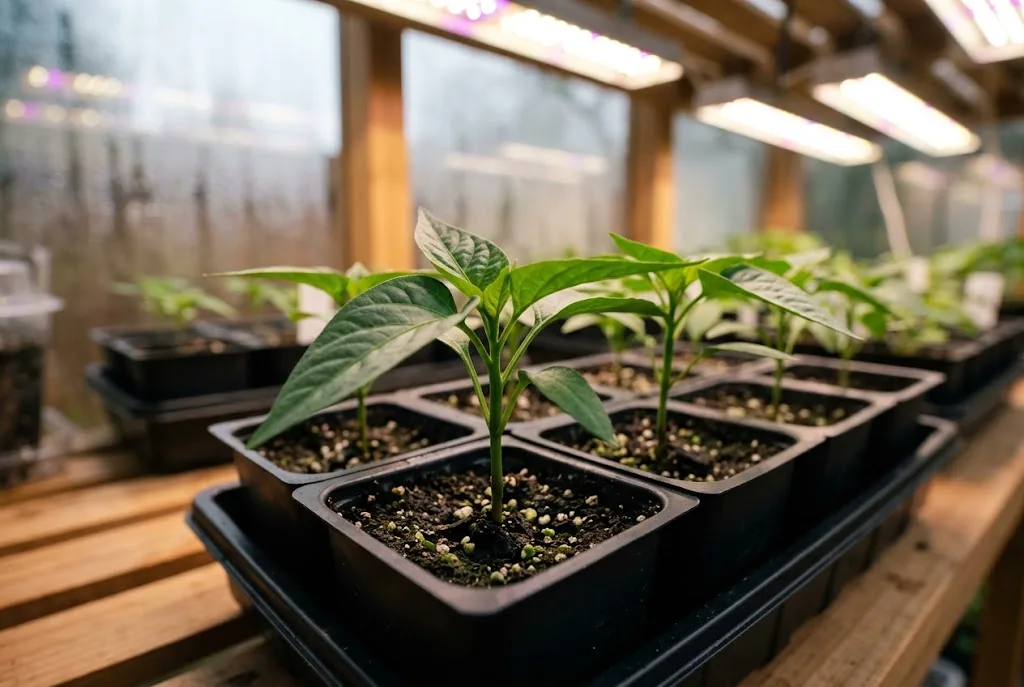
Plan for a long season and steady warmth. The University of Minnesota Extension advises starting peppers indoors about eight weeks before transplanting and keeping the germination medium warm; it gives 80 to 90°F as a useful range for emergence. Begin earlier if your outdoor season is short, because slow growth leaves less time for fully mature fruit.
- Sow indoors. Place fresh seeds about one-quarter inch deep in a clean, fine-textured germination medium. Keep it evenly moist, not waterlogged, with bottom warmth and bright light. Emergence may be uneven, so give the tray time before discarding it.
- Transplant seedlings and build strong plants. Once true leaves appear, move seedlings into individual containers. Keep light close enough to prevent thin, stretched stems. Water when the surface begins to dry, and avoid leaving roots in standing water.
- Harden off before planting. Over about a week, gradually expose plants to outdoor sun and breeze. Transplant after nights are reliably warm and the soil has warmed. Choose a sunny position with fertile, well-drained soil, or use a large container with drainage holes and quality container mix.
- Water consistently. Give the root zone a deep drink, then let excess drain. Aim for evenly moist soil during flowering and fruiting. Long dry spells followed by heavy watering can stress the plant, while saturated soil encourages root problems.
- Feed modestly and monitor growth. Use a balanced vegetable fertilizer according to its label. Too much nitrogen can produce foliage at the expense of flowers. Check leaf undersides and new growth for aphids, whiteflies, and other common pepper pests. Remove damaged leaves and keep the area tidy.
Where to find seeds or young plants
Specialist pepper nurseries, seed sellers, and grower exchanges are common sources. Check that the listing names C. chinense, identifies the line, and states when the packet was collected. Keep the label and seller with your notes so you can compare results between seasons.
University garden references list roughly 150 to 170 days to harvest for this variety, but the starting point can differ and home conditions matter. Treat that range as a planning estimate, not a deadline. Flowers may drop during extreme temperatures, and fruit needs extra time to reach its ripe color.
Harvesting and handling the pods
Pick pods when they have reached their full color and feel firm. Snip the stem with clean scissors rather than pulling on a branch. If frost threatens, harvest mature green or partly colored fruit before the bush is damaged, but those pods may not develop the same flavor as fruit ripened on the bush.
Wear nitrile or other nonporous gloves when cutting or handling the fruit, and keep your hands away from your eyes and face. Work in a ventilated area when slicing or blending. Wash tools and surfaces with soap and water, and do not use bare hands to clean a blender or food processor. Keep fresh pods and scraps away from children and pets.

Capsaicin can irritate skin and eyes. If juice gets in an eye, irrigate immediately with room-temperature water for 15 to 20 minutes, then contact Poison Control for advice. Seek urgent eye care if pain or vision problems continue after rinsing. Avoid rubbing the eye. Wash hands with soap and water after handling peppers so capsaicin does not transfer to your face.
Storing, drying, and preserving
Use fresh fruit promptly or refrigerate it for short-term storage. Whole peppers can keep for a week or more, though long refrigeration may pit their skin. For longer keeping, dry whole or sliced peppers in a food dehydrator until crisp, following the appliance’s instructions. Drying time varies with thickness and humidity. Keep the room ventilated, and avoid breathing dust when grinding dried pieces into flakes or powder. Store them in moisture-resistant packaging in a cool, dry, dark cupboard.
You can also freeze whole fruit in a labeled container. Frozen peppers lose crispness when thawed, so use them in cooked dishes. Do not leave fresh peppers submerged in oil at room temperature. Penn State Extension advises refrigerating homemade vegetable-in-oil mixtures and using them within three days, or freezing them. For pickling or fermenting, follow a tested recipe and keep its ingredient ratios; peppers are low-acid vegetables, so do not improvise canning instructions.
Ways to use the pepper in the kitchen
Use this fruit as a seasoning ingredient rather than a side vegetable. A sliver can add pungency and a fruity note to lentils, marinades, or tomato-based dishes. Remove the stem, then mince or blend a very small piece into the full batch. Taste a spoonful after the intensity has dispersed before adding more. For a mild, sweet contrast in a mixed pepper dish, see Feher Ozon peppers.
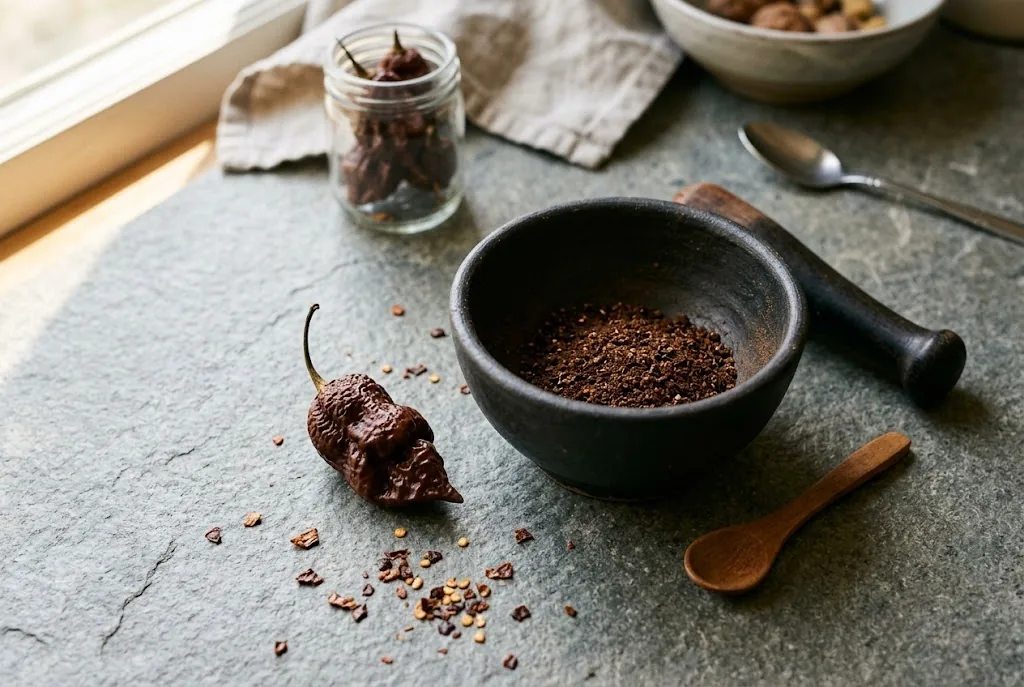
For a homemade condiment, avoid letting fresh peppers sit in oil at room temperature. Use a tested preservation method, refrigerate promptly, or freeze the finished mixture. Label everything clearly so another person does not mistake a superhot condiment for a mild one.
Profile at a glance
- Species: Capsicum chinense
- Origin: Caribbean
- Ripe color: dark cocoa
- Published heat range: about 923,000 to 1,854,000 SHU, with pod-to-pod variation
- Growing season: long and warm; catalog maturity estimates vary by source
- Best uses: tiny amounts in sauces, stews, dried flakes, or powder
Choose a clearly labeled supplier, start early, and give the bush warmth, sun, and even moisture. At harvest, treat every pod as a superhot, then use a cautious sliver to season a full batch of food.
Sources and further reading
- University of Delaware Botanic Gardens, Spring Sale Pepper Inventory 2024, heat and days-to-harvest figures.
- PepperFriends, species profile, synonyms, origin, ripe color, fruit description, and reported SHU range.
- The Chilli Index variety profile, common names, reported heat range, and flavor descriptions.
- The Dougla in Caribbean history, historical context for the related Caribbean term and its varied connotations.
- University of Minnesota Extension, Growing Peppers, indoor starting, warmth, transplanting, and home growing guidance.
- North Carolina Extension, Capsicum chinense profile, species-level growing conditions and common pest concerns.
- Penn State Extension, Canning and Freezing Questions and Answers, safe refrigeration or freezing for vegetables in oil.
- National Center for Home Food Preservation, Pickling Pecks of Peppers, tested ingredient ratios for safe pepper canning.
- Oregon State University Extension, Preserving Peppers, drying, storage, and freezing guidance.
- Poison Control, Eye Irrigation After an Exposure, immediate rinsing time and when to seek further help.
