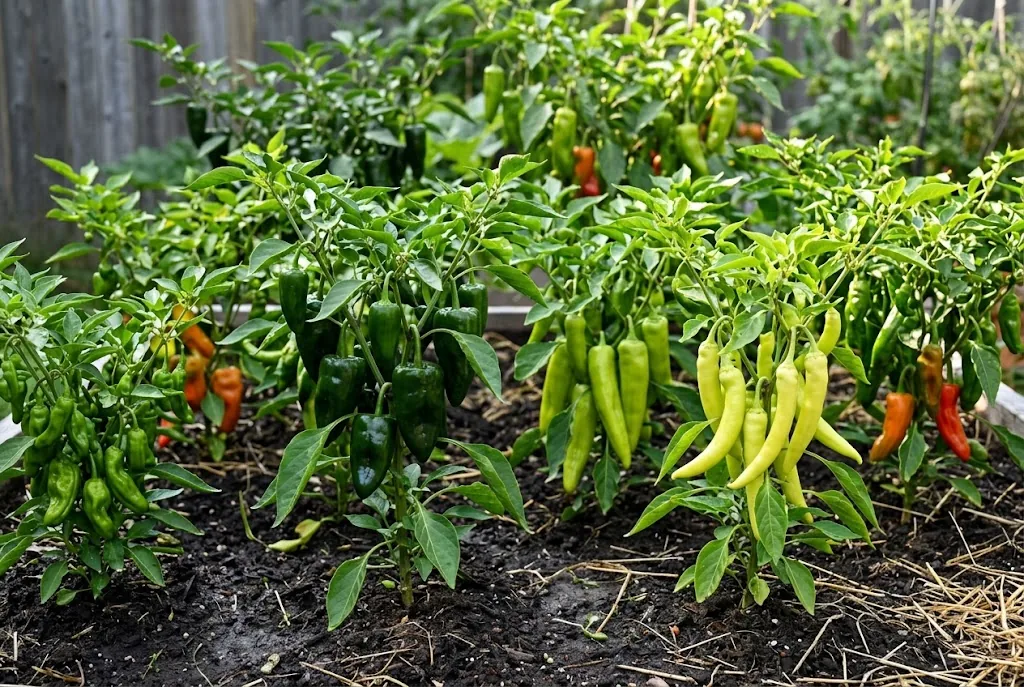
Most of what home cooks reach for in the produce aisle are mild chili peppers, even if they do not call them that. A glossy poblano, a pale green cubanelle, a sweet banana, a tiny pimiento stuffed into a green olive: these are all members of the same capsicum family as the searing habanero and the record-setting hottest peppers, and they are exactly the family you want on the table when kids, sensitive palates, or just dinner guests who do not love the burn are eating with you. Mild chilies are not a watered-down compromise. They are the ones that show off a pepper’s real flavor: fruity, smoky, grassy, sweet, or nutty, with just enough warmth on the finish to remind you that you are eating a chili pepper.
What counts as a “mild” chili pepper
“Mild” on this page means chilies that mostly fall below 2,500 Scoville Heat Units (SHU), with the soft top end of that band nudging up toward a tame jalapeño. That covers a huge range of pods, from the sweet, bell-pepper-adjacent pimiento up through the barely-there warmth of a fresh Anaheim pepper, the deep richness of a dried ancho, and the surprise snap of a shishito that turned out to be the one hot one in the pan.
For comparison, a bell pepper sits at 0 SHU. A banana pepper lands between 0 and 500 SHU, and a cubanelle between 100 and 1,000. An Anaheim runs about 500 to 2,500 SHU. A jalapeño sits at roughly 3,000 to 8,000 SHU, so the upper end of “mild” overlaps with the bottom of “noticeably warm.” Serranos sit at 10,000 to 23,000 SHU, cayenne peppers at 30,000 to 50,000, and a hot pepper like a habanero starts pushing past 100,000. From there the heat climbs fast into superhot territory. The current record holder is Pepper X, which Guinness World Records recognised on 16 October 2023 at an average of 2,693,000 SHU, replacing the Carolina Reaper.
The mild chili varieties worth knowing
You will find these on grocery shelves, at farmers markets, and in seed catalogs across North America. Each brings a different flavor to the same low-heat slot, and the differences matter when you are choosing what goes into tonight’s dinner.
Chili peppers are native to Central and South America and were domesticated thousands of years ago. The poblano is the workhorse of Mexican home cooking: a glossy, dark green pod with a deep, earthy, slightly sweet flavor that turns richer and smokier once it is roasted and peeled. It is usually picked green and used for chiles rellenos and rajas, and it is a classic base for mole. Left to ripen red and then dried, the same pod becomes an ancho, the backbone of many red sauces. The closely related mulato is a dried chile that is usually darker, with chocolate and licorice notes, and it is another traditional mole ingredient.

Anaheim peppers descend from New Mexico chile seed that was brought to Anaheim, California, in the early 1900s, but they are not the same as a Hatch chile today. Thin-walled and green, with a bright, herbaceous flavor, they are a gentle pepper at about 500 to 2,500 SHU. They are the right choice for chile verde, for stuffing with cheese, and for piling onto a plate of eggs in the morning.

Cubanelle peppers are pale yellow-green, thin-walled, and gently sweet, with very little heat. They fry beautifully in a little olive oil and hold their shape in a hot pan.
Banana peppers are the yellow-green pickled rings you see on the deli counter next to the olives. They are sweet, tangy, and very low on heat, and they are excellent on pizza, in salads, and stuffed into sandwiches.
Cherry peppers, sometimes called cherry bomb peppers, are round, red, and about the size of a cherry tomato. Most strains are mild with a touch of sweetness; a few cultivars run hotter. They pickle well and are often jarred whole for antipasto plates.
Pimiento peppers (also written pimento) are the small red heart-shaped peppers that come stuffed into green olives. Sweet, soft, almost no heat, and best known as a flavoring rather than a starring player.
Pepperoncini are the mild, tangy, slightly sweet pickled peppers that turn up on salad bars and antipasto platters, very gentle on the palate. Check the jar if the name matters to you: the friggitello, an Italian frying pepper also sold as a Tuscan or sweet Italian pepper, is a separate pepper that some American stores label pepperoncini.
Fresno peppers are the step above mild: smooth, waxy, conical pods that ripen from green through orange to a glossy red, at 2,500 to 10,000 SHU. That is still tame compared with serranos, and their fruity, slightly sweet flavor is a natural bridge between mild and hot. They are excellent blistered, pickled, or sliced into a fresh salsa.
Shishito peppers are thin-walled, wrinkly green Japanese peppers. Roughly one in ten carries a sharp little kick; the rest are grassy and mellow. They blister in a hot pan with a touch of oil and salt in under five minutes and are one of the easiest appetizers you can make. Padron peppers are the Spanish cousin of the shishito, prepared almost the same way, and follow the same mostly-mild-with-an-occasional-spicy-one rule.

Mild jalapeño cultivars such as TAM Mild Jalapeño give you the familiar jalapeño crunch with a fraction of the heat. They are worth growing when you want a familiar shape but a friendlier flavor, and they pickle and stuff just like the hotter originals. Read the seed packet, because even a bred-mild pod can vary.
Red bell peppers belong to the same species as most of the pods on this page, Capsicum annuum, but they are a non-pungent type with zero heat and a sweet, fruity flavor. They round out any mild chili discussion because most cooks use them in the same recipes, swapping in a few roasted green chilies for a low-burn twist.
How heat is measured, and why “mild” still varies
The Scoville scale was developed in 1912 by the American pharmacist Wilbur Scoville, who measured pepper heat by diluting an extract in sugar water until a panel of tasters could no longer detect a burn. The number of dilutions needed is the SHU rating. A bell pepper needs zero dilutions and scores 0, while a jalapeño needs several thousand. Modern labs have largely replaced taste panels with high-performance liquid chromatography, which gives a more precise reading of the capsaicin content, but the scale itself is still named after Scoville.
The interesting wrinkle for home cooks is that two pods from the same plant can sit at very different points on the scale. The Chile Pepper Institute at New Mexico State University notes that Scoville figures are for comparison only, because heat can vary from location to location and even from pod to pod on the same plant. Sun, water stress, and ripeness can all move the number, and a red pod is often a little hotter and sweeter than a green one. The lesson is simple. Treat the Scoville number as a guide, not a guarantee, and taste a small piece of any new pepper before you commit a whole dish to it.
How to use mild chili peppers in everyday cooking
The first rule of cooking with mild chilies is to cook the pod, not just chase the heat. Most of the flavor lives in the flesh and skin, so a quick roast under the broiler, a char on a comal, or a few minutes in a dry skillet over high heat brings out sugars and a smoky depth that the raw pod does not have.
For stuffing, poblanos and cubanelles are the classic choices. Roast the pods until the skin blisters, slit one side, peel off the charred skin, and fill with cheese, rice, or a pork picadillo for chiles rellenos. Cubanelles take a simpler treatment: slit, stuff with a slice of provolone and a few capers, and braise briefly in olive oil until the pepper softens.

For pickling, banana peppers, cherry peppers, and pepperoncini are the obvious picks. Pack sliced peppers into a clean jar with a clove of garlic and a teaspoon of sugar, and cover them with a hot brine of equal parts 5 percent acidity vinegar and water with a tablespoon of salt per cup. These are refrigerator pickles, not shelf-stable ones, so keep the jar cold. If you want jars that store in the pantry, follow a tested recipe from the National Center for Home Food Preservation rather than changing the vinegar and water proportions yourself.

For blistering in a pan, shishito peppers and padron peppers are unmatched. Heat a wide skillet until it just starts to smoke, add a tablespoon of neutral oil, and tumble in a single layer of whole peppers. Let them sit for a minute until the skins blister, flip, blister the other side, then finish with flaky salt and a squeeze of lemon. Serve straight from the pan. Most peppers will be soft and grassy; the rare hot one will announce itself.
For sauces and salsas, mild chilies give you body and flavor without scaring anyone off. A simple salsa verde blends roasted tomatillos with a single mild jalapeño, a small handful of cilantro, a squeeze of lime, and a pinch of salt. Roasted green chilies blended with crema, a clove of garlic, and a few drops of lime make a versatile taco sauce that doubles as a chip dip. A small spoonful of dried chili flakes, a sprinkle of mild chili powder, or a pinch of paprika adds smoky depth to deviled eggs, soups, and braises without raising the heat level much at all.
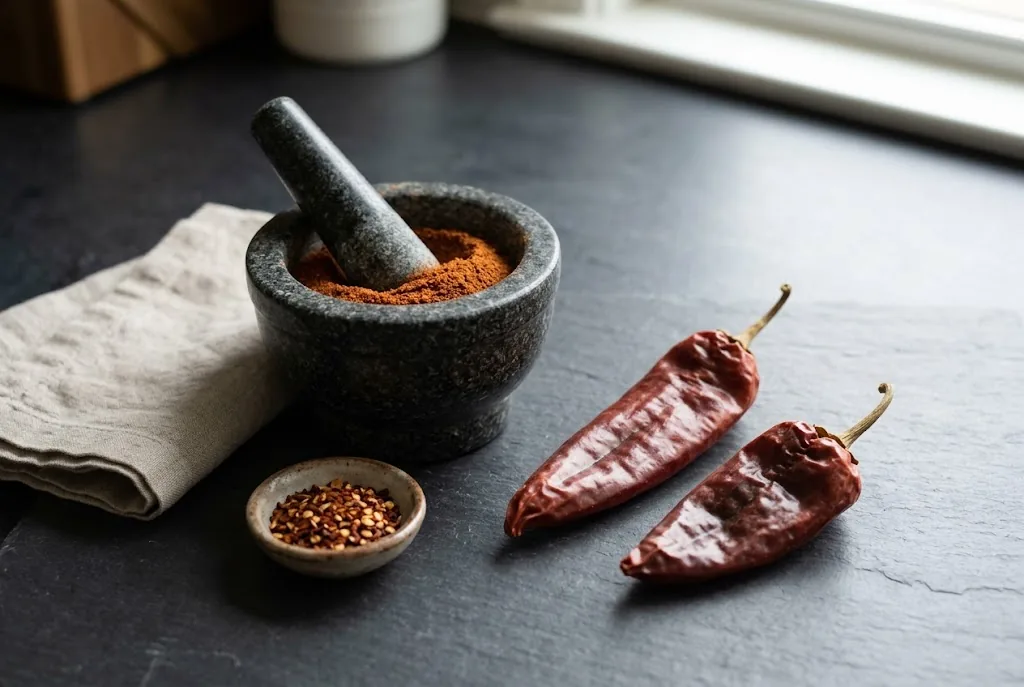
For dried chilies and chili flakes, the same mild pods in their dried form become pantry staples. Ancho and mulato powders give mole and braised meats a deep, slightly sweet, raisiny note. California or New Mexico chile powders bring a brighter, more herbaceous warmth. A pinch of either, shaken into a pot of beans or whisked into a marinade, transforms a plain dish. A small bottle of fruity, low-heat hot sauce rounds out the shelf, especially one built from Fresno peppers, red bells, and a splash of vinegar.
Picking and storing fresh mild chilies
Look for pods that feel heavy for their size, with smooth, unwrinkled skin and a fresh green stem. Avoid any that look soft at the tip, feel spongy, or have dark sunken spots, which usually mean the pod is on its way out. Ripe red peppers are sweeter and a little hotter than green ones, and they are worth buying if you see them at the market.
Fresh mild chilies keep for a week in the fridge in a paper bag or a loose plastic bag with the top folded over. They do not like being wet, so do not wash them until you are ready to use them. For longer storage, slice and freeze them raw in a single layer on a sheet pan, then tip the frozen slices into a freezer bag. They will lose their crunch but keep everything else, and they are perfect for tossing into soups, stews, and sauces through the winter.
Mild chili peppers worth growing at home
If you have a sunny spot and a long enough warm season, you can grow most mild chilies in a large container on a patio. Clemson’s extension service says peppers are ready to harvest about 70 to 85 days after transplanting, and green pods come off the plant before red ones, so check the seed packet for the days to maturity of the variety you pick.
New Mexico-type green chilies are forgiving, productive, and ready to pick green or red. Banana peppers and cubanelles are reliable in raised beds. Shishito and padron peppers are productive in pots and have the bonus of looking beautiful on the plant. For the broadest overview of which chili fits which garden, see the full guide to types of chili peppers and their habits.
When mild is plenty
Mild chili peppers are not the timid cousin of the hot ones. They are where the flavor of the capsicum family actually shows up on the plate, and most home cooks will find themselves reaching for them more often than for anything higher up the heat ladder. Roast them, blister them, jar them, stuff them, slip them into a salsa, or eat them straight off the plant in the garden. A handful of mild pods, treated well, will turn a Tuesday dinner into something memorable.
