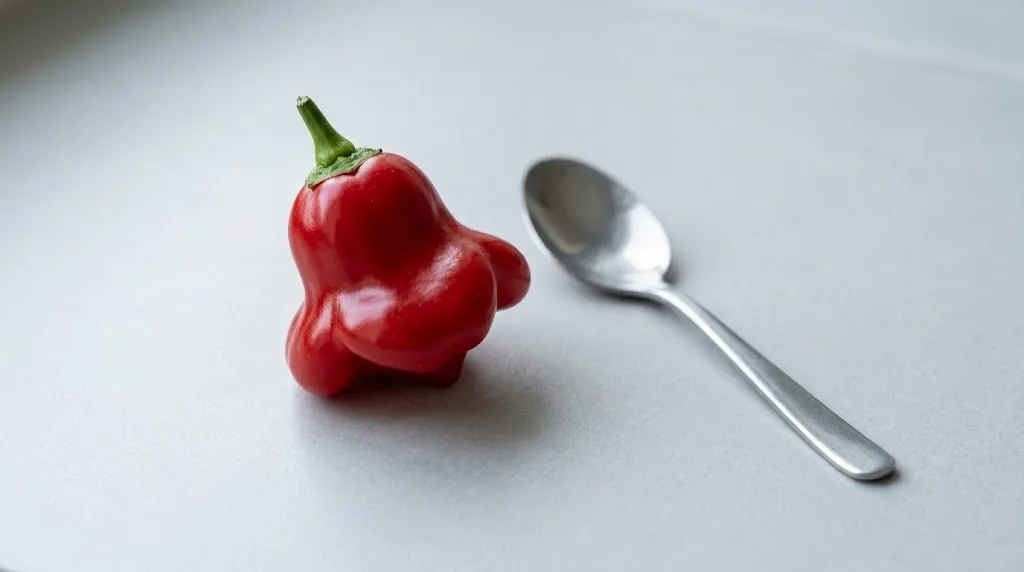
Few chili peppers catch the eye quite like bishops crown peppers (Capsicum baccatum). With their flared, three-pointed lobes resembling an ecclesiastical hat or a royal coronet, these South American heirloom pods look like decorative ornaments hanging from the branches. Beyond their striking appearance, they offer a remarkably crisp texture and a sweet, fruity flavor that transitions from gentle apple-like sweetness at the outer wings to a sharp, pleasant warmth near the central core. Whether you are expanding your home plot with unusual heirlooms or comparing different types of chili peppers for fresh salsas and pickling, this versatile chili pepper delivers an abundance of colorful fruit across a long growing season.
Origin and History of the Bishops Crown Chili
This historic pepper is a South American type that is strongly linked to Barbados, and many sellers list it as a Barbados heirloom. Growers also know it as Joker’s hat or bishop’s hat, and European catalogs often call it the Christmas bell chilli. Every one of those names points to the same three-winged pod.
Over generations, the plant gained popularity among heirloom enthusiasts who valued both its ornamental beauty and practical kitchen qualities. Unlike commercial cultivars bred strictly for machine harvesting, it remained a favorite for home planting. The tall, vigorous bushes produce heavy clusters of pods that hang like pendant ornaments, making the crop as rewarding to look at along a sunny border as it is to harvest for dinner. According to Wikipedia’s entry on the pepper, it reached Europe from Brazil with Portuguese traders in the 18th century, and it remains popular there.
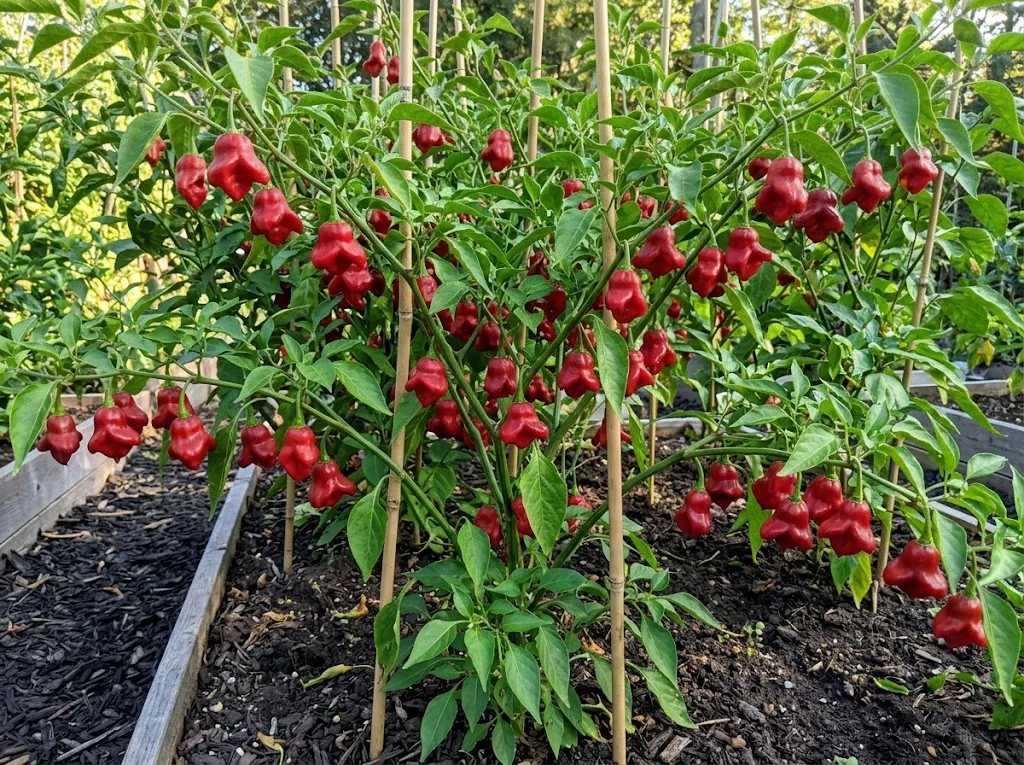
What the Plant and Pods Look Like
Botanically, bishop’s crown belongs to a species whose flowers are white or cream with a gold or green corolla. That sets it apart from common annual bell peppers (Capsicum annuum) and fiery habaneros (Capsicum chinense).
The plant is a prolific grower. A healthy bush usually reaches about 2 to 4 feet in height, and its slender, spreading branches need sturdy support once fruiting begins.
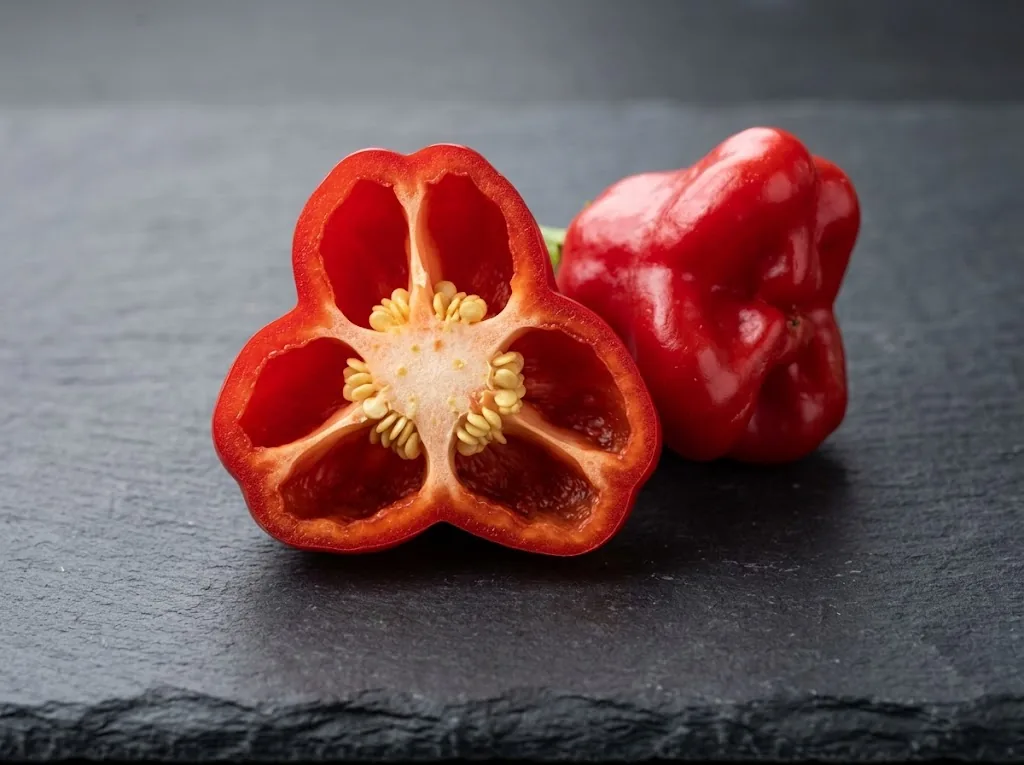
Each fruit is wide rather than long, measuring roughly 1.5 to 2.5 inches across the wings (about 4 cm) and 1.5 to 2 inches long. The unique shape features a flattened or slightly sunken central base surrounded by three or four distinct protruding wings. As the pods mature, they turn from green to orange and finally to a rich, glossy crimson. Inside, the fruit is mostly hollow with a spacious central cavity, making it structurally ideal for stuffing. Curious growers exploring rare chili peppers worth growing often prize it specifically for its unusual architectural form and high branch yield.
Heat Level, Scoville Rating, and What Bishops Crown Peppers Taste Like
One of the most talked-about aspects of these pods is how unevenly the heat is spread. On the Scoville heat scale, Know the Pepper lists a range of 5,000 to 30,000 Scoville Heat Units (SHU), with a lot of variation from pod to pod, which places it in the medium heat category. A single bite can tell two different stories depending on where you cut.
Cooks commonly describe the flared outer wings as sweet and mild, tasting like a crisp little apple or mild pepper with a pronounced fruity character. Many growers describe subtle notes of crisp melon, tart berry, and lemon. Green pods are more vegetal, so wait for the color to bring out the sweetness. This juicy, refreshing crunch makes the outer lobes a delightful fresh snack straight off the vine.
Move closer to the central rib and placenta where the seeds connect, and the spiciness ramps up. Most of a chili’s capsaicin sits in the placenta, so the core is usually the hottest part, though pods vary enough that it pays to taste a small piece before cooking a big batch. The low end of the range is close to a jalapeño (roughly 2,500 to 8,000 SHU), while the high end runs well past one. In contrast to related Peruvian Aji Amarillo peppers, which bring a steadier tropical berry warmth, the crown chili tends to gather its fire in the core, giving cooks some control over how hot a dish becomes.
Growing the Plants Step by Step
Growing these peppers from pepper seed requires patience, as they generally demand a longer season than common annual chilis. Expect roughly 80 to 100 days from transplanting until the first pods ripen, since sources quote different figures.
Follow these proven growing instructions for starting crown pepper seeds:
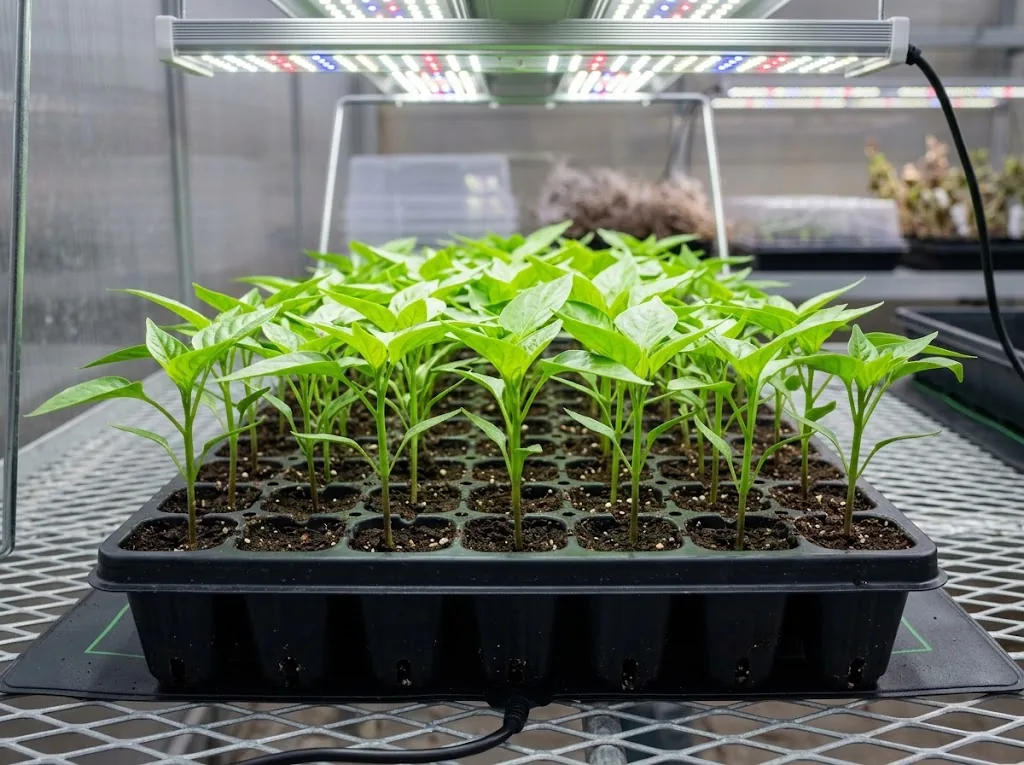
- Starting indoors: Sow pepper seed indoors 8 to 10 weeks before your local average last spring frost. Sow about 1/4 inch deep in a sterile, fine-textured starting mix.
- Moisture and heat: Consistent bottom heat is crucial for successful germination. Place seedling trays on an electric heat mat set between 75°F and 85°F (24°C to 29°C). Keep the mix evenly moist but never waterlogged to help them germinate promptly.
- Germination timing: Seedlings emerge in 10 to 21 days under warm conditions. Lower soil temperatures can delay sprouting by several weeks.
- Light requirements: The moment green shoots emerge, remove the humidity dome and provide strong plant light. Position adjustable LED or fluorescent grow lights 2 to 4 inches above the foliage for 14 to 16 hours daily to prevent spindly growth.
- Transplanting and hardening off: When seedlings develop their second set of true leaves, pot them up into small containers. Begin hardening plants off outdoors in filtered shade and mild breezes 7 to 10 days before planting outdoors, once night temperatures reliably hold above 55°F (13°C).
- Bed and container setup: These chilis thrive in full sun, requiring 6 to 8 hours of direct sunlight daily. Planting into fertile, well-draining garden soil enriched with organic compost supports steady growth, maintaining a soil pH between 6.0 and 6.8. If growing in pots, select a container of at least 5 to 7 gallons with ample drainage holes.
- Staking: Because the plants grow tall and set heavy clusters of fruit, install a sturdy stake or small tomato cage at planting time to avoid damaging root systems later.
The plants are reasonably forgiving once established, though sellers rate them as intermediate to grow. Keep the soil evenly moist during flowering to avoid blossom drop, and mulch around the base of the plant to retain moisture during warm summer dry spells.
Harvesting Techniques and Safe Handling for Ripe Pods
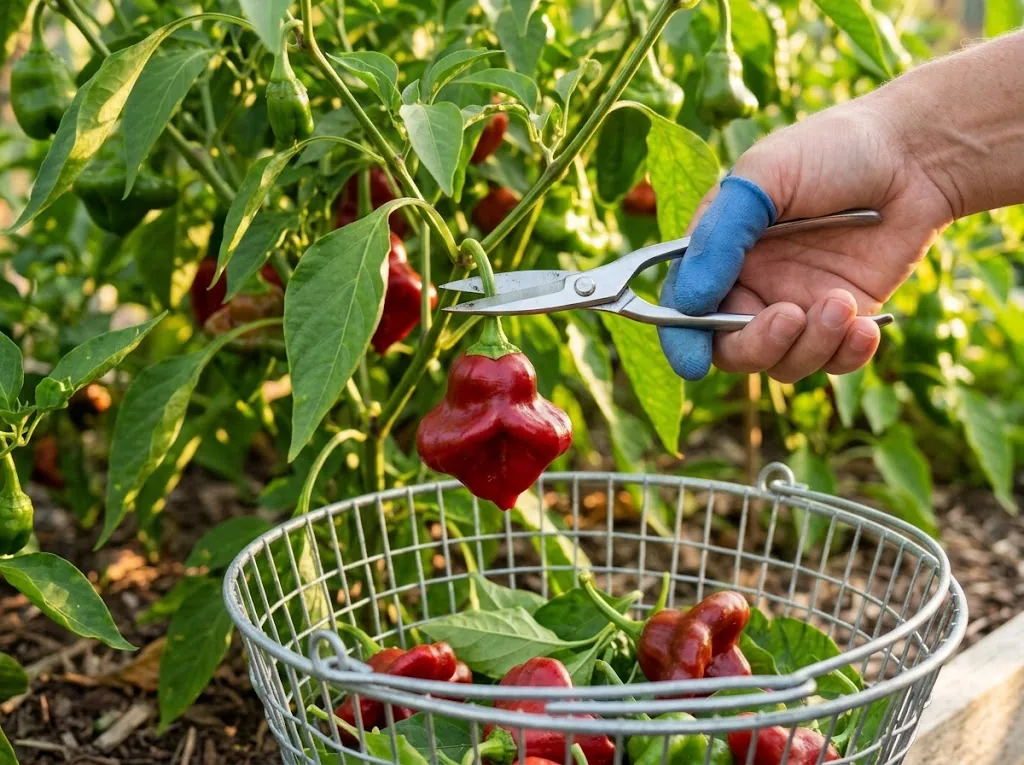
You can begin picking pods once they reach their mature size, but waiting until they turn red delivers the richest, sweeter, and most aromatic flavor profile. A mature pod provides the best reward for a grower’s patience.
To harvest, use clean shears or a sharp knife to snip the tough stem about 1/2 inch above the calyx. Pulling pods by hand can tear the slender branches, reducing later yields. Regular harvesting encourages the plant to continue setting new blossoms well into early autumn until the first autumn frost kills the top growth.
Safe handling is simple. Because capsaicin is concentrated in the interior ribs rather than the outer skin, you can handle whole, intact pods without gloves. However, when you slice into the central cavity to remove the seeds and core, wear food-safe gloves or wash your hands thoroughly with warm water and soap immediately afterward. Avoid touching your eyes or face while chopping, especially if preparing a large batch for processing.
Storing, Drying, and Pickling the Crown Chili Harvest
A productive plant can set dozens of pods over a season, making practical preservation methods essential for your harvest.
- Fresh refrigeration: Freshly harvested pods keep well for 10 to 14 days in the refrigerator crisper drawer when stored in a breathable produce bag.
- Freezing: Wash and dry the peppers, slice off the stem cap, and halve the pods. Remove the seeds and central core if you prefer mild pieces, or keep the ribs for extra punch. Flash-freeze the slices in a single layer on a baking sheet, then transfer the frozen pieces into airtight freezer bags for up to 9 months.
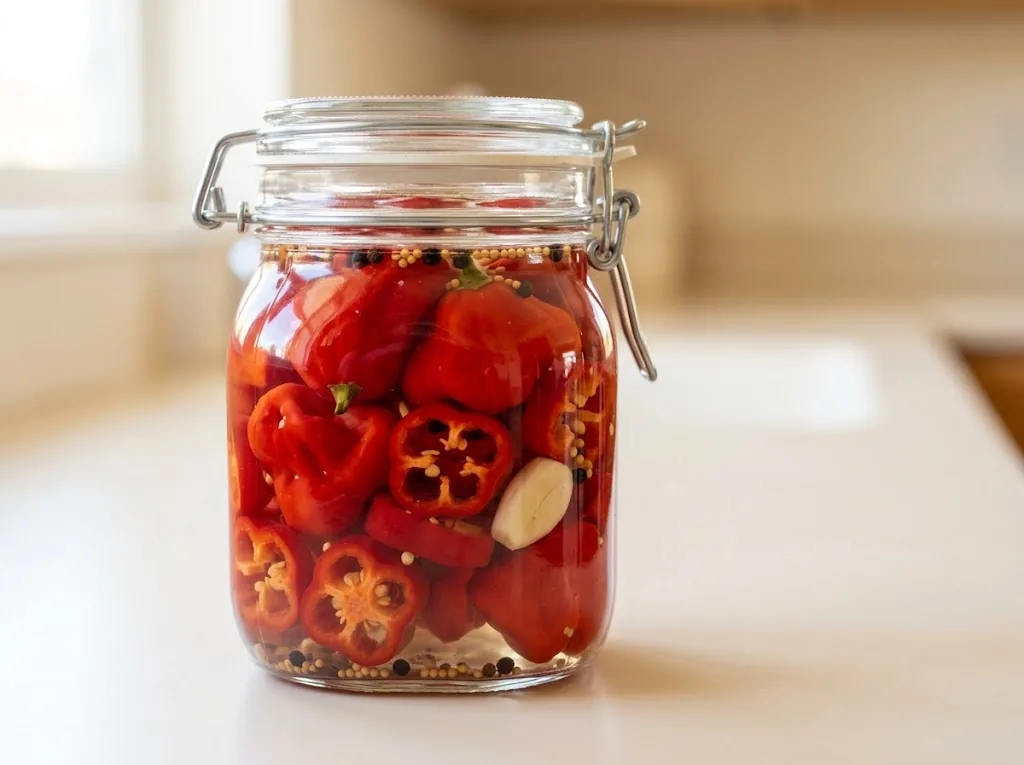
- Pickling: The crisp texture and architectural three-cornered shape make these pods ideal for vinegar brining. Pack whole or sliced pods into clean glass jars and cover them with a hot brine of vinegar, water, and pickling salt. For refrigerator pickles, keep the jars cold and eat them within a few weeks. For shelf-stable jars, follow a tested recipe such as the National Center for Home Food Preservation’s pickled hot peppers, which sets the vinegar ratio and processing time that make canning safe. Pickled pods retain their pleasant bite and add visual flair to sandwiches, antipasto platters, and a crunchy dinner salad.
- Drying and grinding: Because the pod walls are moderately thick, whole pods dry slowly in humid outdoor air. For reliable results, slice the peppers into rings or thin strips and dry them in an electric food dehydrator at 125°F to 135°F (52°C to 57°C) for 8 to 12 hours until brittle. Once dry, grind them into a sweet, aromatic paprika powder that adds subtle warmth, fruity aroma, and deep red color to roasted vegetables and meats. Always discard any blemished or discolored pieces before grinding.
How to Cook With the Pods
Thanks to its unique balance of sweet flesh and controllable core heat, the pod is exceptionally versatile in everyday culinary creations. Its crisp bite and aromatic profile complement both fresh and cooked dishes across a variety of pepper recipes.
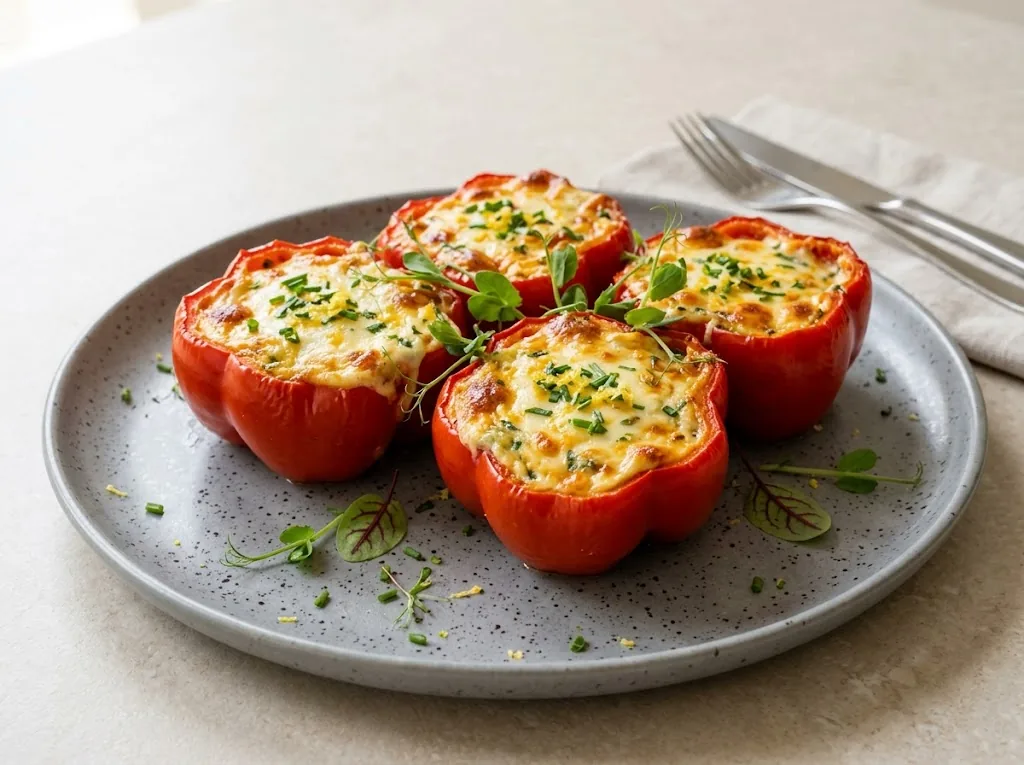
- Stuffed pepper appetizers: The wide, hollow cavity makes this chili ideal for stuffing. Slice off the stem top, scoop out the spicy central core, and fill the hollow interior with cream cheese, goat cheese, minced garlic, fresh herbs, and lemon zest. Bake at 375°F (190°C) for 15 to 18 minutes until tender and bubbling, or serve them chilled for a fresh party bite.
- Fresh salsas and summer salads: Dice the sweet, thick wings into fresh tomato salsa, mango relish, or corn salads. The fruity, apple-like notes cut through rich grilled meats and fish, providing refreshing crunch without overwhelming sensitive palates.
- Stir-fries and sautéed sides: Slice the peppers into thin star-shaped rings and toss them into hot woks with vegetables, garlic, and chicken. The flesh retains its crisp structure under high heat, adding sweet color and gentle spice to stir-fried dishes.
- Sweet and tangy hot sauce: Simmer halved chilis with sweet onions, diced carrots, garlic, apple cider vinegar, and a pinch of sea salt. Blend until smooth for a vibrant, fruity hot sauce with approachable medium heat that pairs effortlessly with eggs, tacos, and grilled meats.
