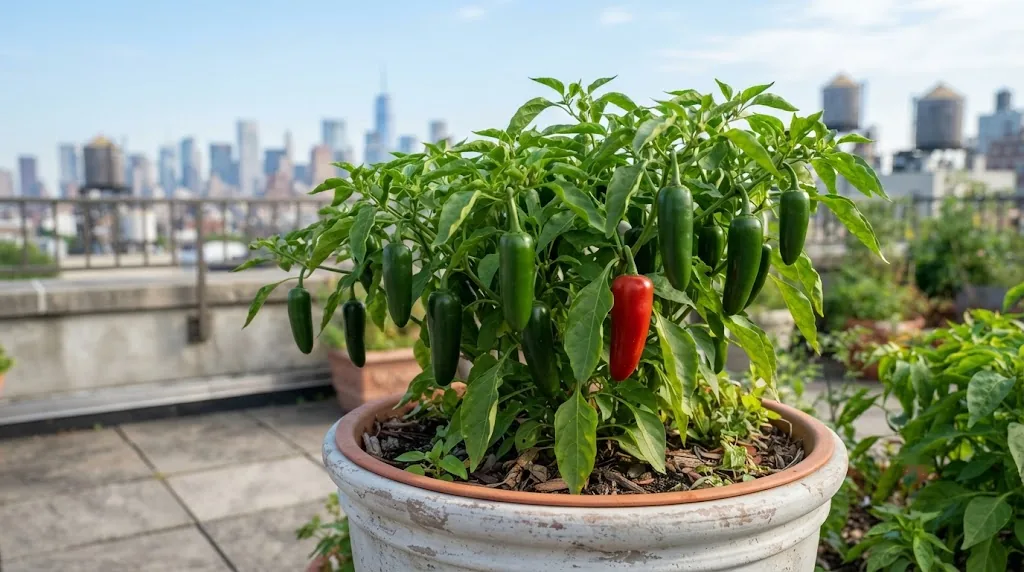
Large jalapeños can be awkward to fill when their walls are thin. This named selection is valued for broad, thick-walled pods that suit stuffing, grilling, and fresh salsa. It ripens from green to red, and its cultivar record gives gardeners a useful set of traits to compare before buying seed.
For a wider comparison of pepper types and their uses, see our guide to chili varieties.
Mucho Nacho jalapeno: what is known about its origin?
A North American cultivar register lists Mucho Nacho as an F1 hybrid sold by Burpee, with a jalapeño type, thick walls, green-to-red color, and a 1999 date. The entry does not name a breeder or describe where the cross was made. One current seed listing gives Mexico as the origin, but that is a seller description, not a documented breeding history for this selection.
The jalapeño crop has Mexican cultural roots, but those roots should not be confused with the origin of a modern named selection. The Universidad Veracruzana discusses criollo jalapeños as part of Veracruz food culture and identifies Mexico as a center of diversity for Capsicum annuum. That helps place the crop in context without claiming this specific selection was bred in Veracruz.
How to recognize the pods
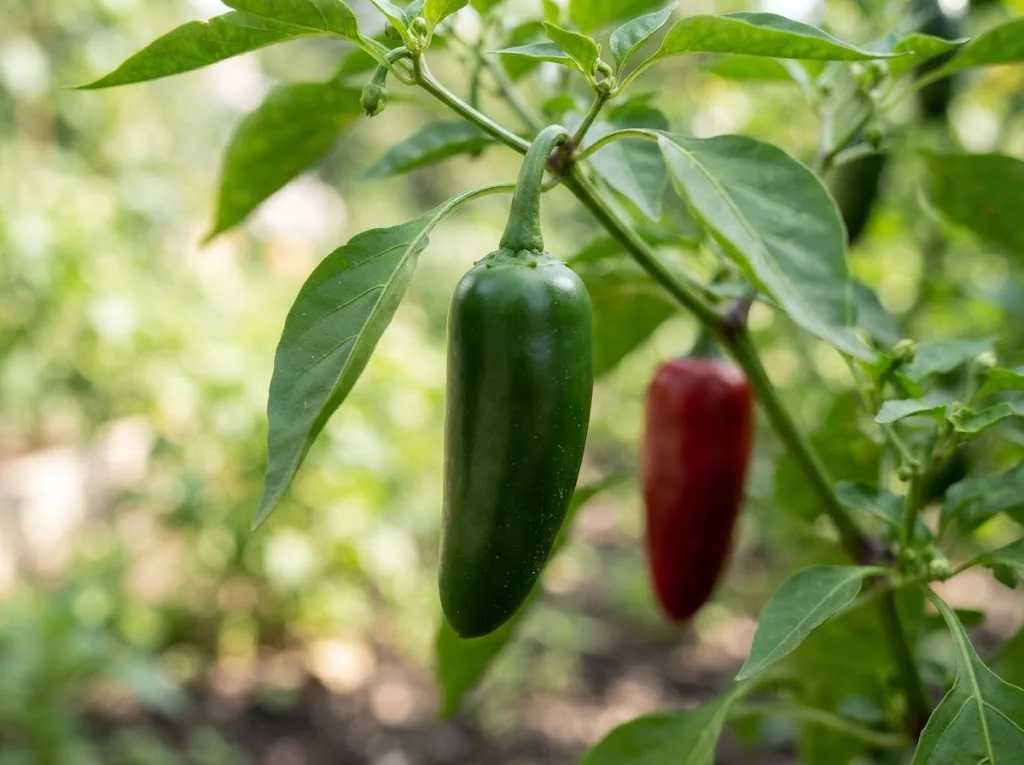
Look for a stout, elongated jalapeño shape, smooth skin, and thick flesh. Catalog descriptions commonly describe 4-inch-long pods that turn from green to red as they ripen on the plant. Cornell’s cultivar entry also reports resistance to potato virus Y and tobacco etch virus; resistance lowers risk but does not make a plant immune. The North American register describes the fruit as 100 by 10 mm, while current sellers often round the length to 4 inches. The width and exact shape can vary between listings and growing conditions.
- Species: Capsicum annuum.
- Type: F1 jalapeño selection.
- Fruit: About 4 inches long in many listings, thick-walled, smooth, and green before ripening red.
- Plant size: Seller listings range from about 18 to 24 inches to 3 feet tall. Give a vigorous plant room and use the dimensions on the seed packet as your planning guide.
- Scoville rating: Published figures range from about 4,500 to 8,000 Scoville heat units (SHU), with some current listings narrower at 4,500 to 6,000.
How hot is it?
The published Scoville range puts this pepper in a moderate jalapeño range, not among the superhots. Sources disagree: Pepper Joe’s lists 4,500 to 6,000 SHU, while the Harris County Master Gardener Association guide lists 4,500 to 8,000. Treat both as reference ranges, not a measurement for every pod. Growing conditions and individual peppers can vary, so taste a small piece before adding more to a dish.
Its flavor is described as crisp and fleshy, with the familiar green taste of a jalapeño. Pick green pods for a sharper, grassy note, or leave them to ripen red for a rounder flavor. The thick flesh gives the pepper a substantial bite without making it a guaranteed high-heat choice.
How to grow it from seed
Start seed indoors about eight weeks before the local planting window. Use a clean, fine-textured starter mix and keep it evenly moist. University of Minnesota Extension recommends warm conditions around 80 to 90°F for pepper emergence, bright overhead light, and gradual acclimation before seedlings go outside. Warm mix and steady moisture matter more than chasing one exact number.

Wait until the last cold nights have passed and the soil has warmed before transplanting. Choose full sun and well-drained soil, or use a container of at least 5 gallons. Set each transplant at its original soil line. A general spacing of about 18 inches is a useful starting point, but follow the seed packet if it gives a different recommendation for that line.
Keep moisture reasonably even around the roots. Let the surface begin to dry, then soak the root zone rather than giving frequent light sprinkles. University of Minnesota Extension recommends consistent soil moisture for healthy peppers. Mulch can slow moisture loss. Under warm days and even watering, it can produce a steady flush, but seller claims about yield are not guarantees. Stake or cage heavy branches if branches lean under pods. If growth is slow, check soil warmth, drainage, and the fertilizer label before adding more nutrients. Avoid high-nitrogen feeding that encourages leafy growth at the expense of flowers.
Sources list maturity anywhere from about 60 to 72 days, and not all say whether the count begins at sowing or transplanting. Cornell’s entry gives 69 to 70 days, while T&T Seeds lists 68. Use these as comparisons, not as a guaranteed harvest date. Weather, transplant size, and whether you want green or fully red pods all affect timing. Our full-season growing guide covers the general steps from seed to harvest.
Will the plant come back each year?
Peppers are tender perennials in mild climates, but frost injures their top growth. The University of Maryland Extension notes that frost can damage peppers. Where winters freeze, home gardeners usually grow peppers as annuals. A container can make it easier to move a plant before cold weather, though overwintering success depends on light, warmth, and plant health. Do not count on it returning after a hard freeze.
When to harvest and how to handle it
Pick pods once they reach full size. Green peppers are ready to eat; leave some on the plant if you want red ones. Clip stems with clean shears instead of pulling and bending branches. Regular picking can encourage continued production while weather stays warm.
Wear gloves when handling hot peppers, especially while cutting several. Wash hands with soap and water before touching your face or eyes, and clean the knife and work surface afterward. Keep a pod whole until cooking if you want to limit contact with its juices.

How to store fresh and cooked peppers
Fresh peppers keep in the refrigerator for a week or more, but prolonged cold storage can pit their skins. For longer keeping, OSU Extension says hot peppers can be frozen without pretreatment; they soften as they thaw. Package them well to limit freezer burn and use them later in cooked dishes.
Ways to use the thick-walled peppers
The broad shape is useful when you want to stuff a pepper with cheese, beans, or another filling. Roast or grill whole pods, chop them into fresh salsa, or slice green rings as a nacho topping. Red pods can go into cooked sauces or the freezer after washing and drying. For shelf storage, follow a tested recipe such as the National Center for Home Food Preservation pickled hot pepper method; refrigerate improvised pickles.

If you want a fuller, rounder pepper for filling, compare it with Cherry Bomb peppers.
Is it the best jalapeño to grow?
“Best” depends on your space and what you cook. Choose this selection if thick walls and large pods suit your plans, and you have a warm, sunny garden or a roomy container. A smaller cultivar may fit a compact patio better, while a milder one may suit a household that prefers less bite. This is not necessarily the hottest jalapeño; its published ratings vary, and individual pods can differ.
For most home cooks, its appeal is straightforward: sizable green pods that can ripen red, with enough flesh for filling, grilling, and salsa. Give the plant warmth, sun, steady moisture, and time, then taste the final picking before deciding how much to use.
