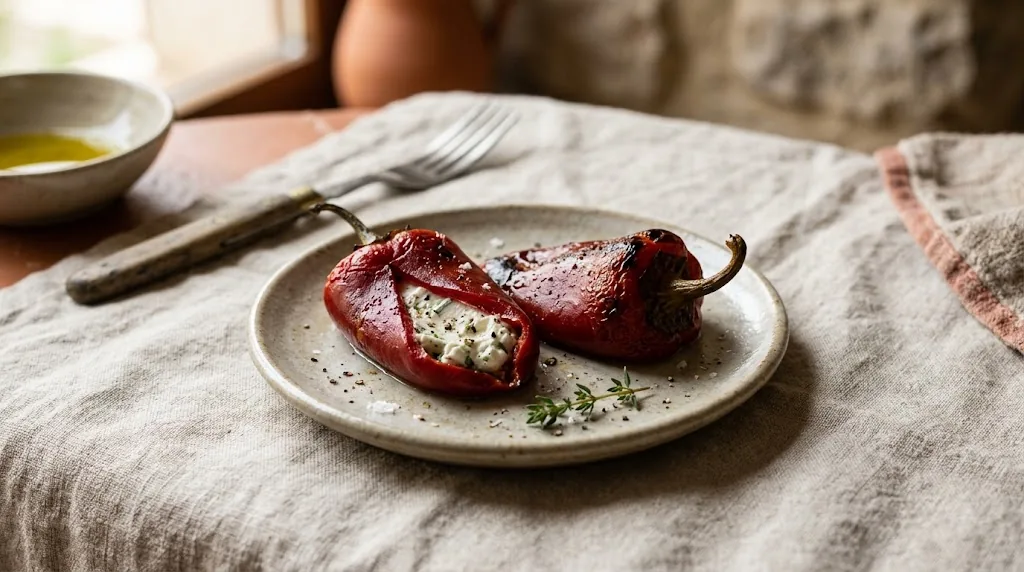
Piquillo peppers are small, sweet red peppers from northern Spain, best known for their pointed, beak-like shape and their use roasted and peeled for tapas. The name covers a pepper variety grown in many places; the protected name Pimiento del Piquillo de Lodosa applies to a more specific product from Navarre. In a home garden, treat piquillos much like other sweet peppers: start seeds warm, transplant after frost into a sunny spot, and allow a long, warm season for the fruit to turn red.
Origin and history of piquillo peppers
Piquillo means “little beak” in Spanish, a reference to the pepper’s narrow, slightly curved tip. The variety is associated with Navarre, especially Lodosa and neighboring towns. Pimiento del Piquillo de Lodosa is a protected Denomination of Origin. Under that designation, covered whole preserved peppers must come from the named variety and be grown and processed within the designated municipalities. A generic jar labeled “piquillo” does not by itself guarantee the protected origin. The Lodosa designation council describes the covered area and product rules.
A research study identifies Piquillo as a Capsicum annuum variety and found far less capsaicin in it than in two other regional peppers. That supports its mild reputation, but the study does not assign one Scoville reading to every seed line. See the study abstract and results.
Botany and appearance
The Piquillo pepper belongs to Capsicum annuum, the same species that includes bell peppers, jalapeños, and many other garden peppers. Plants are warm-season perennials grown as annuals in places with frost. They have branching green stems, simple leaves, and small pale flowers that develop into hollow fruit.
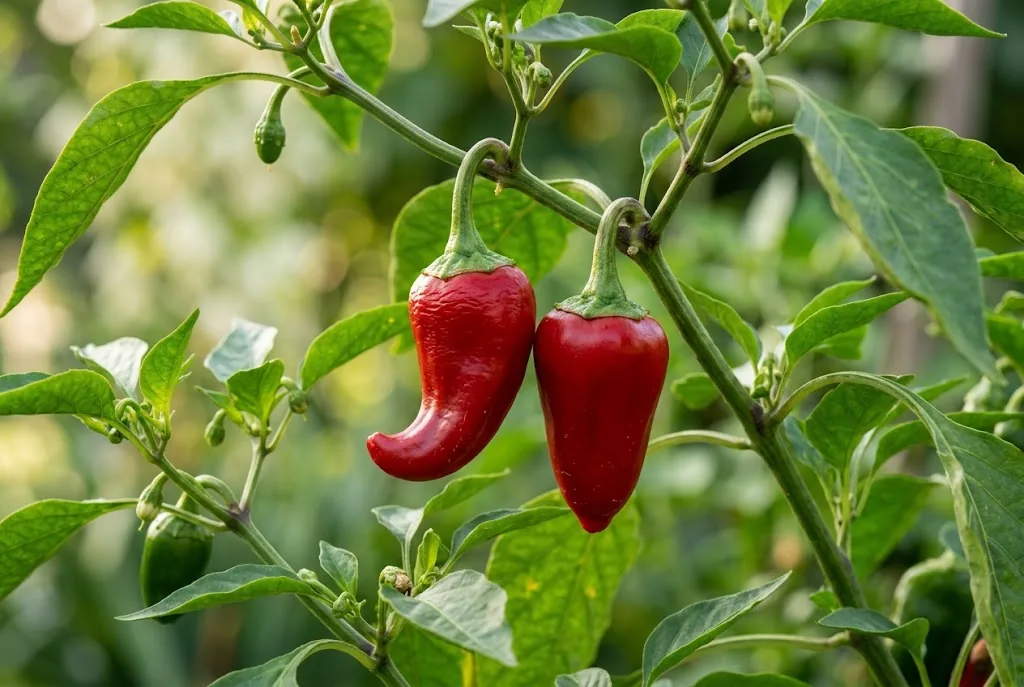
The fruit is commonly described as a flattened triangle or small cone, often ending in a curved point. For another Capsicum annuum profile with a distinct fruit shape, compare it with Bulgarian Carrot peppers. Lodosa’s designation council describes its protected fruit as bright red, about 8 to 10 centimeters long, and roughly 35 to 50 grams, with fine, compact flesh. Those measurements describe the protected Lodosa product; seed lines grown elsewhere can differ. Green fruit ripens through orange tones to red. Pick it red for the mature, sweet flavor associated with the variety.
Heat and taste
Piquillos are generally mild, with a published estimate of about 500 to 1,000 Scoville heat units (SHU). The Chilli Index lists 1,000 SHU and cites an underlying 500-to-1,000 estimate. Cornell gardeners describe Piquillo fruit as practically heatless, though sometimes with some heat, so use the figures as a rough guide rather than a guarantee for every pod or seed line. The Chilli Index summarizes its heat reference and variety notes.
For a wider comparison of varieties by heat, shape, and taste, see our guide to types of chili peppers.
Compared with a bell pepper, a piquillo is smaller and more tapered, and its flesh is often used whole for stuffing. Compared with a jalapeño, it is dramatically milder. If you want a substitute, roasted red bell pepper is the easiest widely available option; it is larger and less pointed, so it will not hold a small filling in quite the same way.
Growing piquillo peppers
Start seeds and raise seedlings
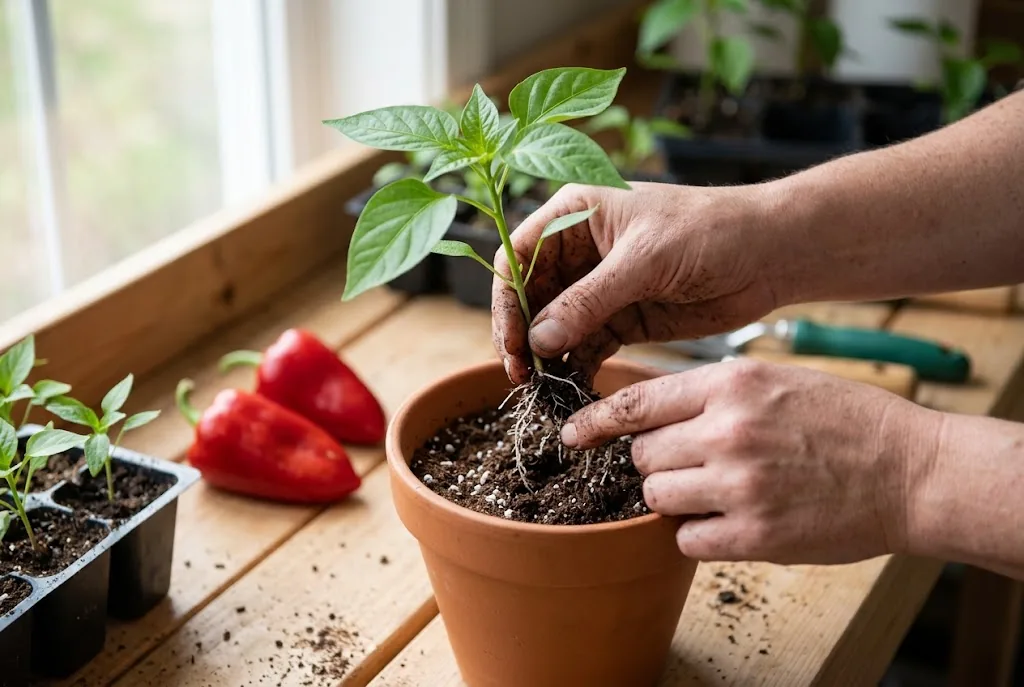
Start piquillo seeds indoors in a sterile, soilless seed-starting mix, about one-quarter inch deep. Keep the mix evenly moist and warm. University of Minnesota Extension identifies about 70°F soil as ideal for pepper seed starting; a heat mat can help keep temperatures steady. Germination varies with seed age and conditions, so allow more than a week and avoid letting the mix dry out or remain waterlogged. Give seedlings strong light once they emerge.
Pot seedlings up if they outgrow their starting cells. Harden them off gradually by exposing them to outdoor conditions over several days. Transplant only after frost danger has passed and nights are reliably mild. Set each plant at the same soil depth it had in its pot. University of Minnesota Extension covers warm soil, seed starting, hardening off, and transplant care for peppers.
Choose a warm, sunny site
Give plants full sun and fertile, well-drained soil. Space them according to the seed seller’s directions, since plant size can vary among seed lines. A container works if it has drainage holes and enough soil volume to keep moisture reasonably steady; use a potting mix made for containers rather than garden soil. Stake a heavily loaded plant if stems lean under fruit.
Water when the top of the soil begins to dry, aiming for steady moisture rather than a fixed calendar schedule. Mulch can reduce rapid swings in soil moisture. Avoid excessive nitrogen, which can encourage leafy growth at the expense of flowers and fruit. Peppers set fruit best in warm weather; cold nights, very hot spells, or irregular watering may slow flowering or cause blossoms to drop.
Flowering, fruit, and harvest timing
Days to maturity depend on the seed line and how the supplier counts them. Cornell’s Vegetable Varieties for Gardeners entry lists 75 to 90 days for its Piquillo listing and notes that its fruit is best when fully mature and roasted. In the Lodosa production area, the designation council reports planting in late May and hand harvest from September through November; a home garden calendar depends on local weather and growing conditions. Use the seed packet’s figure as a planning estimate, not a promise for every climate. Harvest green peppers if you want them earlier, or leave fruit on the plant until it is fully red and the taste has developed. Use clean pruners to cut the stem rather than pulling and risking a broken branch.
Common problems include slow growth in cool weather, blossom drop during temperature extremes, and fruit damage from inconsistent moisture. Check plants regularly for aphids, mites, and chewing pests. Identify the pest before choosing a control, and follow the product label if you use one. Cornell’s Piquillo variety record lists its maturity estimate and gardener observations.
Harvesting and handling
Pick fruit with scissors or pruners, leaving a short piece of stem attached. Although piquillos are mild, pepper sap and seeds can irritate sensitive skin or eyes. Wash your hands after handling them, and wear gloves if you are processing a large batch or know peppers irritate your skin. Avoid touching your eyes while cutting peppers.
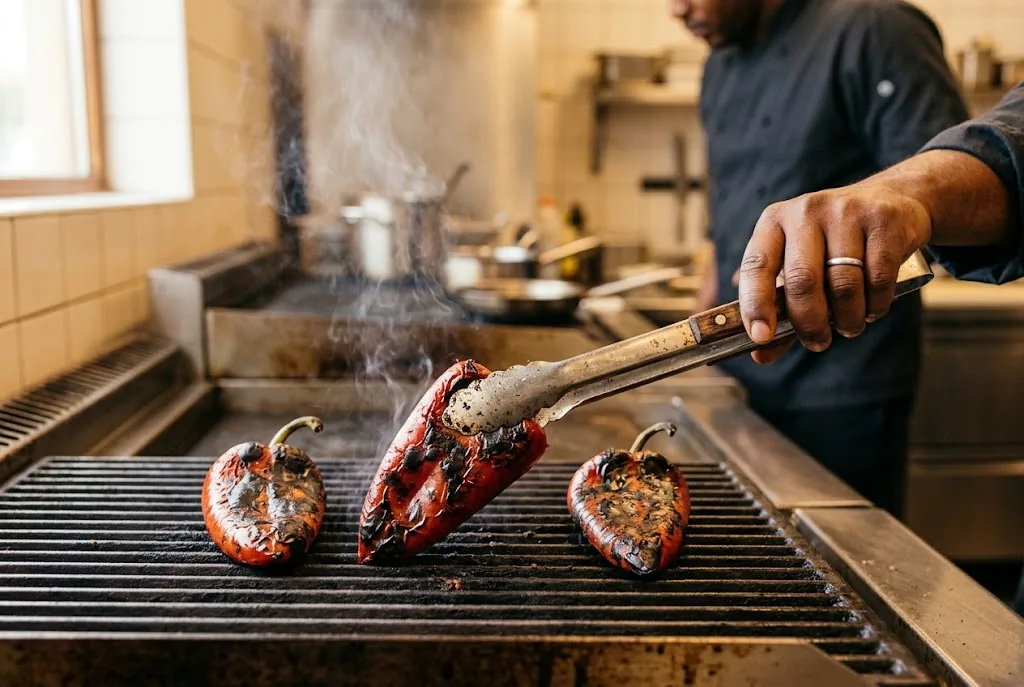
For the classic preparation, whole ripe peppers are roasted over direct flame until the skin blisters, then peeled and seeded. The Lodosa council describes removing the skin by hand without soaking the peppers or using chemical solutions. At home, work over a grill or under a broiler, turn the peppers as the skin chars, then cover them briefly so the skin loosens. Peel and seed once cool enough to handle.
Choosing and storing piquillo peppers
Fresh piquillos are seasonal and may be harder to find outside the harvest period. Most shoppers encounter them already roasted, peeled, and packed in jars or tins. For the protected Lodosa origin, look for the full Pimiento del Piquillo de Lodosa designation; a generic piquillo label does not establish where the peppers were grown.
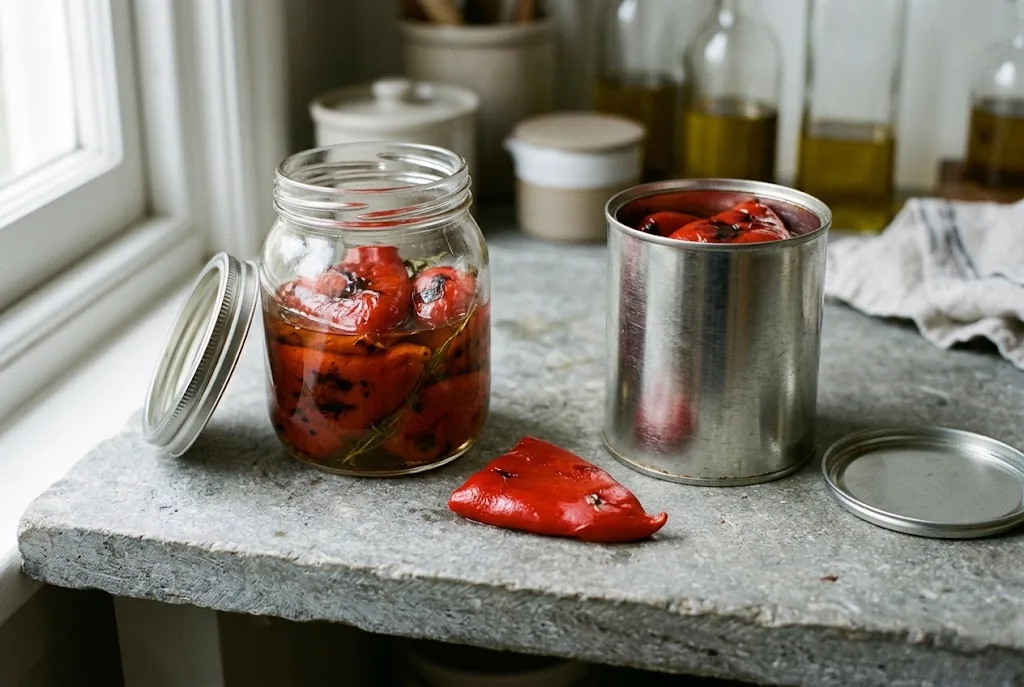
Keep unwashed fresh peppers in the refrigerator and use them while firm, before wrinkles or soft spots develop. Roasted peppers can be refrigerated in a clean, covered container and used promptly. Follow the package directions for opened commercial jars, including refrigeration instructions and the stated use period.
Freezing roasted peppers is a practical home option: cool them, pack in freezer-safe portions, label, and freeze. Their texture will soften after thawing, making them better for sauces, soups, and fillings than crisp salads. Drying is possible, though piquillos are valued more often for their fleshy, roasted form; thin slices dry more evenly than whole peppers. Their compact size and flexible flesh are especially useful when serving whole piquillo peppers stuffed with a savory filling. For shelf-stable canning, use a tested recipe from a food-preservation authority and follow it exactly; the National Center for Home Food Preservation provides a tested pressure-canning method for peppers.
Culinary uses: roast, stuff, and serve
If you want to compare Piquillo with another named pepper variety, continue to our profile of Aji Panca peppers.
Roasted piquillos are ready to serve in tapas, salads, sandwiches, sauces, and warm grain or bean dishes. Their flexible flesh makes them easy to fill with tuna, salt cod, soft cheese, or a cooked vegetable mixture. Drain jarred peppers well, pat them dry, and warm them gently so they hold their shape.
For a simple tapa, fill whole roasted peppers with goat cheese, chopped herbs, and a little lemon zest, then serve at room temperature. The cheese and herbs make a savory ingredient pairing that suits the pepper’s sweetness. A tuna filling with parsley and olive oil is another familiar option. Add chopped piquillos to an omelet, a green salad, or a tomato sauce near the end of cooking. Their mild sweetness pairs well with garlic, olive oil, parsley, smoked paprika, and briny ingredients such as olives or anchovies. They also work in pasta, where a few sliced peppers bring sweetness and a little smoky taste without making the dish hot. Blended with olive oil, roasted piquillos make a smooth sauce; cut into strips or a thin slice, they add a tender bite to a salad or sandwich.
If you cannot find them, roasted red bell peppers can stand in for sliced or chopped uses; for a stuffed presentation, choose smaller peppers or cut the bell pepper into broad strips. Peppadew peppers are another possible substitute when a sweet, tangy taste suits the recipe, though they are rounder and often pickled, so the taste and texture will differ.
Frequently asked questions
Are piquillo peppers spicy?
They are usually very mild. A commonly cited estimate is 500 to 1,000 SHU, though individual peppers and sources vary.
What does “piquillo” mean?
It means “little beak” in Spanish and refers to the fruit’s pointed tip.
What can I use instead of piquillo peppers?
Roasted red bell peppers work well in sliced or chopped dishes. They are larger and broader, so they are less convenient when a recipe calls for a small whole pepper to stuff.
Are all piquillo peppers from Lodosa?
No. Piquillo is the variety name used for peppers grown elsewhere too. The protected Pimiento del Piquillo de Lodosa designation is limited to fruit grown and processed in its defined area under its rules.
How long does it take to grow piquillo peppers?
Timing depends on climate, seed line, and whether the packet counts from transplanting. One Cornell listing gives 75 to 90 days. Start early enough for a warm growing season and use your supplier’s figure as a local planning guide.
Nerdy stuff
The variety name and the protected place name describe different things. Piquillo points to the pepper’s shape; Lodosa names the Navarre area whose growers and processors can use the protected designation. The council describes the protected peppers as a local ecotype of the Piquillo variety, with a defined harvest and roasting tradition.
