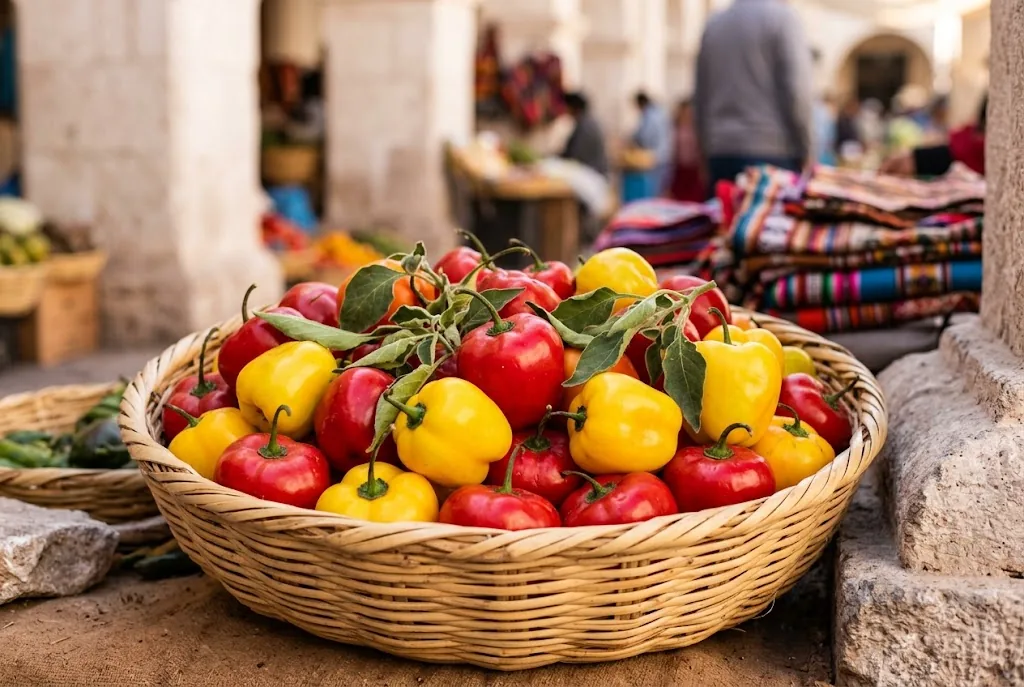
Rocoto peppers belong to Capsicum pubescens, a distinctive species native to South America that developed on the rugged slopes of the Andes mountains. Unlike common garden varieties that trace back to lowland Mexico or Central America, this plant evolved in high-altitude valleys where cool nights and misty cloud-forest breezes shape vegetative growth. Gardeners encountering the plant for the first time often notice its striking physical features: velvety hairy leaves, deep purple star-shaped blossoms, and unusual dark black seeds nested inside thick flesh. Across global spice markets, it is occasionally cataloged as an Andean chilli, while in Mexico it is known as chile manzano due to its rounded apple-like shape, and in Bolivian markets as locoto.
For home growers, the rocoto pepper offers an exciting departure from standard garden crops. While heat-loving species demand intense summer warmth to produce well, this mountain variety thrives in cooler climates that leave other cultivars struggling. The fruit delivers an intense punch of heat paired with a refreshing, juicy crunch that behaves more like a spicy bell pepper than a standard pungent spice. Understanding how this ancient cultivar grows, how to tame its fire in the kitchen, and how it fits into the wider family of types of chili peppers will help you raise and enjoy a bumper harvest.

Origin and Highland History in the Andes
Archaeological records indicate that Capsicum pubescens is one of the oldest domesticated crops in the Americas. Excavations in the Guitarrero Cave and coastal settlements suggest that Andean communities cultivated ancestral forms more than five thousand years ago across highland valleys in Peru, Bolivia, and Ecuador. Ancient Nazca and Paracas textiles and ceramics frequently depict stylized fruits, illustrating the cultural reverence early farmers held for this fiery staple. For a wider look at the domesticated species of the genus, see the overview from the Purdue University Center for New Crops & Plant Products.
The name rocoto comes from the Quechua word rukutu, while Bolivian communities speaking Aymara refer to it as luqutu. Because the plant developed in cloud-forest habitats between 5,000 and 10,000 feet above sea level, it adapted to temperate conditions with narrow temperature swings. Following European contact, traders transported seeds northward through Central America into Mexico, where growers embraced the thick-walled fruit in highland areas like Oaxaca and Michoacan under names like perón, manzana, and caballo. Despite centuries of international trade, commercial production remains centered in South America, making homegrown harvests a prized achievement for pepper enthusiasts.

Botanical Profile and Unique Features of the Species
The botanical classification of the plant highlights its downy layer of fine hairs covering stems and foliage. These hairs serve an ecological purpose, trapping an insulating boundary layer of air against cold mountain winds while reducing moisture loss under intense highland sunlight. The plant displays a sprawling, bushy habit. Size varies widely, from about two feet in cooler gardens to a tall shrub of well over ten feet in its homeland, where it can live for years in frost-free conditions.
The floral biology of the rocoto is equally distinctive. While most garden nightshades produce plain white or greenish blossoms, each rocoto flower opens with showy, violet-to-purple petals featuring striking white throats and bright purple anthers. Once pollinated, these blooms develop into rounded, slightly flattened fruits that measure two to three inches across, resembling a small bell pepper or apple. The size and shape of the fruit vary slightly among local strains, but inside the pod lies its most famous botanical marker: wrinkled, pitch-black seeds. Unlike the pale tan seeds of standard peppers, these dark seeds provide an unmistakable diagnostic trait. Because it is reproductively isolated from other Capsicum species and forms a distinct genetic lineage, it rarely crosses with common garden peppers, preserving its pure heritage among rare chili peppers worth growing.
Scoville Heat Units and Flavor Profile
On the Scoville scale, the rocoto pepper rates between 30,000 and 100,000 Scoville Heat Units (SHU). This places it firmly above a standard jalapeno or serrano and roughly on par with cayenne, while the top of the range overlaps low-end habanero heat. Published figures vary widely between sources, so treat any single number as a rough guide. Many eaters report that the heat feels surprisingly fierce on the tongue, arriving as an immediate sting at the back of the throat and palate rather than a slow, creeping buildup.
Behind the sharp warmth lies a unique flavor that distinguishes it from common pungent spices. The thick walls are crisp, succulent, and packed with clear juice, offering the refreshing snap of a firm salad pepper. When ripe, the fruit turns vibrant red, canary yellow, or warm orange, developing a bright, sweet flavor with fruity undertones balanced by a mild botanical acidity. This crisp, juicy texture makes the fruit exceptional for fresh applications where thin-walled, dry peppers fall short.

How to Grow Rocoto Peppers in Cooler Climates
Hailing from mountainous regions, growing these Andean plants requires a slightly different calendar than standard garden crops. Germination is slow and often takes two to three weeks, sometimes longer, at soil temperatures around 75°F to 80°F. Start seeds indoors early, about 10 to 12 weeks before your last spring frost. Once seedlings develop four to six true leaves, pot them on into larger containers with well-aerated potting soil rich in organic matter.
Outdoor planting conditions should reflect their mountain heritage:
- Temperature: Plants thrive best with daytime temperatures between 65°F and 75°F and night temperatures dropping to 50°F to 60°F. If daytime summer heat exceeds 85°F to 90°F, blossom drop will occur until cooler weather returns in late summer.
- Sunlight: In coastal or northern gardens, provide full sun. In hot inland regions, site plants where they receive gentle morning sun and light afternoon shade.
- Containers and Soil: A large container holding 10 to 15 gallons offers ideal root room and drainage. Keep the soil evenly moist, as drying out stresses the large leaves and halts fruit development.
- Support: The sprawling branches grow heavy as the fruit sets. Install a sturdy tomato cage or trellis early in the season to prevent branches from bending to the ground.
Rocotos are slow. Expect roughly five to seven months from seed to fully colored fruit, with flowering followed by another two to three months of ripening, so harvests often arrive late into autumn. While sensitive to severe freezing, the plant displays greater cold hardiness than common garden nightshades and tolerates light autumn chills without dropping foliage. In winter regions, gardeners enjoy great success by bringing containers indoors to overwinter, a strategy detailed in our practical guide on overwintering garden pepper plants.

Harvesting and Safe Handling Practices
Harvest rocoto peppers once they reach their mature color, whether solid crimson, yellow, or deep orange. Green fruit carries heat but lacks the full, rounded sweetness and juice of fully ripened specimens. Use sharp pruners to cut the stem cleanly from the branch, leaving a short stub attached to the fruit to help seal in moisture and prevent premature decay.
Because the walls are thick and saturated with capsaicin-laced juice, handling requires strict safety measures:
- Always wear disposable nitrile gloves when cutting, seeding, or chopping the fruit.
- Slice carefully on a steady cutting board, as pressing down firmly can spray pungent droplets toward your face.
- Never touch your eyes, nose, or face while working with fresh peppers.
- Wash all knives, cutting boards, and prep surfaces promptly with warm water and dish soap to dissolve capsaicin oils.
- If skin irritation occurs, rinse the affected area with milk or rub with vegetable oil before washing with soap, as capsaicin dissolves in fats rather than plain water.

How to Store, Freeze and Preserve Rocotos
Preserving rocoto peppers presents a unique challenge for home kitchens. Because the fruit walls are dense and succulent, traditional air-drying techniques fail. Whole fruits hung on strings or laid on drying screens almost always mold from the inside before the moisture can evaporate. To preserve your harvest successfully, use methods tailored to high-moisture varieties.
Freezing is the simplest and most effective storage method. Wash the fruit, slice each in half, scrape out the seeds, and arrange the halves cut-side down on a parchment-lined baking sheet. Freeze until solid, then transfer the frozen halves into heavy-duty freezer bags. They will retain their vibrant color and sharp pungency for up to twelve months, ready to dice into stews or sauces.
For long-term shelf storage, slice seeded pieces into quarter-inch strips and dry them in an electric food dehydrator set at 130°F for 10 to 14 hours until crisp and brittle. Dehydrated pieces can be pulsed in a spice grinder to create a unique, coarse pepper flake. Home preservers can also pickle thinly sliced rings submerged in a seasoned vinegar brine with garlic, carrots, and onions, creating a traditional escabeche relish that brightens sandwiches and roasted meats for months.

Culinary Uses in Andean Kitchens
In South American cooking, the rocoto pepper is not merely an accent spice but a cherished culinary staple. Its thick walls and juicy flesh allow cooks to prepare dishes impossible with standard thin-walled peppers. Whether consumed fresh or cooked, it brings clean heat and texture to regional recipes. The most famous example is rocoto relleno, the signature dish of Arequipa, Peru. Traditional Peruvian rellenos feature whole red fruits hollowed out, parboiled in water with vinegar and sugar to soften their heat, and stuffed with seasoned minced beef, onions, raisins, olives, and chopped hard-boiled eggs, topped with melted queso fresco and baked alongside scalloped potatoes.
In Bolivia, the pepper stars in llajwa, the national table condiment served alongside nearly every midday meal. Made by crushing fresh pods together with peeled tomatoes and regional herbs such as quillquiña or wakataya on a traditional stone grinding slab called a batán, llajwa provides a bright, clean heat that cuts through rich roasted meats and potato dishes. Home cooks also blend the fruit into fiery hot sauces, dice it into spicy table salsas, or stir it into citrusy seafood ceviche and quick stir-fries where its crisp snap and fruit-forward heat shine.
