Cool, sweet, and unmistakable, mint shows up next to grilled lamb, floats in a glass of iced tea, and brightens everything from fruit salads to chocolate cookies. If a recipe collection is what you came for, this is the right page. Below are drinks, salads, mains, sides, and sweets built around a generous handful of fresh leaves, plus a few rules of thumb that keep the flavor bright instead of bitter.
Most of these recipes come together in twenty minutes or less. For the broader picture on how to bring this herb into a kitchen, see our ways to cook with this herb guide.
Most cooks buy more leaves than a single recipe uses, and the extras tend to pile up in the crisper drawer. If you have more than you can use right away, keep reading to the end for storage notes and links. These are everyday ways to use fresh mint in a working kitchen, not a chef’s master list.
A few of these recipes will become weekly staples. A few you will try once and then forget, which is exactly the point of a recipe collection.
What spearmint is and how it differs from peppermint
Mentha spicata is a hardy perennial in the mint family that grows in most temperate climates. The flavor is cool, gently sweet, and noticeably less sharp than peppermint (Mentha x piperita), which is the mint most people reach for in toothpaste and candy canes. Fresh mint is the default in Mediterranean cooking, Middle Eastern yogurt sauces, British and American sweet dishes, and a long list of cocktails.
Use the leaves fresh when you can, torn or roughly chopped just before serving. Heat damages the delicate oils, so add it near the end of cooking. A dried leaf works for tea and long-simmered broths, but it will never have the bright, almost minty snap of a fresh one. Spearmint leaves are an easy find in most grocery stores year round, and a pot of this herb on a windowsill is one of the easiest kitchen herbs to grow.
Sweet mint recipes
Sweet recipes are where most people first meet mint. It pairs naturally with sugar, fruit, and chocolate, and a few leaves are usually enough to lift an entire dessert.
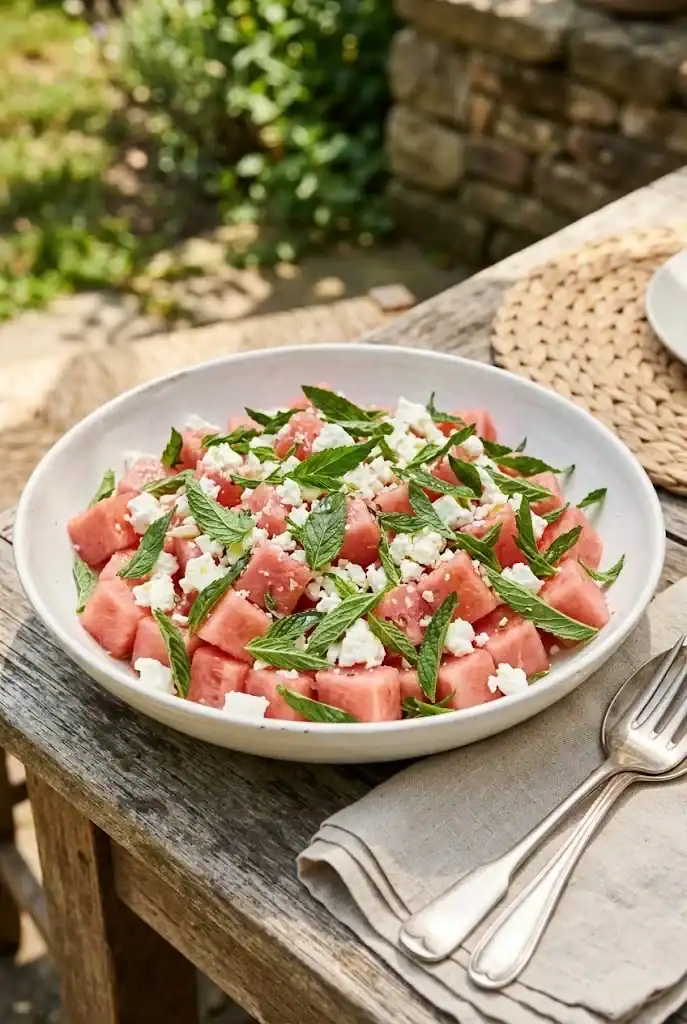
Minted watermelon salad
Cube four cups of seedless watermelon and toss with the juice of one lime, a tablespoon of honey, and a generous handful of torn mint. Crumble a quarter cup of feta on top, finish with flaky salt and black pepper, and serve within ten minutes. The combination of cool melon, salty feta, and cool leaves is a summer staple for good reason.
Mint simple syrup
Combine one cup of sugar, one cup of water, and a packed half cup of mint leaves in a small saucepan. Bring to a simmer, stir until the sugar dissolves, then take it off the heat and let it steep for twenty minutes. Strain into a jar and refrigerate for up to two weeks. Stir it into lemonade, drizzle it over fresh fruit, or use it to sweeten iced tea. A teaspoon or two is plenty in a tall glass of cold water for a refreshing drink on a hot day.
Chocolate mint cookies
Stir two tablespoons of finely chopped mint into a basic chocolate cookie dough along with the vanilla. The mint is subtle, more of a brightening note than a candy-style hit, and it plays well with dark chocolate. Bake as usual and cool on the tray for ten minutes so the centers set.
Fresh mint tea
Pack a quarter cup of mint leaves into a teapot, add two cups of just-boiled water, and steep for five to seven minutes. Strain into mugs and sweeten with honey or the simple syrup above. A squeeze of lemon cuts the grassy edge and brightens the cup. For a colder version, pour the strained tea over ice and finish with a fresh sprig. The same method, poured strong and chilled, becomes a refreshing drink on a hot summer day.

Savory mint recipes
Savory uses are where mint starts to pull its weight. A small handful of fresh leaves, stirred in at the end, turns a plain grain bowl, a tray of roasted fresh veggies, or a bowl of soup into something that tastes deliberate. These recipes lean on fresh mint as a finishing herb rather than a cooked one, which is where the flavor shines brightest.
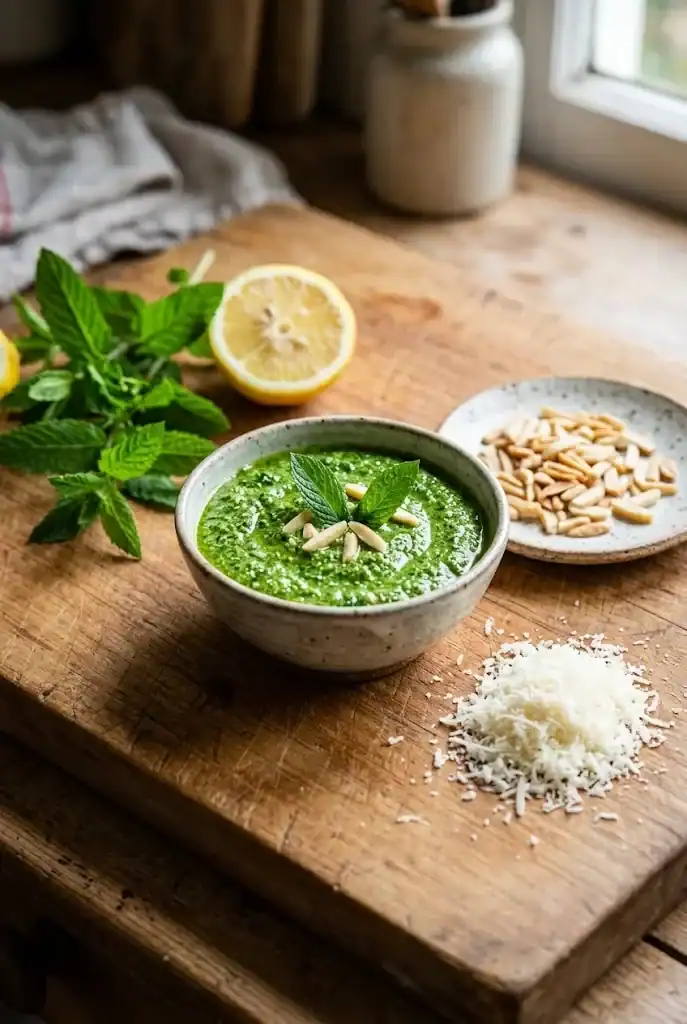
Mint pesto with almonds
Replace the basil in a standard pesto with a fifty-fifty mix of this herb and flat-leaf parsley. Use toasted slivered almonds instead of pine nuts, then blend with garlic, lemon juice, olive oil, parmesan, and salt. Toss with hot pasta, spread on toast, or spoon over grilled chicken. The mint gives the pesto a clean, almost peppery finish that basil alone does not have.
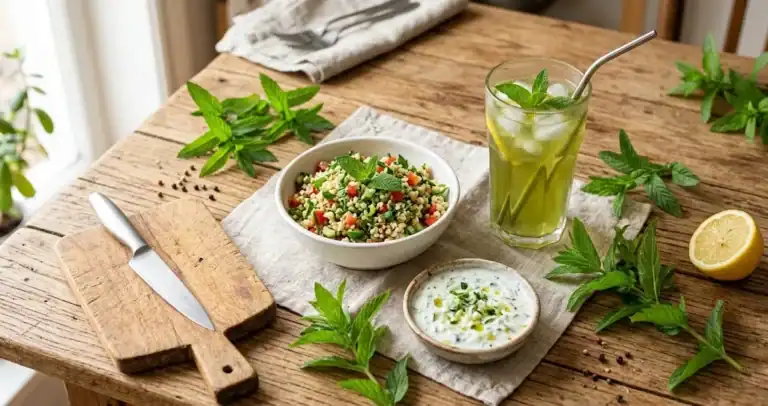
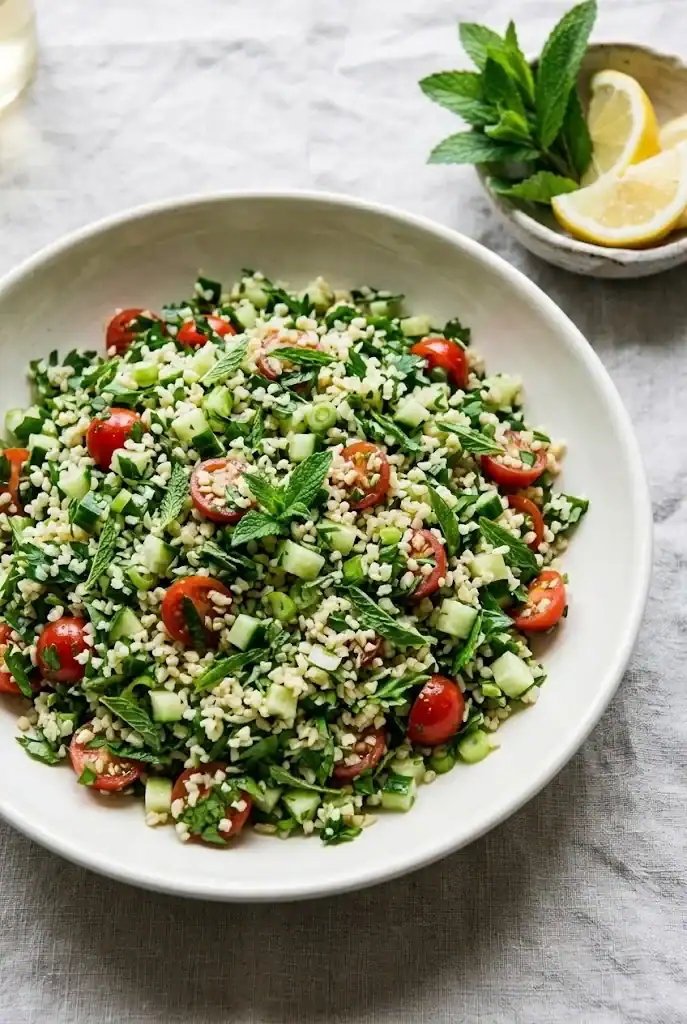
Spring tabbouleh
Soak a cup of fine bulgur in warm water for twenty minutes, then drain and squeeze dry. Combine with a cup of chopped parsley, a half cup of chopped mint, finely diced cucumber, halved cherry tomatoes, sliced green onions, lemon juice, olive oil, salt, and pepper. Tabbouleh is better after an hour in the fridge, when the bulgur has soaked up the dressing. Serve cold or at room temperature.
Yogurt and mint sauce for lamb or chicken
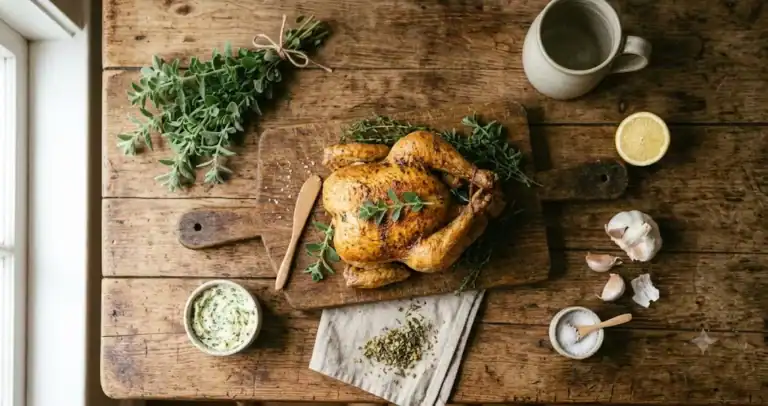
Stir a half cup of plain whole-milk yogurt with a third cup of finely chopped mint, a grated garlic clove, the juice of half a lemon, a tablespoon of olive oil, and salt to taste. This yogurt sauce keeps in the fridge for two days and the flavor actually improves overnight. Spoon it over grilled lamb chops, roasted chicken, or roasted fresh veggies.
Minted pea and feta salad
Blanch two cups of fresh or frozen peas for one minute, drain, and rinse under cold water. Toss with a third cup of crumbled feta, a quarter cup of torn mint leaves, sliced green onions, lemon juice, olive oil, salt, and pepper. Serve as a side with grilled fish, on toast, or alongside a cold rice or grain bowl.
Drinks worth pouring
Few herbs belong in the drinks fridge as naturally as mint. A few leaves can turn a glass of water, lemonade, or simple syrup into a cool and refreshing treat that feels designed rather than assembled.
Classic mojito recipe
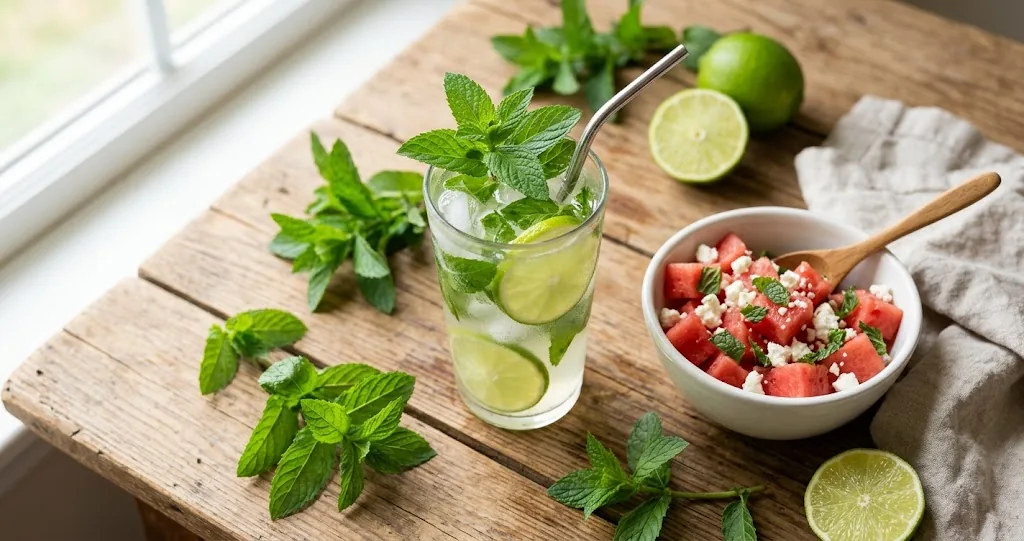
Muddle ten mint leaves with a tablespoon of sugar and a tablespoon of lime juice in a tall glass. Add one and a half ounces of white rum, fill with crushed ice, and top with soda water. Stir once, garnish with a whole sprig of mint, and serve immediately. The leaf bruise is what releases the oils, so press rather than tear. This is the right drink for a hot summer afternoon when the garden is producing more mint than a single cook can use.

Kentucky mint juleps
Gently muddle eight mint leaves with a teaspoon of simple syrup in a julep cup or rocks glass. Add two ounces of bourbon, pack with crushed ice, and stir until the outside of the cup frosts. Top with another sprig and serve. A mint julep is softer and a little grassier than a peppermint version, which suits bourbon better than many people expect.
Cucumber and mint cooler
Blend a peeled and seeded cucumber with the juice of two limes, a tablespoon of honey, a half cup of cold water, and a packed quarter cup of mint. Strain into a pitcher and pour over ice. This cooler is forgiving, so adjust the honey up or down depending on the season.
Mint lemonade
Stir a half cup of mint simple syrup into a pitcher of fresh lemonade and serve over ice. Top each glass with a lemon wheel and a small sprig of mint. The syrup does most of the work, so a strong lemonade base keeps the drink from tasting like flavored water.
Quick ways to use a handful of mint
Sometimes a recipe is just a finishing idea. If you have a few sprigs and twenty minutes, here are a few low-effort moves that work with whatever else is in the kitchen.
- Stir torn leaves into cooked rice, farro, or couscous just before serving.
- Drop a few leaves into chicken or vegetable broth during the last five minutes of cooking.
- Mix chopped mint into softened butter and use it on bread, grilled fish, or steaks.
- Add a small handful to a marinade for lamb, chicken, or shrimp.
- Layer into a simple green salad with sliced red onion and a lemon vinaigrette.
- Toss with sliced strawberries and a teaspoon of sugar for a five-minute dessert.
A few rules of thumb
Mint is one of the most forgiving herbs in the kitchen, but a few habits keep the flavor clean rather than muddy.
- Add mint near the end of cooking. Heat for more than a few minutes dulls the aroma.
- Tear or chop leaves just before using. Cutting ahead and sitting in a bowl costs you a lot of the volatile oils.
- Pair this herb with peas, lamb, chicken, feta, yogurt, lemon, lime, and chocolate. Those are the combinations that show up in tested recipes for a reason.
- Use dried mint for herbal teas, broth, and long simmers. Use fresh for everything else.
Storing and growing notes
Cut sprigs keep in the fridge for about a week when the stems stand in a small glass of water and the leaves are loosely covered with a plastic bag. Change the water every other day. For longer storage, chop the leaves, pack them into ice cube trays with a little water or olive oil, and freeze. The ice cubes drop straight into drinks, soups, and pasta water. A bunch of fresh mint from the market will keep in this way for a week, while frozen cubes will keep their flavor for three to four months.
If you want a deeper walk through storage methods, including drying and infused oil, the dedicated page is storing fresh mint.
This plant is easy to grow in a container or a corner of a bed, and one plant usually produces more leaves than a household can use. The plants spread by runners, so most gardeners keep mint in a pot to keep it where it was planted. Cut plants back hard every few weeks during the growing season, and the new growth will be noticeably more fragrant than the old. A single mint plant by the back door gives the cook in the house a steady supply of fresh leaves from late spring through the first frost, with aromatic sprigs ready for any recipe below.
For the broader context on the culinary herbs and how fresh mint fits alongside basil, dill, and the rest, the cluster hub is a useful starting point: facts about culinary herbs.