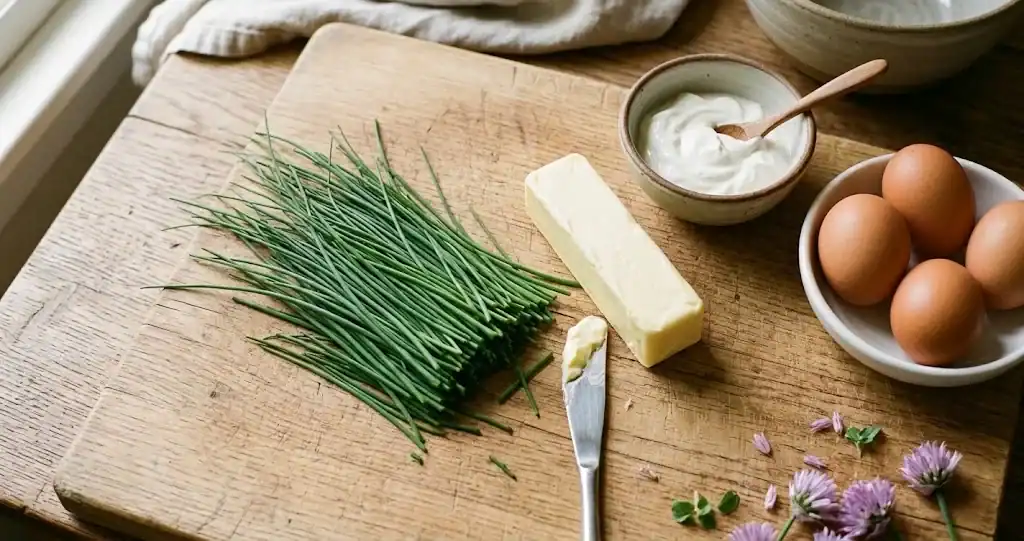
A small bunch of just-snipped chives can lift almost anything you make this week. Their soft allium note slips into scrambled eggs, buttered potatoes, simple weeknight noodles, and a long list of everyday recipes without taking over. The ideas below start with the easiest preparations and build toward the plates that really show what this green can do.
If you keep one plant on the windowsill, chives reward you more than almost any other. A quick cut adds color, a gentle savory note, and a vivid finish that dried leaves simply cannot match. Treat them like a garnish first, then as an ingredient, and you will find more places to use them than you expect.
What chives taste like and how they differ from onions
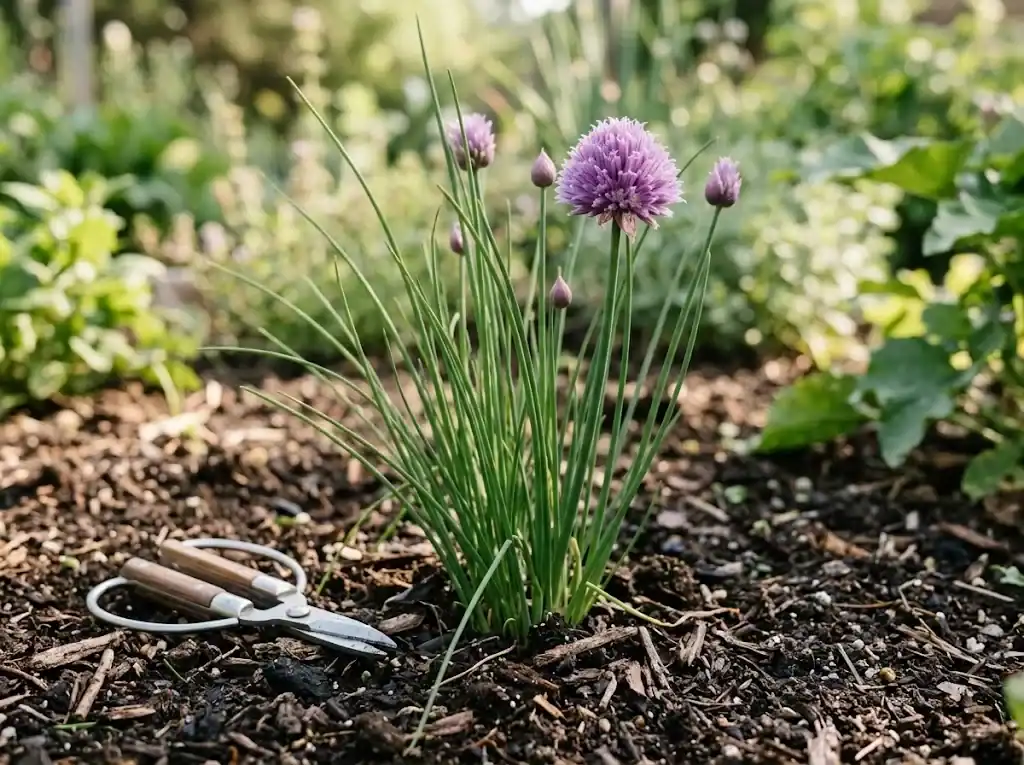
Chives (Allium schoenoprasum) belong to the allium family with thin, hollow green stems and a very gentle taste. A bite of just-cut stems brings a quiet allium-like note without the sharp bite or heat of a raw allium bulb. The texture stays tender and the color stays vivid even after a quick chop, which is why cooks reach for them as a finishing touch.
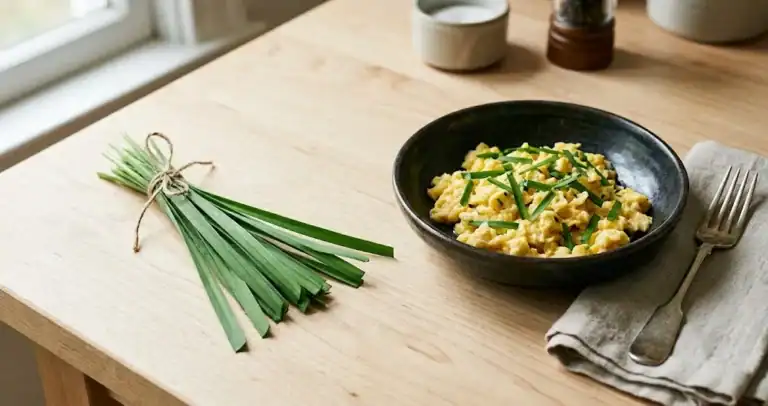
Garlic chives (Allium tuberosum) are a related plant with flat leaves and a soft garlic flavor instead of an allium bite. Use them the same way as regular chives when you want the savory taste without mincing cloves. They shine in stir-fries, scrambled eggs, and any preparation where regular chives would feel too sharp.
If you have ever wondered whether chives are just chopped scallions, they are not. Green onions and scallions are young bulbing alliums, with thicker stems and a much stronger taste. Chives are a separate plant with hollow stems and a much softer taste. Use chives where you want a vivid finish, and use scallions where you want a real allium bite.
Where chives sit among kitchen herbs
Chives are a starting point for almost any cook learning to use fresh greenery. They are forgiving, easy to grow, and they show up in recipes you already make. As you branch out into other fresh plants, our facts about culinary herbs covers the wider family and how each one earns its place on the shelf.
How to prep chives for cooking
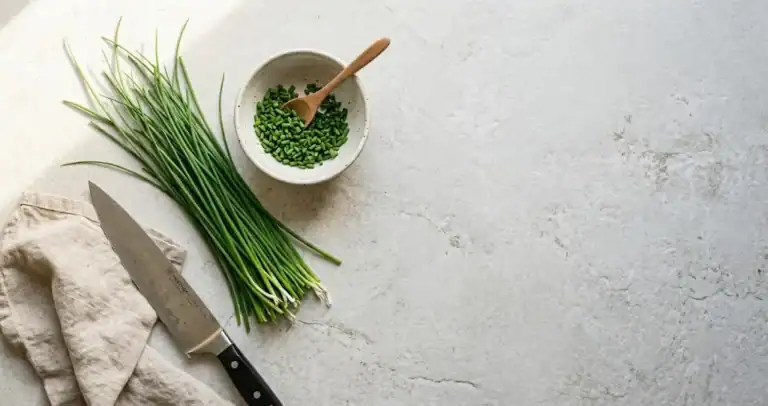
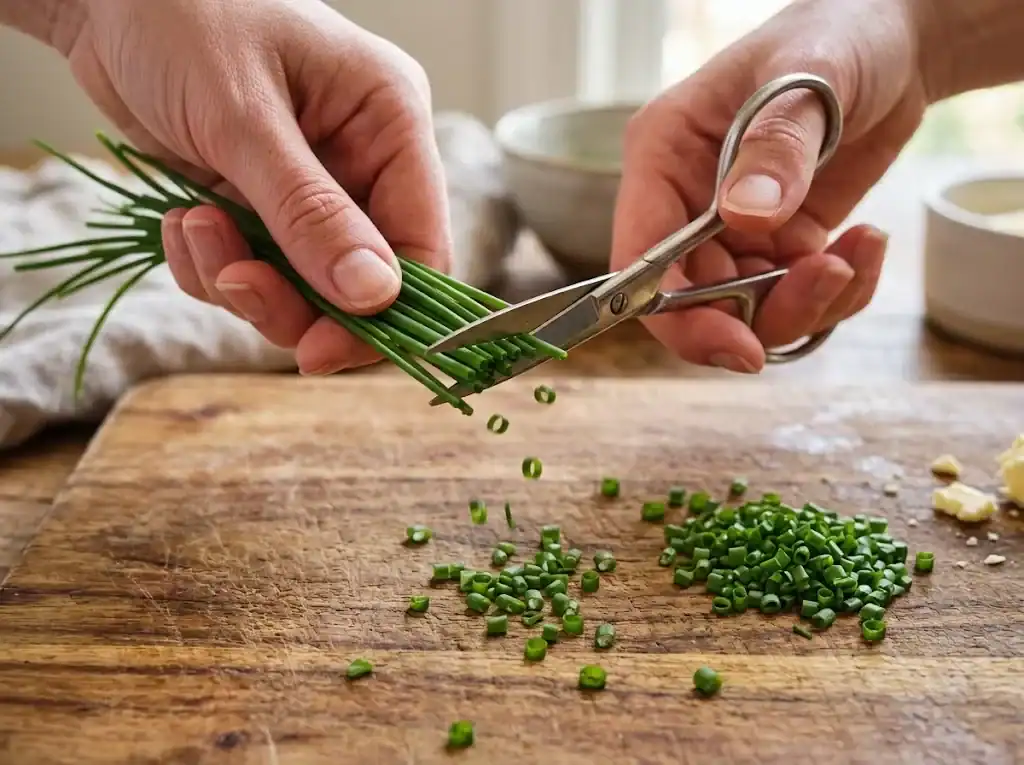
Give the stems a quick rinse and pat them dry. Snip with kitchen scissors or chop with a sharp knife into small rings about the size of a lentil. A clean cut keeps the tender stems from bruising and protects the vivid color. Avoid the food processor if you can; it tends to mash the stems and turns them dark.
Add chives at the very end of cooking or as a raw garnish. Heat dulls both color and taste, so a last-minute sprinkle keeps every plate looking bright. A small handful stirred into sour cream or butter at the table does more for the plate than simmering the leaves in a pot for twenty minutes. For a closer look at how to use chives beyond a garnish, see these ways to cook with chives for technique notes that pair well with the recipes below.
Everyday chive recipes to start with
Scrambled eggs with chives
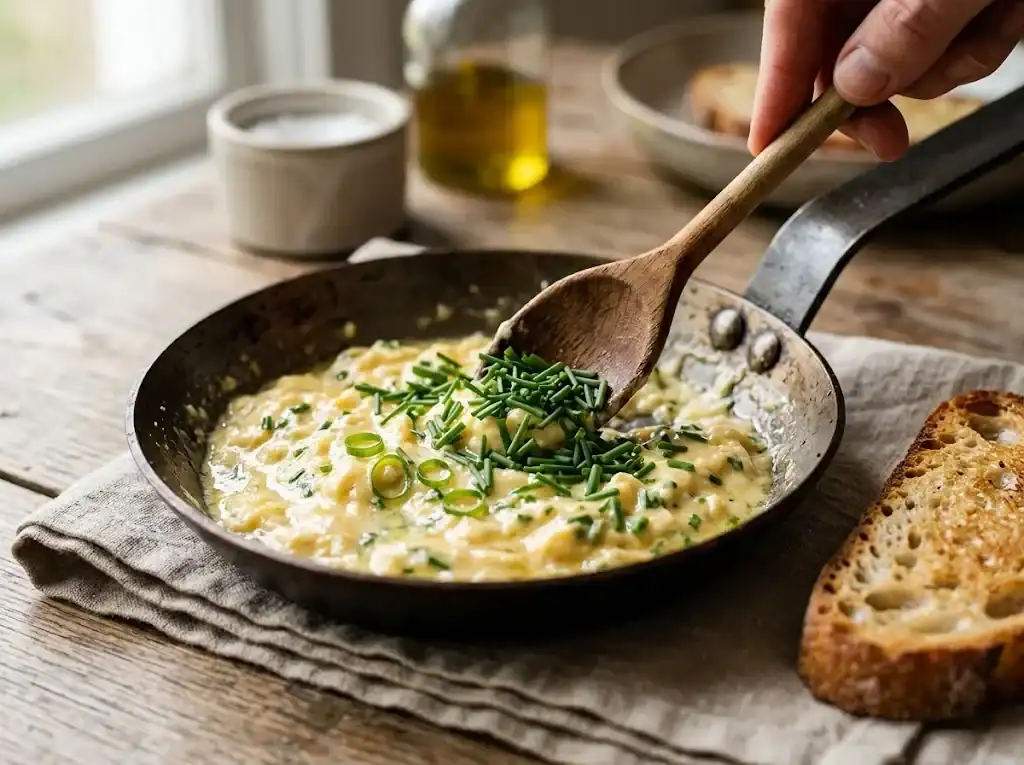
Soft scrambled eggs are one of the best ways to learn what chives can do. Whisk a couple of eggs with a little salt and black pepper, cook them low and slow in a small amount of butter, and pull the pan off the heat while the eggs still look slightly wet. Crack a second egg into the pan if you want a heartier plate. Fold in a generous tablespoon of chopped chives and let the carryover heat finish the plate. The soft allium-like taste settles into the creamy curds and turns a plain breakfast into something that tastes like it came from a small brunch place.
For a heartier version, fold a few tablespoons of grated cheese into the eggs along with the chives. Cheddar, gruyere, and a soft goat cheese all work well. Serve on toast with a little extra chive scattered over the top. This is one of the most reliable chive recipes for new cooks, and a good reminder that simple ingredients can taste delicious with almost no extra work.
Soft herb butter for bread and steak
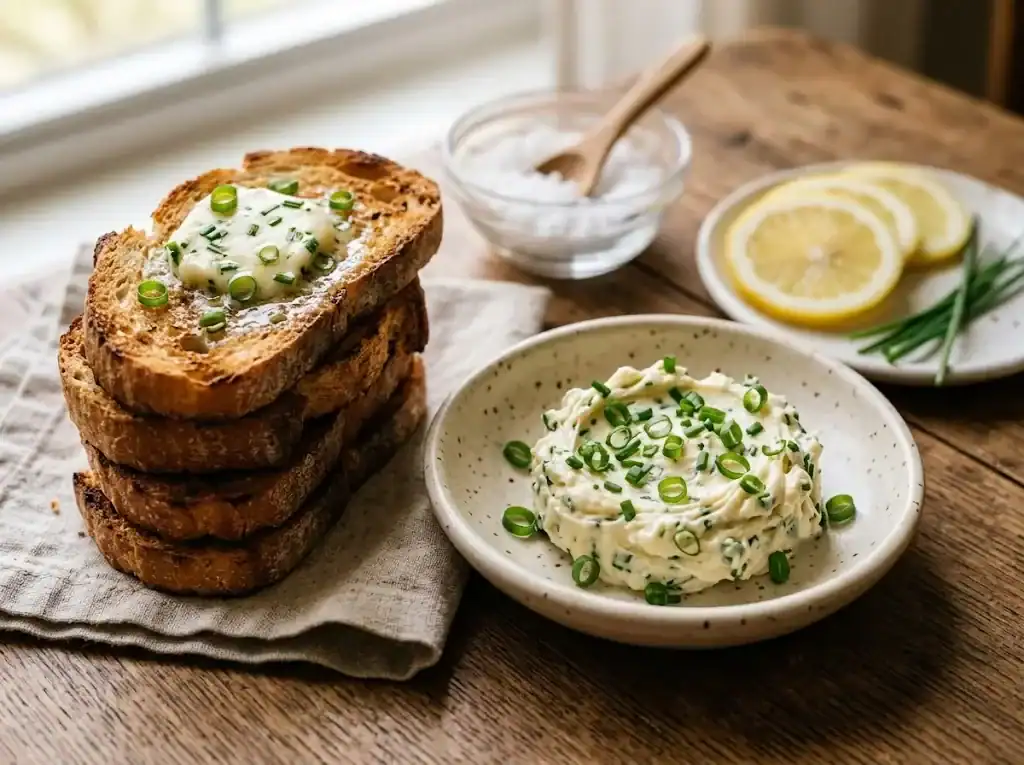
Mix a stick of softened butter with two tablespoons of chopped chives and a squeeze of lemon. Pack the butter into a small dish or roll it into a log in plastic wrap. It keeps in the fridge for a week and holds its taste well for a few months, so you always have a way to make bread, steak, fish, or roasted potatoes feel a little special.
This is also the base for a compound butter you can change with the season. Stir in minced garlic, a little grated parmesan, or chopped parsley, and the same recipe takes you in a different direction each time.
Sour cream dip with chives
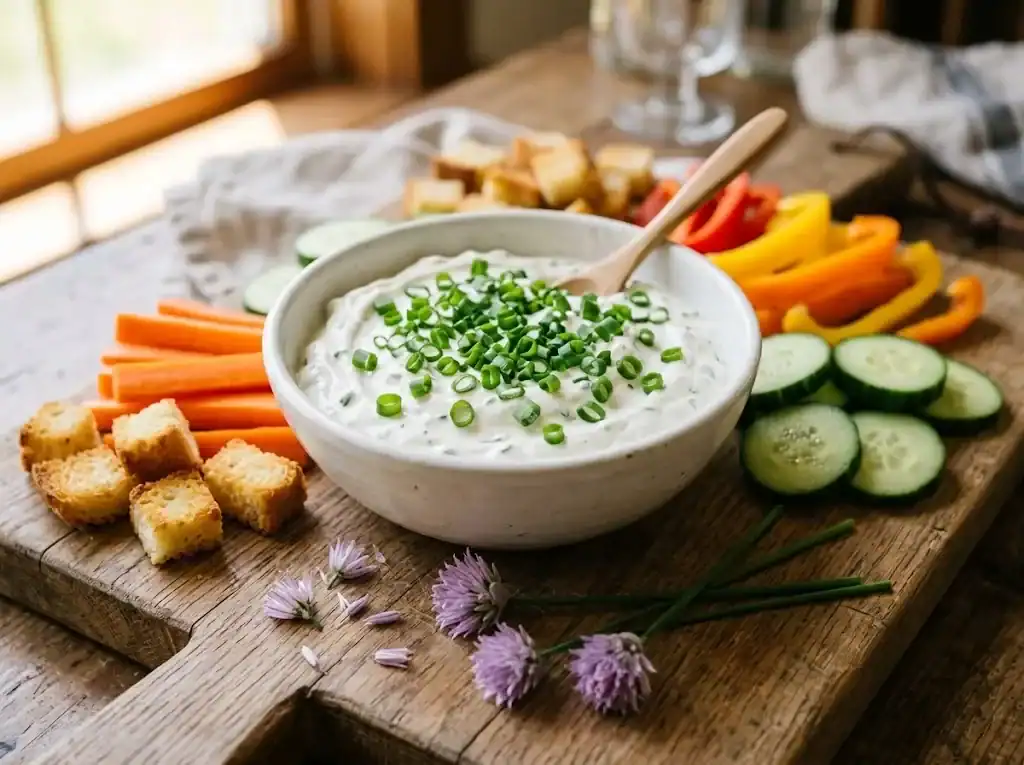
Stir half a cup of chopped chives into a cup of sour cream with a little grated allium and black pepper. Let the dip sit in the fridge for at least thirty minutes so the tastes settle. Serve with potato wedges, raw veggies, or toasted bread. The same base makes a quick sauce for baked potatoes or a topping for a simple bowl of chili.
For a lighter version, swap half the sour cream for plain Greek yogurt. It stays creamy and tangy with a little less richness, and the chive taste still comes through clearly.
Simple chive pasta
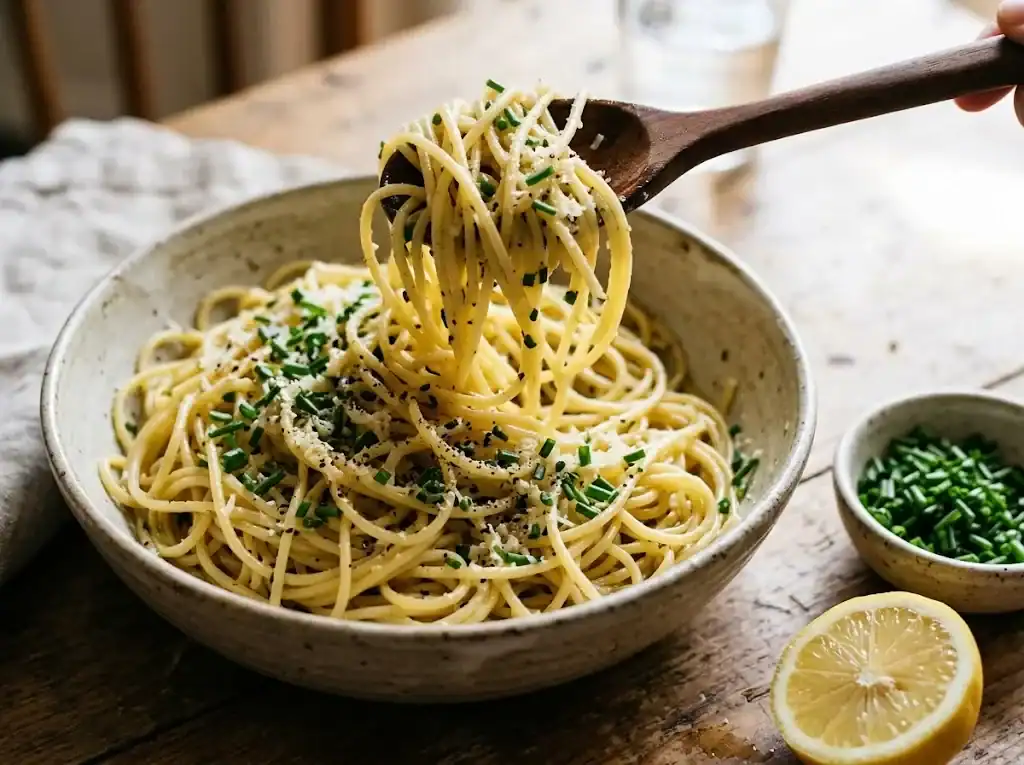
Cook a pound of noodles in well-salted water and reserve a cup of the starchy cooking water before draining. Warm a generous amount of olive oil or butter in the same pot, add a couple of chopped garlic cloves, and let them soften without browning. Toss the noodles back in with a splash of the reserved water and a big handful of chopped chives. Finish with grated parmesan and black pepper. The starch in the water and the butter pull together into a creamy sauce that clings to every strand.
This is one of the fastest weeknight plates you can make from a handful of just-picked greenery, and it is also a good way to use up a small amount of chives that is about to pass its prime.
Salad dressing with chives
Whisk a quarter cup of olive oil with a tablespoon of white wine vinegar, a teaspoon of Dijon mustard, a small handful of chopped chives, and a little black pepper. This simple dressing brightens a green salad, dresses a tomato and cucumber plate, or serves as a quick sauce for grilled fish. It keeps in a jar in the fridge for a few days; just give it another whisk before you use it.
Mashed or roasted potatoes with chives
Stir a few tablespoons of chopped chives into mashed potatoes right at the end, along with butter and warm milk. The quiet allium note and the green flecks make the plate look finished without any extra work. The same approach works for roasted potatoes: toss the hot potatoes with butter and chives as soon as they come out of the oven. The greens soften just enough from the heat to taste cooked but still vivid.

How to use a whole harvest at once
If a friend hands you a big handful or your garden sends up more than you can snip onto eggs, the recipes below use a serious amount and keep well.
Chive and cheddar biscuits
Stir a generous quarter cup of chopped chives and a cup of grated sharp cheddar into your favorite biscuit dough. Bake as usual. The soft allium taste settles into the buttery layers and the cheese adds a savory edge. These biscuits are good warm from the oven and almost as good the next day, split and toasted.
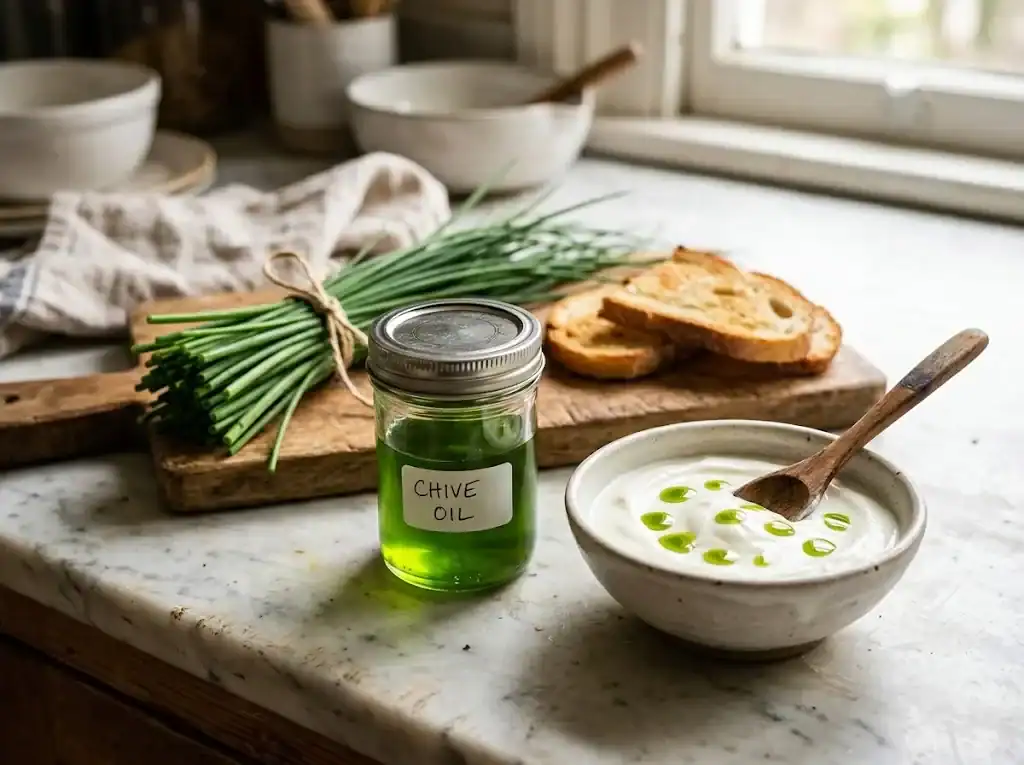
Chive oil for finishing
Blitz a cup of packed chives with a half cup of mild olive oil until smooth. Strain through a fine mesh strainer. Refrigerate the oil in a covered jar and use it within four days, or freeze it in small portions for longer storage, per Oregon State University Extension’s 2025 guidance on unacidified fresh-herb oils. Drizzle over roasted potatoes, grilled fish, soups, creamy noodles, or a bowl of cooked rice. A spoonful also livens up a simple bowl of plain yogurt.
Chive oil freezes well in small portions, so a bumper crop of summer stems can become a winter finishing oil for soups and roasted veggies.
Cooking with garlic chives
Garlic chives are the leaves to reach for when you want a soft savory note instead of an allium bite. They are especially good in recipes that take a little more heat, because the gentle garlic-like taste holds up better than the milder allium note of regular chives.
- Stir-fry chopped garlic chives with scrambled eggs and a splash of soy sauce for a quick weeknight dinner.
- Toss a handful into a stir-fry with rice, ginger, and a little sesame oil in the last minute of cooking.
- Fold chopped garlic chives into dumpling filling along with pork, ginger, and soy sauce.
- Use them in place of regular chives for savory pancakes and savory crepes.
Flavors that pair well with chives
Chives play well with almost any savory ingredient, but a few combinations show up over and over in good recipes. Butter, cream, sour cream, and soft cheeses bring out the soft allium note. Eggs, fish, chicken, and potatoes are the classic partners. Lemon brightens everything and lifts the green color. A little Dijon mustard or a splash of white wine vinegar gives the leaves enough edge to stand up to richer plates.
On the savory side, garlic, parsley, thyme, and tarragon are all friendly neighbors. Chives do not pair as well with strong competing tastes like cumin, smoked paprika, or heavy chilies; those tend to overpower the delicate allium note.
Storing chives and using what you have
Chives keep for about a week in the fridge when stems are wrapped loosely in a damp paper towel and slipped into a bag or container. For longer storage, chop the stems and stash them in a small container or ice cube tray with a splash of water or olive oil. Dried chives are a workable backup but lose most of what makes the just-cut leaves worth growing.
If you find yourself with more chives than you can use, see our full guide on how to store chives for freezing, drying, and longer-keeping methods.
Cooking techniques that bring out chive flavor
A few extra habits help the recipes above come out the way you want. Snip chives just before they hit the plate so the cut edges stay vivid. Add them at the very end of cooking, since a long simmer dulls both taste and color. Let the leaves cool for a minute before stirring them into cold yogurt or sour cream so the green stays bright instead of turning brown.
Frequently asked questions about chives
Can chives be eaten raw or cooked?
Both. Raw chives work best as a finishing touch because heat dulls their color and taste. A quick wilt at the end of cooking or a brief toss in a hot pan is the most heat the tender stems can take without losing what makes them worth using.
Can I freeze chives for later use?
Yes. Chop the stems and stash them in a small airtight container or in an ice cube tray with a splash of water or olive oil. Frozen chives lose their crisp texture but keep their taste, so use them in cooked plates like scrambled eggs, soups, baked potatoes, and compound butter rather than as a raw garnish.
What flavors pair well with chives?
Butter, cream, sour cream, eggs, fish, chicken, potatoes, and lemon are the most reliable partners. Garlic, parsley, thyme, and tarragon all sit well alongside chives. Strong spices like cumin, smoked paprika, and heavy chilies tend to overpower the soft allium note.
Are chives the same as green onions?
No. Chives are a thin-stemmed plant in the allium family. Green onions and scallions are young bulbing alliums with thicker stems and a much stronger, sharper taste. Use chives where you want a vivid finish, and use scallions where you want a real allium bite.
What do chives do to your body?
Chives are a low-calorie green that adds a small amount of vitamin K, vitamin C, and folate to plates that include them. The same sulfur compounds that give chives their soft allium note are linked, in larger amounts from garlic and onion, to small short-term effects on blood pressure and cholesterol, according to the National Institutes of Health Office of Dietary Supplements. Chives are a flavor ingredient, not a treatment, and they fit easily into a balanced diet. If you take blood thinners or have a known allergy to plants in the allium family, ask your doctor before using any herb in large amounts.
Sources for the health and safety notes
- National Institutes of Health Office of Dietary Supplements. Garlic. U.S. Department of Health and Human Services. https://ods.od.nih.gov/factsheets/Garlic-Consumer/
- Oregon State University Extension. Herbs and vegetables in oil. https://extension.oregonstate.edu/catalog/pub/sp-50-701-herbs-vegetables-oil