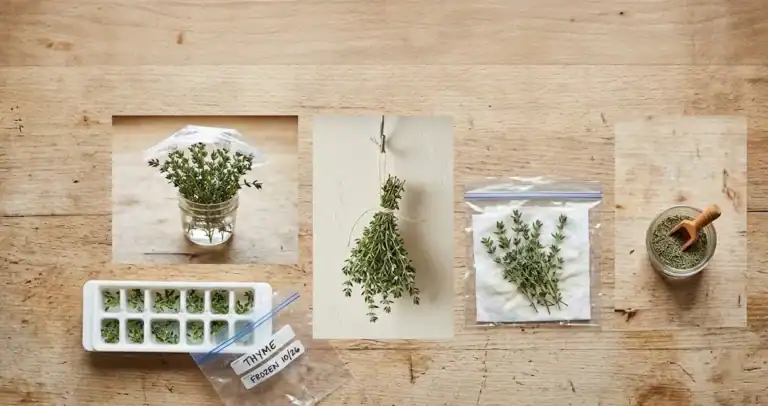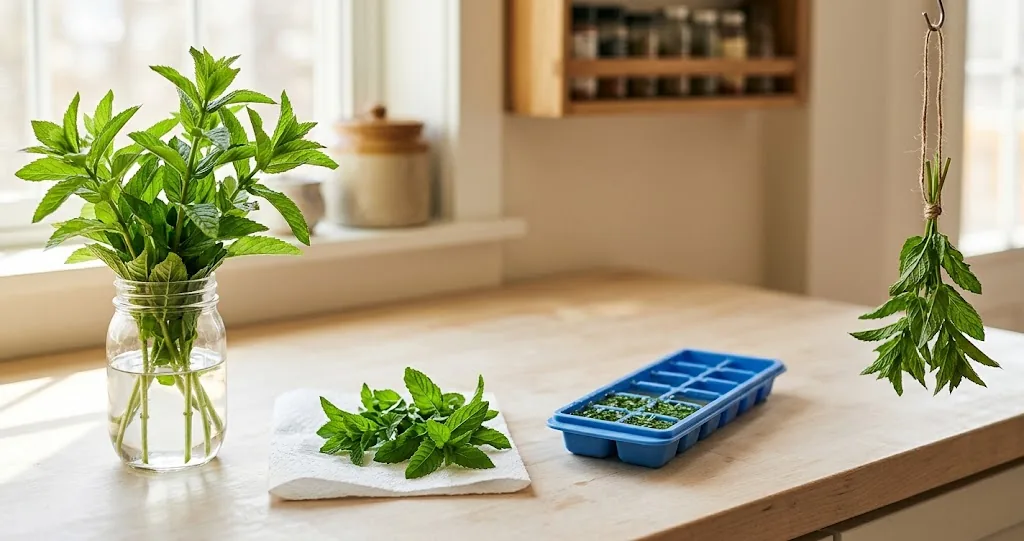
Wondering how to store spearmint and keep it as fresh as possible? Spearmint wilts faster than most kitchen herbs, but the right storage keeps the leaves bright, fragrant, and ready for hot drinks, salads, and cocktails for days. The fastest method is a glass of water in the refrigerator with a loose produce bag tented over the leaves, which keeps it fresh for seven to ten days. Freezing mint in ice cube trays with a little water or oil extends the shelf life to three to six months, and air-drying the leaves gives a pantry-stable supply that lasts a full year.
Spearmint (Mentha spicata) is a delicate herb, so the goal with every storage method below is the same: keep the leaves cool, slightly humid, and away from ethylene gas given off by apples, bananas, and tomatoes. Cut the stems before the plant flowers for the best flavor, then move quickly to storage so the leaves do not wilt on the counter. Harvest timing is one of the biggest factors in how long spearmint will keep, and a sharp cut just above a leaf pair helps the plant send up new shoots for the next round.
Below is the best way to keep mint at home, with three short-term methods and two long-term options. Pick the method that matches how quickly you will use the harvest.
Spearmint is often used fresh from the garden, but a single harvest can yield far more leaves than one meal needs. Whether you want to learn how to properly store spearmint in the refrigerator, in the freezer, or as a dried pantry supply, the right method depends on how long you want to keep it fresh.
For the full picture on cutting at the right height and getting the most regrowth, see our simple guide to harvesting spearmint.
Refrigerator storage: keep spearmint fresh for one to two weeks
The refrigerator slows wilting without cooking the leaves, which is exactly what spearmint needs. Three methods work well, and most home cooks already have the supplies on hand.
Method 1: water jar, bouquet-style
Treat spearmint like a bouquet of flowers. Trim the ends of the stems, stand them upright in a glass with about an inch of water, and slip a loose produce bag over the top to hold in humidity. Place the jar in the refrigerator and change the water every few days. Properly handled, the leaves stay fresh and aromatic for seven to ten days. The bouquet method is the best way to keep your mint fresh and ready to use whole sprigs as a cocktail garnish.
Method 2: damp paper towel in a sealed container
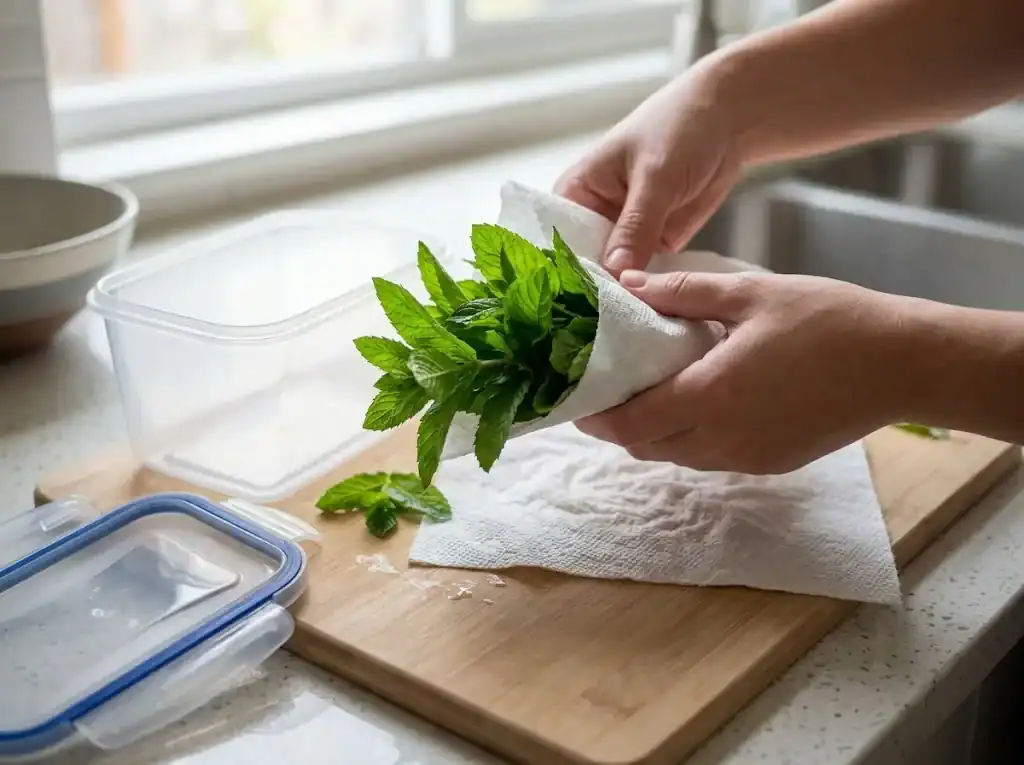
For leaves you plan to use within a week, this is the easiest method. Wash the spearmint gently, spin or pat it completely dry, then lay the leaves between two damp paper towels. Slide the bundle into a sealed container and refrigerate. The damp paper towel holds enough humidity to keep the mint fresh without excess moisture. Expect seven to ten days of usable spearmint this way. The mint leaves stay vibrant, and the sealed container keeps ethylene away from other fresh herbs in the same drawer. Storing spearmint in a sealed container is the easiest way to keep the leaves from wilting in a crowded fridge.
Method 3: airtight container with a dry towel
If your spearmint is already a bit wet from rinsing, dry it thoroughly first. Any surface moisture trapped in a sealed container will turn the leaves black within a day. Pat the leaves completely dry, line an airtight container with a dry towel, lay the spearmint loosely inside without crowding, top with a second dry towel, and seal. Used within five to seven days, the leaves come out bright and ready to use.
Freeze mint for long-term storage: three to six months
Freezing is the best method to keep spearmint on hand for months. The flavor holds remarkably well, and frozen leaves drop straight into cooked dishes, rice, and drinks. Properly frozen mint keeps most of its aroma through three to six months in cold storage.
If you want to freeze mint without chopping it, the flat-freeze method below works just as well on whole leaves as on chopped ones. The goal with any freezing method is to seal out as much air as possible, which keeps ice crystals from bruising the leaves.
Ice cube tray method for mint ice cubes
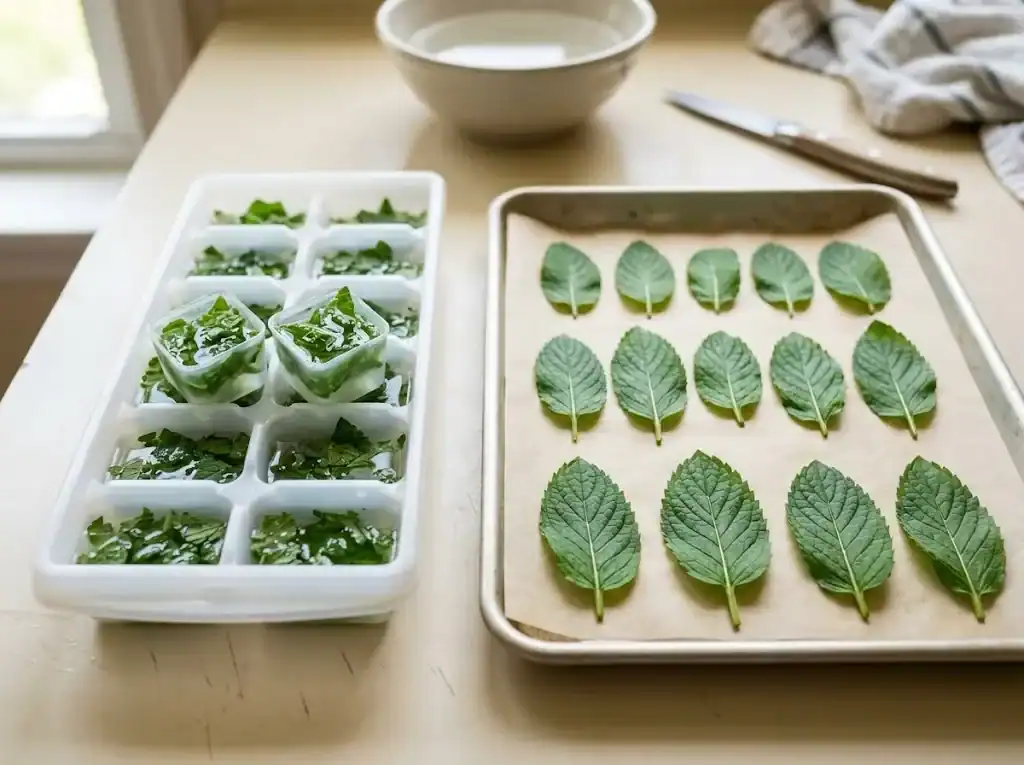
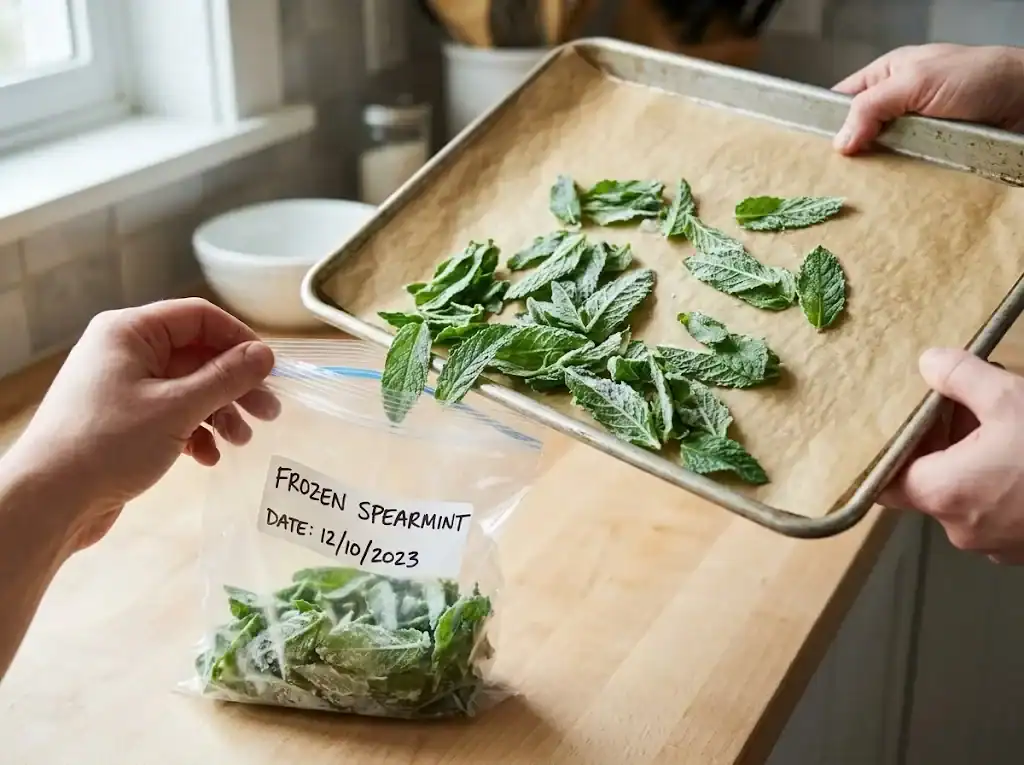
Chop the mint leaves roughly, fill each compartment of an ice cube tray about two-thirds full, and top with water, olive oil, or melted butter. Olive oil cubes work especially well for sautés and dressings, and water cubes melt cleanly into hot drinks, cocktails, and lemonade. Once the cubes are frozen solid, pop them out and store in a labeled freezer bag or container. Properly sealed, the frozen mint keeps for three to six months, and the cubes drop straight into cooked dishes or a glass of iced tea without measuring.
Flat-freeze method
Spread clean, dry spearmint leaves in a single layer on a parchment-lined baking sheet and freeze until solid, about an hour. Transfer the frozen leaves to an airtight freezer container, press out the air, and seal. Flat-frozen leaves stack neatly, thaw in seconds under cold running water, and are easy to portion for recipes. Use the frozen mint within four months for the brightest color. To freeze mint leaves whole, skip the chop and lay them straight on the sheet.
Dry mint: pantry-stable for a year or more
Dried spearmint trades the bright color of fresh leaves for a more concentrated, herby flavor that suits hot drinks, long-simmered broths, and Middle Eastern recipes like kofta. Drying does reduce the volatile oils, so the result tastes softer and more hay-like than fresh leaves, but it is the only way to preserve mint without cold storage. Spearmint is often used in Mediterranean and Middle Eastern kitchens, and drying mint leaves at home keeps that flavor available year-round.
Air-drying small batches
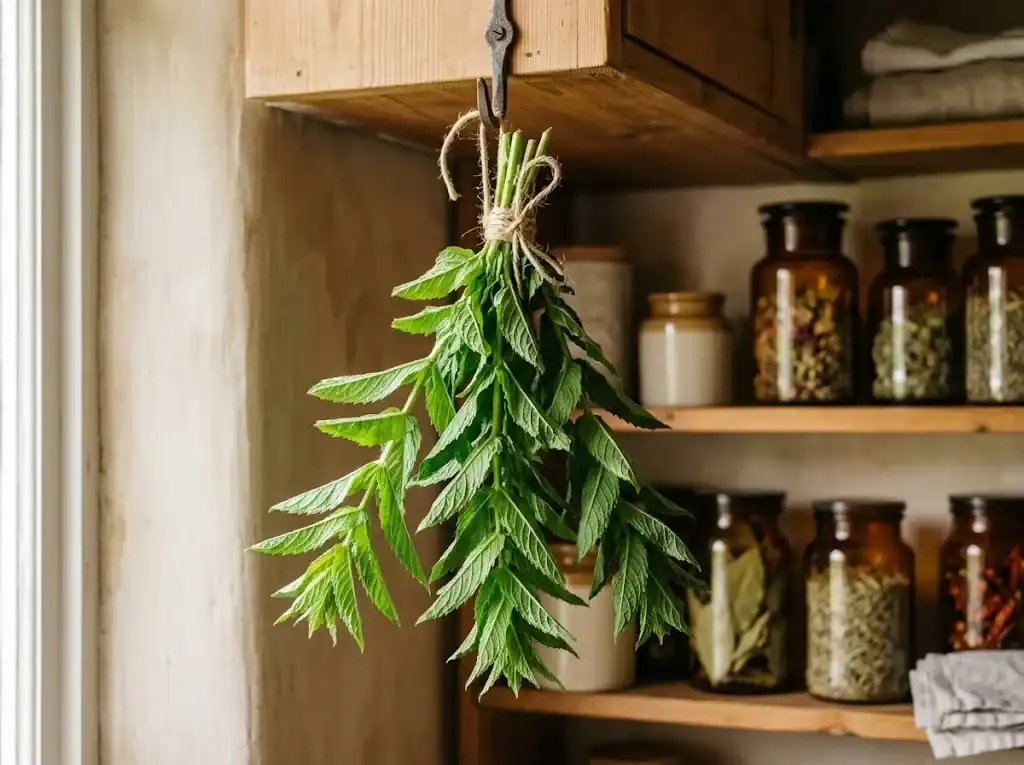
Tie three or four stems together at the base with kitchen twine and hang them upside down in a warm, dry place with good airflow, out of direct sunlight. A pantry, attic, or spare room works well. The leaves should be completely dry and crumbly in seven to fourteen days. Strip the dried mint off the stalk and store in an airtight container, kept in a cool, dark, dry place. Properly stored, dried spearmint stays aromatic for a full year.
Dehydrator or oven method
Spread spearmint leaves in a single layer on dehydrator trays or a parchment-lined baking sheet. Set the dehydrator to about 95 F, or the oven to its lowest setting with the door cracked open. Drying takes one to three hours. Dry the leaves until they are crisp and crumble easily between your fingers, then cool them completely before storing. Store the dried mint in airtight containers the same way as air-dried leaves.
How to tell if stored spearmint has gone bad
Spearmint past its prime gives clear signals before it ever reaches your plate. Watch for these signs and toss the leaves if you see them. Food safety with leafy herbs is mostly about trusting your eyes and nose. The volatile oils that give mint its aroma fade quickly once the leaves start to break down, so a faded scent is the first warning.
- Black or dark brown spots on the leaves, which mean the chlorophyll is breaking down and the flavor is going with it.
- A slimy or sticky surface, the hallmark of bacterial growth from too much moisture in storage.
- A sour or off smell, instead of the clean, slightly sweet aroma of good spearmint.
- Leaves that collapse into mush when you pinch them, even if they were stored correctly.
If the leaves look slightly wilted but are still green, smell clean, and have no slime, they are still safe to eat. A quick chop and a few minutes in iced water will often perk the mint back up.
Common mistakes to avoid when storing spearmint
Most storage failures come from one of three avoidable causes. Skip them and your mint will outlast what you would expect from a tender green herb. Proper storage is mostly about controlling moisture, temperature, and air.
- Storing wet leaves in a sealed container. Surface moisture trapped without airflow turns leaves black within a day. Always dry spearmint completely before sealing it in any container.
- Keeping spearmint near ethylene-producing fruit. Apples, bananas, and tomatoes give off ethylene gas that browns and wilts nearby herbs. Store mint away from the fruit drawer.
- Cramming the leaves in. Crowded leaves bruise and trap humidity. Lay spearmint loosely so air can circulate around every leaf.
Ways to use stored spearmint
Stored mint shows up in more places than most cooks expect. A few leaves can change the whole feel of a dish, a sauce, or a drink.
- Hot drinks. A small handful of fresh or dried leaves steeped in hot water for five minutes makes a gentle digestive drink, often used after rich meals.
- Cocktails and summer drinks. Mint juleps, mojitos, and lemonade all start with muddled fresh leaves or a frozen oil cube. Frozen leaves also drop straight into a smoothie for a bright herby finish.
- Salads and dressings. Torn leaves over a tomato or cucumber salad, or whisked into a yogurt-based dressing, give a bright finish without extra salt.
- Garnish. A single sprig over grilled lamb, roasted vegetables, or fruit brings the herby aroma forward.
- Watermelon mint salad. Cubed watermelon, crumbled feta, and a generous handful of torn mint makes a summer salad in five minutes.
- Chopped in a food processor. Pulse a cup of leaves with a little olive oil and salt for a quick herb paste that freezes well. The paste works as a sauce for grilled fish or a seasoning rub for chicken.
- Refreshing water. Steep a handful of fresh mint in cold water in the refrigerator for an hour for a refreshing flavor with no added sugar.
- Mint-infused simple syrup. Simmer a half cup of sugar with a half cup of water and a generous handful of mint, strain, and store the syrup in the refrigerator for two weeks.
- Mint tea. Steep a small handful of fresh leaves or a teaspoon of dried mint in hot water for five minutes, sweeten to taste.
- Ingredient in cooked dishes. Stir chopped mint into rice pilaf, lentil soup, or a yogurt sauce in the last few minutes of cooking for a final herby lift.

For a fuller set of recipe ideas beyond storage, see our cooking with spearmint guide, which walks through drinks, savory dishes, and sweet uses from a working kitchen.
Quick reference: methods for storing spearmint
Use this short table to pick the right method for how long you need to keep mint fresh.
- 1 to 2 days: keep stems in a glass of water on the counter, change water daily.
- 1 to 2 weeks: refrigerator, damp paper towel in a sealed container, or a bouquet-style jar.
- 3 to 6 months: ice cube trays with water or oil, or flat-frozen on a baking sheet.
- Up to 1 year: air-dried or dehydrator-dried, stored in an airtight container in a cool, dark, dry place.
Spearmint gives up its flavor faster than most kitchen herbs, but a few minutes of careful storage gives you weeks of fresh leaves and months of usable frozen or dried ones. Pick the method that fits the time you have, and the rest takes care of itself.
Frequently asked questions about storing spearmint
How long does fresh mint last in the refrigerator?
Spearmint in the refrigerator keeps for about seven to ten days when stored by the bouquet or damp towel method. After that, the leaves start to brown and lose their aromatic oils. Dry or freeze the leaves if you need to keep spearmint on hand for longer than two weeks. To keep it fresh even longer, switch to the freezing or drying methods below.
Can I store mint in oil or vinegar for cooking?
For a quick dressing, whisk fresh spearmint into oil and vinegar just before serving. Do not make a shelf-stable oil with fresh herbs: they can create a botulism risk. For an infused oil, use commercially dried mint and follow safe storage guidance from University of Maine Cooperative Extension.
Does drying mint reduce its flavor?
Somewhat. Drying drives off the most volatile oils, so dried mint tastes softer and more hay-like than fresh leaves. It still works well in hot drinks, broths, and slow-cooked dishes, but for garnishes where the bright snap matters, frozen mint is the better choice.
What is the best way to dry mint?
For most home cooks, air-drying small bundles in a warm, dry room with good airflow gives the best flavor. A dehydrator at 95 F works faster but gives a similar result. Avoid high heat, which cooks the leaves and removes the aroma you are trying to preserve. Drying mint leaves in a warm, shaded spot preserves the volatile oils far better than oven drying. When stored properly, the dried leaves keep their color and aroma for a full year.
How do I know if stored mint has gone bad?
Look for black or brown spots, a slimy surface, or a sour smell. Wilted but otherwise clean leaves are still safe; toss them once they turn dark, sticky, or sour.
Can I keep mint on hand year-round?
Yes. Freeze mint in ice cube trays for cooking, dry the leaves for hot drinks, and grow a pot on a sunny windowsill for fresh sprigs through the colder months. With all three methods on hand, you can store fresh herbs and use them across seasons. A refrigerator or freezer, a drying line, and a windowsill pot are the only equipment you need.
Is spearmint different from peppermint?
Yes. Spearmint (Mentha spicata) is sweeter and more delicate than peppermint (Mentha x piperita), which has a sharper, more menthol-forward flavor. The storage methods are the same for both, but spearmint is the traditional choice for Mediterranean cooking, mint juleps, and herbal tea. Both make a fine cup, though peppermint will read stronger in the cup.
How does spearmint compare to cilantro for storage?
Both are tender leafy herbs that lose moisture quickly, but cilantro has a shorter shelf life and tends to yellow before it wilts. Spearmint keeps its color and aroma longer under refrigeration, which is why the damp-towel method works so well for mint but only buys a few days for cilantro. A plastic bag liner can stretch cilantro by another day or two, but it still does not match the week that mint gives you.
What if my mint turns soggy in storage?
Soggy leaves mean too much trapped moisture. Pull them out of the sealed container, pat them dry, and switch to a fresh dry towel before returning them to the refrigerator. If the leaves have already gone soft and dark, toss them and start over with a drier batch.
If you are storing spearmint as part of a broader herb harvest, our complete herb harvesting guide covers cutting heights, washing, and drying for every common kitchen herb.