
Marjoram sits quietly in the spice cabinet until a recipe finally calls for it, and then it turns out to be the ingredient a dish was missing all along. It’s sweet and mild, with a faint hint of pine and citrus, and it works into roasted meats, simple vegetable sides, and slow-simmered sauces without taking over the plate. This collection uses both the fresh leaves and the dried version, with enough detail on quantities and timing that you can start cooking tonight.
What marjoram tastes like and where cooks reach for it
It belongs to the mint family, softer and sweeter than many of its cousins. Cooks reach for it in roasted poultry, potatoes, tomato sauces, egg dishes, and butter-based sauces for fish or vegetables. Because its flavor is delicate, it holds up best when added toward the end of cooking, or in a dish that does not need a bold, assertive seasoning.
For a wider view of how it fits among other kitchen staples, the culinary herbs guide covers seasoning basics, storage, and pairing across the whole spice rack.
A few basics before you start cooking
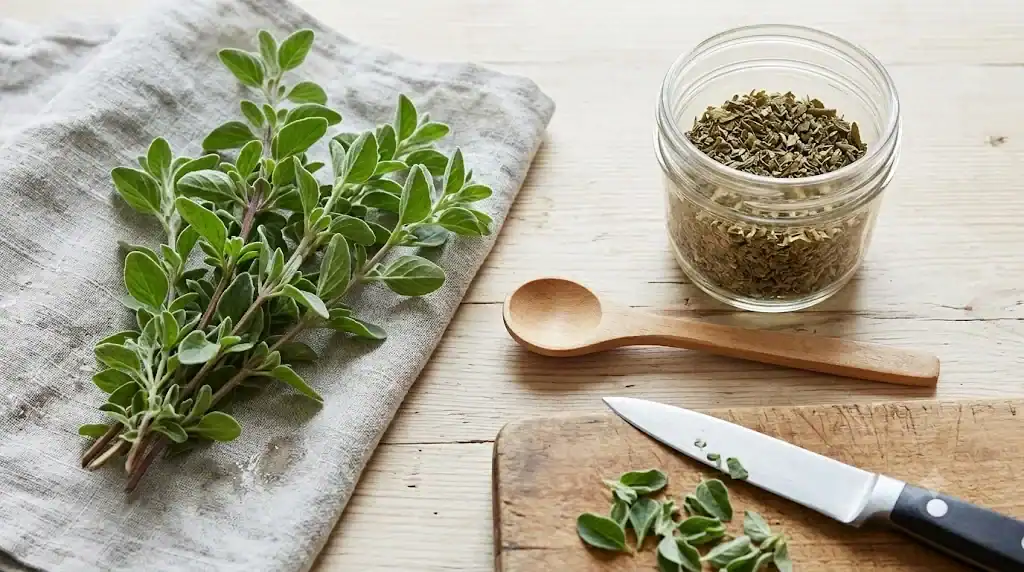
Using it well starts with knowing which form you have. The leaves are brighter and greener, while the dried version is earthier and slightly stronger, concentrated by drying. As a rule, use one tablespoon of the chopped leaves for every teaspoon of the dried version, and add it in the last few minutes of cooking so its character does not fade. It pairs naturally with garlic, olive oil, lemon, and other soft herbs like basil or thyme.
How to bring more of it into your cooking
A few reliable habits make it easy to use well: rub it into a whole chicken before roasting, whisk it into a vinaigrette, or blend it into a compound butter to melt over steak or grilled vegetables. If you want more depth on how it behaves in the kitchen, see our guide to ways to cook with sweet marjoram.
Recipes to try tonight
Each of these menu ideas puts it to work in a different way, from a Sunday roast to a fast weeknight side.
Roasted lemon marjoram chicken
Loosen the skin on a whole chicken and rub two tablespoons of softened butter mixed with a tablespoon of the chopped leaves, a minced garlic clove, and the zest of one lemon underneath. Season generously with salt and pepper, tuck a halved lemon into the cavity, and roast at 425°F until the skin turns deep gold and the thigh reads 165°F, about 70 to 80 minutes. Let it rest for ten minutes before carving. The compound butter bastes the meat from the inside out, so every slice picks up its sweet, earthy edge.

Compound butter for steak and vegetables
Blend four tablespoons of softened butter with a tablespoon of the finely chopped leaves, a pinch of salt, and a squeeze of lemon juice. Spoon a pat over a hot seared steak or roasted vegetables like asparagus, squash, or green beans right before serving, and let it melt into a light sauce. The same blend works well stirred into mashed potato.

Tomato and white bean stew
Saute a chopped onion and two cloves of garlic in olive oil until soft, add a can of crushed tomatoes and a can of drained white beans, and simmer for 15 minutes. Stir in a tablespoon of the chopped leaves near the end so the flavor stays bright, then finish with salt, pepper, and a drizzle of olive oil. Serve the stew over rice or with crusty bread for a simple, meatless dinner.

Potato salad with mustard and herbs
Boil small potatoes until fork-tender, then toss them warm with a dressing of olive oil, whole grain mustard, a splash of vinegar, and a tablespoon of the chopped leaves. Add sliced green onion and a handful of chopped parsley for color, and season to taste. Serve it warm or at room temperature alongside grilled meat.
Marjoram and ricotta flatbread
Spread 3/4 cup of softened ricotta over a par-baked flatbread or pizza dough, scatter two tablespoons of the chopped leaves and thin lemon slices, then drizzle with olive oil and bake at 450°F for eight to ten minutes until the edges are crisp. Its sweetness balances the richness of ricotta better than a stronger herb like rosemary would.

Spring pea and asparagus saute
Trim and blanch a handful of asparagus and peas, then saute them briefly in butter with a minced garlic clove. Toss in a tablespoon of the chopped leaves once the pan is off the heat, so the delicate character does not cook away, and finish with salt and a squeeze of lemon. This dish is best in springtime, when both vegetables are at their sweetest.
Herb-crusted pork chops with sage
Season bone-in pork chops with salt, pepper, a teaspoon of the dried leaves, and a smaller pinch of dried sage, since sage is the stronger of the two. Sear them in a hot pan with olive oil for about four minutes per side, until a thermometer reads 145°F in the thickest part, then let them rest five minutes before serving. The milder, sweeter flavor keeps the chops from tasting like a straight sage rub.
Keeping marjoram on hand for these recipes
A few sprigs from a garden bed or a farmers market bunch will cover most of these recipes, but cut stems fade quickly. If you regularly end up with more than you can use before it wilts, our guide on how to store marjoram explains how to dry it, freeze it, or keep the stems usable longer, so nothing goes to waste.

Marjoram vs oregano: how they differ in the kitchen
Marjoram and oregano are cousins in the mint family, and it is easy to swap one for the other in a pinch, but they are not identical. Oregano is more common in Italian and Greek cooking and brings a stronger, slightly bitter edge, especially when dried. Marjoram is milder and sweeter, so it works better in delicate recipes, such as egg or ricotta preparations, where a bold oregano profile would take over. If a recipe calls for oregano and marjoram is all you have, use about half again as much to make up for the softer character.
Recipe questions worth answering
What do you do with too much fresh marjoram?
Chop it and freeze it in olive oil inside an ice cube tray, blend it into a soft compound butter, or hang small bunches to air dry for winter. It dries well and keeps most of its character, so a big harvest does not have to go to waste.
Can you substitute marjoram in a recipe?
Oregano is the closest substitute, used in a smaller quantity since it is stronger. Basil can also work in a pinch, though it will not taste quite the same.
However you use it, marjoram rewards a light hand. Add it near the end of cooking, check the flavor before you season further, and let its sweetness stay in the background instead of the spotlight.
