Snipping a few leaves over pasta, brushing past a fragrant plant as you reach for the salt, cutting a few stems for Sunday morning eggs. A small setup on the counter turns an ordinary kitchen into a useful one. Most beginners start with good intentions and a wilted plant three weeks later. The good news is that herbs are forgiving once you understand the handful of conditions they actually want. This guide walks through those conditions in plain language, so you can set up a window, a shelf, or a corner of the counter and keep a steady harvest going year-round.
Why a small herb setup is worth the effort
Fresh herbs change a meal. A small handful of chopped leaves or a single torn sprig lifts an otherwise plain dish, and a few stems simmered into soup makes the whole container taste deliberate. Beyond the kitchen, growing at home gives you something to tend, a green thing to look at while dinner simmers, and a reason to keep the south-facing window clean.
It also saves real money. A single packet of seed costs about what two clamshells of cut leaves cost at the store, and one plant keeps producing for months. A few varieties will quietly outlast every other houseplant you own. If you have a sunny window, you have enough space for several different herbs in containers at once.
Pick herbs that grow well indoors

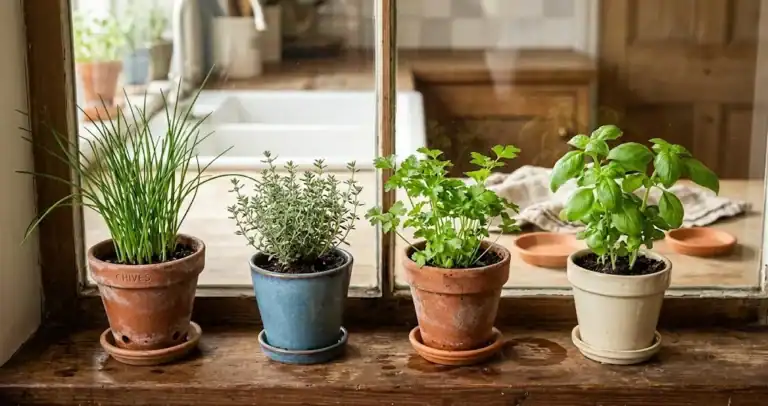
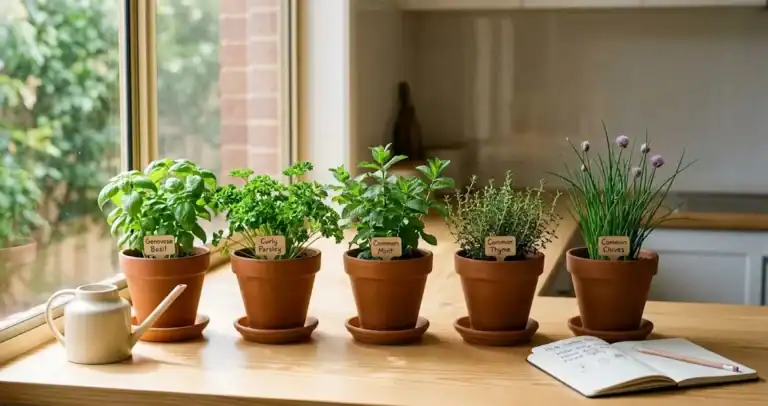
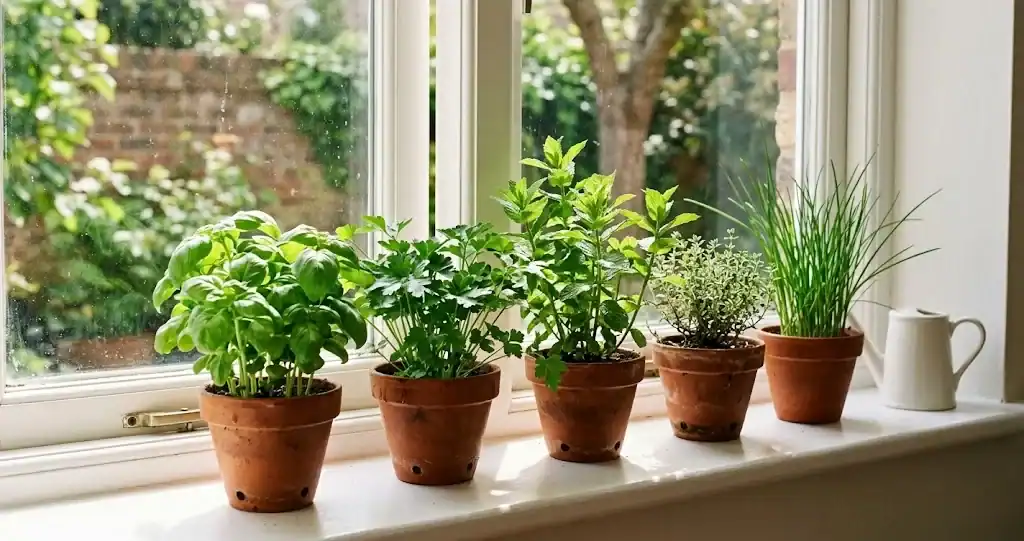
The easiest options for beginners are the ones that already tolerate a range of conditions. Chives, parsley, basil, mint, thyme, and oregano all do well on a bright sill and forgive a missed watering. Rosemary is the exception worth naming: many a gardener loses it indoors because it prefers drier soil and cooler nights than a warm kitchen offers. Start with the forgiving six, then add rosemary once you have a lighter touch.
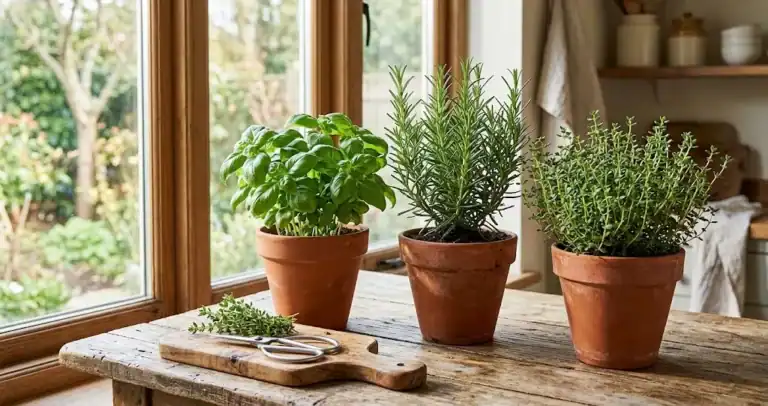
Some are best kept apart. Mint, for instance, sends out runners and quickly takes over a shared container. Plant it in its own, even if it means one extra on the sill. Basil likes more water than rosemary or thyme, so the two do not belong together. If you want a mixed planter, group the moisture-lovers together and keep the woody Mediterranean trio in a drier, sunnier container of their own. Choosing the right vessel for each grouping makes everything easier; the principles are the same ones we cover in our guide to choosing herb containers.
Find a spot with at least six hours of natural light
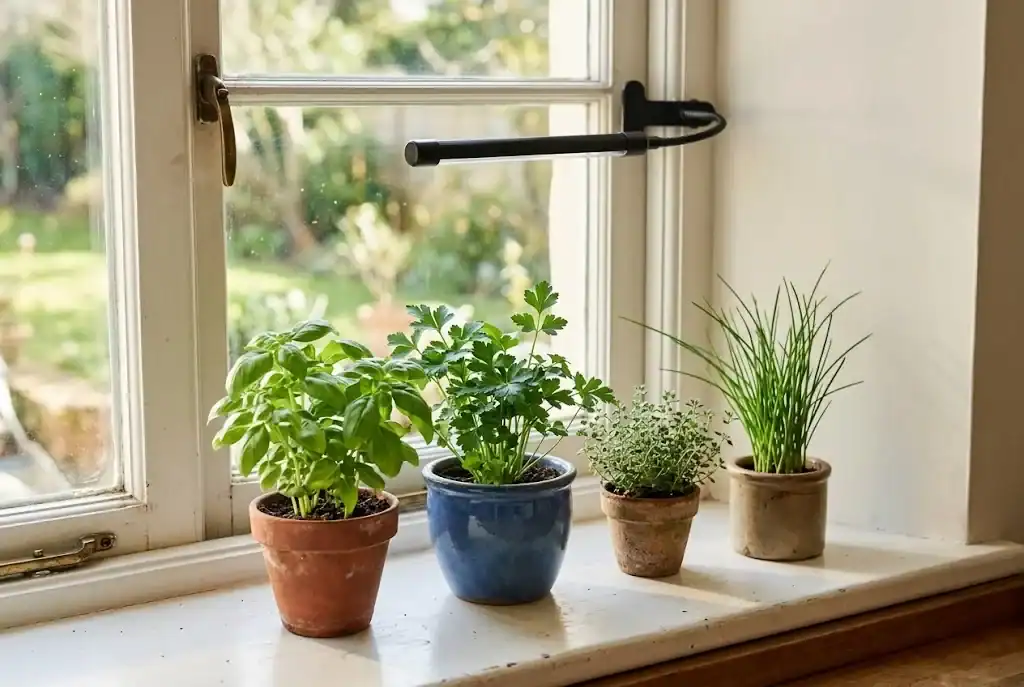
Light is the single biggest factor in whether a setup thrives or just survives. Most culinary herbs want six to eight hours of sunlight a day. A south-facing window is ideal in the Northern Hemisphere; an east or west window works for shade-tolerant options like parsley and mint. If your best window only gets four hours of direct sun, supplement with an LED grow light on a simple timer. A small, full-spectrum unit hung six to twelve inches above the plants for twelve to fourteen hours a day will keep a setup productive through the darkest months.
Rotate the pots a quarter turn each week so the plants do not lean toward the light. If stems stretch and the spaces between leaves grow long, the plant is asking for more light. The leaves will also look pale, and growth slows. Move the container closer to the window, or run the lamp a few more hours.
Choose containers with real drainage
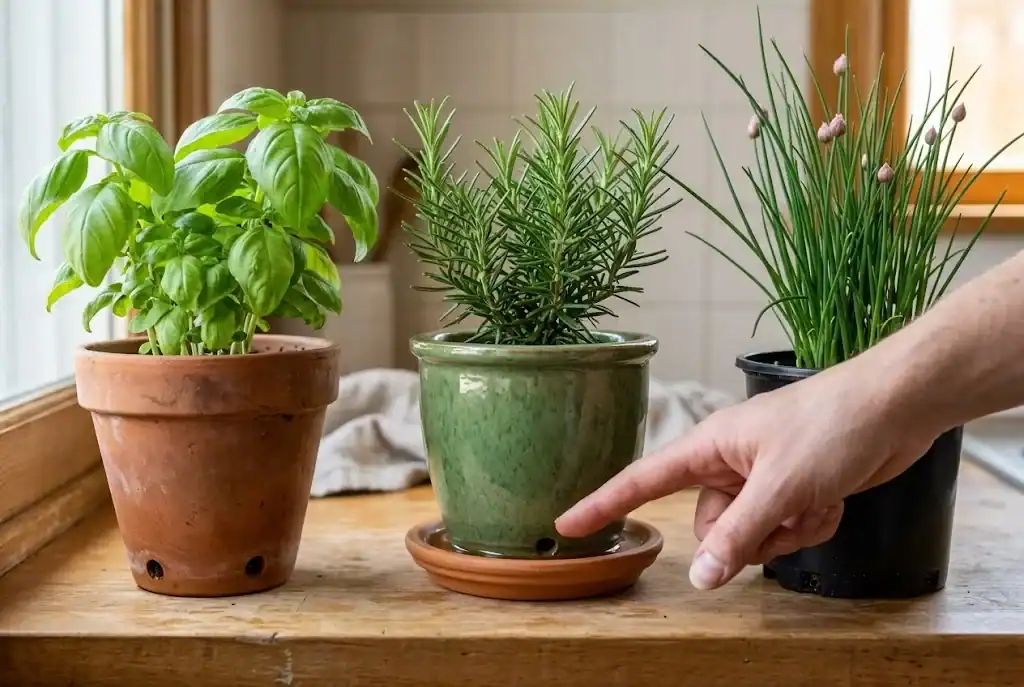
Herbs hate wet feet. A pot without holes is the most common reason herbs fail indoors, because water pools at the bottom and the roots rot. Every container you use needs at least one drainage hole, and a saucer underneath to catch the runoff. Terra cotta breathes through its sides and helps soil dry evenly, which suits the woody Mediterranean trio. Glazed ceramic and plastic hold moisture longer, which suits the moisture-lovers.
Most plants are happy in a six-inch pot. Larger ones can use an eight- or ten-inch container to give the roots room to spread. If you want a kitchen-friendly look, drop the nursery pot into a decorative cachepot, but lift the inner one out for watering and let it drain before putting it back. Standing water in the cachepot is a quiet killer.
Use fresh potting soil, not garden soil
Bagged potting mix is the right medium for indoor plants. Garden soil is too dense, holds too much water, and can carry insects and disease into your home. A standard mix gives roots the air and drainage they want, and you can refresh it each season by gently loosening the root ball and adding fresh material around the sides. Most indoor herb gardeners, and any gardener who has tried to grow them in a window, skip rocks at the bottom of the pot; they raise the water table rather than improve drainage, and the mix alone drains well if the container has holes.
If you are starting from seed, a seed-starting mix is finer and gives small roots an easier time. Once seedlings have two sets of true leaves, transplant them into regular potting soil. For a richer mix, blend two parts potting soil with one part perlite for the woodier herbs in your collection.
Watering without overwatering

The most common mistake is watering on a schedule rather than by feel. Stick a finger into the top inch of soil. If it feels dry, water thoroughly until you see water run out of the holes, then stop. If the soil still feels moist, wait another day and check again. Most setups like a wet-dry cycle: a deep watering followed by a period of drying out, rather than a little splash every day.
The moisture-lovers prefer steady moisture. The woody Mediterranean trio prefer to dry out between waterings. Plants in clay containers dry faster than those in plastic or glazed ones. In winter, when light is lower and growth slows, water less often. Yellowing lower leaves and a musty smell are signs of overwatering. If the soil smells sour or the stems feel mushy at the base, the plant has likely root rot and may not recover.
Feed lightly, not heavily
Do indoor herbs want fertilizer? They do, but only a little. The nutrients in potting soil are used up within a couple of months, and a light feeding every three to four weeks during the active growing season keeps the plants productive. A balanced liquid fertilizer diluted to half strength works well. Organic options like fish emulsion or kelp meal are gentler and improve flavor for culinary use.
Skip fertilizer in winter when growth slows. Overfed plants grow fast and taste bland, and salts build up in the soil. Every few months, flush the pot with plain water until it runs freely from the holes to wash accumulated salts away.
Temperature, humidity, and air flow
Most culinary herbs are comfortable in the same temperatures people are: 65 to 75 degrees F during the day, a few degrees cooler at night. Keep pots away from cold drafts in winter and away from heating vents that dry the air out. Some Mediterranean herbs in particular like cooler nights, around 55 to 65 degrees F, which can be hard to provide in a heated kitchen. A spare bedroom or an unheated sunroom often suits it better than a stove-top windowsill.
Indoor air is dry, especially in winter. Grouping pots together raises the humidity around them, and a small tray of pebbles with water under the pots adds gentle moisture. Misting does little. Air flow matters too: a small fan running for a few hours a day strengthens stems and discourages fungal problems. If you see white fuzz on the soil surface or on leaves, the air is too still and the soil is staying too wet.
Common mistakes that kill an indoor herb garden
Most setups fail for the same handful of reasons. The first is overwatering, especially in containers without drainage. The second is too little light, which produces leggy, pale, slow-growing plants. The third is overcrowding: a single sill packed with pots where each plant is fighting for light and air. Give each pot its own space, and the plants do the rest.
Two more mistakes are easy to make. The first is buying a beautiful mature grocery-store plant and putting it in a too-large pot; the plant goes into shock and rarely recovers. Repot into a container only one size larger, in fresh potting soil, and trim the plant back by a third to reduce the stress. The second is waiting too long to harvest. Regular cutting keeps the plant bushy and productive. If you only take leaves now and then, the plant bolts to flower and the leaves turn bitter.
How to harvest without hurting the plant
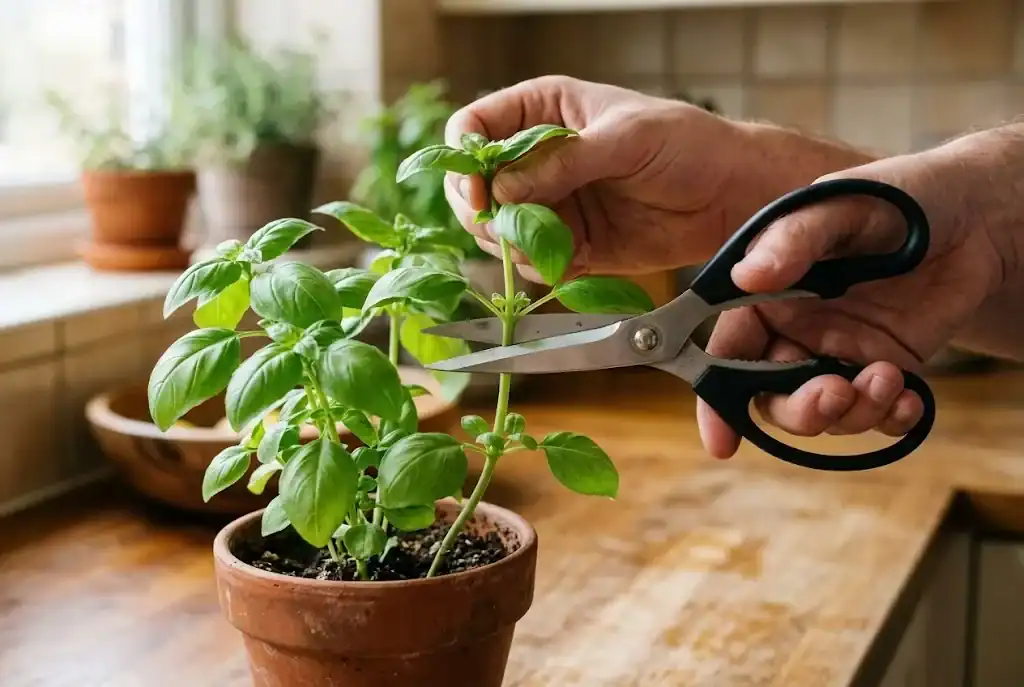
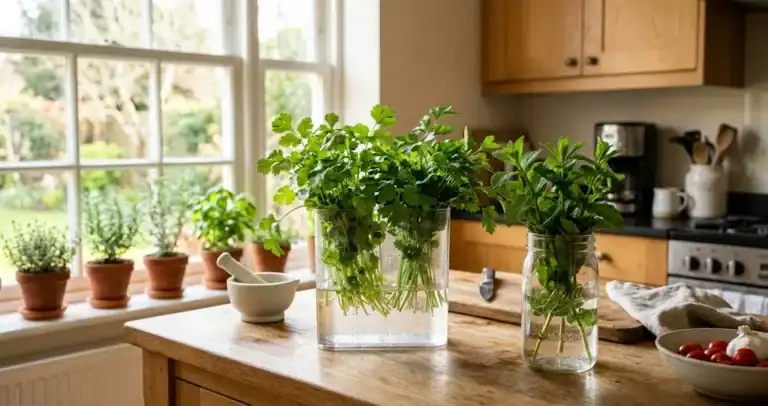
The right way to take leaves from most leafy herbs is to cut above a pair of leaves. New growth branches out from that node, so the plant becomes fuller rather than taller. For basil, pinch the stem just above the second set of leaves from the top. For leafy herbs like parsley, cut the outer stems near the base, leaving the inner stems to keep producing. For chives, snip a single chive a finger-width above the soil; new leaves will push up within a week. Never take more than a third of the plant at once, and let it recover for a few days before harvesting again.
Woody herbs are best harvested by cutting a few inches off the tip of a stem. The cut stem will branch out and produce two new stems. Avoid cutting into the brown woody part, which does not regrow. For the fullest flavor, take what you need in the morning after the dew has dried but before the plant is hit by hot afternoon sun.
Can you grow herbs indoors all year long?
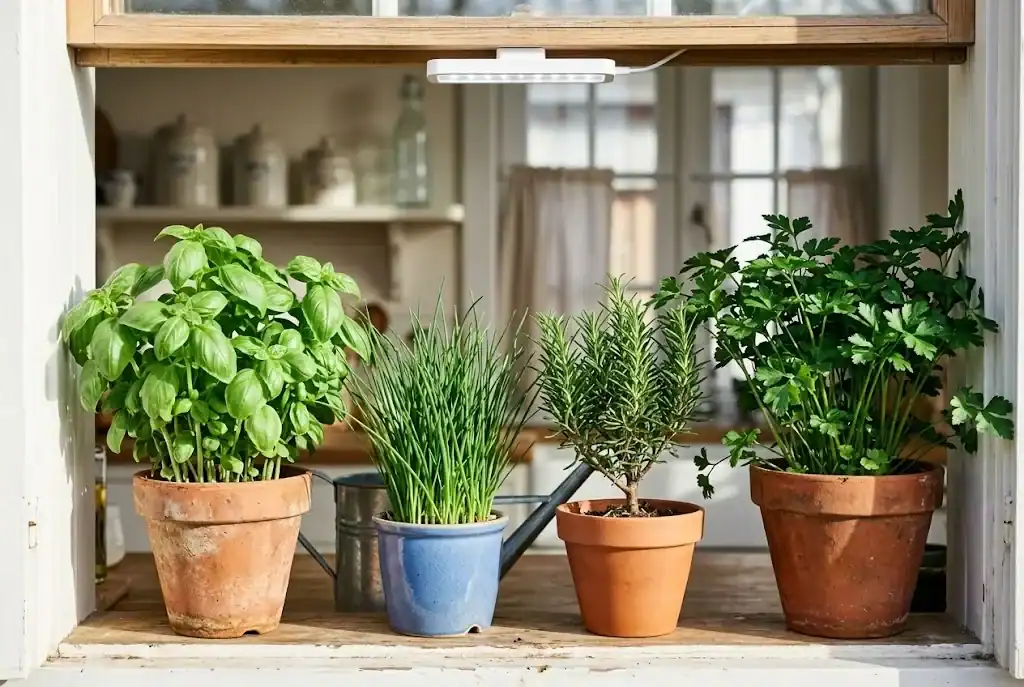
Yes, with light and a little care. The easiest way to keep a steady supply is to maintain a rotation: moisture-lovers through spring and summer, hardier plants as the cooler weather sets in, and the woody Mediterranean trio carrying the kitchen through winter under a grow light. Most culinary herbs will keep producing for many months indoors, and a few will quietly outlast every other plant on the sill. Watch how your herbs grow, and you will learn what each one wants within a season or two.
The same principles apply whether you tend a single pot or a long row of herb gardens along a sunny wall: a generous window, a container with drainage, fresh soil, and a light hand with the watering can go a long way.
If you have never grown herbs before, start with one or two pots in your sunniest window and learn how those plants behave. The first cut usually comes within a month, and the habit of stepping over to take a few leaves for dinner is the part that keeps a small setup going for years. For a fuller walk-through of setting up an indoor garden from scratch, our beginner’s guide to starting an indoor garden covers the planning side in more detail.
Either way, the basics hold: a sunny window, a container with drainage, fresh potting soil, a light touch with the watering can, and a few herbs you actually cook with. Once a small indoor garden feels routine, expanding to a larger setup is a matter of giving the same plants more room and a bit more light.
Quick answers to common questions
What are the easiest herbs to grow indoors?
The forgiving six are the easiest for beginners. All tolerate a range of conditions and keep producing with regular cutting. Mint and chives are particularly forgiving and will quietly outlast other houseplants.
How much light do indoor herbs need?
Most culinary herbs need six to eight hours of sunlight a day. A south-facing window is ideal. If your best window gets less than four hours of direct sun, supplement with an LED grow light on a timer for twelve to fourteen hours a day.
How often should you water indoor herbs?
Water when the top inch of soil feels dry, then water thoroughly until water runs out of the drainage holes. Most setups prefer a wet-dry cycle rather than a daily splash. Reduce watering in winter when growth slows.
What herbs should not be potted together?
Mint is best in its own pot because its roots spread aggressively. Basil likes more moisture than the woody Mediterranean herbs, so plant them in separate containers. Group the moisture-lovers together, and keep the woody Mediterranean herbs in a drier, sunnier pot of their own.
For a wider view of how a small indoor setup grows into a long-term garden, our complete beginner’s guide to growing an herb garden brings the same principles to a larger setup.