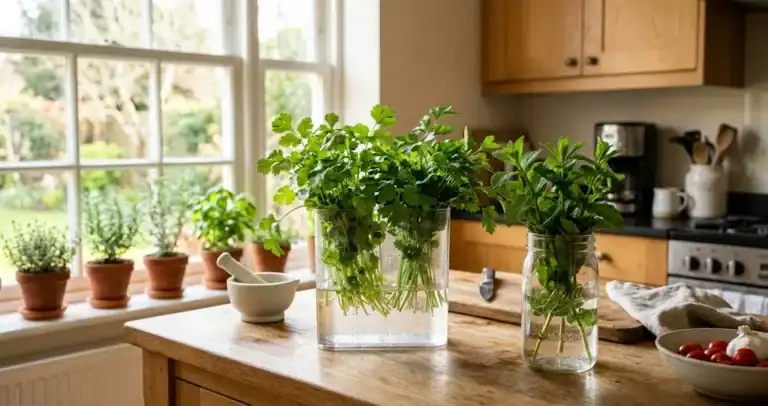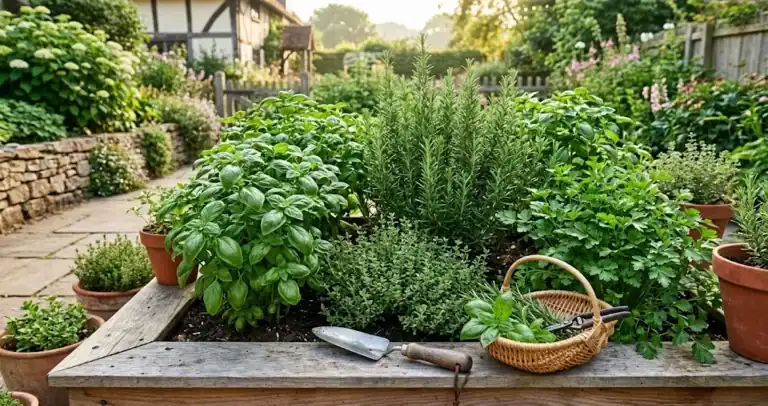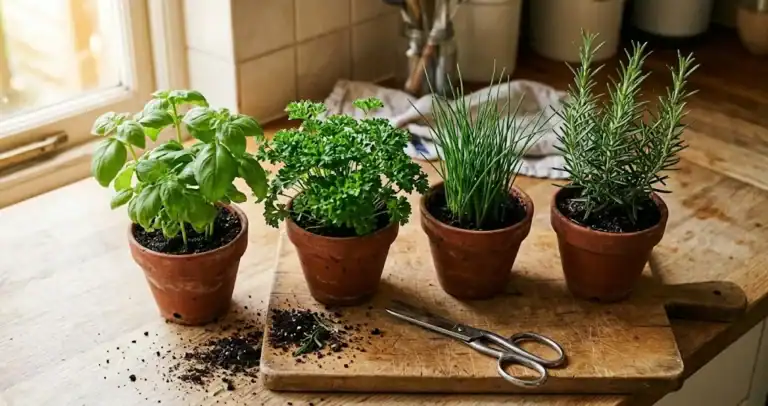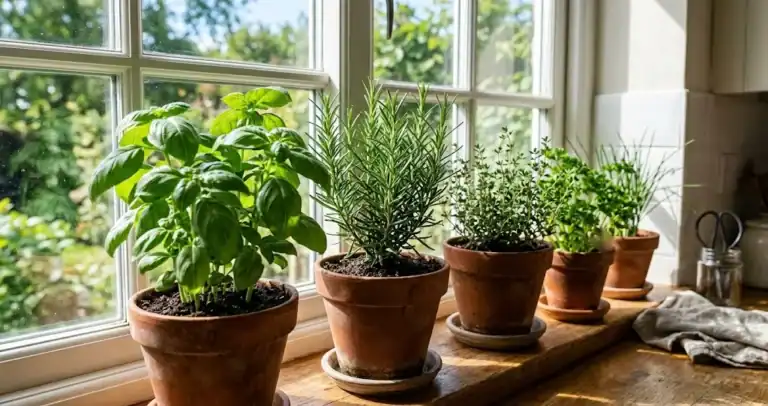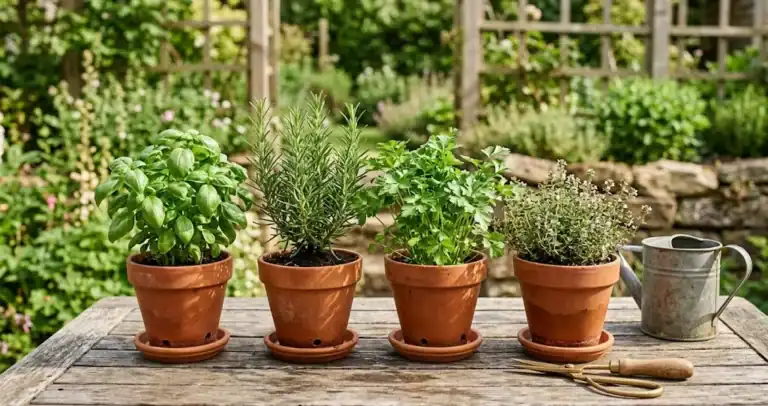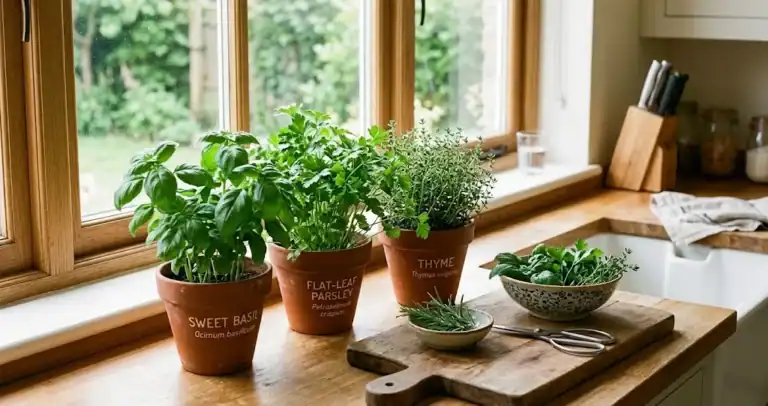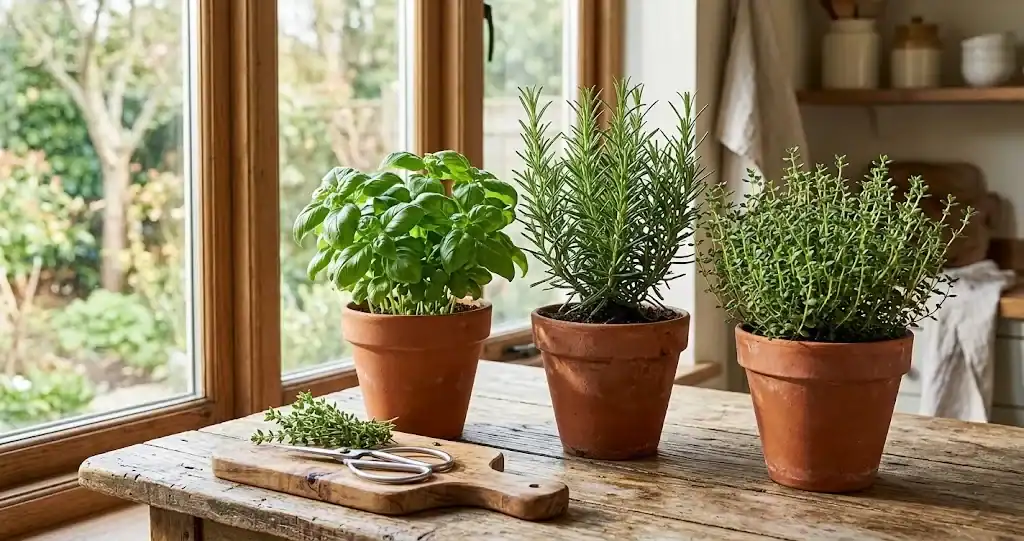
Fresh herbs bring vibrant aroma, fresh flavor, and vivid color straight to your cooking. Keeping potted plants within arm’s reach of your cutting board turns everyday meals into lively culinary creations. When you start growing herbs in the kitchen, you enjoy tender clippings of sweet basil, robust rosemary sprigs, and crisp chives without stepping outside.
You do not need a large outdoor plot or an innate green thumb to successfully grow fresh greens inside your home. With thoughtful attention to light, drainage, and watering, every home gardener can nurture a productive setup on a bright window ledge or kitchen counter. If you are new to gardening altogether, explore a fuller guide to growing your own herbs to understand basic plant biology before setting up your indoor pots.
Why Start a Kitchen Herb Garden Indoors
Creating a kitchen herb garden offers daily convenience for home cooks who want fresh herbs on hand. Snapping a fragrant sprig from a woody stem or pulling tender leaves for homemade pesto takes seconds during dinner prep. Potted plants also brighten living spaces with lush foliage, sweet fragrance, and beautiful flower blossoms when in bloom.
Beyond culinary flavor, many home growers like to grow a mix of cooking staples and traditional herbal varieties for hot tea. Traditional herb growing includes brewing peppermint and lemon balm in hot water for comforting infusions, offering pleasant natural options at the end of a long day.
Essential Growing Conditions: Light, Soil, and Planters
To ensure every potted herb thrives inside, you must match the natural growing conditions each species requires. Sunlight, potting soil, and container design determine how vigorously each plant grows. Every herb has specific light and moisture preferences you should respect.
Light and Sunshine Requirements
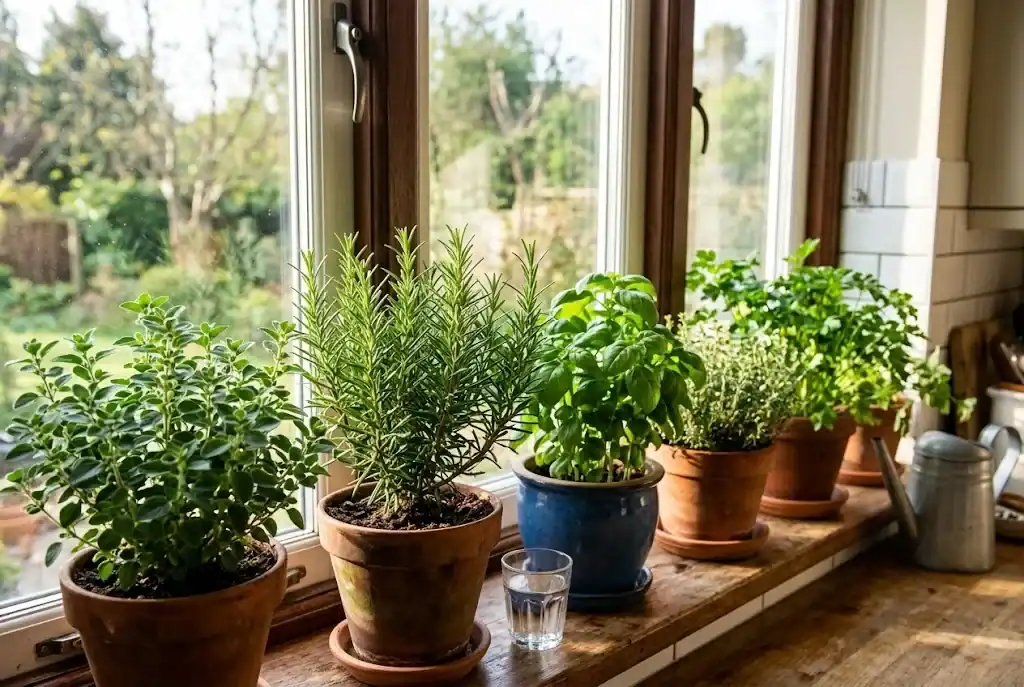
Most culinary plants crave plenty of light to build aromatic oils and strong stems. Sun-loving Mediterranean plants require at least six hours of direct sunlight daily. Placing a planter on a sunny windowsill usually provides enough light during spring and summer.
If your kitchen lacks bright windows, install an adjustable LED grow light directly above your pots. Running a grow light for twelve to fourteen hours daily delivers the exact amount of light needed to prevent weak, leggy stems.
Containers and Drainage
Proper drainage protects roots from rot. Never let pots sit in standing water. Choosing containers with bottom drainage holes and matching drip saucers keeps roots aerated and healthy. If you need to plant multiple varieties, avoid cramming too many plants in one pot; instead, group species with similar water needs. For detailed advice on container materials and sizing, read our guide on what makes a good herb container.
Potting Soil and Aeration
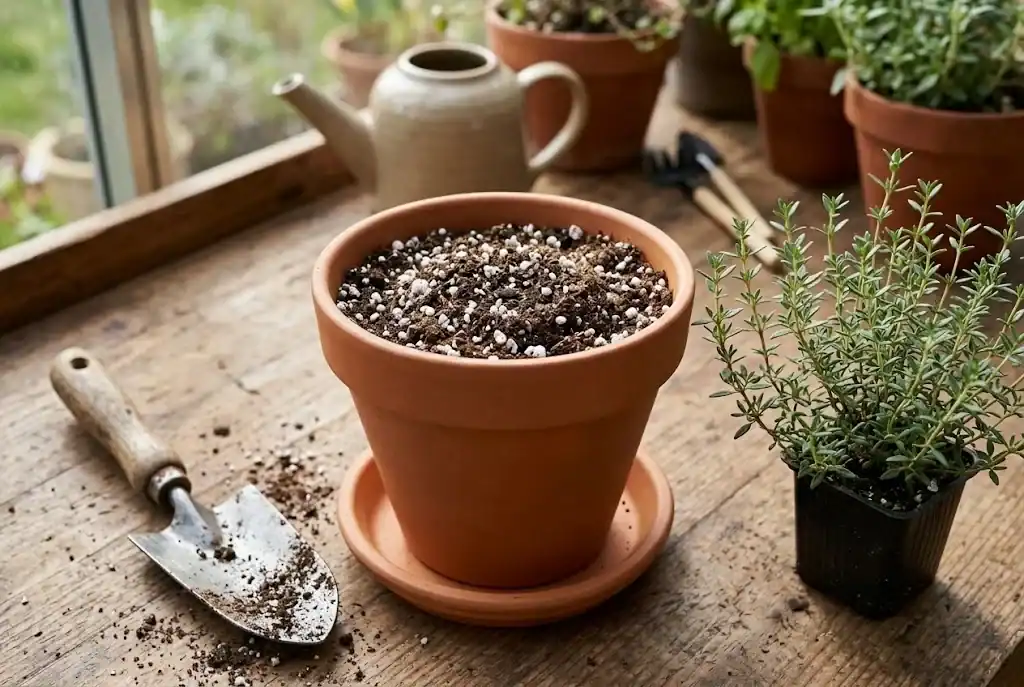
Avoid heavy garden dirt, which compacts tightly in small containers and chokes roots. Use a lightweight, sterile potting soil enriched with perlite or coarse sand. This blend ensures fast drainage while holding balanced moisture around the root zone.
How to Grow Herbs: Annual vs Perennial Varieties
Understanding plant life cycles helps you plan replacements and manage feeding schedules throughout the year. Many herbs have distinct seasonal requirements that dictate how long they remain productive.
- Annual varieties: Plants like sweet basil, cilantro (yielding coriander seeds), and feathery anethum complete their life cycle in one season. They grow rapidly from seed, produce abundant leaves, and set seed before dying back.
- Perennial varieties: Sturdy perennials such as rosemary, garden thyme, sage, oregano, and chives live for multiple years. These cold hardy plants survive winter inside, can overwinter in mild climates, and provide steady harvests season long.
Top Kitchen Herbs: Basil, Rosemary, Thyme, and Parsley
Selecting reliable culinary species ensures you have favorite ingredients ready for cooking without overcrowding your counter space. Woody varieties like rosemary and lavender are especially easy to grow on bright ledges.
Sweet Basil
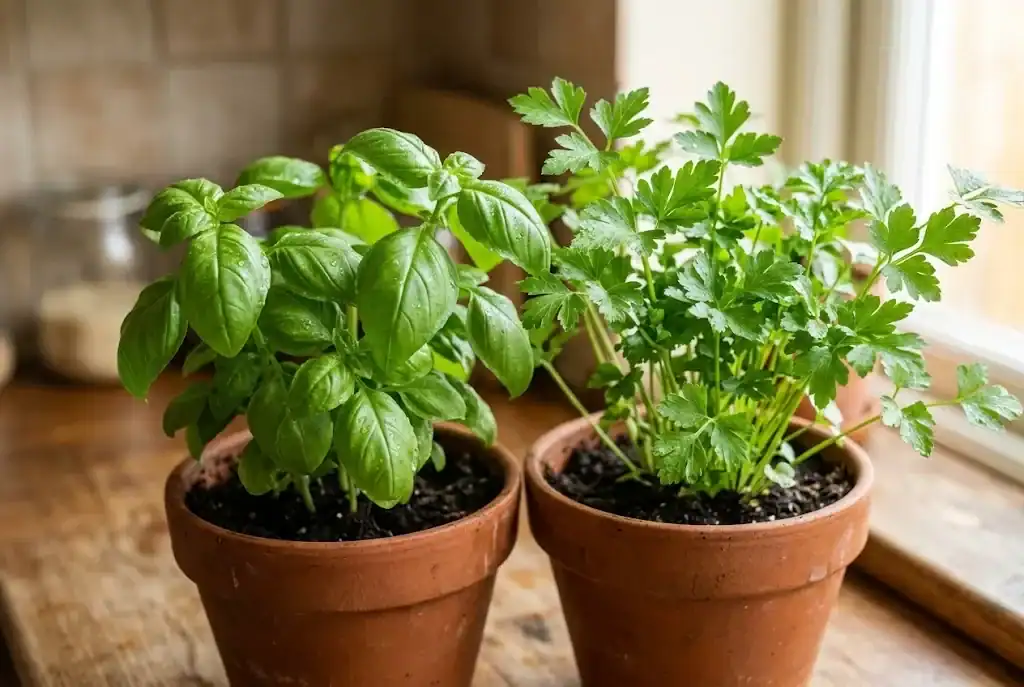
Fresh basil is an indispensable culinary herb in pasta sauces, pizza, and crisp summer salads. Basil thrives in warm temperatures and requires full sun to produce lush leaves. Keep potting soil moderately moist and pinch back stem tips regularly to encourage bushier growth.
Rosemary and Thyme
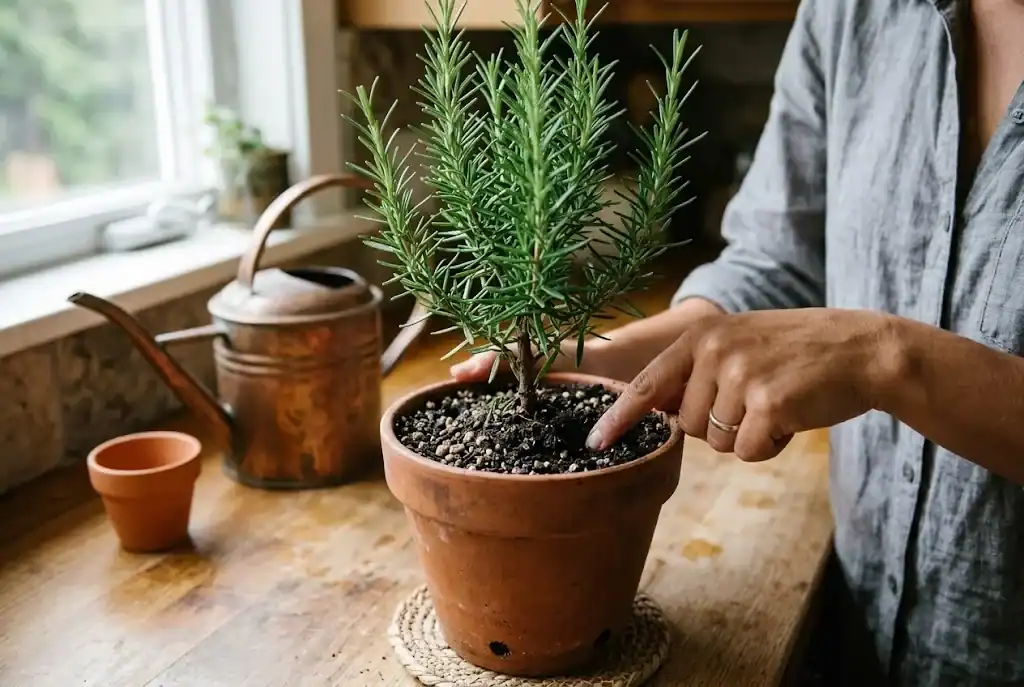
A compact rosemary bush brings piney, woodsy aroma to roasted potatoes, poultry, and breads. Thyme is another Mediterranean favorite that grows well in containers, providing tiny, pungent leaves perfect for slow-simmered stews. Both plants prefer drier soil and need thorough drying between waterings to prevent root distress.
Flat Leaf and Curly Parsley
Flat leaf Italian parsley offers a crisp, bright flavor that balances rich marinades and grain salads. Curly parsley is great to use as a decorative garnish and soup booster. Both types tolerate cooler indoor temperatures and partial shade better than Mediterranean evergreens.
Fragrant Additions: Oregano, Chive, Sage, and Marjoram
These aromatic staples expand your culinary palette with distinct savory notes. When choosing which herb to use in roasted dishes, these savory leaves deliver reliable depth.
Greek Oregano and Sweet Marjoram
This classic Greek herb delivers spicy, pungent notes essential for Mediterranean fare. Sweet marjoram offers a milder, sweeter variation that complements poultry and egg dishes. Both species thrive in well-drained potting mix under full sun.
Chive Plants and Garden Sage
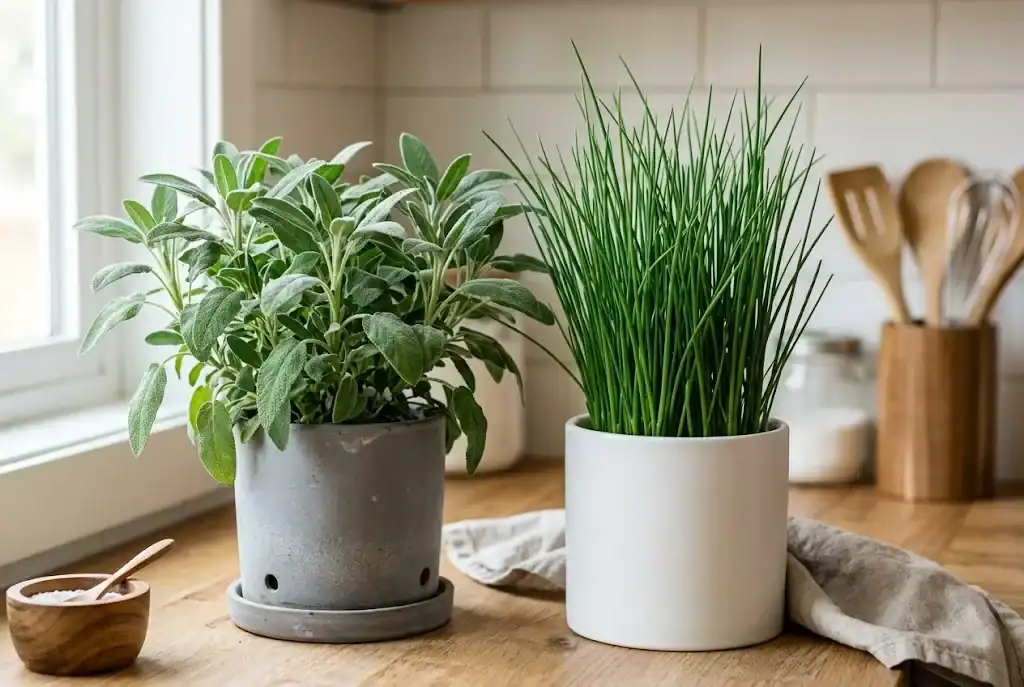
A potted chive plant produces slender green spears and edible purple flowers that impart mild onion flavor to baked potatoes and omelets, making it an herb home cooks use a lot in weekday breakfasts. Garden sage features velvety, gray-green leaves with an earthy flavor that pairs naturally with roasted squash, beans, and autumn stuffing.
Delicate Greens: Coriander, Dill, Tarragon, and Mint
These delicate plants require attentive care to prevent premature bolting.
Coriander Greens and Feathery Fronds
Tender coriander foliage lends a bright citrus note to salsa and curry, while fresh dill provides tangy sharpness for dips and seafood. Because both species tend to grow flower stalks quickly in warm room heat, sow fresh seeds every few weeks for a continuous supply of young leaves.
French Tarragon and Peppermint
French tarragon imparts a subtle anise-like licorice aroma prized in French vinaigrettes and chicken dishes. Peppermint and spearmint spread aggressively through vigorous runners; always plant mint varieties in dedicated individual pots rather than shared planters.
Daily Care, Watering, and Maintenance
Consistent care keeps indoor plants productive for months. Before adding water, test the top inch of potting soil with your fingertip. If dry, water thoroughly until moisture drains freely from the base. Discard excess runoff from saucers after twenty minutes.
Feed active plants every four to six weeks during active spring and summer growth with a diluted organic liquid fertilizer. In darker winter months, reduce feeding and watering as plant growth naturally slows down.
For more detailed management tips and seasonal routines, check out our companion resource on growing kitchen herbs.
Harvesting Techniques and Creative Ways to Use Herbs
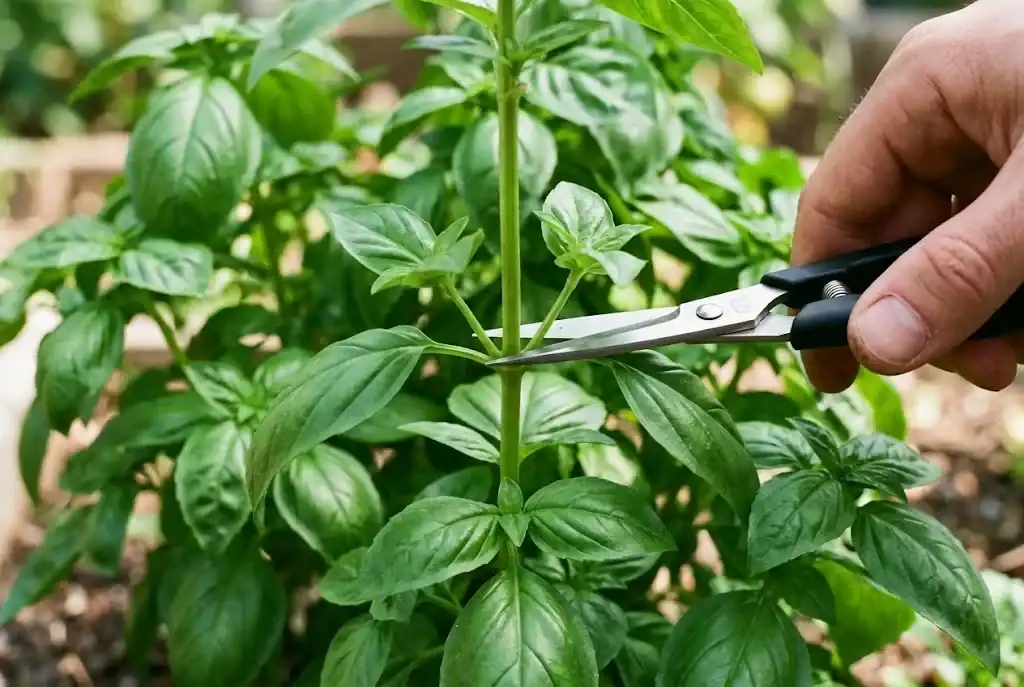
Proper harvesting encourages your plants to produce new branches rather than bolting to seed. Frequent light trims keep foliage dense and aromatic. Whenever you want to harvest fresh clippings, snip just above a set of growing leaves. Here are practical ways to use herbs fresh and dried:
- Snip outer stems using clean, sharp pruning shears or kitchen scissors.
- Never remove more than one-third of the total plant foliage during a single harvesting session.
- Pinch off flower buds as soon as they appear to direct energy into flavorful leaves.
- Use fresh clippings immediately in cooking, or preserve excess harvest by freezing; you can also dry sturdy sprigs for long-term pantry storage. You can also blend fresh trimmings into compound butter for quick steak and vegetable toppings.
Preventing Common Indoor Pest and Disease Issues
Indoor container gardens sometimes encounter common household pests such as fungus gnats, spider mites, or powdery mildew. Preventing these problems is straightforward when you maintain good air circulation and avoid overwatering.
- Fungus gnats: Tiny black gnats thrive in soggy soil surfaces. Let the top layer of potting mix dry out completely between waterings to disrupt their breeding cycle.
- Spider mites and aphids: Inspect the undersides of leaves weekly. If you spot webbing or tiny insects, gently wipe the foliage with a damp cloth or spray with a mild insecticidal soap solution.
- Airflow: Keep small fans circulating gentle air around crowded pots to reduce excess humidity and discourage fungal spores.
Frequently Asked Questions About Kitchen Herb Care
Can I grow kitchen herbs from seed at home?
Yes, fast-sprouting annuals like basil and coriander easily grow from seed on a warm window ledge. Slower perennials like lavender and tarragon establish much faster when started from nursery transplants or root cuttings.
How much direct sunlight do indoor culinary herbs need?
Most Mediterranean varieties need at least six hours of direct sunlight each day. If your kitchen windows receive less light, supplement with a compact LED grow light placed six to twelve inches above the foliage.
Why are my potted herb seedlings turning yellow and wilting?
Yellowing lower leaves and soft stems usually indicate overwatering or poor container drainage. Allow the soil surface to dry slightly between waterings and confirm that drain holes are unobstructed.