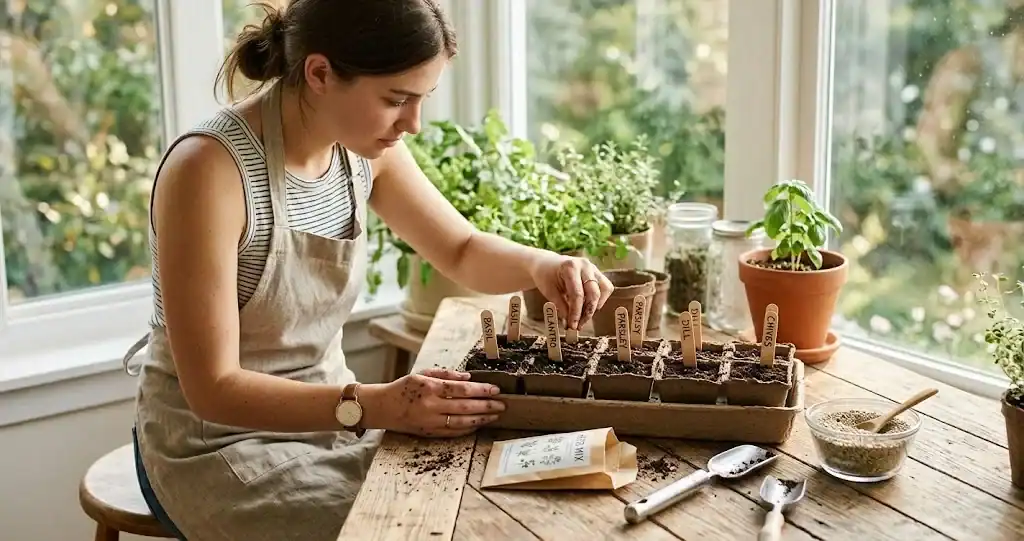
A handful of herb seeds can turn one windowsill or patio into a useful little kitchen garden. The trick is not complicated: match each seed to the right season, sow it at the right depth, and give new seedlings steady light instead of constant fussing.
To grow herbs from seeds, start with fresh seed, a clean container with drainage, and a light seed-starting mix. Keep the mix evenly moist and warm while seeds germinate. Once seedlings have true leaves, give them strong light, thin or transplant them, and move them outdoors only after they have adjusted to outdoor conditions.
If you are planning more than a few pots, this beginner’s guide to growing an herb garden gives the broader layout, sunlight, and care framework. This guide stays focused on getting herbs started from seed.
Choose herbs that suit your first season
Basil, cilantro, dill, chives, and parsley are satisfying choices for a first try. Basil germinates quickly in warmth. Cilantro and dill grow best when sown where they will stay, because they dislike root disturbance. Chives make fine, grasslike seedlings and come back as a perennial in many climates. Parsley is slower, so give it patience rather than extra water.
Oregano, sage, rosemary, and thyme can also be grown from seed, but their small seeds and slower germination make them less forgiving for a first tray. Start with one or two easy varieties, then add the slower herbs once you understand how your light and temperature behave. Many perennial herbs are easiest to buy as starter plants, while annual herbs such as basil and dill reward you quickly from seed.
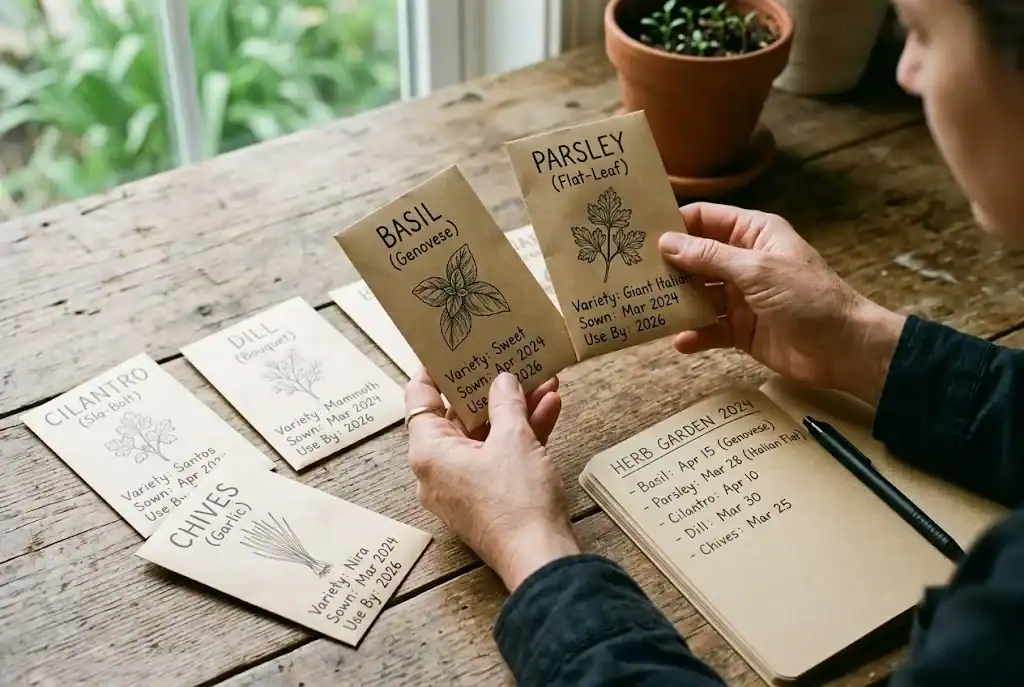
Seed quality matters. Check the seed packet for the year packed and the expected germination window. For a deeper look at varieties, freshness, and what to buy, see choosing herb seeds.
Starting herbs from seed indoors or outdoors
Start warm-season herbs such as basil indoors about six to eight weeks before your usual last spring frost. This gives seedlings a head start while nights are still cold. Use a bright south-facing window only if it receives strong light for much of the day. A simple grow light is more reliable, especially in cloudy weather.
Direct sow cool-season herbs such as cilantro and dill outdoors after the soil can be worked in early spring. Make a second sowing every few weeks if you want a longer harvest. You can also grow many herbs in containers, provided the pot has drainage and enough sun. Direct sowing directly in the garden also works well for a raised bed or vegetable garden with loose, weed-free soil.
Indoor growing has its own timing and light limits. If your goal is a windowsill crop rather than outdoor transplanting, use this guide on how to grow herbs indoors from seed.
Seed-starting supplies your herbs need
- Fresh herb seeds and plant labels
- A clean seed tray, small pots, or cells with drainage holes
- Light, sterile seed-starting mix
- A shallow tray to catch water
- A spray bottle or gentle watering can
- A clear cover for humidity, if your room is dry
- A grow light if window light is weak
Use seed-starting mix rather than heavy garden soil. It drains well enough for air to reach the seed while still holding moisture. Compost is useful later in a garden bed or larger pot, but it is usually too coarse for tiny seeds in a small cell. A growing medium made with peat or perlite is common, but choose any clean mix that stays light and drains freely.
How to sow herbs from seed
- Moisten the seed-starting mix before filling the tray. It should feel like a wrung-out sponge, not drip when squeezed.
- Fill each cell loosely, then level the surface without packing it hard.
- Read the seed packet for seed depth. Most small herb seeds need only a light cover. Some tiny seeds can sit on top of the soil and be pressed in gently.
- Sow two or three seeds per cell when you want one final plant. This improves your odds without creating a crowded clump.
- Label every row before you water. Basil and oregano seedlings do not look very different at first.
- Mist or bottom-water gently so seeds do not wash into one corner.
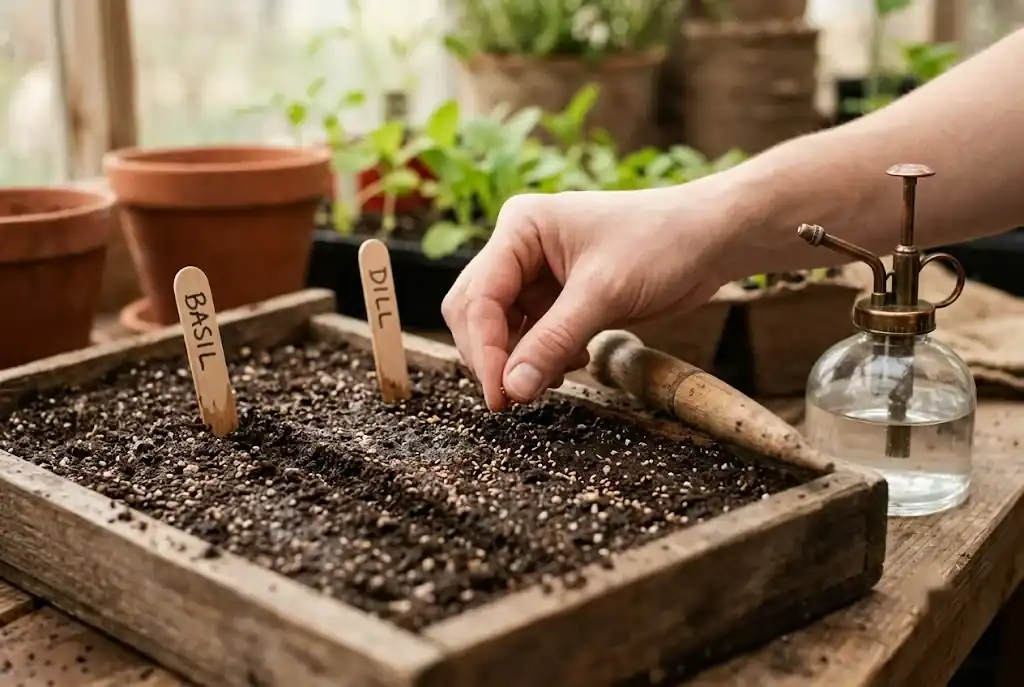
Warmth and moisture start germination. Put the tray in a warm spot, then check it daily. A heat mat can help herbs like basil when a cool room delays sprouting. A cover can keep the surface moist, but remove it as soon as sprouts appear so stale, damp air does not encourage fungal problems.
Give seedlings light, water, and room
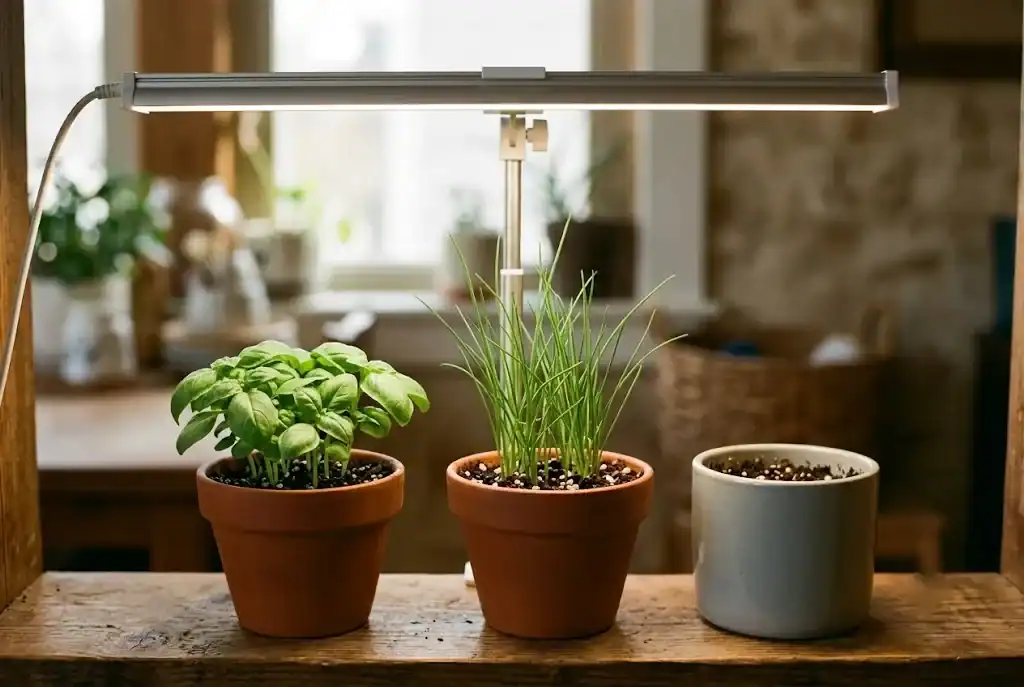
Once seedlings grow, light matters more than extra heat. Place a grow light a few inches above the leaves and raise it as plants grow. Without enough light, seedlings stretch into pale, floppy stems. Rotate a windowsill tray every day or two if light reaches it from one side. Fluorescent lights can work for seed starting, though modern LED grow lights run cooler and use less electricity.
Water when the surface begins to dry, then let excess water drain. Constantly wet soil can lead to damping off, a disease that makes young stems collapse near the soil line. Good airflow, clean containers, and moderate watering are your best prevention.
When seedlings have their first set of true leaves, choose the strongest plant in each cell and snip the extras at soil level. Do not pull them out, because that can disturb the roots you plan to keep. Move crowded seedlings into their own pot before roots become tangled.
Planting herbs outdoors after transplanting
Before transplanting outdoors, harden seedlings off for about a week. Set them outside in bright shade for a short time on the first day, then gradually increase their time outdoors and exposure to sun. Bring them inside if a cold snap or hard frost is expected.
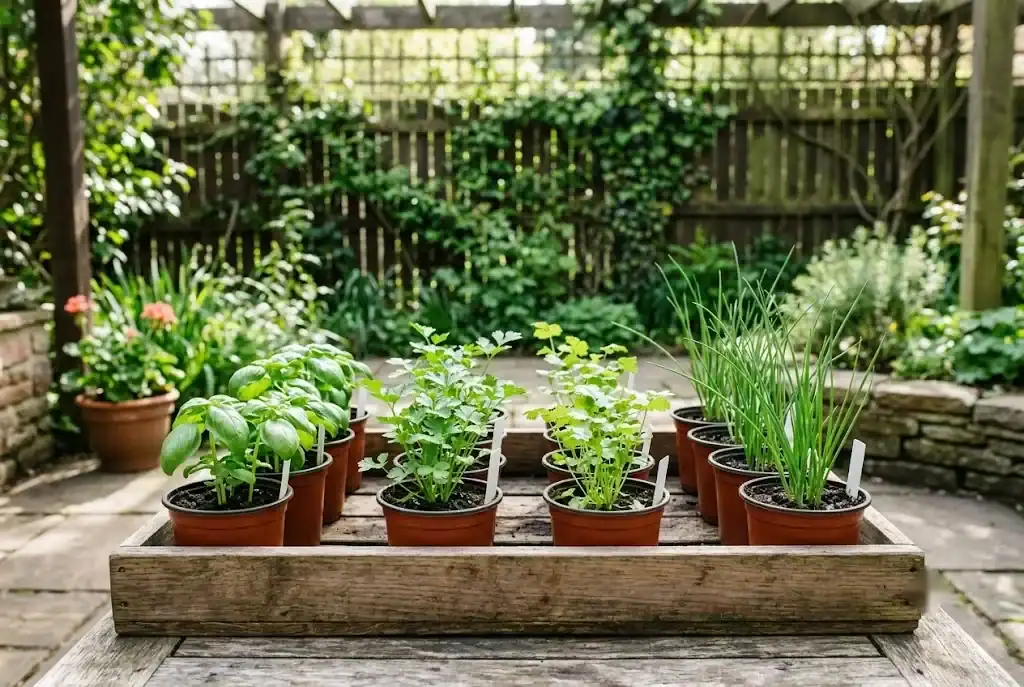
Transplant after the danger of frost has passed for tender herbs such as basil. Water the pot before planting, slide the root ball out gently, and set it at the same depth it grew in the cell. Firm the soil lightly and water it in. Give each plant enough space for air to move around it. Avoid fertilizer at transplanting if your planting mix is already enriched. Start a light feeding routine only after active new growth appears.
Many herbs prefer at least six hours of direct sunlight. Basil and dill are hungry for sun. Parsley and cilantro can handle some afternoon shade where summers are hot. Most herbs can be grown in a pot, but herbs need regular checking because a small container dries faster than a garden bed. Those growing conditions will vary with your climate, so use the plant’s response as your guide.
Common reasons herb seeds fail
- Seeds never sprout: The mix may have dried out, stayed too cold, or the seeds may be old. Check the packet and try a warmer location.
- Seedlings fall over: Improve airflow, avoid soggy soil, and use clean containers for the next batch.
- Plants are tall and weak: Move the grow light closer or give the tray stronger daylight.
- Seeds are crowded: Thin early. A small number of well-spaced seedlings will grow faster than a crowded tray.
- Leaves look pale after transplanting: Protect plants from strong sun while they adjust, then increase exposure gradually.
How long it takes to grow herbs from seeds
Germination can take a few days for basil or more than two weeks for parsley and rosemary. Most seedlings need several more weeks before they are large enough to transplant. You can usually begin light harvesting once a plant is established and has enough leaves to keep growing strongly.
Start herbs from seed when you want more variety, more plants for the cost, or a steady supply for successive sowings. Buy a starter plant when you want a quick harvest from a slow-growing herb such as rosemary. Both methods have a place in a practical herb garden.
Frequently asked questions
What is the easiest herb to grow from seed?
Basil is often the easiest for beginners because it germinates quickly in warm conditions and grows fast with strong light. Dill, cilantro, and chives are also good choices when their season and growing space suit them.
Why are herbs hard to start from seed?
Most problems come from too little light, too much water, old seed, or sowing at the wrong time. Match the seed packet’s depth and temperature guidance, and make one change at a time if a tray struggles.
Can I use potting soil for starting seeds?
You can, but a fine seed-starting mix gives small seeds a more even surface and better drainage. Save richer potting soil for transplanting seedlings into a larger pot.
Start small and sow again
Begin with a tray of two or three culinary herbs you cook with often. Keep notes on sowing dates, germination, and light. A second small sowing is often more useful than one oversized tray, because it teaches you how each herb behaves and keeps fresh leaves coming into the kitchen.
