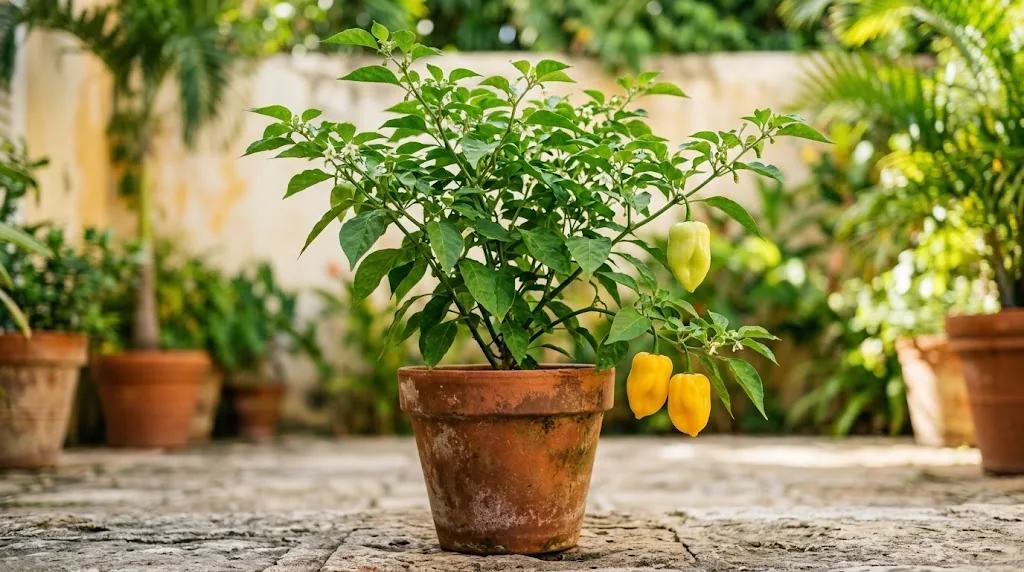
Trinidad Perfume is a mild seasoning pepper with a sweet, fruity fragrance and little heat. Its small fruits usually ripen from pale green to yellow. Supplier descriptions vary by seed line, so taste one before adding a whole fruit to a dish.
At a glance
- Reported pungency: Very mild; one supplier lists 700 Scoville units (SHU).
- Ripe color: Bright yellow in several seed catalogs; check the description supplied with your seed line.
- Best fit: Cooks who want fragrant flavor in soups, curries, and seasoning mixes without relying on high pungency.
Trinidad Perfume origin and identity
Catalogs identify this named variety with Trinidad and Tobago. The Italian Society of Horticulture record also lists Trinidad as its origin, while a supplier listing describes it as open-pollinated. These records do not provide a detailed breeding story or establish that every seed lot sold under the name is genetically identical. The sources reviewed give no reliable record that supports calling it a landrace.
For a broader comparison of named varieties, see this guide to types of chili peppers.
What does it taste like, and how spicy is it?
Suppliers describe a fruity, strongly aromatic flavor with very mild pungency. One listing reports 700 SHU while also describing the variety as mildly hot and low in heat. Treat that catalog figure as an estimate for its seed line, not a lab result or a promise for every fruit. Taste a small piece before using the whole fruit in a dish.
The fragrance is the point. A ripe yellow fruit can add a floral, tropical note to a sauce or stew. This variety shares a country of origin with far hotter peppers such as the Scorpion, so confirm the variety name on the packet.
Plant and fruit characteristics
One supplier lists a mature height of 24 to 36 inches, light-green foliage, and white flowers. Its Habanero-like fruit is about 1.5 inches long by 1.25 inches wide, with medium-thin flesh that ripens from light green to bright yellow. Check the seller’s own description because details can differ by seed line.
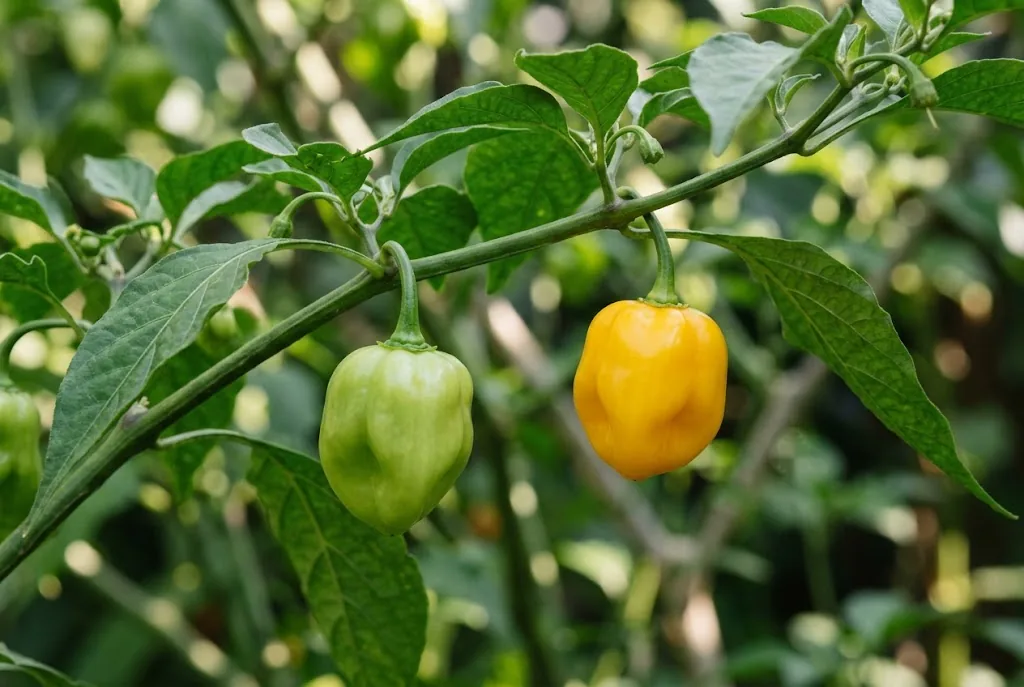
Before buying, look for a supplier that shows its own mature fruit and keep the packet label. Compare the first ripe pods with that description instead of judging by the name alone.
How to grow Trinidad Perfume
Choose a sunny site with freely draining soil. A sturdy container can work if it has drainage holes and sits in the warmest part of the patio. Keep moisture even while fruit develops, adjusting for rain, temperature, and drainage rather than following a fixed watering calendar.
Start indoors
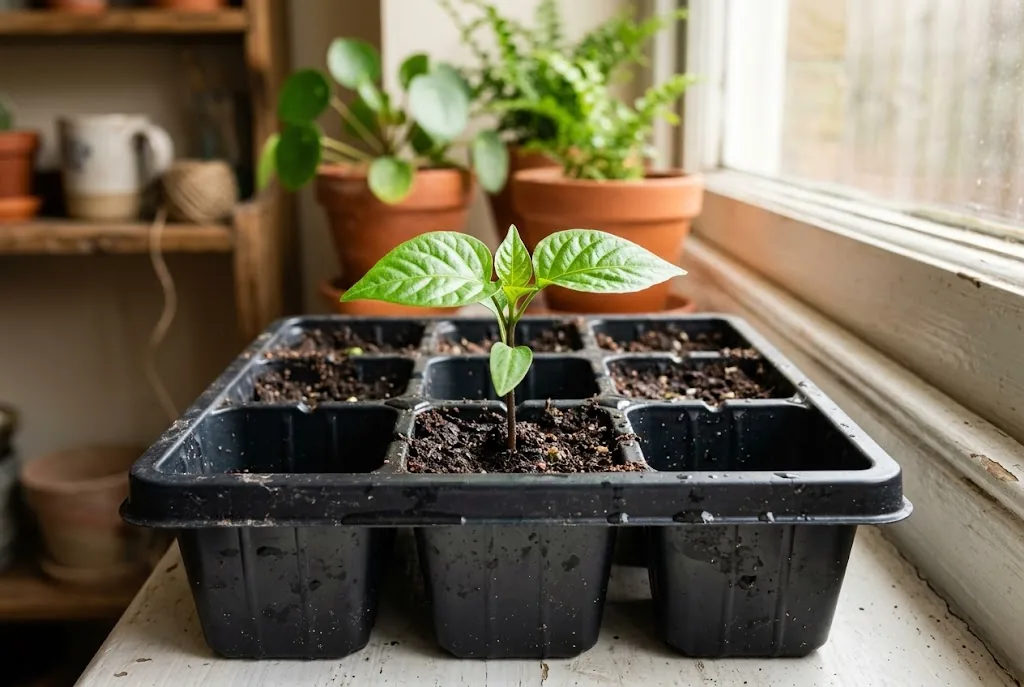
In many climates, start sowing indoors about eight weeks before outdoor planting. University of Minnesota Extension recommends keeping the starting mix around 80 to 90°F until seedlings emerge. Cover the seeds about one-quarter inch deep, monitor moisture, and give sprouts bright overhead light. Warmth helps them germinate; cold, soggy mix can slow them.
Harden off and transplant
Gradually expose young plants to outdoor light and breezes over about ten days. Set them out after frost danger has passed and the soil is warm, near 60°F, as Penn State Extension advises for peppers. Choose a well-drained bed or a roomy pot, water at the base, and set the root ball at its original depth. Cool nights can slow growth, so wait for settled warmth rather than planting by the calendar alone.
General timing is only a guide. One catalog lists maturity at 90 or more days, but does not say whether it counts from sowing or transplanting. Allow a long warm season and use fruit color and firmness, not a catalog day count, to decide when to pick. For a different Mexican variety with distinct growing and culinary traits, see Chilhuacle Negro peppers.
Harvest, handle, and store the fruit
Pick fruits when they reach the mature color described by your seed supplier, usually bright yellow for this variety. Cut the stem with clean snips instead of pulling hard on a branch. Check the plant every few days once fruit begins to ripen; regular picking keeps mature pods from sitting on the plant and lets you use them at their freshest.
A mild label does not guarantee zero pungency. Wear gloves when cutting fruit from an unfamiliar seed line, keep hands away from your face, and wash tools afterward. Poison Control recommends gloves and avoiding eye contact when handling peppers. Refrigerate fresh fruit and use it while firm; Utah State University Extension recommends refrigerating fresh chiles, freezing them for longer storage, or drying ripe pods until brittle. For shelf-stable storage, follow a tested pickling or marinated-pepper method rather than improvising one.
Culinary uses
Use it where you want fragrance more than burn. Add a little to a cooked curry, soup, bean dish, or sautéed vegetables. Remove the stem, mince the flesh, and let its aroma mingle with the dish. For a gentler result, remove the inner ribs and seeds; include some after tasting first if you want more bite.
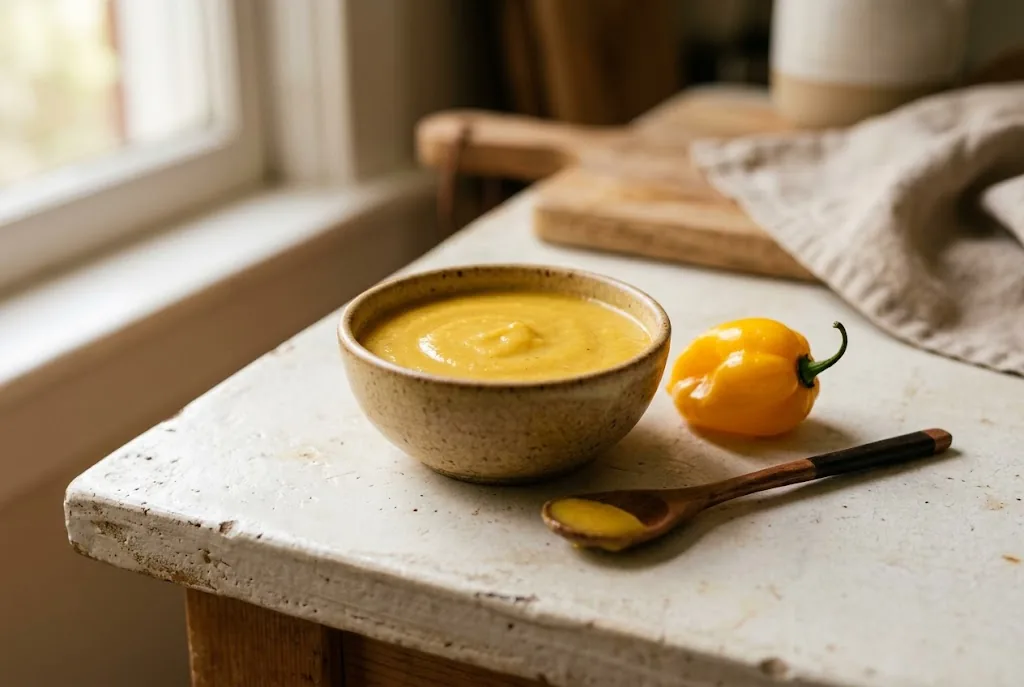
The thin flesh suits chopping, cooking, and drying better than stuffing. Dry sound, fully ripe pods until brittle, then store them airtight away from heat and light. Grind a small batch into powder or crumble it into beans. For a fruitier option with a more noticeable bite, compare Sugar Rush Peach peppers.
