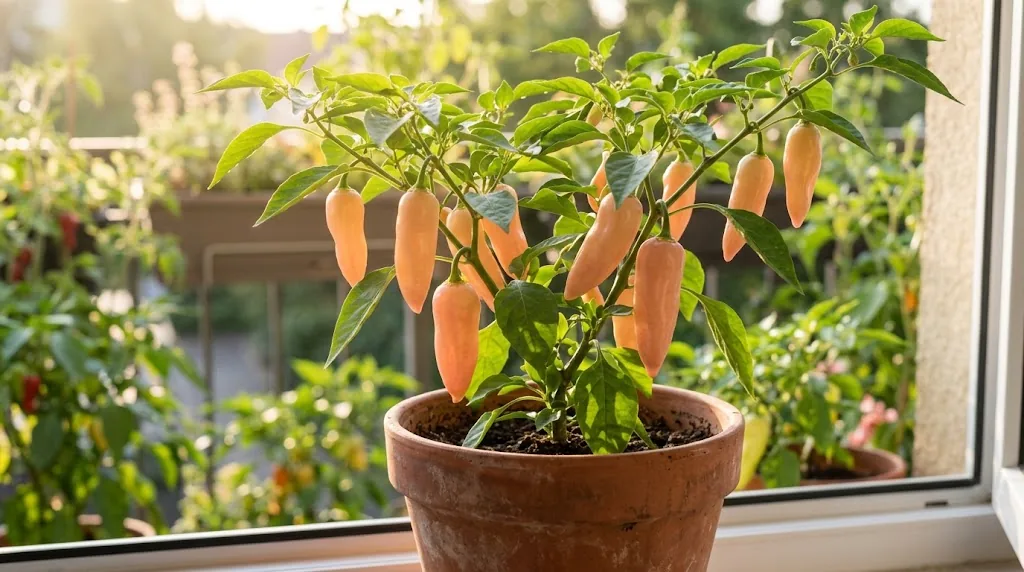
A ripe Sugar Rush Peach pepper looks as if it belongs in a fruit bowl: long, tapered, and a soft peach color. The sweetness is real, but so is the heat. This open-pollinated Capsicum baccatum cultivar pairs a tropical, citrusy flavor with a sharp kick, making it a good fit for gardeners who want a productive plant and cooks who enjoy sweet-hot peppers. This variety is grown for its balance of color, flavor, and heat.
Park Seed lists the pods at about 3 to 4 inches long and the heat at 50,000 to 100,000 Scoville Heat Units (SHU), while Baker Creek lists 30,000 to 50,000 SHU. Those are seller estimates, not a laboratory guarantee. Individual pods can taste hotter or milder, so start with a small piece when cooking.
For a wider comparison of species, shapes, and heat ranges, see our guide to the main chili pepper varieties.
Pepper variety: origin and appearance
It is a named, open-pollinated cultivar in the species Capsicum baccatum, a group that includes many aji peppers. It is not the same as Sugar Rush Peach Striped, a distinct striped selection, and the name does not describe every peach-colored pepper. Check the label when buying if you want this particular fruit.
Catalogs credit Welsh grower Chris Fowler with developing or stabilizing the cultivar. Its origin story is less settled: Baker Creek describes an accidental cross among C. baccatum peppers, while another catalog attributes the chance cross to Jukka Fatalii’s garden and says Fowler helped stabilize it. The careful takeaway is that the named selection was stabilized after a chance cross; its precise parentage and location are not consistently documented by the sources available.
The name reflects mature fruit color and its sweet impression. Green pods turn pale yellow or peach as they ripen, with the final shade varying by plant and growing conditions. The fruit is usually elongated and tapered rather than round, though shape can vary. Park Seed describes pods around 3 to 4 inches long.
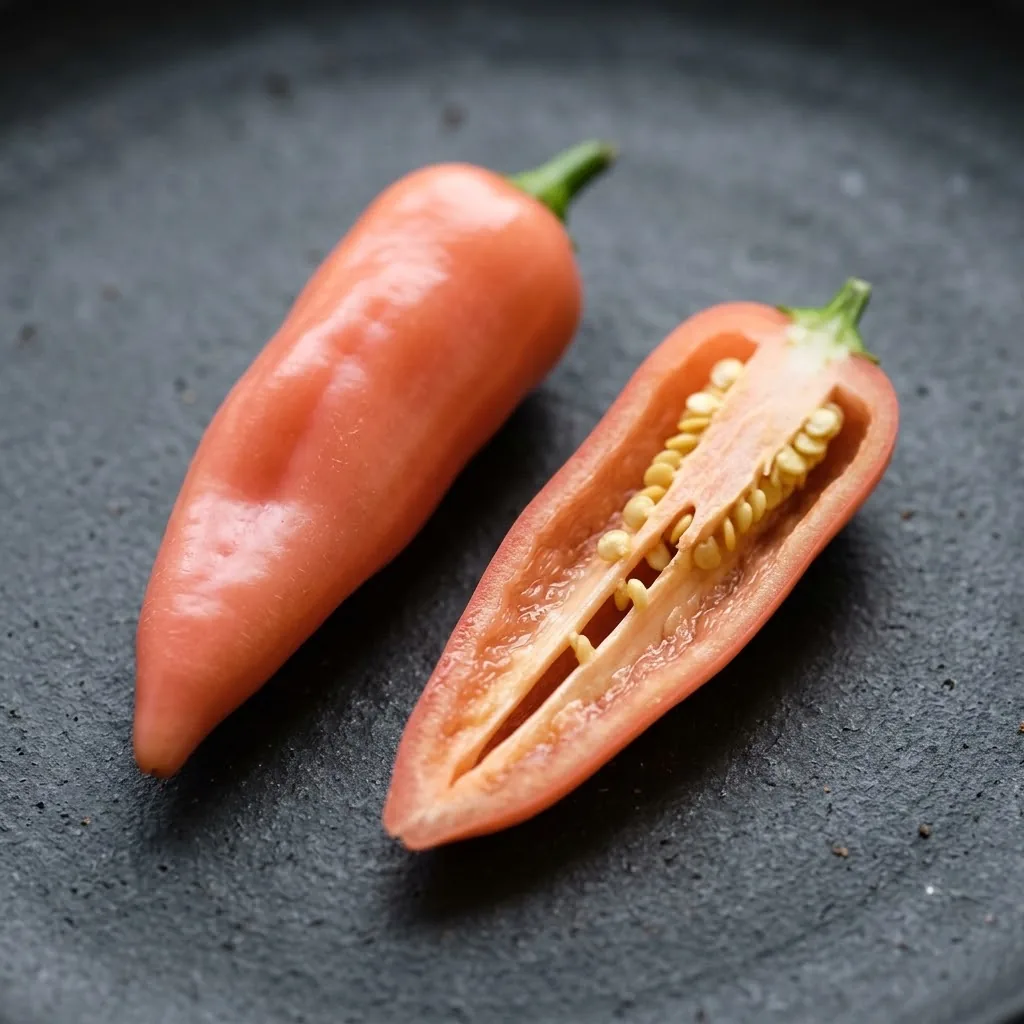
At the table, a ripe pod can be eaten fresh in a small amount, sliced into a salad, or chopped into salsa. Its crisp bite and juicy flesh make it useful raw, while cooking softens the fruit and spreads its heat through a dish. Remove the stem and taste a small piece first because even a sweet-smelling pepper can be much hotter than expected.
Sugar Rush Peach pepper heat and Scoville range
Park Seed lists 50,000 to 100,000 SHU and Baker Creek lists 30,000 to 50,000 SHU. Neither product page presents a lab test for each harvest, and heat naturally varies from pod to pod. Treat the numbers as a broad guide, not a promise.
The first taste can seem sweet and citrusy, with tropical notes, before the heat builds. Ripe peach-colored fruit is often described as sweeter than green fruit. If you are sensitive to chile heat, cut a very small piece and taste it before using a whole pod. It is still hot even when its aroma suggests fruit.
Heat charts can make this seem similar to some habaneros, but an SHU range alone does not predict the whole eating experience. Cultivar, ripeness, and the individual fruit matter, and the fresh citrus-like flavor is a defining part of this pepper’s appeal. The Scoville figure should help you set expectations, not replace a cautious taste test.
Pepper planting and growing tips
This cultivar needs a warm, bright growing season. Start seeds indoors in a clean starting mix, about one-quarter inch deep. Utah State University Extension recommends germinating pepper seeds at about 80°F, then growing seedlings on at 65 to 75°F, though a particular packet may take longer. Keep the mix evenly moist, not waterlogged, and move seedlings into strong light as soon as they emerge. A heat mat can help keep the mix warm, but check it often because warmth speeds drying.
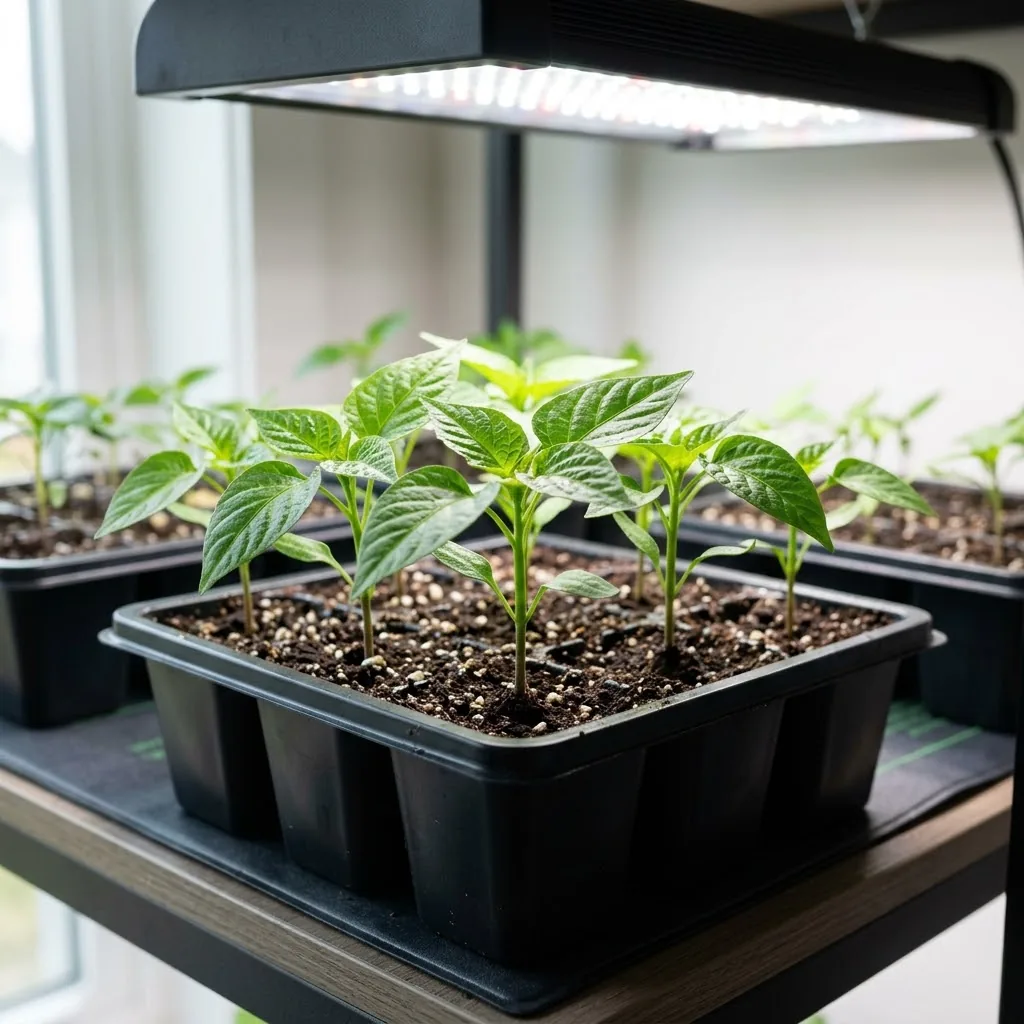
Allow roughly 8 to 10 weeks for a transplant to develop, then harden it off gradually. Set the plant outside after frost danger has passed and the soil has warmed. Choose full sun and fertile, well-drained soil for planting. Baker Creek describes plants up to about 5 feet tall, so a stake or cage is sensible before branches sag; tie the main stem loosely and leave room for it to thicken. A large pot with drainage holes also works if the plant gets enough light and water, and one catalog suggests a pot at least 12 to 16 inches deep. A pot dries faster than a bed and lets you move the plant under cover when nights turn cold. Leave space around the pepper plant so leaves dry after rain and damaged fruit is easy to spot.
Catalog maturity estimates vary: Park Seed lists about 90 days from transplant, while Baker Creek lists 120 days. Use those as seller-specific planning estimates, not a fixed countdown. Cool nights, low light, container size, and the time needed for fruit to change from green to peach all affect the harvest date.
Water deeply when the growing medium begins to dry, adjusting for rain, heat, and whether the plant is in a pot. Peppers do better with steady moisture than repeated swings between very dry and saturated ground. Avoid heavy, wet growing beds. If leaves droop in afternoon heat, check the mix before adding water, since a wet pot can stress roots as much as a dry one. Base fertilizer decisions on the garden and product label rather than adding extra nitrogen by habit. The University of Minnesota Extension’s pepper growing guide covers moisture, sun, harvest, and common problems. To compare a different fruit type, see the compact, round-fruited chinense pepper from Guyana.
When to harvest ripe hot peppers
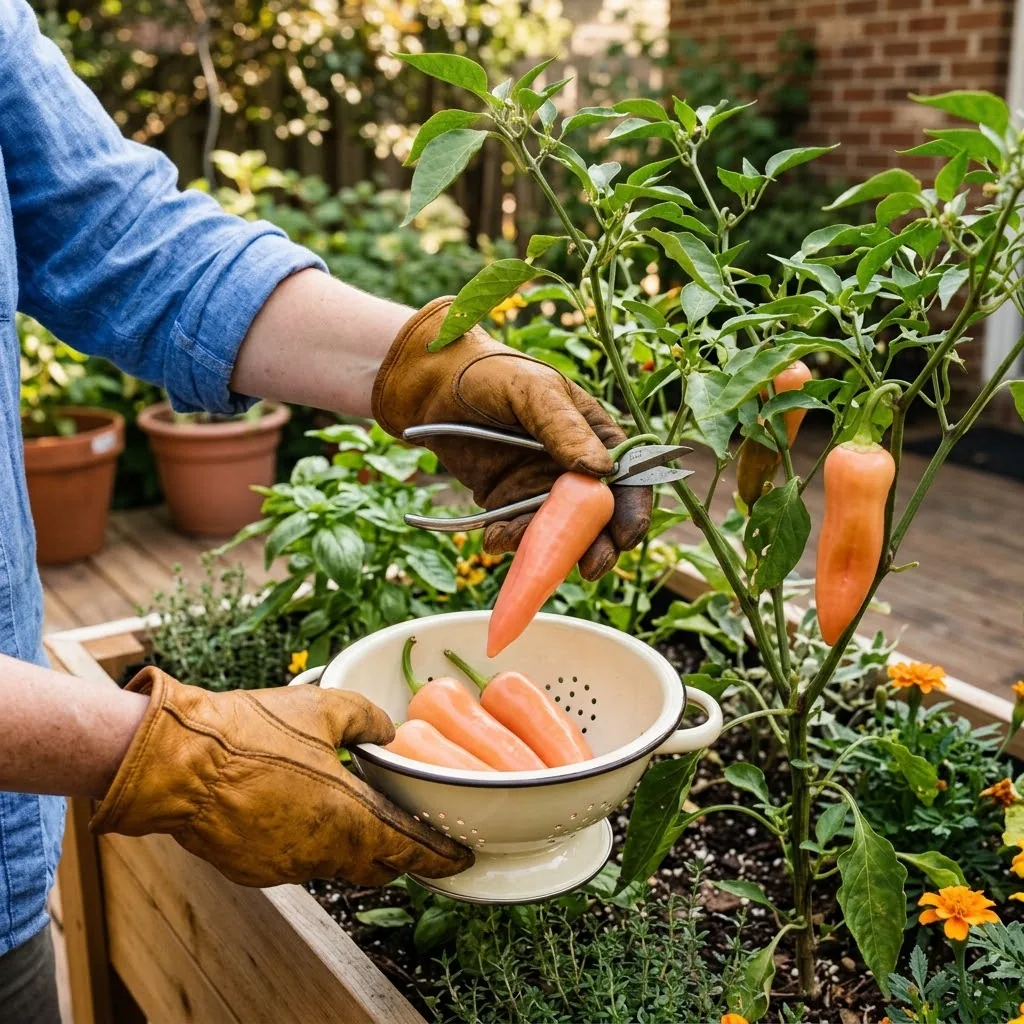
Pick the pods when they have reached full size and turned peach, if you want the ripe color and sweeter flavor this cultivar is known for. Green fruit is edible, but it has not reached the same mature color. Use clean shears to snip the stem instead of pulling hard on a loaded branch.
Wear gloves while harvesting or cutting the pods, and wash your hands with soap before touching your eyes or face. Keep cut peppers away from children and pets. If you are unsure about the heat, taste a tiny piece before adding more to a dish.
Fresh pepper storage, drying, and preserving
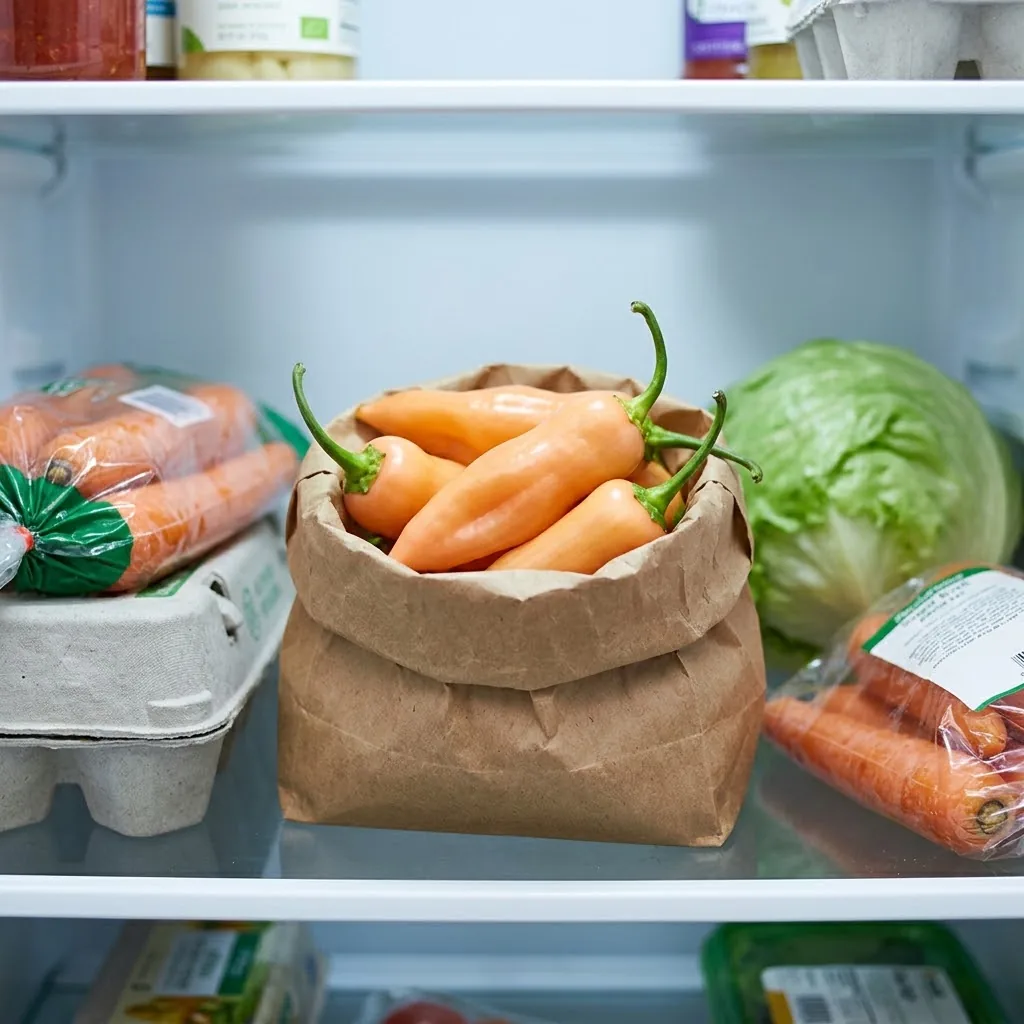
For short-term use, keep unwashed fruit in the refrigerator and wash it just before cooking. The University of Minnesota Extension says peppers can keep for a week or more in the refrigerator, though their skins can become pitted if they stay cold too long. Check them regularly and use soft or damaged pods first.
For a longer harvest, freeze peppers or dry them using a tested method suited to your equipment. The National Center for Home Food Preservation says vegetables should dry until brittle, then cool fully before airtight packing. Store dried food in a cool, dry, dark place and check for moisture; if it returns and the food is not spoiled, dry it again and repack it. Discard moldy food. For home-canned pickles and sauces, use a tested recipe from the Center or another reliable extension source and follow its directions exactly.
Hot pepper recipes and cooking ideas
The sweet-hot flavor works well where a chili can bring both aroma and heat. Try a small amount in fresh salsas, a blended hot sauce, fruit salsa, or a marinade. You can also slice a ripe pod into a cooked dish near the end so its bright flavor remains noticeable. Remove the seeds and inner ribs if you want less heat, though that will not make the pod mild.
Because the heat can be substantial, build a recipe gradually: add a little, taste, and stop when the balance suits you. Do not substitute it one-for-one for a mild pepper without first testing a small amount. If you are exploring another fruity C. baccatum pepper, this pineapple-scented relative offers a comparison point.
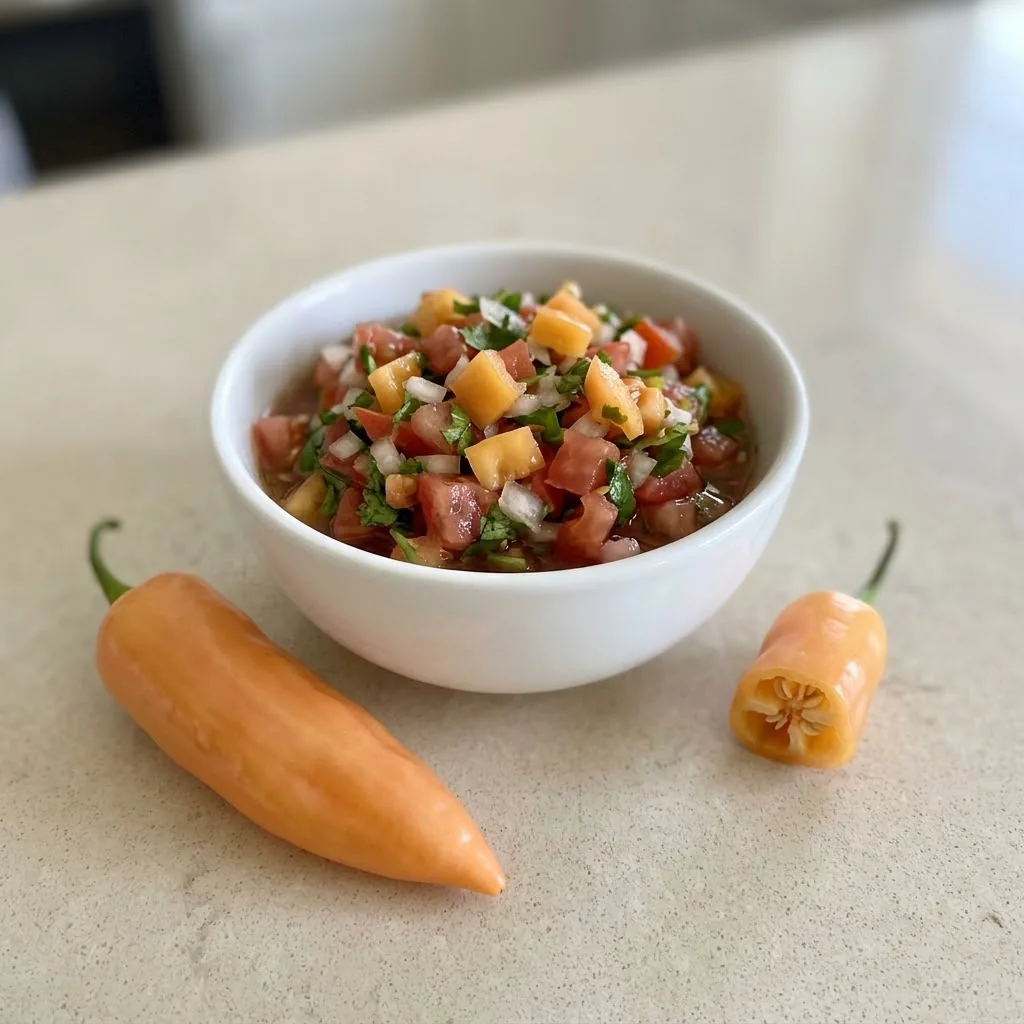
For a quick fresh salsa, mince a small piece of ripe fruit with tomato, onion, cilantro, lime, and salt, then taste before adding more. You can also blend a small amount into a peach or pineapple salsa. Those are starting ideas rather than tested canning recipes; keep fresh preparations refrigerated and follow tested directions for preserved versions.
Pepper seeds and live seedlings: where to buy
Specialty seed companies list this cultivar, but stock changes during the year. Check that the packet says Sugar Rush Peach and identifies Capsicum baccatum; listings for striped or red selections refer to other named types. Read the seller’s notes for its own germination and maturity estimates because those figures can differ between catalogs. A current packet with the cultivar name and seller instructions gives you a clearer starting point than an unlabeled mix. For a live start, choose one with firm leaves, no visible pest damage, and a strong stem.
Frequently asked questions
Is it an heirloom?
Sellers use different labels, including open-pollinated and heirloom. The dependable detail is that it is a named Capsicum baccatum cultivar sold as open-pollinated. Saved seed may vary if the plant cross-pollinated with another pepper nearby. The University of Minnesota Extension explains that open-pollinated varieties can include recent selections as well as heirlooms, so the heirloom label alone does not tell you how old this cultivar is.
Can I grow it in a pot?
Yes. Choose a large container with drainage, give it full sun, and support the plant if branches bend under fruit. A pot dries faster than an in-ground bed, so check moisture rather than following a fixed watering calendar.
How long until the fruit ripens?
Catalog listings range from about 90 to 120 days after transplant, and they may count maturity differently. Growing conditions also change the schedule. Watch the fruit itself: ripe pods turn from green toward peach.
How is the peach type different from Sugar Rush Stripey?
The peach selection ripens to a peach shade. Sugar Rush Stripey, also sold as Sugar Rush Peach Striped, is a separate variety known for red striping on pale fruit. The striped selection’s background is described differently by growers and sellers, so buy it by its full name rather than assuming every plant with a few stripes is the same type.
Can I save seeds from the fruit?
Yes, if the fruit is fully ripe and the plant is healthy. Peppers mostly self-pollinate, but pollen from a nearby pepper can cross. The current fruit still tastes the same; resulting plants may not match the parent. Utah State University’s seed collection guide explains that peppers can cross with nearby varieties and that parent traits may not carry through. Let fruit fully ripen before removing the kernels, dry them thoroughly, and label the collection with its variety and year before storing it in a cool, dry place.
Sugar Rush Peach earns its space when you want a colorful, fruity pepper with substantial heat. Give the plant warmth, sun, drainage, and support, then harvest a few fully colored pods and taste them carefully before planning a whole batch.
