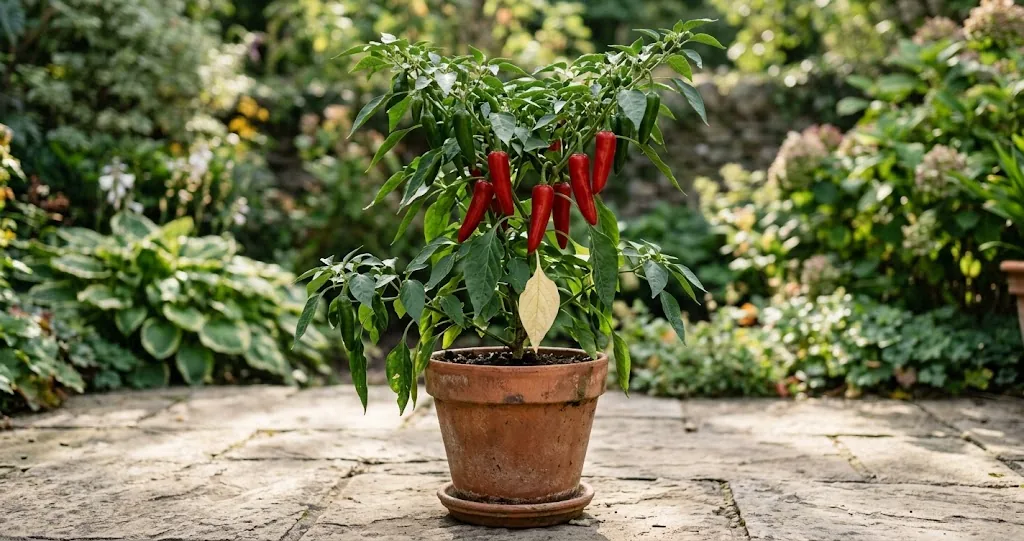
Almost every pepper grower has wondered whether withholding irrigation makes the next harvest hotter. It can change pungency in some cultivars, but the response is inconsistent. A 2018 irrigation study found a benefit in one of four hot pepper cultivars, while the other three produced less total capsaicinoid yield under drought stress. A 2021 drought study found reduced pungency in its tested genotypes. Variety choice remains the most dependable way to choose a heat range.
If you want hotter peppers, choose a cultivar in the heat range you enjoy, then grow it well. Irrigation and weather can affect the heat of individual harvests, but severe stress risks a smaller crop. Here is what the research can and cannot tell a home grower.
Genetics decide the heat ceiling
Capsaicinoids, including capsaicin, are produced mainly in the placenta, the white tissue that holds the seeds inside a pod. Genetics strongly influence a variety’s potential heat. Capsicum annuum includes bell peppers, jalapeños, cayenne and serrano; its cultivars span a wide range. Capsicum chinense includes habaneros, Scotch bonnets, ghost peppers and the Carolina Reaper. These examples help explain why choosing the right cultivar matters more than changing a watering schedule. New Mexico State University notes that stress will not turn a genetically mild chile into a hot one.

A stressed bell pepper remains mild. Start with a cultivar whose expected heat suits the dish or sauce you plan to make, then give it conditions that support a full harvest.
What growers mean by stress
When home growers talk about stressing a chili plant, they usually mean one or more of the following:
- Moisture deficit: letting the soil dry out between waterings, or skipping irrigation until the leaves wilt slightly.
- Nutrient deficit: cutting back on fertilizer, especially nitrogen, late in the season.
- Temperature extremes: leaving plants in full afternoon sun during heat waves, or exposing them to cold nights near the end of the season.
- Root restriction: pruning roots, restricting pot size, or letting the plant become root-bound.
Plants respond to these conditions, but their effects on pod heat vary by cultivar, timing and severity. A change in measured capsaicinoids does not guarantee that a gardener will notice a consistent difference at the table.
What the research says about moisture deficit
In a 2018 study of four C. chinense cultivars, irrigation every two days increased total capsaicinoid yield in one cultivar relative to daily watering. The other three cultivars produced less under the tested deficit-irrigation regimes. This is evidence for a cultivar-specific response, not a universal recipe for hotter pods.
A separate 2021 drought experiment reported reduced pungency and reproductive growth across its tested pepper genotypes. Those results do not erase the 2018 increase in one cultivar. Together, they show why deliberately inducing drought is an unreliable home-garden method.

What the research says about other stresses
Nutrient deficit is another proposed lever, but this article cannot establish a useful fertilizer reduction that reliably raises pungency. Avoid severe deficiency, which limits growth and harvest. Follow the fertilizer guidance for your variety and growing conditions.
Temperature affects flowering and fruit development, but deliberately exposing plants to extreme heat or cold is a poor way to chase pungency. Penn State Extension describes peppers as warm-season plants that grow well with warm days and moderate nights. Protect plants from heat waves and sunscald rather than treating damage as a useful stress.
Root-bound container plants have less room for moisture and nutrients, which can limit growth and harvest. There is no good basis here to recommend restricting roots to raise pod heat. Use a container large enough to keep the plant healthy.
Risks of stressing a pepper plant on purpose
Stressing a plant to chase heat has real downsides, and the home grower often loses more than they gain. The main risks are:
- Blossom drop: moisture deficit and heat stress both cause flowers to fall before they set fruit, reducing total yield.
- Sunburn on pods: pods that are suddenly exposed to harsh afternoon sun after the plant has been shaded can develop white, leathery patches and become vulnerable to rot.
- Blossom end rot: irregular irrigation, especially alternating drought and flooding, causes the bottom of the pod to turn brown and sunken.
- Pest and disease pressure: stressed plants may recover less readily from an infestation. Monitor leaves and stems regularly, and address pests early.
- Smaller, less flavorful fruit: stress typically reduces overall fruit size and can mute the fruity or smoky aroma that makes a good pod worth eating.
For most home growers, the practical question is not how to push a single pod a few hundred Scoville units higher, but how to keep the plant healthy enough to set and ripen a full crop of pods that match the variety’s potential.
Heat comparison by variety, not by effort
Because genetics matter so much, a heat comparison helps set expectations. Bell peppers have zero Scoville heat units (SHU). Jalapeños are commonly listed at about 2,500 to 8,000 SHU, serranos at about 10,000 to 23,000, cayennes at 30,000 to 50,000, and habaneros at 100,000 to 350,000. Ghost peppers and Carolina Reapers can exceed one million SHU. These are variety ranges, not guarantees for an individual pod. See the New Mexico State University Scoville chart.
That comparison also explains why an inexperienced gardener who plants a mild variety and pushes the plant with stress will end up disappointed: the absolute ceiling is set by the seed. Choose the cultivar first, then fine-tune conditions.
What actually moves the needle on pod heat
If stressing the plant is a small lever, several other choices matter more. In rough order of impact:
- Variety selection: pick a hotter cultivar. A jalapeno grown under perfect care will not match a ghost pepper grown under stress. Browse what makes chili peppers hot for the science behind pungency and genetics.
- Let pods ripen fully on the plant. Capsaicin continues to accumulate as the pod changes color from green to red, yellow, orange or brown. A pod picked early is milder than the same pod left on the plant another two or three weeks.
- Include the placenta and seeds when you cook. Most of the burn sits in the white membrane that holds the seeds. Removing seeds alone does not tame a hot pepper, but taking the placenta does.
- Irrigate steadily. Instead of swinging between drought and flood, give the plant a consistent soak-and-dry cycle and let the soil dry slightly between waterings. How often to water chili plants covers the practical schedule for pots and beds.
- Feed according to your variety and soil. Avoid excess nitrogen that favors leafy growth, and do not starve a fruiting plant in pursuit of heat.
- Choose a sunny spot with good airflow. Six to eight hours of direct sun and steady temperatures in the mid 20s Celsius support pungency without pushing the plant into heat stress.

These practices protect plant health and let a cultivar approach its expected yield and heat range. They are more reliable than deliberate drought for most home growers.
When a touch of stress does help
Some growers ease watering as pods ripen, but the studies above do not establish a reliable two-to-three-week treatment that improves heat, wall thickness or flavor. Keep moisture reasonably steady while fruit develops, especially in containers, and watch the plant for signs of stress.
Ripening conditions can affect an individual crop, but there is no evidence here that ghost peppers or Trinidad scorpion types need a final cool snap to reach peak heat. Harvest according to the variety’s mature color and condition.
Cooking with hotter pods: amplifying heat in the kitchen
Growing hotter pods is only half the picture. Once you have ripe chilies in hand, a few simple kitchen moves raise the heat in the finished dish without needing a hotter plant next year. The flavor of the chili matters as much as the burn, so pick varieties that taste good to you at the heat level you want.
- Use fresh peppers instead of dried, or the other way around, depending on the dish. Drying concentrates the burn because moisture leaves but the compound stays, so a teaspoon of dried red pepper flakes carries more heat than the same volume of fresh chopped chili.
- Build a quick hot sauce. Simmer fresh pods with vinegar, salt and garlic, then blend. Its heat depends on the peppers, their amount and the final sauce volume; do not assign a Scoville rating to a spoonful without testing the sauce.
- Add chipotle or chile paste. Smoked, dried chipotles pack heat and a deep, earthy aroma that suits stews, soups, chilis and bean dishes.
- Toast dried chilies in a dry pan before grinding. Toasting releases aromatic oils and adds another layer of flavor on top of the heat. Char the skins over an open flame for a smoky note that lifts salsas and tacos.
- Add the hot pepper late in long-cooked dishes. Adding a little chopped fresh pepper near serving time gives a dish a sharper fresh-pepper flavor. Taste before adding more; cooking time alone does not reliably make a hot dish mild.
- Use the whole pod. Stuffed peppers, sliced chilies in stir-fries, and chopped fresh pods in salsas all carry more heat than a thin sprinkle of powder, because they bring both membrane and seeds to the dish.
Cooking also offers ways to tone a dish down. Removing the white membrane from a pod drops its heat noticeably, and a dairy topping can make a spicy serving feel gentler.

Why some peppers come out milder than expected
It is common to grow a supposedly hot variety and find the pods surprisingly mild. A few explanations cover most cases:
- The seed was mislabeled or did not grow true to type. Cross-pollination can change plants grown from saved seed in the next generation. Buy fresh seed from a reputable source if plants repeatedly differ from the named variety.
- The pods were picked too early. Green pods of a hot variety are usually less pungent than fully colored ripe ones. Leave pods on the plant until they have changed color and started to soften slightly.
- The season was cool and short. Without sustained warm nights and a long ripening window, even the right cultivar may not reach its full pungency.
- The plant was overwatered and overfed. A plant that pushes leaf growth at the expense of fruit often produces pods with lower capsaicin content.
- The chili pepper plant was a sweet type. A bell or a mild pimento looks like a hot pod at first glance and ends up with all the heat of a cucumber.
If peppers come in bland two years in a row from the same packet, the most likely cause is the seed source, not the gardening. Replace the seed and try again.
Reading a recipe’s heat level
When a recipe says “two spicy hot peppers,” that means very different things depending on which type of chili it expects. A two-pod call for bell pepper is mild; a two-pod call for habaneros can clear a room. Some rough kitchen rules of thumb help you calibrate.
- One small jalapeno, finely chopped, adds gentle warmth to a family-size dish. Two or three will move the spice level up noticeably.
- One serrano, sliced thin, lifts the heat above jalapeno territory. Three in a single dish is genuinely spicy hot.
- One habanero or scotch bonnet can season a whole pot of stew or soup. Use more than two per dish only if you know your diners can handle the burn.
- Ghost peppers and Carolina Reapers should be measured in pepper pieces rather than whole pods. Begin with a tiny amount, then taste and increase cautiously.
- When a recipe does not specify the type of chili, choose the mildest reasonable option. You can always add more heat at the table with flakes or hot sauce; you cannot take heat out of an over-spiced dish.
A pinch of red pepper flakes at the end is the easiest way to dial the spice level of an already cooked dish. Taste, add, taste again. Build the heat in layers rather than dumping it all in at once.
Spice tolerance: how to handle very hot peppers
Spice tolerance is partly habit, partly genetics. Regular exposure to the burn compound raises tolerance over weeks, while people who rarely eat hot foods may find even a moderate pepper overwhelming. A few habits help when working with very hot pods:
- Start small. One bite of an unknown superhot is plenty. Wait ten minutes before adding more.
- Have milk, yogurt or sour cream ready. Milk, yogurt or sour cream may ease mouth burn better than a plain drink.
- If a pepper causes severe symptoms or you have a condition affected by spicy food, stop eating it and ask a qualified clinician for personal advice.
- Respect the pith and seeds of any pod you have not grown yourself. Trim them out until you know the heat level.
Safety with hotter pods
Hotter pods, whether the heat comes from genetics or a final nudge of stress, demand more care in the kitchen and the garden. A few habits make handling safer:
- Wear gloves when picking, seeding and chopping hot peppers. The burn compound absorbs through skin and transfers easily to eyes.
- Wash your hands, knives and cutting boards thoroughly afterward. Dish soap and warm water work; water alone does not lift capsaicin.
- Ventilate the kitchen when working with very hot pods. The aerosol from chopping a superhot can irritate eyes and lungs.
- Keep hot peppers away from children and pets, and store dried hot pods well above countertop level.
- Respect your spice tolerance. A pod that feels pleasant to one person can overwhelm another. Start with a small amount of any new variety, especially superhots.
- If skin burns, wash with soap and a mild oil or dairy product to dissolve the remaining capsaicin. For a chili burn in the mouth, how to stop chili burn in your mouth covers what actually helps.
The bottom line for home growers
Stressing chili plants may alter pungency, but research shows mixed, cultivar-specific results and a risk to yield. Genetics set the broad heat range. For a dependable harvest, choose a hotter cultivar if that is what you want, let pods ripen and irrigate consistently. When saving seed, remember that cross-pollination and normal variation can change the next generation.
For a step-by-step plan to grow hotter peppers from seed to harvest, the complete guide to growing chili peppers walks through variety choice, container size, watering, feeding and harvest timing.
