
A ripe white habanero pepper can look mild on the plate while delivering a serious burn. The name covers pale-fruited types sold under several regional and catalog names, so check the packet when you want a particular shape or flavor.
Some catalogs call their plants Peruvian White or Yucatan White, while another sells a White Bullet line. The listings do not describe one standardized strain. Our broader guide to pepper varieties can help you compare this group with other fruit types.
What does the white habanero name cover?
These peppers are selected for pale ripe fruit. Depending on the seller’s line, pods may be short and bullet shaped or small and wrinkled. They typically start green, then turn creamy white or ivory as they mature. White is the ripe color for the Peruvian and Yucatan forms described by their sellers, not a sign of immaturity.
Before buying white habanero pepper seeds, compare a named line rather than relying on color alone. Garden Hoard describes its Peruvian White as tapered, lime green when young, and creamy white at maturity. Reimer Seeds describes its Yucatan White as small and wrinkled, changing from green to white. Those are seller descriptions of their own lines, not a universal shape standard. See the Peruvian White listing and Yucatan White listing.
Origin and history
The regional labels do not point to a single documented origin for every pale habanero. Garden Hoard says its Peruvian White line originates in Peru; Reimer Seeds calls its Yucatan White a line from Mexico’s Yucatan region. Treat those as provenance claims for the listed lines rather than one shared history.
The species has roots in the Amazon basin and other lowland parts of South America. A recent research review explains that chinense reflects an early mistaken belief that the plant came from China, rather than its actual origin. Mexico protects the name Chile Habanero de la Península de Yucatán for product grown in Campeche, Quintana Roo, and Yucatán. That official regional designation applies to its defined habanero product; it does not establish the ancestry of every pale line. Read the official designation and a research review of the species’ history and regional diversity.
How strong is the bite?
Published estimates disagree. Tyler Farms and Garden Hoard give 100,000 to 350,000 Scoville Heat Units (SHU) for their Peruvian White lines, while Pepper Joe’s lists 200,000 to 500,000 for its white type. Taken together, those seller figures span 100,000 to 500,000. They are catalog estimates, not tests of every fruit, and individual pods can vary. Color alone does not predict pungency. A Scoville unit gives a rough comparison, not a promised reading for your harvest.
Start with a thin slice, then add more to taste. Halve the pod lengthwise and scrape out the pale ribs and membrane for less bite, though the flesh can still be fiery. The placenta contains the highest concentration of capsaicin, according to Colorado State University Extension. For another pale, intensely spicy pepper, compare the white ghost pepper profile.
Flavor and kitchen character
Flavor notes vary by line and ripeness. Garden Hoard describes its Peruvian form as aromatic and smoky; Tyler Farms calls its own slightly fruity. Treat these as tasting notes, not guarantees. The ripe fruit can bring a fruity or smoky note behind a sharp habanero burn.
Compared with the familiar orange habanero, the pale forms stand out visually, not through a dependable difference in pungency. Michigan State University Extension notes that color is generally a poor indicator of pepper heat. Growers who want a particular level should choose by named line and taste the first mature fruit cautiously.
The pale flesh is useful when you want intense pepper flavor without orange or red flecks in fruit salsa or a dressing. Use a small amount with mango, citrus, onion, or vinegar, tasting as you go. Roasting can add a deeper flavor, while finely minced fresh fruit spreads more evenly through a marinade.

Growing a plant at home
These long-season peppers benefit from an indoor start in places with cool springs. Utah State University Extension lists 9 to 14 days for pepper germination under suitable conditions in its transplant table, and recommends about 80°F for the germination stage in its pepper growing guide. Minnesota Extension suggests sowing indoors roughly eight weeks before outdoor planting, using warm mix and bright overhead light. See the Minnesota home growing guide.

- Place each seed one-quarter inch deep in a clean, fine starter mix. Keep it warm and evenly moist, not soaked.
- After emergence, give young plants strong light. Pot them up once they have true leaves and a sturdy root system.
- Harden plants off gradually. Move them outside after frost danger has passed and the soil has warmed. Minnesota Extension advises waiting until overnight lows are above 50°F.
- Choose a sunny spot with well-drained soil, or use a large container with drainage holes. Give the plant room for its roots and good air movement around its leaves.
- Water at the soil when the surface begins to dry. Keep moisture reasonably steady as flowers and fruit develop, and use a soil test to guide fertilizer.
Catalog timing varies: Garden Hoard lists 80 to 90 days to harvest for its Peruvian line, Pepper Joe’s lists 100 to 109 days, and Reimer lists 110 days for Yucatan White. The sellers do not clearly use the same starting point, so treat these as planning estimates and check the packet for the line you grow. Cool conditions can delay ripening. Utah State University Extension recommends picking peppers when fully colored but still firm; for these lines, the mature color is pale. Garden Hoard lists its plant at 18 to 24 inches tall; Pepper Joe’s describes a 3-foot plant, another reason to check the named line before choosing a container.
Harvest and handle carefully
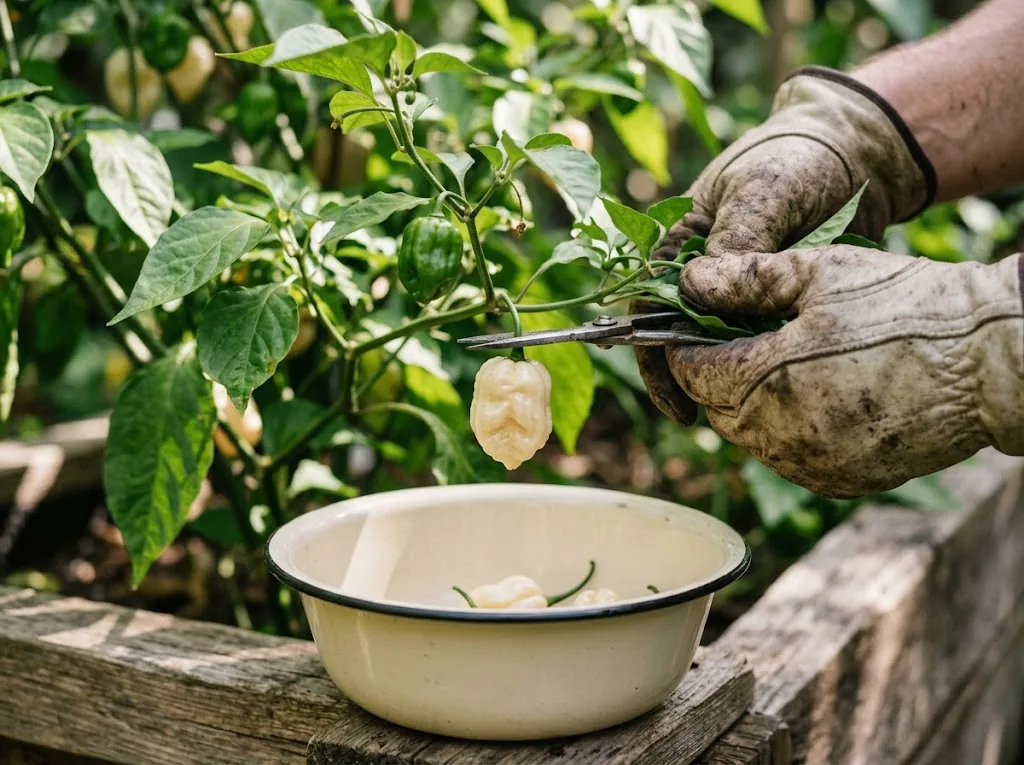
Cut ripe pods with clean scissors or pruners so you do not bend a branch carrying other fruit. Wear gloves when cutting or removing ribs, avoid touching your eyes, and wash hands thoroughly with soap and water afterward. Michigan State University Extension recommends gloves and handwashing because capsaicin can irritate skin and eyes. Clean the knife and work surface before preparing other food.
Storage and preservation
Keep fresh pods dry and refrigerated. Michigan State University Extension says fresh peppers can be refrigerated for two to three weeks. To freeze a small harvest, wash the fruit, remove the stems, freeze the pods apart on a tray, then pack them in a labeled freezer bag. They soften after thawing, so frozen peppers suit cooked sauces, beans, and soups.
For flakes, slice the fruit and dry it in an oven or dehydrator at 140°F until the moisture is gone. Michigan State Extension says drying may take 8 to 12 hours; check often and wear gloves, a face mask, and eye protection when grinding because particles can become airborne. Store dry flakes in a sealed jar in a cool, dark cupboard.
Use a tested recipe for shelf-stable pickled or canned peppers. The same Extension guide notes that unpickled peppers require pressure canning for safety. Do not improvise a room-temperature oil, vinegar, or water-bath preserve.
Ways to use the fruit
A small piece can season a whole dish. Add a little to fruit salsa, citrus marinade, hot sauce, beans, or a dressing, then taste before adding more. Ripe pods work well where you want a strong burn but prefer a light-colored condiment to stay visually pale. Pair them with fruit, creamy ingredients, or acidity to balance the bite.
For a different ornamental and cooking pepper with purple fruit, see our Buena Mulata profile.

Frequently asked questions
Are white habaneros hotter than orange ones?
Color is not a reliable guide to pungency. The catalog range above is broad, and fruit and strains vary. Taste a small piece before using a whole pod.
Why are the pods still green?
They may still be ripening. The Peruvian and Yucatan descriptions above say their fruit changes from green to white at maturity. Give the plant time and warmth, then compare its fruit with the description for the named variety. If a different pepper has isolated bleached patches rather than an even color change across the fruit, it may have sunscald. Minnesota Extension notes that direct sun can leave white patches on peppers when foliage does not shade the fruit during hot, dry weather.
Can I grow one in a container?
Yes. Some sellers list their Peruvian line for containers. Choose a roomy pot with drainage, provide a sunny position, and check the soil as it dries. Pots can dry faster than garden beds.
