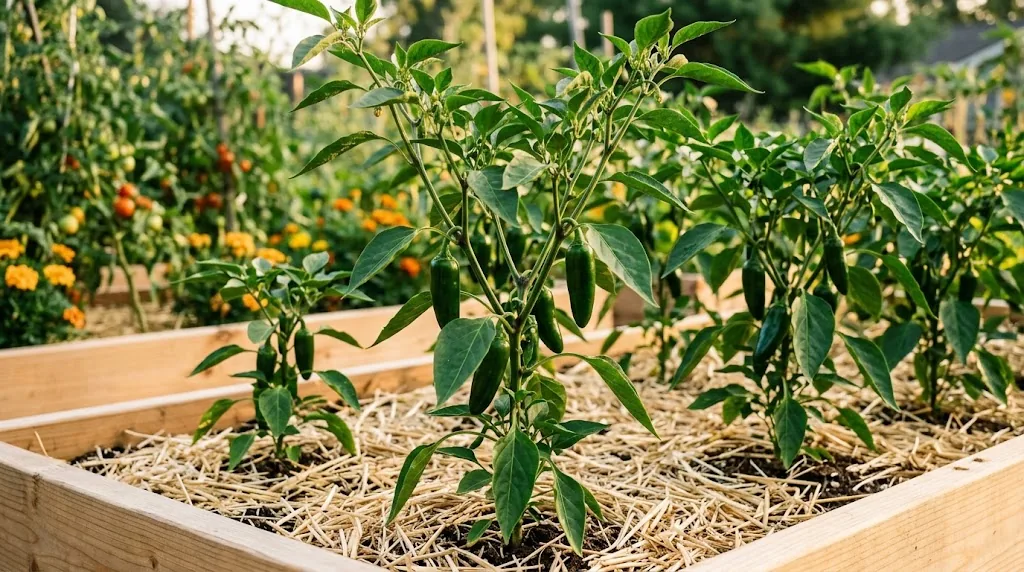
A dependable chili growing calendar transforms home pepper gardening from a guessing game into a predictable, rewarding seasonal rhythm. Peppers are warm-season perennials cultivated as tender annuals across most temperate climates. Because they require warm soil to sprout and a long growing season to produce fruit, timing every stage from early seed starting to autumn harvest protects your plants from cold snaps while maximizing your total yield.
Whether you cultivate mild jalapeños, sweet bell pepper rows, or scorching habanero cultivars, this month-by-month planting calendar guides every gardener through each critical milestone. By aligning your vegetable planting schedule with regional frost dates and local growing conditions, you can enjoy abundant, fiery peppers from your garden throughout the year.
How to anchor your chili growing calendar
Every successful pepper planting schedule begins with your regional frost date. Warm-weather crops have zero frost tolerance: temperatures below 32 degrees Fahrenheit (0 degrees Celsius) kill foliage instantly, while extended exposure to temperatures under 50 degrees Fahrenheit (10 degrees Celsius) stunts growth and delays flowering. In temperate regions, such as USDA Zone 7, an experienced grower calculates the schedule backward from the average date of the last spring frost.
Different pepper varieties demand different developmental runways. Fast-maturing selections like sweet peppers and jalapeños typically require 70 to 85 days from setting out to mature pods. In contrast, hotter Capsicum chinense types such as Scotch bonnet, ghost peppers, and fiery landraces need 100 to 120 days or longer after setting out to turn color. These hot pepper types need an early head start under nursery lights to ensure the fruit ripens before cold autumn weather arrives.
When planning your indoor setup, knowing when to start chili seeds based on your regional freeze cutoff prevents leggy seedlings from outgrowing their containers before the weather warms.
The month-by-month chili growing calendar
This timeline follows a standard temperate Northern Hemisphere cycle (USDA Zones 6 to 8), with the final freeze occurring in mid-spring (late April to early May) and the first fall frost arriving in mid-to-late October. Gardeners in cooler or warmer regions can shift these tasks earlier or later by two to four weeks.
January and February: Early indoor seed starting for superhots
Late winter marks the opening move of the pepper season. Capsicum chinense and baccatum varieties germinate slowly, often taking two to three weeks just to sprout. Starting these varieties in late January or February gives them the necessary runway to produce fruit during summer.
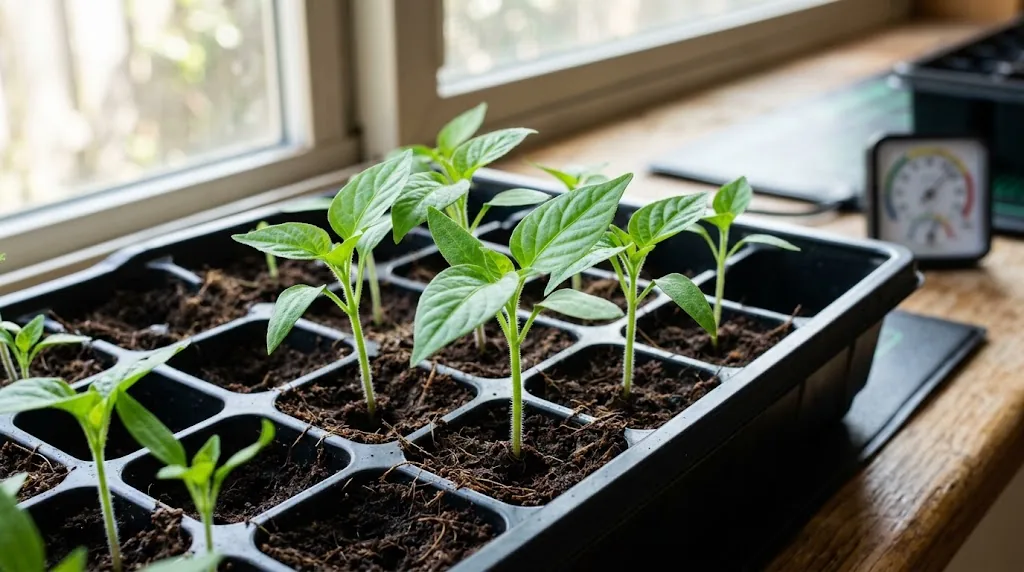
- Sow superhot seeds: Plant seeds in a shallow seed starting tray filled with moistened, sterile seed-starting mix. Sow seeds about one-quarter inch deep.
- Provide bottom heat: Seeds germinate best when the soil temperature remains between 80 and 85 degrees Fahrenheit (27 to 29 degrees Celsius). Place your propagation tray on an electric seedling heat mat.
- Maintain gentle moisture: Cover the tray with a clear humidity dome to retain moisture until the seeds sprout. Vent the dome daily to prevent fungal issues.
- Ensure bright light: The moment green shoots emerge, remove the dome and position high-output LED grow lights two to three inches above the canopy. Keep lights on for 14 to 16 hours daily.
March: Main sowing season for standard varieties
March is the primary month to start seeds indoors for faster-growing Capsicum annuum varieties, including serrano, cayenne, poblano, and jalapeño crops. At this stage, your earlier February starts will also begin developing their first true leaves.
- Start standard peppers: Begin your annuum seeds eight to ten weeks before your local last frost.
- Provide fresh air circulation: Run a small oscillating fan on low near your seedling racks. Gentle air movement strengthens stems, prevents damping-off disease, and deters fungus gnats.
- Begin light feeding: Once plants produce two sets of true leaves, apply a dilute, half-strength organic liquid fertilizer once every 10 to 14 days to support steady vegetative development.
April: Potting up and seedling care
As spring advances, active root growth means young plants outgrow their starter cells. April is dedicated to up-potting to prevent root constriction and building sturdy foliage.
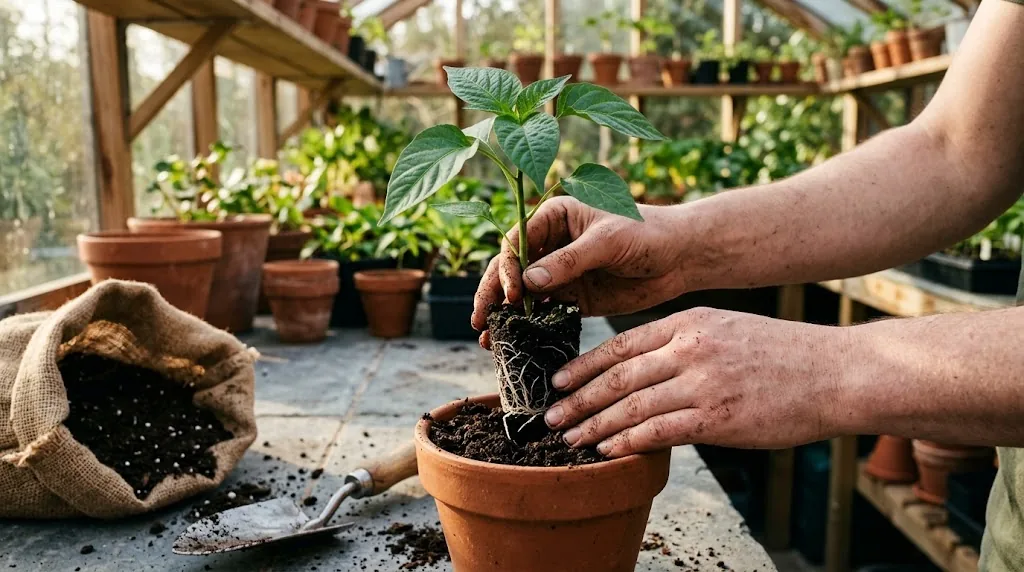
- Pot up into larger pots: When roots fill the starter cell, transplant your young stock into three-to-four-inch containers filled with rich potting soil. Loosen the root ball gently if roots begin wrapping.
- Inspect for early pests: Check leaf undersides regularly for any persistent pest like the green peach aphid or spider mites, which thrive in dry room air. Treat any early infestation with an insecticidal soap spray or neem rinse.
- Monitor seedling nutrition: Feed with a balanced organic fertilizer containing nitrogen and trace micronutrients. Sturdy, dark green foliage indicates a healthy plant, while pale yellow lower leaves suggest a nitrogen deficit.
May: Hardening off and garden transplanting
May brings the pivotal transition from indoor nursery to outdoor soil. You must wait until the risk of frost has passed completely and night temperatures stay consistently above 50 degrees Fahrenheit (10 degrees Celsius) before planting outdoors.
- Harden off over 10 to 14 days: Acclimate tender starts to direct sunlight, wind, and fluctuating temperatures. Begin with two hours of dappled shade on day one, gradually increasing exposure until plants can handle full sun and breezy days.
- Prepare the garden soil: Pepper varieties grow best in well-draining garden soil enriched with aged compost and organic matter. Choose a planting site that receives at least six to eight hours of direct sunlight. Peppers prefer soil with a pH between 6.0 and 6.8.
- Transplant into beds or containers: Set transplants into the garden bed or final 5-gallon pots. Set pepper transplants at the same soil depth they had in their containers. Water deeply after planting.
For detailed advice on container sizes, bed spacing, and nutrient blends, consult our comprehensive guide on how to grow chili peppers in home gardens.
June: Vegetative growth, branching, and staking
With warm summer temperatures arriving in June, plants enter rapid vegetative growth and begin setting their first flower buds.
- Apply organic mulch: Spread a two-inch layer of clean straw, shredded bark, or leaf mulch around the base of each pepper plant. Mulch helps retain moisture, moderates root temperature, and suppresses competitive weeds.
- Support developing branches: Install stakes or small cages around vigorous stems. As plants grow and produce fruit, heavy pepper branches snap easily under strong summer thunderstorms.
- Water evenly: Establish a deep watering routine. Water at the base in early morning, allowing the top inch of soil to dry slightly between waterings to encourage deep root exploration.
July: Flowering, fruit set, and midseason feeding
July brings peak flowering and the initial fruit set. Maintaining balanced environmental conditions during midsummer ensures flowers set pods rather than dropping off the stem.
- Feed according to soil needs: Follow a soil test and the fertilizer label when feeding fruiting plants. Avoid applying extra nutrients without a demonstrated need.
- Protect against extreme heat: When daytime temperatures exceed 90 degrees Fahrenheit (32 degrees Celsius), blossoms can drop without setting fruit. In hot climates, erect a 30 percent shade cloth overhead during intense midday sun.
- Encourage pollination: Gently vibrate flowering stems or allow natural pollinators like bumblebees to work the blossoms, ensuring maximum fruit set.
August: Fruit swelling and the start of harvest
During August, pods swell to full size and the earliest varieties begin changing color. Jalapeños transition from emerald green to deep glossy red, while banana peppers and wax varieties turn golden yellow.
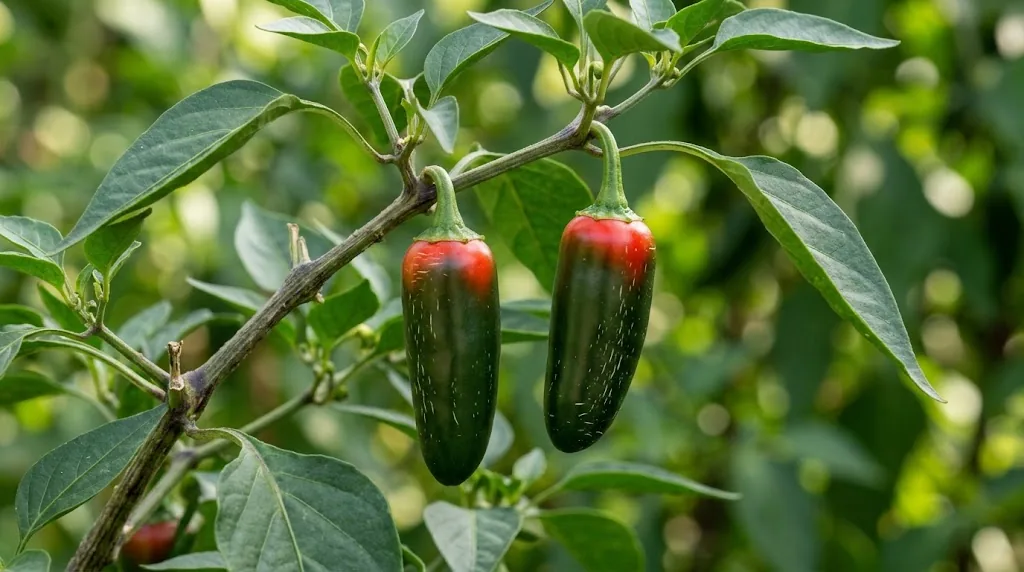
- Harvest green or wait for full color: Many varieties, like jalapeños and serranos, can be gathered green for crisp acidity. Allowing pods to ripen fully on the vine increases their vitamin content, natural sugars, and capsaicin concentrations, creating a hotter, richer flavor profile.
- Maintain consistent moisture: Inconsistent watering during fruit swelling causes blossom end rot or split skins. Maintain regular soil moisture without waterlogging the roots.
- Prune lower yellowing foliage: Strip away yellowing or damaged lower leaves touching the soil surface to maintain healthy airflow and deter fungal spore splash.
September: Peak harvest season
September represents the golden harvest window. Plants are loaded with pods in every stage of development, from green baby fruit to fully finished scarlet and orange gems.
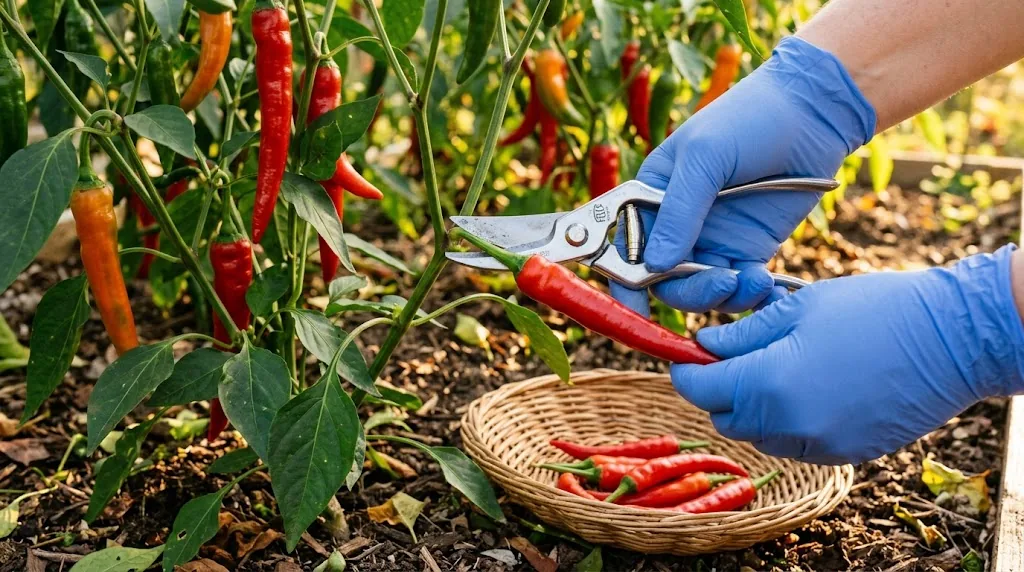
- Harvest peppers frequently: Pick pods weekly using clean bypass shears. Frequent harvesting stimulates the plant to continue flowering and setting new pods until cool weather sets in.
- Exercise care when handling hot peppers: Always wear disposable gloves when harvesting superhot varieties like ghost peppers and scorpion pods. Avoid touching your face or eyes, as concentrated capsaicin oils cause severe skin irritation.
- Clip cleanly: Avoid pulling or twisting fruit by hand, which tears delicate branches. To protect your crop and keep your plants productive, learn how to harvest red chili peppers using clean cutting techniques.
October: Final harvests and frost protection
As autumn deepens and daylight shortens, monitor local weather forecasts closely for your area’s first fall frost date. Preparing your plants ensures none of your hard work goes to waste.
- Pinch late flowers: In early October, pinch off any tiny new flower buds and small immature peppers that have no chance of ripening before cold weather. This forces the plant to channel its remaining sugars into finishing mature green pods.
- Collect all remaining pods before freezing weather: When a fall frost threatens, strip all full-sized pods from the plants, including green fruit. Use or preserve mature green peppers after picking. Pods that have already begun changing color may continue coloring indoors, but most green peppers will not ripen after harvest.
- Protect potted plants: Move container-grown plants into an unheated garage, porch, or greenhouse during cold nights to extend the harvest window by several weeks.
November and December: Overwintering and bed cleanup
Once freezing temperatures terminate outdoor growth, gardeners can close down the beds or prepare choice plants for winter dormancy.
- Clear garden beds: Cut down spent annual plants at soil level. Compost clean foliage, but bag and discard any material that displayed fungal blight or severe viral symptoms.
- Overwinter select mother plants: Because pepper plants are true perennials, you can overwinter sturdy container plants indoors. Prune the plant back to main structural stems, strip away foliage to eliminate hitchhiking pests, and store the potted root ball in a cool, bright room (55 to 60 degrees Fahrenheit / 13 to 15 degrees Celsius) with minimal watering until spring.
- Plan next year’s varieties: Review your garden notes, evaluate which varieties thrived in your microclimate, and order fresh seeds early to prepare for winter sowing.
Seasonal shifts for warm, tropical, and southern hemisphere climates
Gardeners outside temperate Northern Hemisphere zones must adjust their calendar to match their local climate realities:
- Southern Hemisphere growers: Shift the entire calendar by six months. Sow superhot seeds in July and August, plant out into outdoor beds in October or November, and enjoy peak harvests from February through May.
- Subtropical and desert regions (USDA Zones 9 to 11): Searing summer heat often shuts down pollination in July and August. In these zones, growers run two distinct seasons: an early spring crop started in December and planted out in February, and an autumn crop started in July for winter harvesting.
- Tropical humid climates: Plants can grow continuously year-round. However, heavy rainy seasons increase fungal pressures. Local growers often start seeds toward the tail end of the wet season so plants flower and fruit during bright, drier months.
Temperature is a useful guide when planning the pepper season. Penn State Extension says peppers set fruit when nighttime temperatures are between 60 and 75 degrees Fahrenheit (16 to 24 degrees Celsius). Fruit set can suffer when nights are cooler or hotter.
Key milestones for pepper growing success
To keep your pepper production running smoothly across the year, keep these five core operational rules at the forefront of your planning:
- Count backward from frost: Always start seeds eight to twelve weeks prior to your average spring freeze date, reserving the earliest starts for slow-growing chinense varieties.
- Prioritize warm root zones: Pepper seeds need warmth to sprout reliably; a seedling mat maintaining 80 degrees is the single best investment for high germination rates.
- Never rush outdoor planting: Warm soil matters more than early dates. Setting transplants into cold ground causes root shock, purple leaf phosphorus deficiency, and stalled growth.
- Balance water and drainage: Pepper plants need steady moisture to produce succulent fruit walls, but saturated soil invites root rot. Ensure garden beds and pots offer flawless drainage.
- Wear protection for hot harvests: Treat superhot varieties with respect. Wear nitrile gloves and clean bypass pruners whenever harvesting pungent pods.
Frequently asked questions about pepper growing calendars
What is the best month to start chili seeds indoors?
For most temperate gardeners, February is the ideal month to sow slow-maturing hot varieties like ghost peppers, scotch bonnet types, and habaneros, while March is ideal for standard annuum types like jalapeños, serranos, and bell peppers. Starting seeds eight to ten weeks before your last spring freeze gives plants ample time to develop strong root systems under nursery lights without becoming root-bound.
When can I safely plant peppers outdoors?
Transplant pepper starts outdoors only after all danger of frost has passed in spring and night temperatures consistently remain above 50 degrees Fahrenheit (10 degrees Celsius). Soil temperature should ideally reach 65 degrees Fahrenheit (18 degrees Celsius) before planting. Moving plants outside too early shocks root systems and permanently slows summer fruit production.
How long do pepper crops take from seed to harvest?
Most varieties require 100 to 150 days from seed germination to mature fruit. Fast-maturing Capsicum annuum varieties like jalapeños and cayennes can yield harvestable green pods within 70 to 80 days after planting out, while Capsicum chinense varieties often require 100 to 130 days post-transplant to turn full color.
Can a pepper plant live for more than one year?
Yes, peppers are botanical perennials in frost-free environments. Gardeners in cold winter climates can prune back container-grown plants in autumn, bring them inside to a cool, bright location, and overwinter them in a semi-dormant state. Overwintered plants wake up quickly in spring and produce early, prolific harvests in their second season.
