
A single 7 pot pepper is famous for the saying that it can season 7 pots of stew. That is a warning about intensity, not a cooking measurement: named lines differ, and pungency can vary from fruit to fruit. These peppers come from Trinidad and Tobago and belong to Capsicum chinense. This guide explains what the name covers, what measured results can tell you, and how to grow, handle, and use the fruit with care.
If you are sorting out the wider family, our guide to chili pepper types and their differences puts this group in context.
Origin and the seven pots saying
Seed catalogs identify the Red selection as a variety from Trinidad and Tobago. A 2012 New Mexico State University field study identifies Trinidad 7 Pot Jonah as a high-pungency C. chinense type and says its name alludes to folklore that a pepper could spice seven pots of soup. The name also appears as “7 Pod.” Treat the saying as a cue to start small, not as a tested recipe ratio.
“7 Pot” covers named selections rather than one standardized fruit. Red, Barrackpore, and Douglah appear as distinct names in seed listings and research. Catalogs may call a named selection a strain or line; check its packet and ripe color before comparing it with another.
How the pods look
Reimer Seeds’ Red description gives a useful example: a wrinkled, medium-thick fruit about 2 inches long and 1¼ inches wide, green before it ripens red. This description applies to that listing, not every named selection.
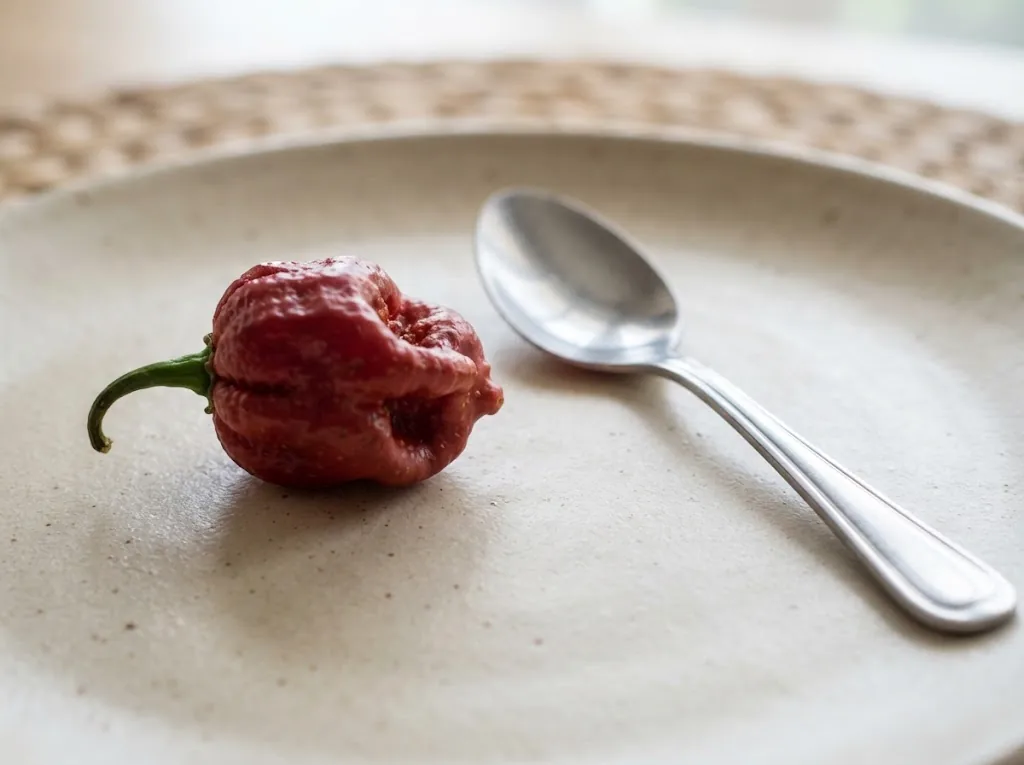
Barrackpore can look different. Pepper Joe’s Barrackpore listing describes fruit up to 3 inches long, with dimples, wrinkles, and sometimes a pointed tail. Its fruit changes from green to bright red. The 7 Pot Douglah, also called the Chocolate 7 Pot, ripens brown; its listing describes fruit about 2 inches long. These examples show why details for the exact line matter when appearance is part of your choice.
How hot are these peppers?
Expect an extreme level of pungency, but do not assume one heat level or Scoville number for the whole group. Reimer lists 900,000 Scoville heat units (SHU) for its Red selection. Pepper Joe’s gives 1,000,000 to 1,300,000 for Barrackpore. Those seller figures describe named lines, not a universal rating or a guaranteed result.
In the replicated field study, the tested line measured a mean of 1,066,882 units. Individual plants and fruit vary, which supports treating any single figure cautiously. Compare results only when the source names the exact selection and describes the measurement.
One fruit may feel fierier than another from the same harvest. Color, wrinkles, and size do not tell you how pungent a fruit will be.
Flavor and choosing a line
Taste depends on the named selection and the fruit. Pepper Joe’s describes Barrackpore as slightly sweet and more bitter than its relatives. For the Red line, Reimer emphasizes medium-thick flesh and lists salsa among its uses, without giving it one defining flavor note. “Fruity” or “sweet” may fit a particular harvest, but those words are not a guarantee for every seed lot.
When buying 7 Pot pepper seeds, choose a seller that names the selection, shows its ripe color, and explains its timing estimate. For hot pepper seeds, compare the exact type and the source’s care notes. A home garden can also hold a milder pepper for everyday cooking; a purple jalapeño has a different profile from these superhots.
Growing a 7 Pot plant
Give this C. chinense pepper a long, warm growing season. University of Minnesota Extension recommends starting pepper seeds about eight weeks before outdoor planting and keeping the starting mix at 80°F to 90°F until seeds germinate. Keep the medium moist rather than saturated, and provide bright overhead light. If only a few seeds germinated, check warmth and moisture before sowing more.

Gradually acclimate seedlings before moving them outside. In Minnesota, the extension guide advises waiting until nighttime lows stay above 50°F; use local guidance for your climate. Set transplants at their original depth. Choose a sunny site with well-drained soil, or a roomy container with drainage holes. Consistent moisture supports each flower and the developing fruit.
Catalog timelines are estimates for a seller’s specific line. Reimer lists 120 or more days for its Red selection, while Pepper Joe’s gives 100 to 109 days for Barrackpore. Those listings do not establish one calendar for every plant. Check whether your seller counts from sowing or transplanting, and allow for local weather and ripening time.
Harvesting and safe handling
Use the ripe color given for your line, since not every selection ripens red. Clip fully colored fruit with clean shears instead of pulling hard on a branch. Poison Control recommends that you wear gloves for hot peppers; keep hands away from your face and wash them after work. Capsaicin can irritate skin and eyes, so do not touch contact lenses or sensitive areas while preparing these peppers.
If juice gets in an eye, Poison Control advises rinsing with plenty of warm water for 15 minutes. Contact Poison Control for exposure guidance, and seek emergency help for trouble breathing or chest discomfort. Keep cut fruit and seeds away from children and pets.
Storing, drying, and preserving
Use fresh fruit soon or refrigerate it for short-term storage. Oregon State University Extension’s pepper-preservation guide explains that freezing softens peppers, so reserve frozen pieces for cooked dishes. To dry them, spread whole fruit or cut pieces on trays until crisp; keep the finished seasoning in moisture-resistant packaging in a cool, dry, dark place. Mark the package clearly.

For shelf-stable pickles or condiments, use a tested preservation recipe and follow its ingredient proportions and processing directions exactly. Peppers are low-acid vegetables, and changing a tested canning recipe can make the result unsafe. The National Center for Home Food Preservation’s tested pickled pepper recipe is written for specific pepper types and quantities. Do not improvise its acid or processing steps for a custom pepper mixture.
Ways to use 7 Pot peppers
Use this super hot chili as a seasoning ingredient rather than the bulk of a meal. Add a very small piece to beans, stew, or a hot sauce, then taste the cooked dish before adding more. A little can add a sharp edge to a large pot, which is the point of the old saying. At superhot levels, even a sliver of fruit is plenty for one pot.
For dried powder, grind crisp fruit carefully and keep it sealed and clearly labeled. Work in a ventilated space and avoid breathing oils from the skin. If you want a familiar jalapeño flavor in a stuffed or roasted dish, Mucho Nacho jalapeños are another option.
Frequently asked questions
Can one pepper really season seven pots of stew?
The name reflects a longstanding saying about potency, not a measured serving guide. Named lines and individual fruits vary, so treat the saying as a warning about intensity and not as a recipe ratio.
How does 7 Pot heat compare with the Carolina Reaper?
On published averages, the Reaper comes out higher. Guinness World Records reports an average of about 1.64 million units for the Reaper from Winthrop University testing, while the New Mexico State study above measured a mean of 1,066,882 for the 7 Pot line it tested. Those figures come from different labs, years, and methods, and individual fruits vary widely, so treat them as a rough guide rather than a ranking.
