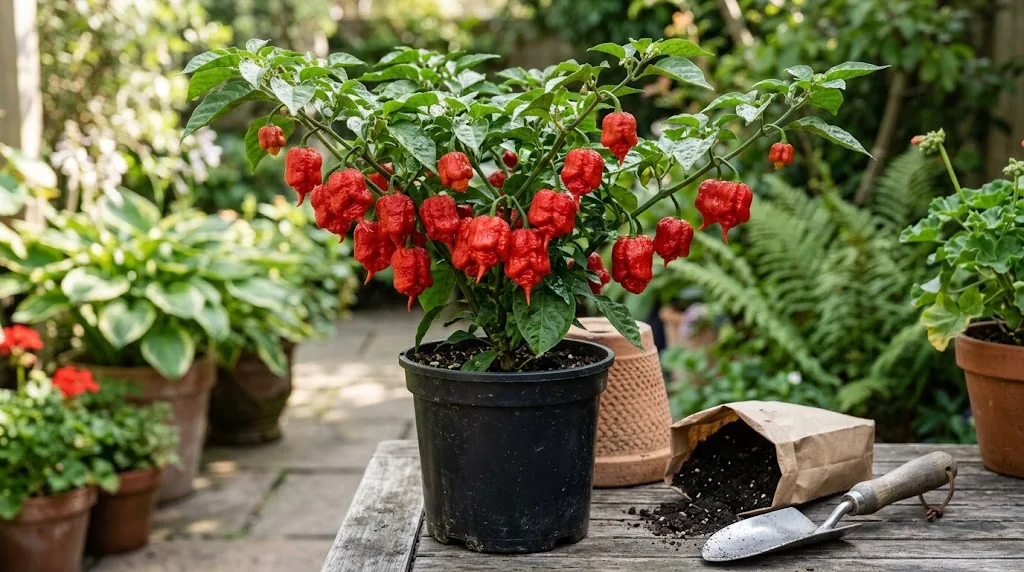
Look for a rounded, wrinkled red fruit with a narrow tail and you may have found a 7 Pot Primo. This Louisiana-bred cultivar is known for extreme pungency, though published ratings differ. Here is what is documented about its story, appearance, garden needs, and uses.
What is this cultivar?
7 Pot Primo is a named cultivar of Capsicum chinense. Troy Primeaux, a Louisiana horticulturist, developed this hybrid while working at the University of Louisiana at Lafayette. A university profile says he crossed peppers from Malaysia and Trinidad in 2005. In a later first-person interview, Primeaux describes using Naga Morich and a Trinidad 7 Pot, obtained around 2005, with the cross made afterward. The two accounts differ on the first parent and the exact year, so treat 2005 as approximate. The university’s profile and Primeaux’s account document the history.
The name pairs the 7 Pot group with Primeaux’s nickname, “Primo.” He says a fellow enthusiast coined it when his early selections began circulating. The saying that one pod can season seven pots of stew is a story behind the group’s name, not a serving suggestion. Even a small amount can dominate a dish.
How hot is the 7 Pot Primo?
No single rating fits every fruit. The university reported about 1.4 million Scoville heat units in 2013. The breeder’s seed listing now gives an average of 1.79 million, without publishing a lab report alongside the number. Treat these as separate reported figures, not a guaranteed score. Individual fruit and testing methods can differ.
Guinness reports the Carolina Reaper averaged 1.64 million SHU and that Pepper X averages 2,693,000 SHU in Winthrop University testing. Guinness’s record report gives that context, but record averages for other cultivars cannot settle whether a particular 7 Pot Primo is hotter than a particular Carolina Reaper. Rankings also shift as new tests appear, so a list position is not a dependable guide for growing or cooking.
Appearance and taste
The classic pod is squat and rounded, with a deeply wrinkled surface and often a narrow, pointed tail. It starts dark green and ripens bright red. Shape varies from fruit to fruit, and other superhots can grow a pointed tip, so a tail alone does not confirm its identity. Primeaux’s first-person history describes the selection as round and warty, with a long, stinger-like appendage.
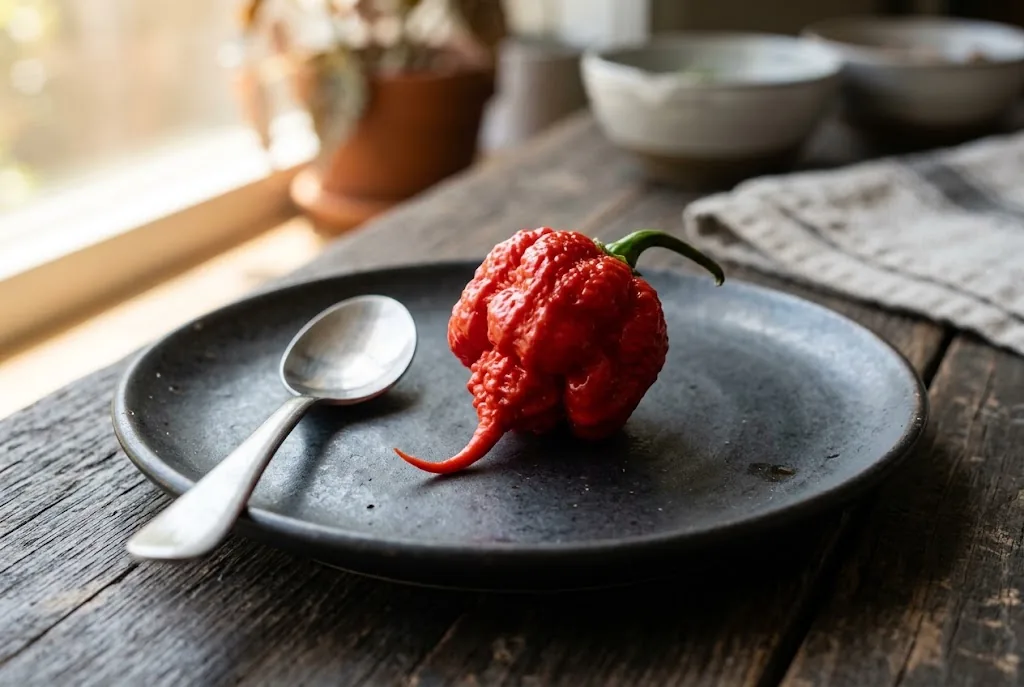
Descriptions of taste are subjective. Primeaux calls attention to the cultivar’s exceptional pungency. If you want to try it, use a trace amount in a full recipe or choose a prepared product from a maker that names its ingredients. Do not taste a whole pod to test the flavor. PepperScale describes the taste as fruity, citrusy, and floral, though a personal tasting note is not a promise about every fruit.
If you want a contrasting fruit shape and a different species, our Bulgarian Carrot profile offers another variety to compare.
Growing a plant at home
Plan for a warm, sunny site and a long frost-free season. Sellers publish few dependable days-to-maturity figures for this cultivar, so follow the instructions supplied with the line you obtain and allow extra time in a cool or short-season region.
Utah State University Extension advises germinating pepper seed near 80°F, then growing seedlings with adequate light in sterile mix. Harden plants gradually outdoors. Transplant after frost danger passes and soil warms, keeping the stem at its original soil line. Choose fertile, well-drained soil; a raised bed or drained container helps where ground stays wet.

Keep soil moisture steady during flowering and fruit growth. Water according to conditions rather than a fixed schedule, and use soil-test guidance or the fertilizer label. Too much nitrogen can encourage foliage over fruit. High or low temperatures can also interfere with fruit set, so a greenhouse or a large pot that can be moved under cover may help gardeners with short seasons. For a broader comparison of named varieties, visit our chili variety guide.
Harvest and handle ripe fruit carefully
Pick fruit when it has reached mature size and is firm. Color helps signal ripeness, but it does not measure pungency. Clip the stem with clean snips instead of pulling on a branch. Wear gloves when picking and wash your hands after handling hot varieties, especially before touching your eyes or face.

When cutting one, use a stable surface and keep hands away from your face. Wash the knife, worktop, and reusable gloves afterward. If juice gets into an eye, rinse with copious warm water for 15 minutes. Poison Control’s capsaicin guidance recommends eye irrigation and expert help for concerning symptoms.

Storage and kitchen uses
Utah State University Extension says peppers generally keep one to two weeks at 50°F to 55°F, and warns that prolonged cold can injure them. A refrigerator runs colder than that range, so use refrigerated pods within about three to five days, as Texas A&M AgriLife Extension advises for peppers in general. For longer storage, freeze washed, dried fruit in a labeled freezer-safe container. Thawed flesh softens, so save it for cooked food.
You can also dry sound, fully ripe fruit in a food dehydrator, following its instructions until the pieces are brittle. Avoid breathing the dust when grinding and clean equipment carefully. For homemade oils, pickles, or ferments, use a tested preservation recipe for shelf stability; refrigerate an improvised version. For hot sauce, see the National Center for Home Food Preservation’s tested Easy Hot Sauce recipe.
In cooking, treat this cultivar as a seasoning. Start with a sliver or measured amount in chili, beans, soup, marinade, or tomato dishes. Keep a separate utensil, label leftovers, and warn people sharing the meal. Poison Control says small sips of milk or water may ease the sensation for some people, but that does not make a large serving safe or mild. Choose a gentler variety if you want less intensity.
Is it right for your garden?
Choose 7 Pot Primo if you have a long, warm season, enjoy unusual cultivars, and have a real use for very hot fruit. It is not a good fit if you need a mild harvest or face early frost. Buy from a seller that identifies its source and cultivar; saved seed from nearby varieties may not grow true to type when insects have cross-pollinated flowers.
Where to buy the cultivar or its products
Primo’s Peppers is the Louisiana business run by Troy and Kara Primeaux, and its shop lists official 7 Pot Primo seeds. Inventory and shipping terms can change, so check the current product page and recent customer reviews before ordering. The company also makes hot sauce: in an interview, Primeaux described Swampadelic as reflecting the cultivar’s punch. Read the ingredient label if you need to know which variety a bottle contains, since recipes can change.
The company name is not a separate botanical variety. For a habanero that runs well below the superhots, see our Mustard Habanero profile.
