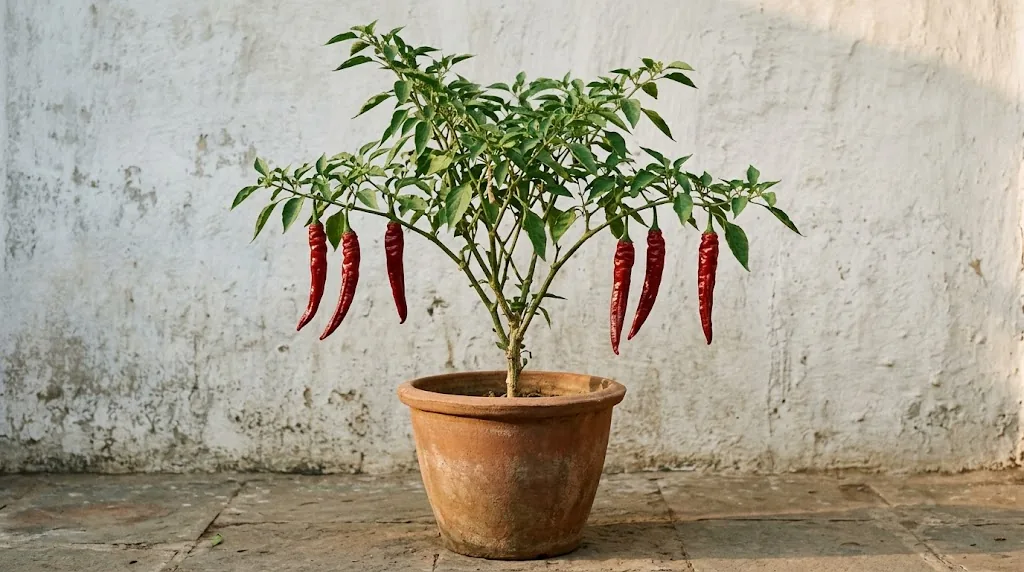
Some dried chilies bring more color than fire. Byadgi chili, a wrinkled red pepper from southern India, is prized for the deep red color and aroma of its dried pods. It is often described as a pepper with low heat, but individual pungency varies by form and batch. The regional name covers more than one form, so packaged pods can differ in shape and heat.
This pepper is one example in a broader guide to how chili varieties differ in heat and flavor. Here, the focus is this regional pepper: what it looks like, how hot it is, how to grow it, and when its color-rich pods work best in the kitchen.
Where the pepper comes from
Its name comes from the town of Byadgi in Haveri district, in the Indian state of Karnataka. The crop is also grown in neighboring districts, including Dharwad and Gadag. India’s PMFME processing handbook describes the local variety as having a geographical indication, or GI, tied to its growing region. The GI links the product to a defined region; it does not mean that every packet sold under a similar name has identical heat or quality. The PMFME processing handbook covers the region, crop, and processing trade.
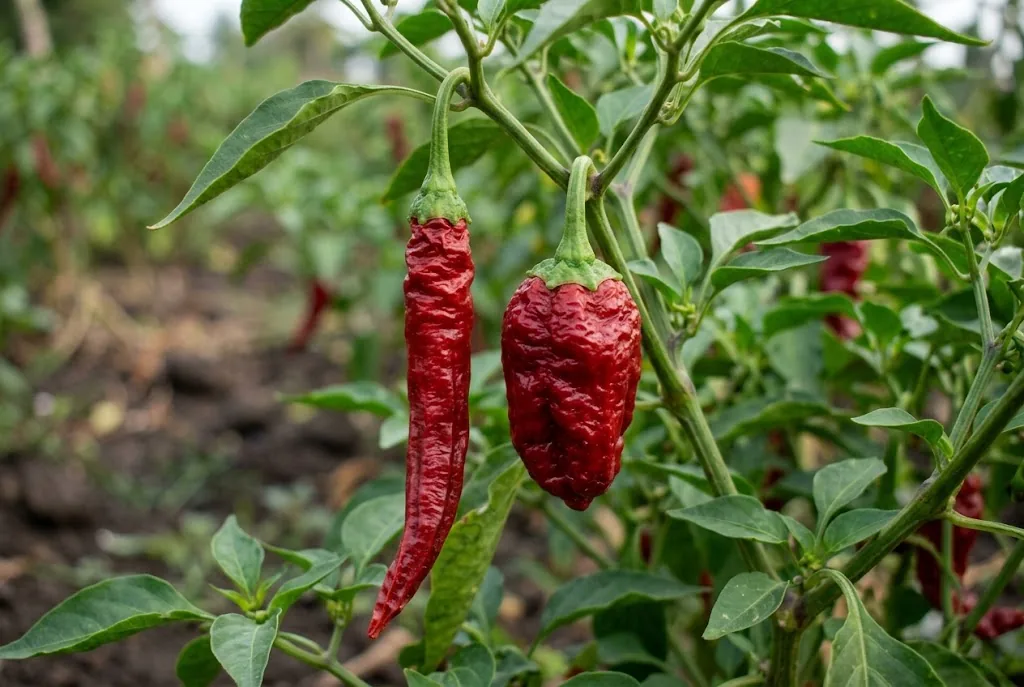
Kaddi and Dabbi are two familiar forms. A Spices Board specification lists Kaddi pods at about 10 to 15 centimeters long and Dabbi at about 8 to 12 centimeters. Kaddi is typically long and slender, while Dabbi is shorter and broader. Neither has the blocky shape of a bell pepper. The handbook also describes other local variants, which helps explain why photos and market samples do not always match one idealized shape. Both forms ripen from green to vibrant red; after drying, the skin is wrinkled.
What is it called in English?
There is no separate English common name that replaces the regional name. Indian packages often spell it “Byadagi chilli,” while U.S. sellers more often use “Byadgi chili.” Kaddi and Dabbi identify familiar local forms, while “red chili” or “chili powder” alone is too broad to confirm origin. If the label matters, look for the regional name together with a named form and origin details.
Buying pods, seeds, and powder
For whole pods, look for dry, intact chilies with naturally wrinkled, saturated crimson skin, not damp spots or mold. The pepper is sold whole, as flakes, and as ground spice. Indian packages may label the powder by its regional name, while U.S. listings usually spell it chili. Spelling variations do not prove a product’s origin or standardize its heat, so check the stated origin and the Kaddi or Dabbi form. In the United States, chili powder often means a blend, so read the ingredient list if you want pure ground pepper rather than a mix. A seller that names the form and growing region gives you more useful information than a generic “red chili” label.
When buying pepper seeds for a garden, check whether the packet identifies a Kaddi, Dabbi, or other named line. The regional name covers several forms, and the seed line affects pod shape and the grower’s days-to-harvest estimate. Do not assume that a packet of dried grocery pods is viable seed stock.
What does Byadgi chili look and taste like?
Fresh pods are narrow or moderately broad, depending on the form, and mature to red. Dried pods are often thin-skinned, folded, and aromatic, with a natural wrinkle pattern rather than a smooth, shiny skin. Its dark red color is a defining trait: processors use the pepper in spice blends and food products when they want vivid pigment without relying on a very hot pepper.
Flavor profile
Its documented hallmarks are vivid pigment and fragrance; tasting notes beyond that can vary by product and batch.
Heat and pungency
Heat varies by form, growing conditions, and batch. A PMFME processing handbook gives a broad range of about 8,000 to 15,000 Scoville Heat Units (SHU), but says Kaddi and Dabbi have negligible or nil pungency in its variety comparison. The Spices Board GI specification describes capsaicin in this pepper as negligible (0.03%) without giving an SHU value. These sources do not provide one uniform heat measurement for every form, so any claim of mild heat needs that context. For comparison, Iowa State University Extension lists jalapeños at 2,500 to 10,000 SHU, a range that overlaps the handbook’s Byadgi estimate; the mixed Byadgi reports do not support a fixed ranking. Treat published figures as context, not a promise for an individual pod. Start with a little, taste, and add more only if the dish needs it. The official GI specification gives Byadgi product details and lists Guntur Sannam separately.
Is it the same as Kashmiri chili?
No. They are different regional peppers, though both are commonly sold dried and may be used for color with moderate heat. Their shape and heat can overlap, and sellers sometimes use names loosely, so check the label rather than assuming the two are interchangeable. Kashmiri chili comes from a different part of India. The same Spices Board specification lists Guntur Sannam at 35,000 to 40,000 SHU. That makes Guntur a much hotter substitute in most dishes. When a recipe calls for it, try this regional pepper only if its aroma suits the dish, and adjust the amount to the product in hand.
Growing the pepper
The crop is a warm-season Capsicum annuum pepper, a classification also consistent with a DNA barcoding study of the GI-tagged Kaddi and Dabbi cultivars. The PMFME handbook describes a warm, humid growing period, drier weather as fruits mature, and well-drained loamy soil. For a home garden, give the plant full sun, warm conditions, and soil that drains freely. The handbook reports field plants around a meter tall, but size in a pot or home bed depends on the seed line and growing conditions.
Field growers commonly raise seedlings before transplanting. At home, start seeds indoors about eight weeks before you plan to plant outside. Use warm potting mix for germination, then move sturdy seedlings outside after frost risk has passed and night temperatures stay above 50 degrees F. Set each transplant at its existing soil line. Keep soil moisture steady and use a container with drainage holes if you are growing on a patio. University of Minnesota Extension’s home pepper guide covers seed starting, transplanting, and care.
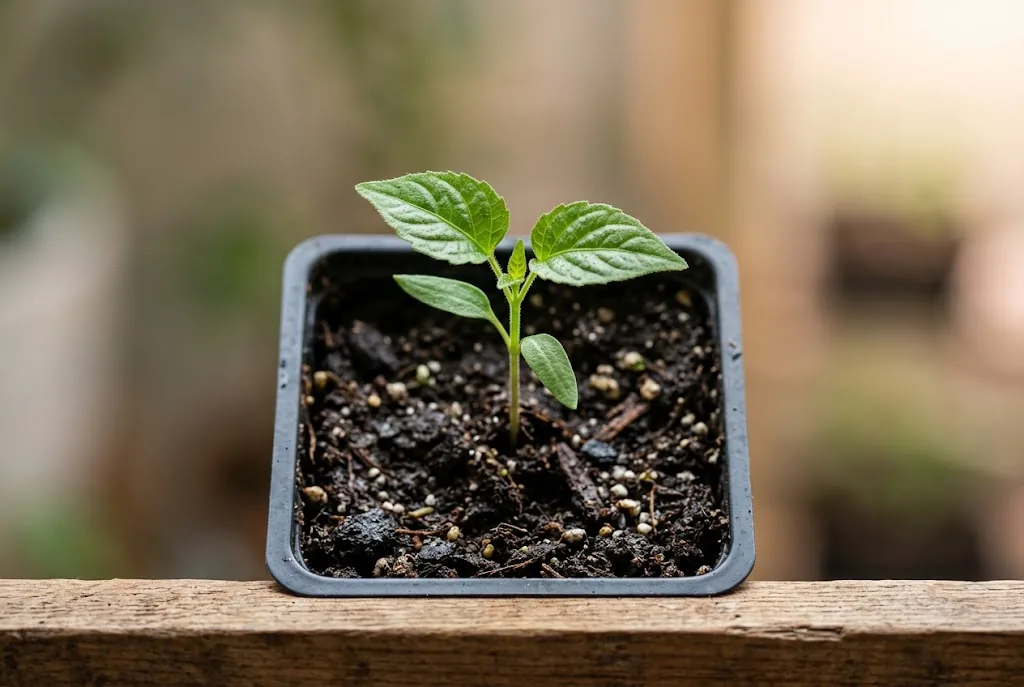
This is a named regional group, not one uniform seed line, so days to maturity and pod size can differ between seed sellers. Read the packet for the specific line you buy and follow its spacing and harvest estimates. For a step-by-step overview of another Capsicum annuum pepper, the mulato, compare its notes with the cultivar named on your seed packet rather than assuming the plants behave identically.
When to harvest and how to store the pods
Pick fresh pods when they are full-sized and firm. Leave pods on the plant longer if you want them to develop a ripe scarlet hue, checking regularly as they change. Capsaicin in pepper fruit can irritate skin. Wear gloves if you are sensitive, and wash your hands before touching your eyes or face after harvest. Clip ripe pods from the plant with clean shears instead of pulling hard on the branch.
For home drying, Utah State University Extension’s chile guide recommends washing and slicing peppers before dehydrator drying until brittle, or hanging tied stems in a dry, well-ventilated place. Keep fully dried pods in a sealed container away from heat, light, and moisture; grind only what you need so the aroma stays fresher. Its home-drying guide recommends sealed storage in a cool, dark, dry place. Discard pods that show mold, dampness, or an off smell.

How to use it in cooking
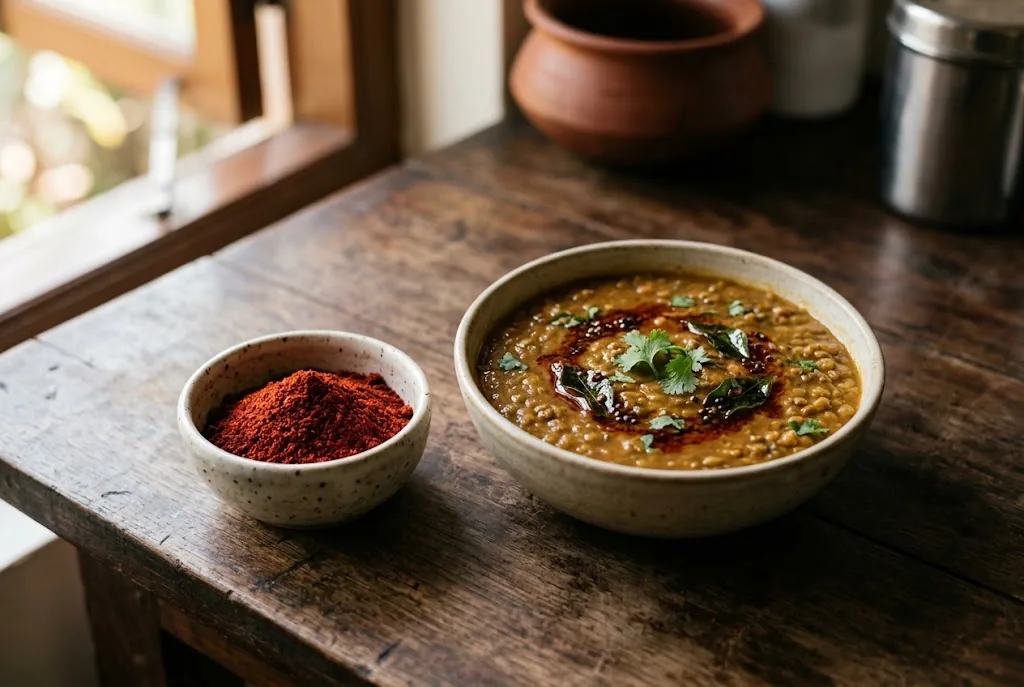
Use this pepper when you want a rich scarlet hue and a rounded chili aroma without making heat the main event. Add a pod to a curry or lentil dish, or soak a dried one briefly before blending it into a paste. A small amount can also deepen the color of a spice blend, chutney, or marinade. At home, whole pods, flakes, powder, and paste suit different recipes. The PMFME handbook on market forms lists dried pods for paste and chutney, crushed flakes for seasoning, and powder for masala. Taste before adding more, because pungency varies by form and batch. Toasting a dry pod briefly in a pan can bring out its aroma, but keep the heat gentle and move it as soon as it smells fragrant; scorched chili turns bitter.
Ground pods work well in South Indian cooking, including seasoning mixes and rice dishes where color is welcome but sharp burn would crowd out other spices. The state tourism board describes Bisi bele bath as a rice-and-lentil dish with a special seasoning blend. Byadgi’s crimson pigment can suit that kind of dish, but it will not reproduce the full seasoning. Use a small amount in curry, chutney, sambar, lentil stew, or marinade, then adjust to taste. NIFTEM notes that Dabbi is used both green and dried, so a firm fresh pod can also be sliced into a curry or cooked with lentils.
For a substitute, paprika can add color with very little heat, while spicier Guntur Sannam can add much more burn. Neither tastes exactly the same, so start with a small amount and adjust. If replacing a hotter chili, you may need more Byadgi for comparable heat; for a color-first dish, use less than a generic chili powder and add heat separately if needed. In U.S. stores, check the ingredient list because chili powder may be a blend rather than pure ground pepper; chili powders can include other spices. That means a blend may taste different even when the heat level seems similar.
For a different pepper with a distinctive shape and culinary role, see Peter pepper’s profile. The two are not interchangeable by appearance, but comparing their uses can help you choose a variety that suits the dish.
Frequently asked questions about heat and use
Is Byadgi chili very spicy?
Not always. Published sources describe it as mild or negligible in pungency, while one processing handbook gives a broad heat range. Form and batch matter, so start with a small amount.
Can it replace paprika?
It can add red color, but it has its own aroma and may add more heat than the paprika in your recipe. Try a small amount first, then adjust the seasoning.
How should I store it to preserve color and aroma?
Keep fully dried pods in an airtight container in a cool, dark, dry cupboard. Protect them from moisture and heat, and grind only what you need. Discard pods that become damp or moldy.
Nutrition reference for powdered pepper
The NIFTEM processing handbook lists an approximate analysis per 100 grams of the ground powder: 343.55 kilocalories, 16.75 grams of protein, 13.07 grams of fat, 39.73 grams of carbohydrate, and 1.23 grams of sodium. Treat this as one processing-guide reference, not as the label for every product or a typical serving. Ground spice blends and brands can differ, so use the package Nutrition Facts for a specific product.
Does it have health benefits?
This article covers the pepper as a culinary spice. Color, aroma, and heat describe how it works in food, not a medical benefit, and no treatment claims are made here.
Quick facts
- Species: Capsicum annuum, as listed for this article’s regional pepper group.
- Origin: the town and surrounding region in Karnataka, India.
- Common forms: Kaddi, long and slender; Dabbi, shorter and broader.
- Heat: Sources vary; a government processing handbook gives a broad estimate and notes that specific forms may be very mild.
- Best known for: Rich color and aroma in dried pods and chili powder.
Choose this pepper when you want color, aroma, and a measured warmth. Because the name covers more than one local form, check the seller’s description and taste a small amount before building it into a recipe.
