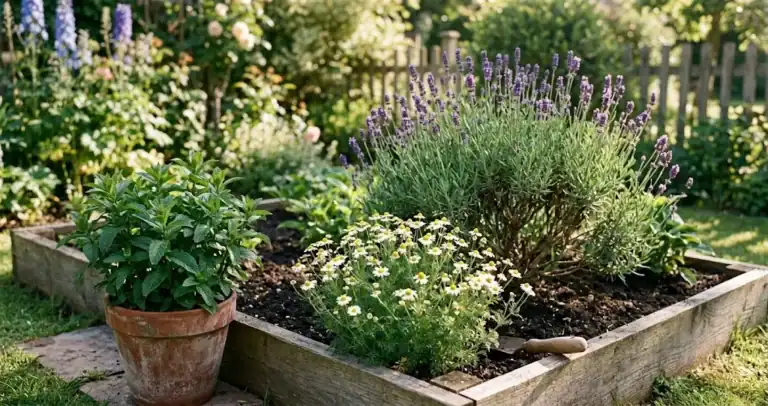
Fresh herbs turn an ordinary meal into something worth remembering, and a small herb plot on a windowsill or back step is enough to supply most kitchens for the better part of a year. Growing herbs at home is also one of the easiest ways to start gardening, because the plants are forgiving, the season is long, and a single pot of mint or a leafy herb will teach most of what you need to know about watering, sunlight, and harvesting in a single summer. Many gardeners find that starting their own herb patch also unlocks a real sense of accomplishment, and within a season they have a steady supply of cut-and-come-again leaves. This primer walks through every decision a new gardener actually has to make: which herbs are easy to grow, where to put them, how to plant them, how to keep them productive, and how to harvest herbs without killing the plant. By the end you should have a clear plan for a first herb plot that fits your space and your cooking, and a short list of herbs for beginners worth trying first.
Why grow herbs at home
Herbs are among the most rewarding plants a new gardener can grow, and the reasons are practical rather than romantic. A single basil plant gives a steady supply of leaves for pasta, salads, and pesto from early summer until the first frost. Mint, thyme, sage, parsley, and chives all behave the same way once they are settled in. A pot by the kitchen door is more convenient than a trip to the store, the flavor is noticeably better than dried, and a healthy plant keeps producing for months with very little attention.
Herbs also help the rest of the herb plot. Flowering herbs and flowering types such as oregano, thyme, and chives pull in bees and other pollinators, and many herbs repel common pests when grown near vegetables. A few herbs, including mint, are best kept in containers because they spread aggressively and will take over a bed if given the chance. Used well, an herb planting is one of the best companion additions any new gardener can make to an outdoor space, and a small set of herbs to grow your own cooking from will expand quickly once a cook sees how much flavor a single pot adds.
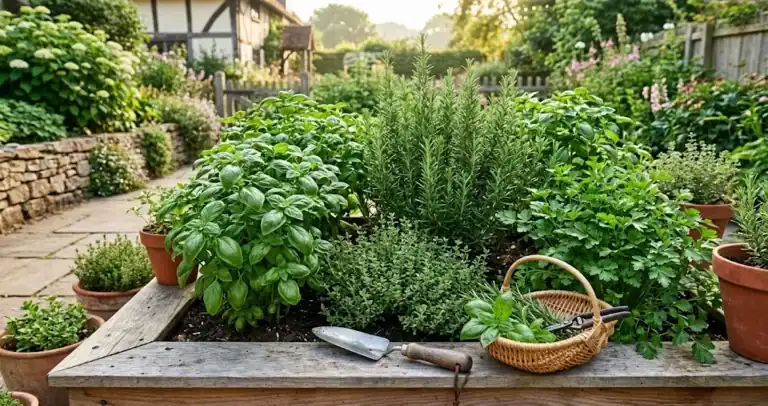
The herb plot itself does not have to be large to be useful: most kitchens are well served by a sunny corner with three or four reliable plants, and a cook who leans on Mediterranean, French, or American food most nights can cover almost every recipe with a small starter set grown together. Fresh leaves picked straight from the plant keep their flavor longer than anything from the produce aisle, and a rosemary plant adds a sturdy evergreen that earns its place in that same sunny corner year after year.
The easiest herbs to grow
A short herbs 101 list is a useful place to start. Most new gardeners are surprised by how much can be grown from a single packet of seed or a couple of starter plants, and by how forgiving herbs are once they are settled in. The plants to grow depend on what you cook, but a beginner-friendly starter set covers almost every kitchen need. Many are perennials that come back on their own, and most prefer to grow in plain soil rather than anything fancy.
Some herbs are easier than others, and a first garden should lean on the easy ones. Basil is the herb to grow if you only have space for one; mint, thyme, sage, parsley, and chives round out a list that covers most cooking needs and all grow well in ordinary soil or in pots. The leafy annual is the friendliest of the bunch and rewards steady warmth and pinching, and is one of the easiest herbs to start from seed. Mint is famously hardy, almost impossible to kill, and useful in everything from tea to salad; keep it in a container because it spreads by runners and will fill a bed if left alone. Sage prefers drier soil and full sun, and one plant will supply a household for years. Herbs like thyme and oregano are Mediterranean herbs that thrive on neglect, asking only for sun and well-drained soil. Parsley prefers cooler weather and partial shade in summer. Chives come back every year and produce edible purple flowers in late spring. These are also the easiest herbs to grow for gardeners who want a low-fuss first season.
Types of herbs break into two main groups, and a small herb planting usually contains a mix of both. Annuals complete their life cycle in one season. Cilantro, dill, and summer savory are the most useful annual herbs, joined by basil where the summer is long and warm. Perennials return year after year once established. Mint, oregano, thyme, chives, and sage are reliable perennials in most climates. Knowing which type is which matters when planning the plot, because annuals need to be replanted each spring while perennials settle in and grow stronger with age. Tender herbs such as the leafy summer annuals are particularly sensitive to cold and should be planted out only after the last frost has passed.
The best herbs for a beginner’s kitchen
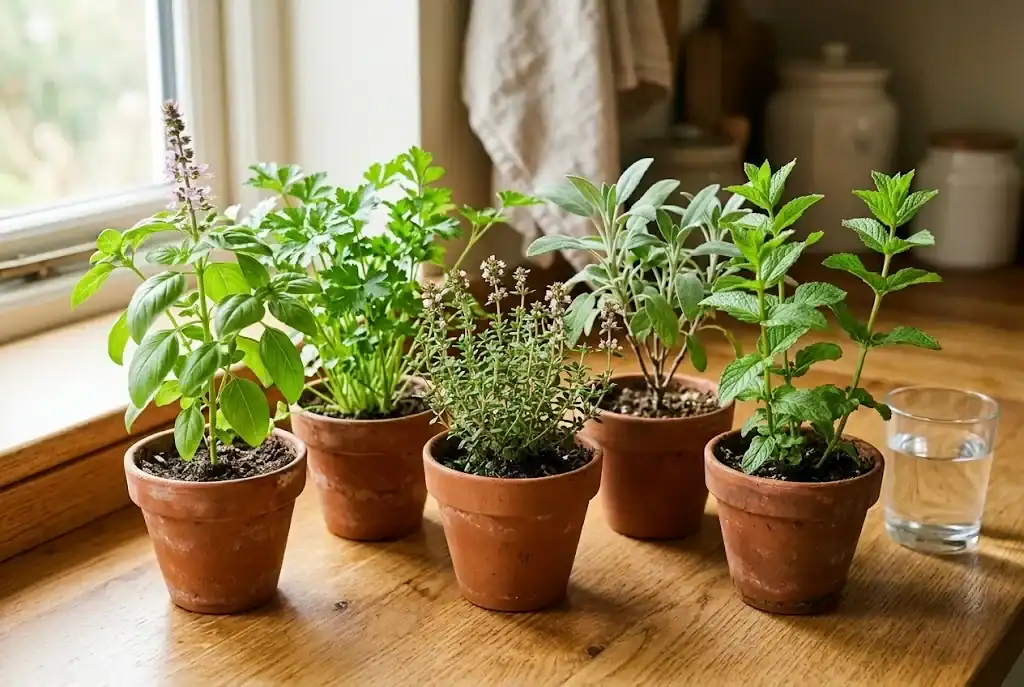
Choosing the best herbs for a new gardener’s kitchen is mostly a matter of what you cook, but a few plants earn their place in almost every first garden. The leafy annual is the easy herb for pesto, pasta, and Thai-style soups; thyme and oregano handle roasts and slow-cooked beans; parsley brightens everything green; chives top eggs and salads.
For gardeners who want the best herbs for both cooking and ornamental value, thyme and oregano pull double duty as ground cover at the front of a sunny bed. Mint earns a place for the bees it attracts even before its first leaf is picked. Basil is one of the easiest herbs for a new gardener to start from seed, which is a large part of why it earns a spot in almost every first garden.
Almost all herbs you want to cook with prefer to grow in similar conditions, which is why a single sunny plot of well-drained soil holds six or seven different kinds without trouble. The hardest part of starting is picking which herbs you want to grow first, and a good rule is to plant what you already buy at the store.
Choosing the right spot
Most herbs want the same thing: at least six hours of direct sunlight, soil that drains freely, and a little shelter from the strongest midday wind. A south-facing windowsill, a back step, or a corner of a vegetable plot all work. If the only available spot gets morning sun and afternoon shade, parsley, mint, and chives will still do well, while basil will struggle. Avoid low spots where water collects after rain, because few herbs tolerate wet roots for long. Growing herbs indoors under a bright window works for parsley, mint, and chives through the winter, though basil does better outside in summer. The growing conditions that herbs prefer are similar enough that grouping them in one bed almost always works.
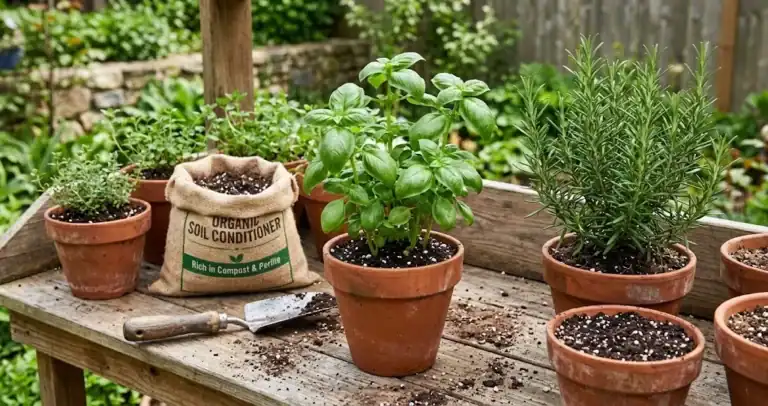
Soil quality matters more than location for most new gardeners. Herbs prefer a loose, well-drained mix with plenty of organic matter worked in. A bag of ordinary potting mix is fine for containers, and a planting bed benefits from a few shovelfuls of compost turned into the top six inches before planting. Building soil that suits herbs from the start saves a season of troubleshooting later. Raised garden beds are an easy answer for poor native soil, and they warm up faster in spring, which Mediterranean herbs appreciate. Most herbs have shallow roots that prefer a loose, crumbly texture over compacted clay. For a fuller look at what a healthy herb bed needs below the surface, the guide on soil for growing herbs explains drainage, pH, and feeding in more detail.
Planting herbs from seed or starts
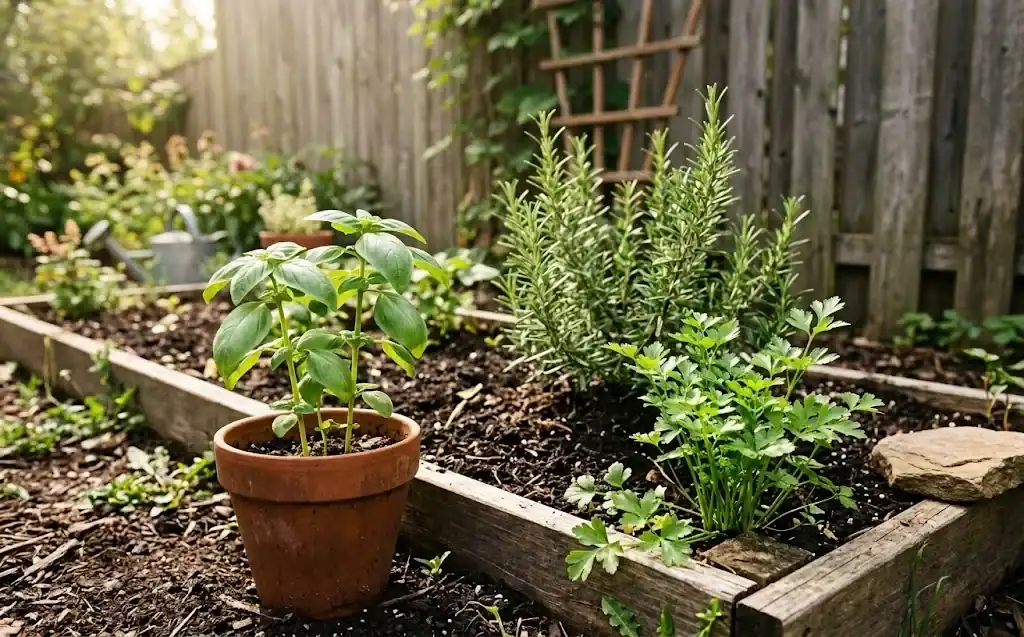
New gardeners can choose between planting herbs from seed or buying small plants from a nursery. Both work, and each has trade-offs. Seeds are cheaper, offer more variety, and give the satisfaction of raising a plant from the beginning. Starts are faster, easier, and a good way to get a first plot going in a single weekend. Choosing how to plant herbs is often the first real decision a new gardener makes, and there are plenty of plants to grow no matter which approach is taken.
Easy herbs to grow from seed include cilantro, dill, parsley, and chives, along with basil for gardeners willing to wait a couple of weeks for germination. Sow seeds indoors six to eight weeks before the last frost, or direct sow in the plot once the soil has warmed in late spring. Press the seeds into the surface of a moist seed-starting mix, cover lightly, keep them damp, and most will germinate within two weeks. Perennial herbs grow slowly from seed and are usually bought as small plants the first year. For a first garden, a mix of seed-grown annuals and a few purchased perennials is the path of least resistance, and gives the gardener a chance to learn each herb’s needs. Cold-hardy herbs such as parsley and chives can be direct sown a couple of weeks before the last frost, which gives them a head start.
Choosing seed that will actually germinate matters more than new gardeners expect. Fresh seed from a reliable source, stored cool and dry, sprouts readily; old or poorly stored seed disappoints. Planting depth matters too: small herb seeds want only a fine dusting of mix on top, while larger seeds like dill and parsley benefit from a quarter inch of cover. Spring planting is usually the easiest time to start, but most types can also be planted in early summer, and a second planting in late summer extends the harvest into fall. For a detailed look at selecting seed packets and viability, the guide on choosing herb seeds covers what to look for and what to skip.
Growing herbs in pots and containers
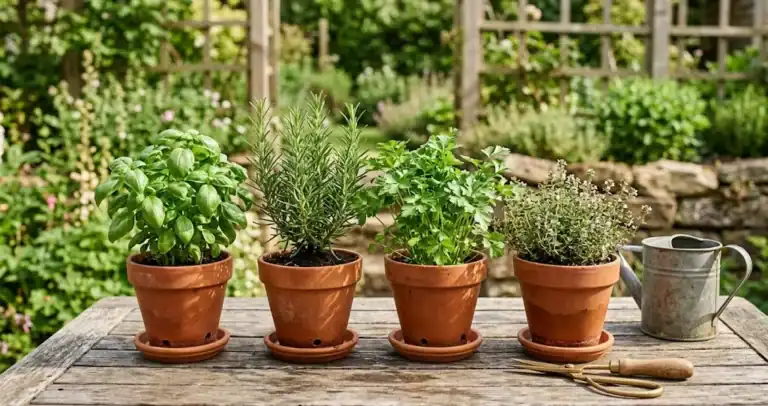
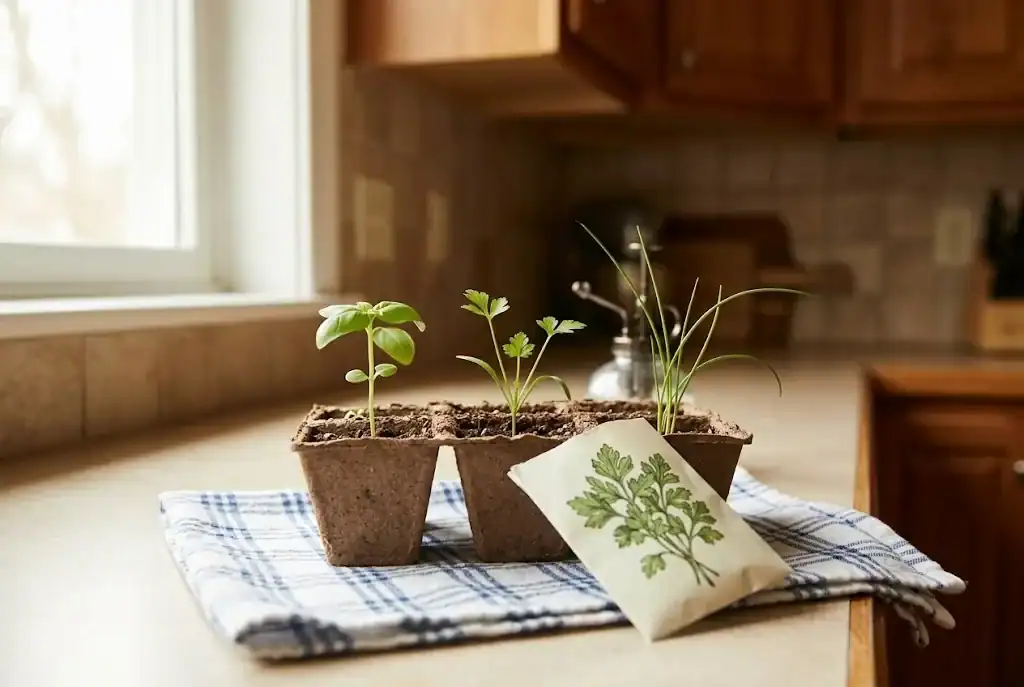
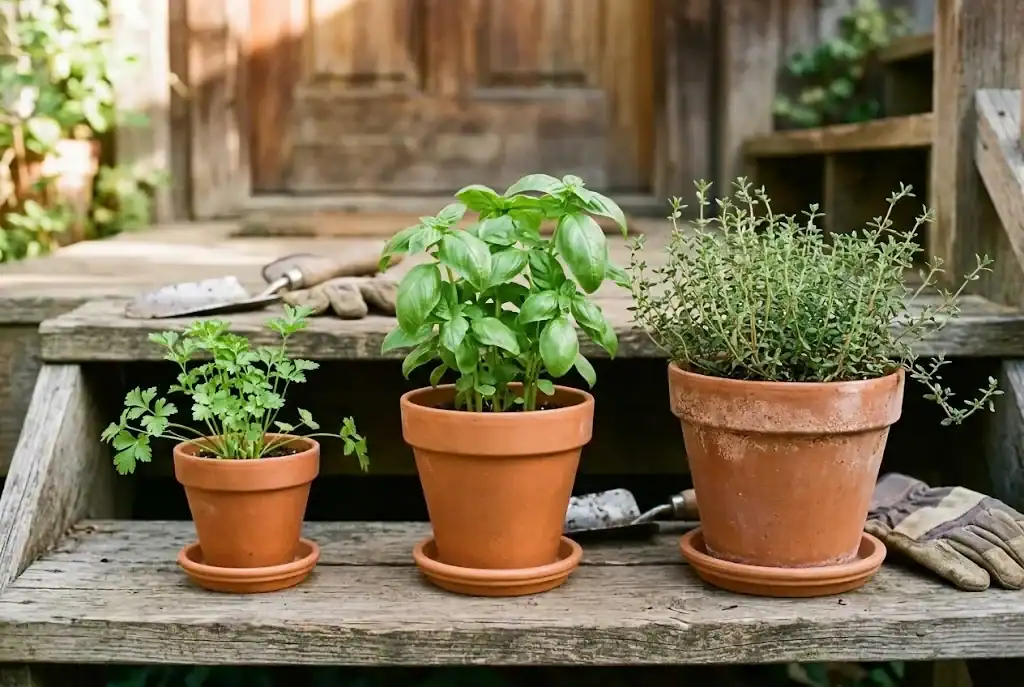
Containers are a practical answer for balconies, small patios, or anywhere the soil is poor. Almost any herb will grow in a pot as long as the pot drains freely and is large enough for the plant’s root system. A six-inch pot suits a single basil or parsley plant. Sage and oregano appreciate an eight- to ten-inch pot so their roots have room to spread. Unglazed terracotta breathes and dries out faster, which suits Mediterranean herbs. Plastic retains moisture longer, which suits basil and parsley. Growing in containers is also a good way to keep aggressive spreaders such as mint contained.
A small herb planter on the kitchen counter is enough for parsley, basil, and chives to supply most cooking needs through the winter, and a dedicated container for each kind makes watering and pinching easier than a mixed pot. Group pots by water need rather than by appearance. Basil and parsley like steady moisture. Thyme, oregano, and sage prefer to dry out between waterings. Putting a thirsty herb next to a drought-tolerant one usually means one of them suffers. A simple grouping by pot saucer color or by where they sit on the step keeps the watering routine straightforward.
Watering, feeding, and everyday care
Most herbs need less water and less fertilizer than new gardeners expect. The general rule is to water thoroughly, then let the top inch of soil dry before watering again. Stick a finger into the soil: if it feels dry an inch down, water; if it still feels cool and moist, wait. Overwatering is the most common cause of a struggling herb, particularly in containers that do not drain freely. Mediterranean herbs grow best on the dry side, while parsley appreciates more consistent moisture. Water herbs at the base rather than over the foliage to keep leaves dry and reduce fungal problems. Each herb has its own watering sweet spot, and a little observation saves a lot of troubleshooting later.
Herbs do not need heavy feeding. A light application of a balanced organic fertilizer once a month during the growing season is enough for most. Potted herbs run out of nutrients faster than garden-grown plants and benefit from a dilute liquid feed every two or three weeks. Pinching the growing tips of oregano and basil encourages the plant to branch and produces a bushier, more productive plant. Letting any of these herbs flower signals the end of leafy growth, so pinching off flower buds as they appear keeps the harvest going and helps the herbs continue producing through the rest of the summer.
A small dose of compost tea or organic herb fertilizer once a month is enough to keep leaves producing, and most herbs grow best without richer feedings that push soft leafy growth at the expense of flavor.
Growing herbs indoors
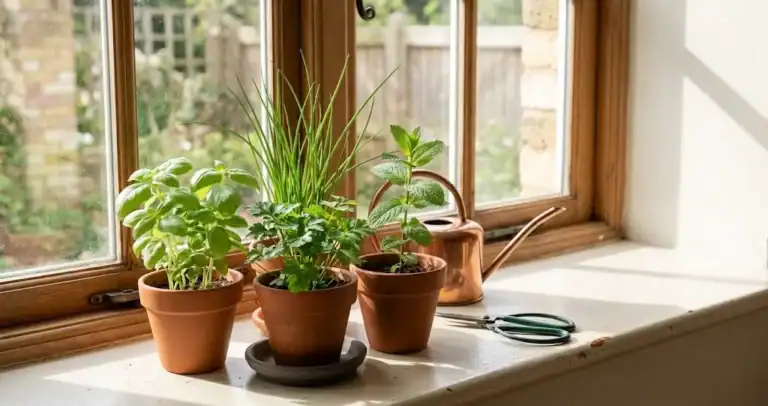
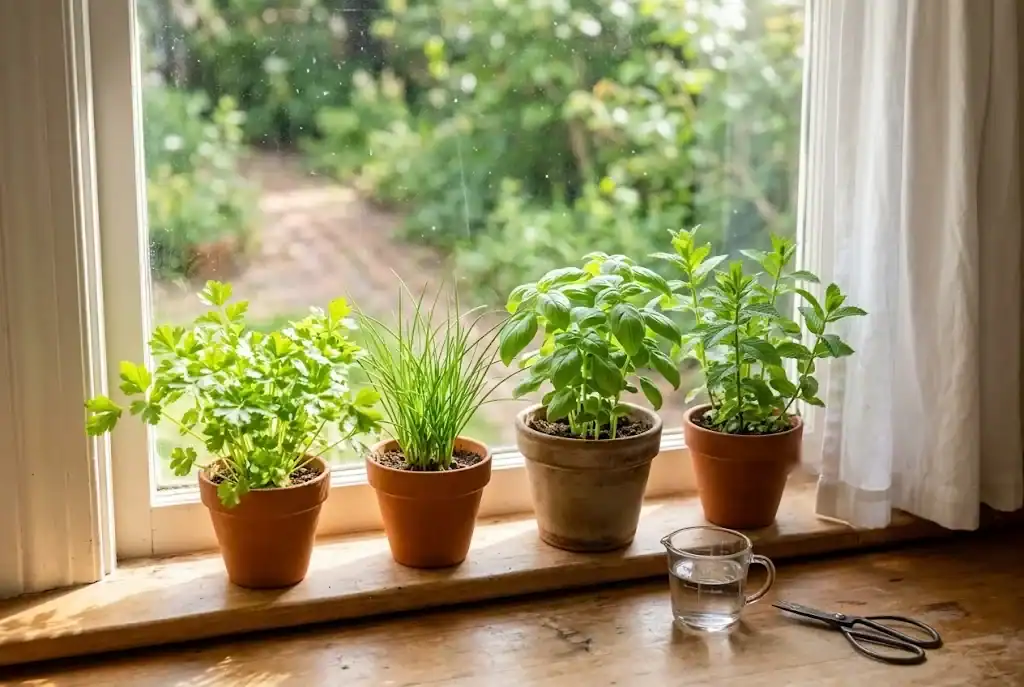
For gardeners without outdoor space, growing herbs indoors is a practical way to keep a steady supply within reach. A bright south-facing window gives most herbs the light they need; an east- or west-facing window works for parsley, mint, and chives, all of which tolerate slightly less sun. Indoor herbs want shorter watering cycles because pots dry out faster with indoor heating and lower humidity.
The herb seedlings and starts sold at grocery stores transplant well into a sunny window, and indoor heating tends to dry pots out faster than the same plant would dry outdoors, so check the soil more often than habit suggests through the coldest months. Use a well-drained potting mix and let the surface dry between waterings; indoor herbs hate wet feet more than outdoor ones do. A gentle liquid feed once a month keeps the leaves producing.
Harvesting herbs the right way
Harvesting is the reward for the rest of the work, and a few simple habits keep the plant productive. Pick leaves in the morning after the dew has dried but before the day gets hot, when the essential oils are most concentrated. Never take more than a third of the plant at one time, because the leaves are how the plant feeds itself and recovers. For leafy herbs such as parsley and basil, pinch or snip above a pair of leaves and the plant will branch from that point and grow back fuller.
Woody herbs are harvested by cutting whole stems. Cut just above a leaf node and the stem will fork. Harvest often and lightly rather than waiting for a single large cutting; regular light harvesting keeps the plant in active growth. Dry herbs by hanging small bundles in a warm, airy spot out of direct sun, or use a low oven set to its lowest temperature with the door slightly open. Fresh leaves keep for several days in a glass of water on the kitchen counter, loosely covered with a plastic bag. Frozen herbs hold their flavor better than dried for most cooking uses; chop them, pack into ice cube trays with a little olive oil or water, and freeze. A well-timed planting and a steady harvest keep the garden productive from spring through the first frost. Growing your own herbs also lets the cook pick a favorite herb at its peak rather than settling for what the store has on hand.
Common problems and easy fixes
A few problems show up reliably in new herb gardens. Yellowing leaves usually mean overwatering or poor drainage. Leggy, pale growth means the plant needs more sunlight. Pests such as aphids and spider mites can be dislodged with a strong spray of water or treated with a mild insecticidal soap. Mint sometimes gets rust, a fungal disease that shows up as orange spots on the undersides of leaves; remove affected leaves, thin the plant for better airflow, and avoid wetting the foliage when watering. The leafy summer annuals bolt in midsummer in response to heat and lengthening days; pinch off the flower stalk and the plant will keep producing for a few more weeks. Common herbs are usually tough enough to recover from a small pest problem once conditions improve, and most perennials will return year after year once their roots are established.
If an herb simply will not grow, the cause is almost always one of three things: not enough sun, too much water, or soil that does not drain. Adjust one of those and most new-gardener problems clear up in a couple of weeks. A few pests such as spider mites take over a herb planter when the air is dry; a daily mist and a gentle rinse usually clear them up. Slugs can decimate tender herbs overnight, and a shallow dish of beer or a sprinkle of diatomaceous earth around the pot is usually enough to keep them at bay.
Starting your herb garden
A first herb garden does not need to be large or complicated. Three pots on a sunny step with basil, mint, and thyme will supply most of what a home cook needs through the summer. Add a small raised garden bed of oregano, sage, and parsley if there is space, and the planting becomes the foundation for a much wider kitchen garden over time. Starting an herb garden with a small set of reliable plants and expanding each season is a friendlier path than trying to grow everything at once. For a fuller walk-through of laying out an herb garden from scratch, the broader guide to growing an herb garden covers planning, layout, and seasonal care in more detail.
Start with one or two easy herbs, learn how they respond to your soil and sunlight, and expand from there. The next step after a healthy harvest is usually preserving the surplus, and drying or freezing the extra oregano turns a single season of growth into a winter of good meals. The basics of herb growing come back quickly once you start paying attention to what each plant actually needs, and most gardeners find that what started as a small herb planting quietly becomes a habit. If you only try growing one plant this season, make it basil: it rewards the effort more reliably than the rest, and the surplus freezes well for winter cooking.
Preserving your herbs at the end of the season
A healthy herb garden produces more than most cooks can use fresh, and preserving the surplus turns a single season of growth into a winter of good meals. Almost all herbs you want to cook with can be dried, frozen, or stored in oil for use later, using the drying and freezing methods already covered above. Which method suits which herb varies more than the method itself, as the breakdown below shows.
A few herbs are best for one method over another. Basil freezes well in olive oil for pasta sauces and soups through the winter. Mint dries well for teas and desserts. Parsley holds its color and flavor when frozen but loses much of both when dried. Chives are easy to chop and freeze in small clumps, ready to drop into eggs or salads all winter. Rosemary and thyme both dry well and keep their flavor for six months or longer in a sealed jar.
Herbs at their peak are almost always best used fresh, but preserving the surplus means a gardener gets to enjoy the harvest long after the growing season has ended. A small planting is enough to keep a cook supplied with leaves for most cooking needs through the year.