Asian basil brings vibrant aromas, colorful foliage, and rich culinary tradition to any home herb plot. Unlike common Italian basil, herbs in the Asian basil group are celebrated for their bold, clove-like spice and distinct anise undertones. Whether you want to pluck fresh sprigs for noodle soups or toss fragrant leaves into a hot wok stir-fry, learning how to grow Asian basil gives you a bountiful harvest from late spring until autumn.
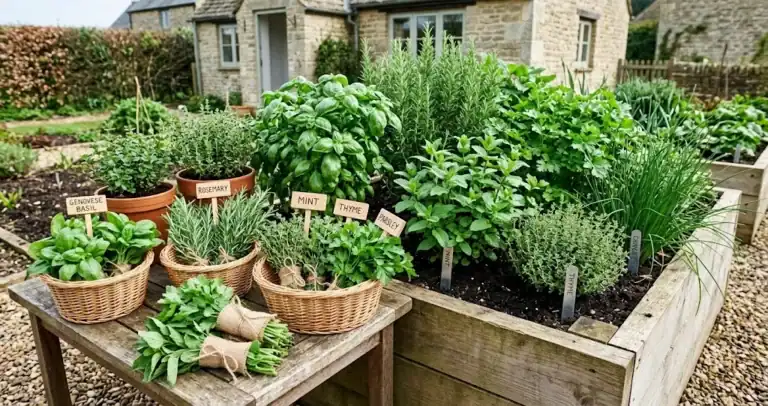
These heat-loving annuals thrive in backyard beds, raised planters, and sunny patio containers. If you learn how to grow Thai basil and its close relatives with adequate warmth, rich soil, and attentive care, your plants will reward you with exceptional yields. For home gardeners designing an outdoor growing area, planning an herb garden from scratch creates the sunny foundation warm-season herbs require.
Understanding Asian Basil Varieties for Home Gardens
Home growers often use the umbrella term Asian basil to describe several aromatic species native to Southeast Asia. While all belong to the mint family (Lamiaceae), each offers unique traits, growth habits, and culinary uses. If you want to grow basil with authentic Asian flavors, understanding the primary types of basil grown in backyard gardens is the first step:
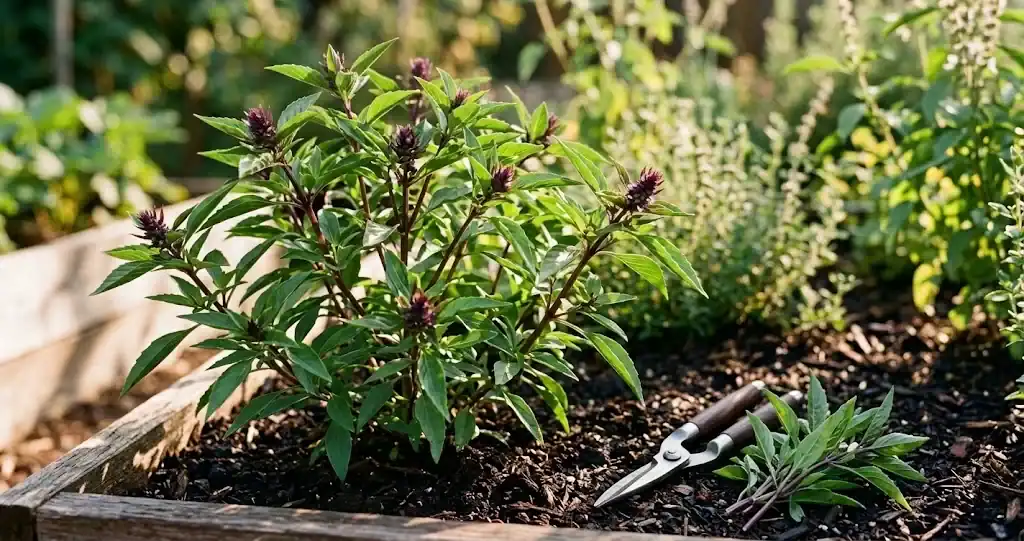
- Thai basil (Ocimum basilicum var. thyrsiflora): Known for its sturdy purple stems, narrow pointed leaves, and showy purple flower spikes. It delivers an assertive licorice or anise aroma that holds up remarkably well under high heat. A mature Thai basil plant produces abundant foliage for curries and soups. Popular cultivars include Siam Queen, an award-winning selection celebrated as both a culinary staple and an ornamental border specimen that grows well across temperate climates.
- Holy basil (Ocimum tenuiflorum, often called tulsi or krapow): Featuring slightly hairy stalks and serrated leaf margins, this herb releases a sharp peppery aroma essential for authentic Thai restaurants and herbal infusions.
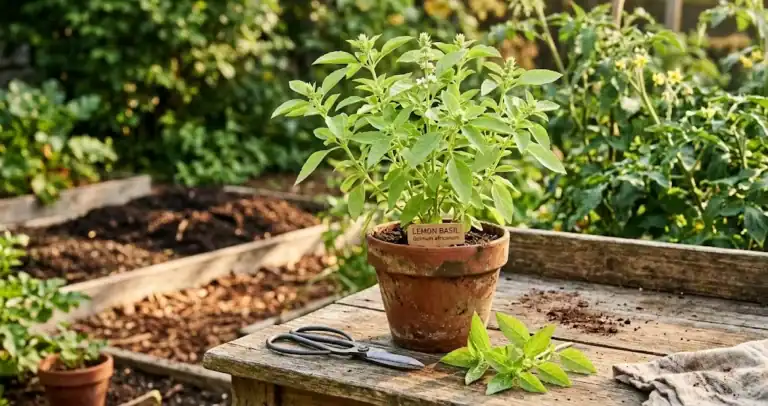
- Lemon basil (Ocimum × africanum): Prized for its compact green foliage and bright citrus bouquet, this variety is an easy to grow herb frequently added to seafood broths and coconut curry.
Botanical records curated by the Royal Botanic Gardens Kew categorize these plants across related taxa within the genus Ocimum. Knowing which variety you plant ensures you tailor your garden care and harvest leaves with optimum flavor.
How to Grow Thai Basil and Asian Varieties from Seed
You can establish Asian basil plants from seed, nursery starts, or rooted sprigs. Choosing to grow from seed provides the widest choice of specialized cultivars and ensures vigorous stock for the upcoming growing season.
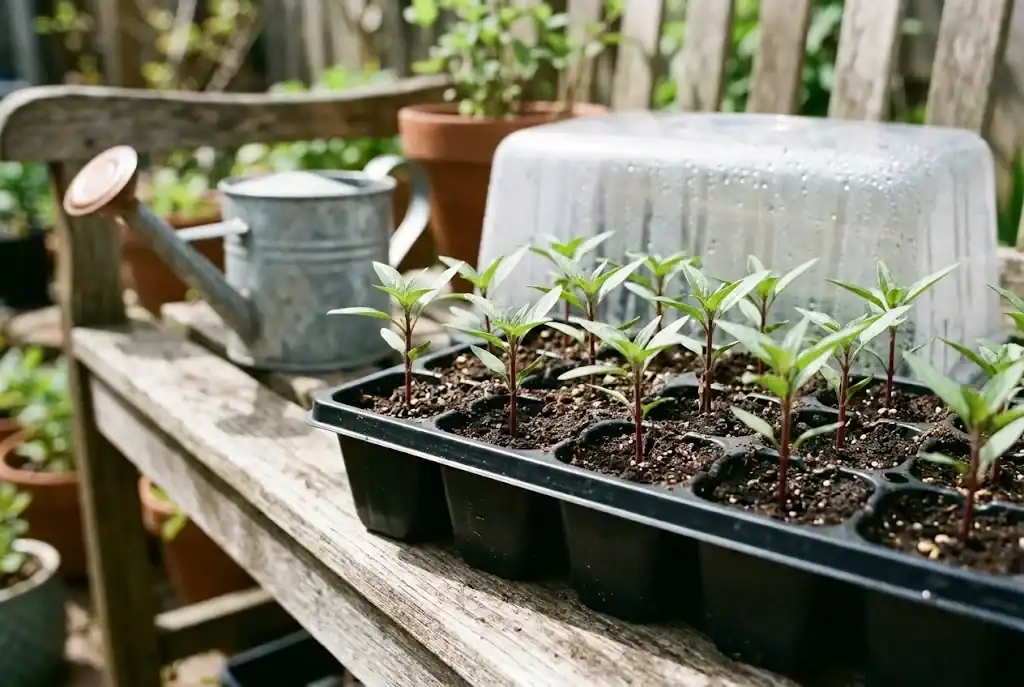
Begin indoor seed starting four to six weeks before your region’s expected last frost date. Fill modular planting trays with fine, pre-moistened seed-starting potting mix. Scatter Thai basil seeds thinly and press them one-quarter inch into the medium. Asian basil seeds need sustained warmth to germinate; keep the soil at 70 to 75 degrees Fahrenheit using a seedling heat mat if indoor rooms are cool. Covering the tray loosely with a clear plastic bag helps retain humidity until sprouts appear.
Under warm conditions, seeds typically germinate in seven to ten days. Once each seedling appears, move trays onto a bright windowsill or beneath grow lights. Keep the potting mix moist with bottom waterings so fragile roots remain undisturbed. When young shoots display their first set of true leaves, thin cells so only one plant remains per compartment.
Gardeners who prefer direct outdoor sowing should wait two to three weeks past the final frost date when garden soil warms to at least 65 degrees Fahrenheit. You can sow seeds into finely raked beds amended with aged compost, lightly covering them until green shoots break the surface.
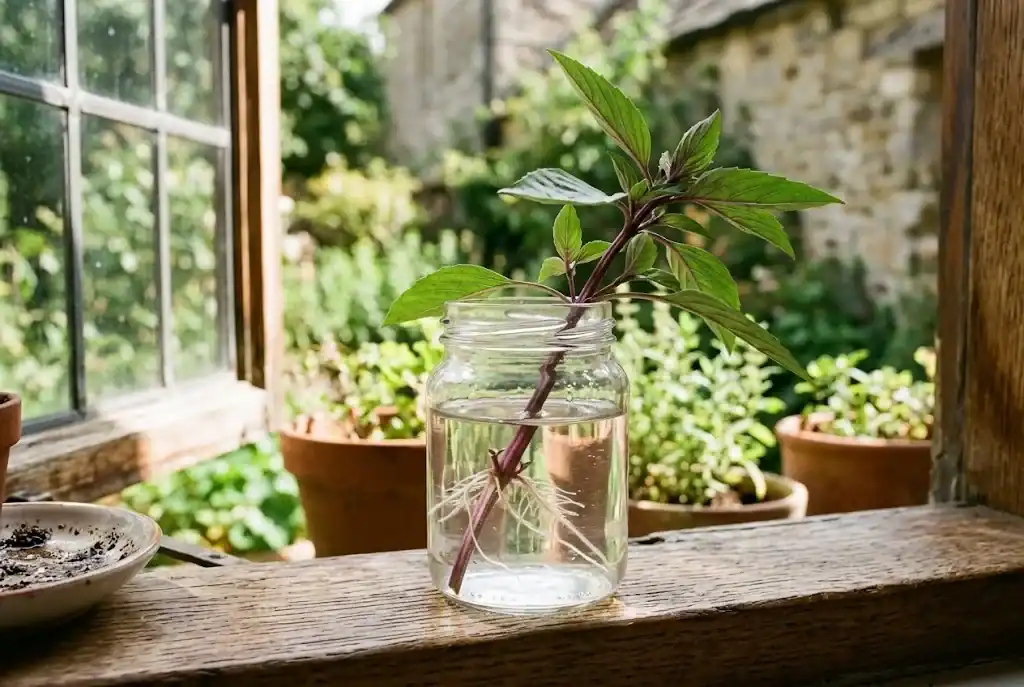
Propagating Asian Basil from a Stem Cutting
Propagating plants from a cutting is one of the easiest ways to expand your backyard herb crop. Stems root readily in warm weather, creating a vigorous new plant in just two weeks.
Take a healthy, non-flowering stem about four to six inches long from an established plant or fresh grocery bundle. Using sanitized shears, trim the shoot just below a leaf node. Strip off lower foliage, leaving three or four upper leaves to sustain growth.
Stand the trimmed stem in a small jar of water on a bright windowsill, ensuring the foliage stays dry above the rim. Refresh the water every two days. After seven to ten days, slender white roots will emerge from the submerged node. Once root branches measure an inch long, transplant the cutting into a container filled with quality potting soil, water thoroughly, and place it in filtered light before transitioning to full outdoor sun.
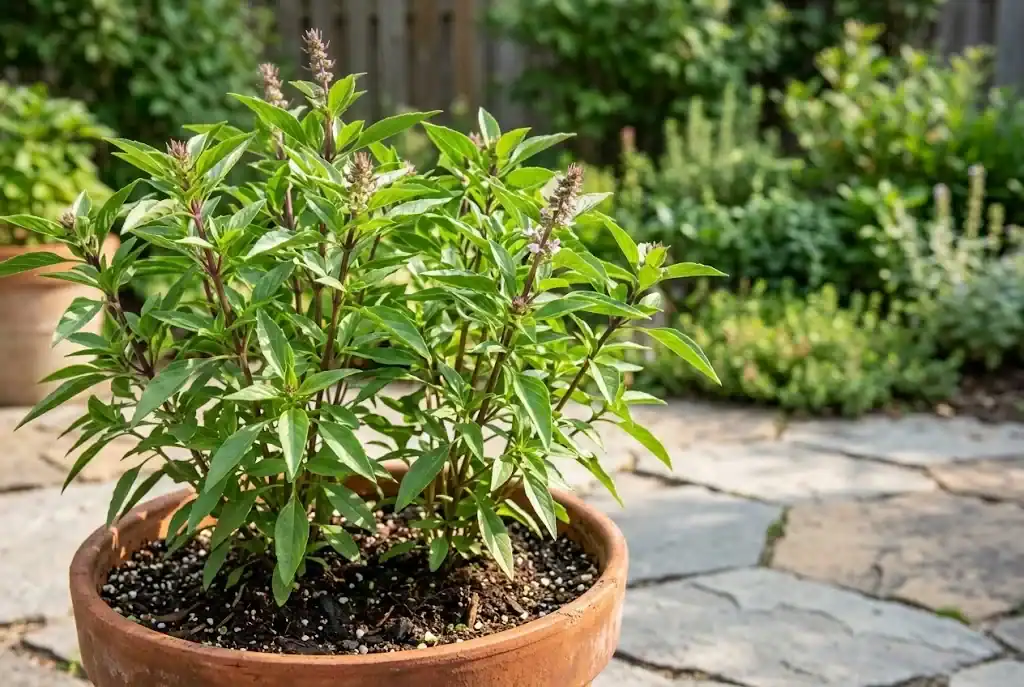
Sunlight, Soil, and Pot Requirements for Backyard Beds
Like Mediterranean herbs, Asian basil requires full sun to concentrate its aromatic volatile oils. Select a backyard planting site that receives six to eight hours of sunlight each day. Without ample hours of sun, stems stretch and foliage loses intensity.
Backyard soil must be loose, fertile, and well-draining, with a pH between 6.0 and 7.0. Heavy clay holds surplus moisture that can rot root systems and foster fungal disease. Mix three inches of finished compost into native beds before putting plants in the ground to improve drainage and steady nutrient release. Before you plant outside permanently, harden off young seedlings over a week so they adapt to outdoor winds and fluctuating temperatures.
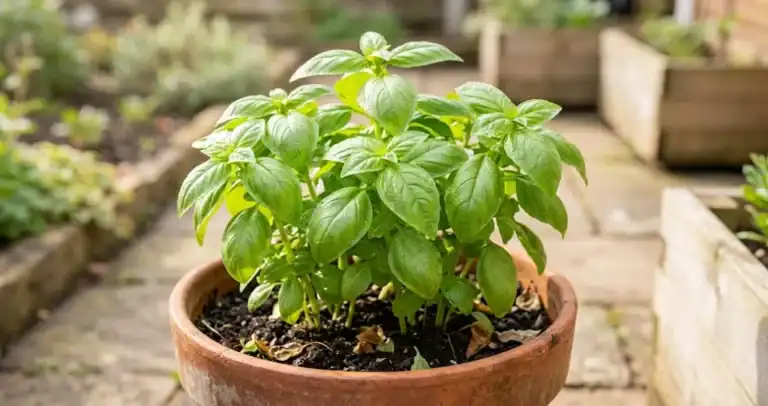
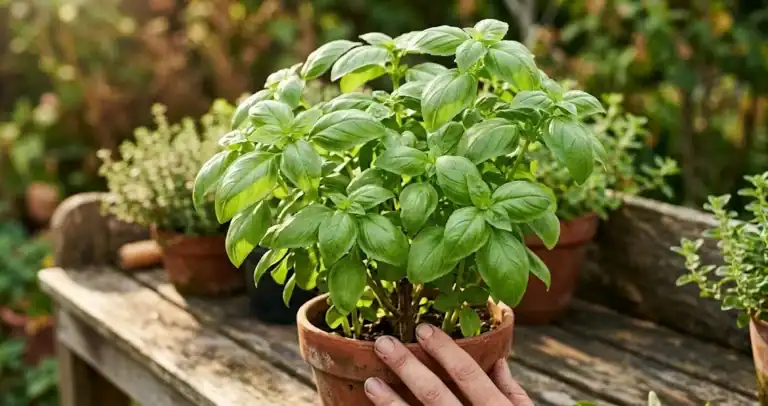
Asian basil also excels when growing plants in a patio container. Select a pot at least 10 inches in diameter with open drainage holes, and fill it with porous potting mix. Container culture allows you to shift the plant to follow sunlight or protect it during harsh weather.
Essential Growing Tips: Watering, Feeding, and Pinching
Proper soil moisture keeps foliage tender throughout hot summer months. Water your plants at ground level whenever the surface inch of soil feels dry when you press a finger into the soil. Direct water toward the root zone rather than wetting upper leaves, which helps prevent fungal leaf blights.
Potted herbs dry out quickly during midsummer heat waves, so inspect container moisture daily. Apply a balanced liquid organic fertilizer or diluted fish emulsion every three to four weeks. Avoid excessive chemical feeding, which fuels weak growth and dilutes aromatic flavor.
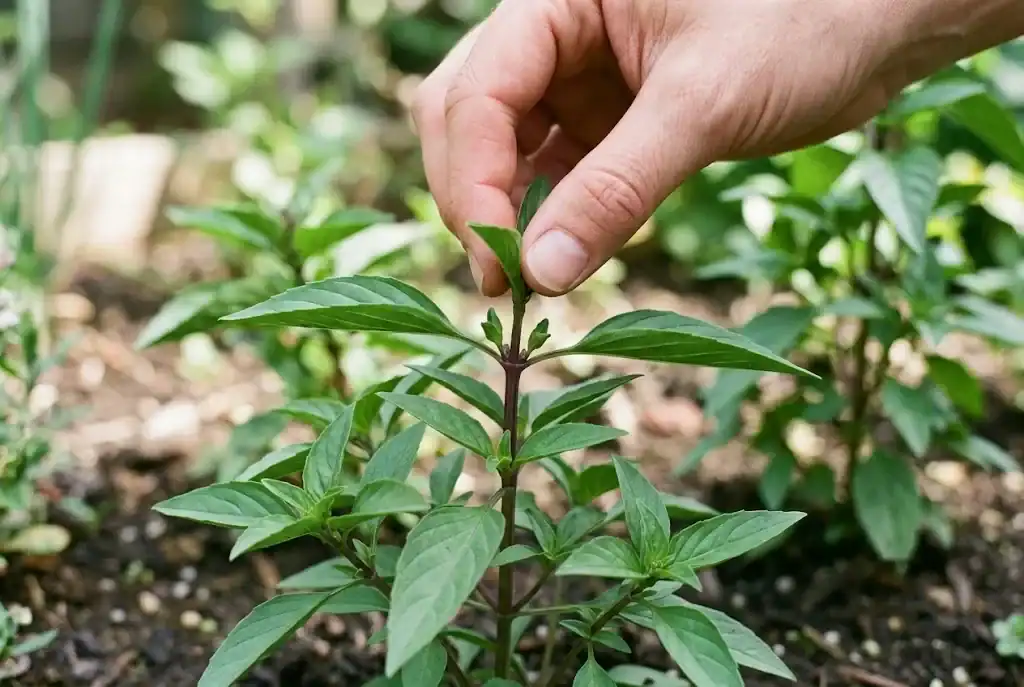
Pinching is vital to guide young plants toward a bushy architecture. When your plant reaches six inches tall, pinch off the top center growing tip just above a leaf node. This prompts the plant to form two lateral branches, giving you a bushier profile and doubling leaf harvest.
As summer advances, prune off flower spikes as soon as buds appear. Allowing the herb to bloom causes the plant to go to seed, making older leaves tough and bitter. Removing basil flowers promptly directs energy back into flavorful foliage.
Pest Management and Backyard Plant Care
While the pungent scent of Thai basil naturally repels many garden pests, backyard plants can encounter common insects. Regular inspection ensures success growing your crop:
- Aphids and spider mites: These pests feed on sap along tender shoots. Rinse them away with a sharp spray from a garden hose, or treat foliage in the early morning with mild insecticidal soap.
- Slugs and snails: These nocturnal pests chew jagged holes through lower leaves during wet spells. Protect beds with coarse mulch barriers, hand-pick pests at night, or apply organic iron phosphate pellets.
- Fungal issues: Prevent mildew and leaf spots by spacing plants twelve to fifteen inches apart to allow free airflow.
Planting Asian basil alongside tomatoes and peppers makes a productive companion pairing that deters garden hornworms.
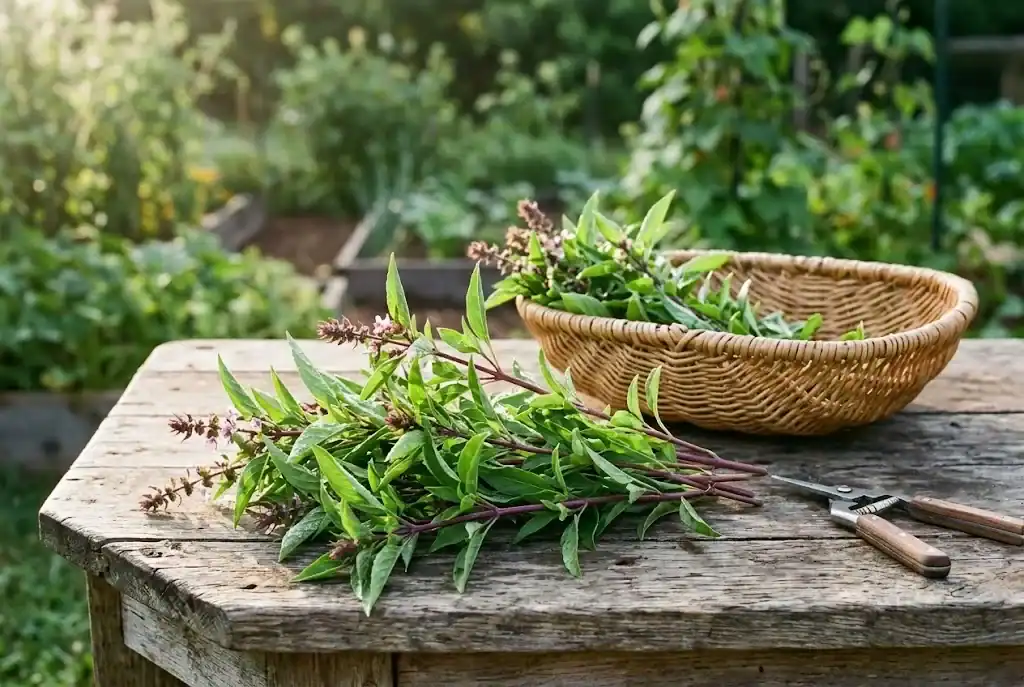
Harvesting Fresh Leaves Throughout the Season
You can start to harvest basil leaves once plants reach eight inches tall and have branched vigorously. Regular clipping stimulates ongoing shoot production throughout the summer.
Harvest during cool morning hours after dew evaporates. Using sharp garden snips, clip stem tips just above a set of healthy leaves, never removing more than one-third of the foliage at one time. For detailed harvesting guidance and step-by-step cutting techniques, read our complete guide on how to harvest Asian basil without harming plant crowns.
Rinse fresh sprigs under cool water and pat dry with a soft cloth before bringing them into the kitchen. Fragrant leaves bring authentic flavor to stir-fries, noodle broths, and fresh summer rolls.
Transitioning Surplus Harvest to Kitchen Storage
As autumn approaches and cooler night temperatures signal the end of the warm season, plan a final major harvest before the first freeze. Basil foliage blackens quickly when exposed to frost, so collecting remaining stems beforehand protects your hard work.
To preserve fresh aroma for winter meals through freezing, drying, or infusing oils, follow our practical walkthrough on how to store Asian basil to retain peak culinary quality.
Frequently Asked Questions About Growing Asian Basil
Can I grow Asian basil indoors all year? Yes, you can grow basil indoors if you place the container on a sunny south-facing windowsill or provide twelve to fourteen hours of supplemental light under an LED grow light fixture.
How does Thai basil differ from Italian sweet basil? Thai basil features purple stems, dark pointed leaves, and a spicy anise or licorice flavor. Italian sweet basil has rounded, bright green leaves with a sweeter, clove-scented taste that easily bruises in cooking.
Why is my Asian basil plant flowering so quickly? Basil naturally bolts and produces flowers when summer heat peaks and daylight hours lengthen. Pinch off flower buds immediately to prevent the plant from going to seed and maintain tender leaf production.
How often should I water Asian basil in containers? Check container moisture daily during summer. Water thoroughly whenever the top inch of potting soil feels dry, ensuring excess water drains freely from the base of the pot.