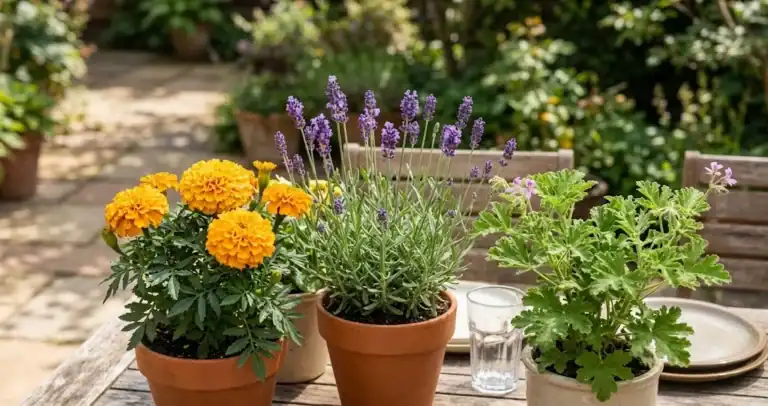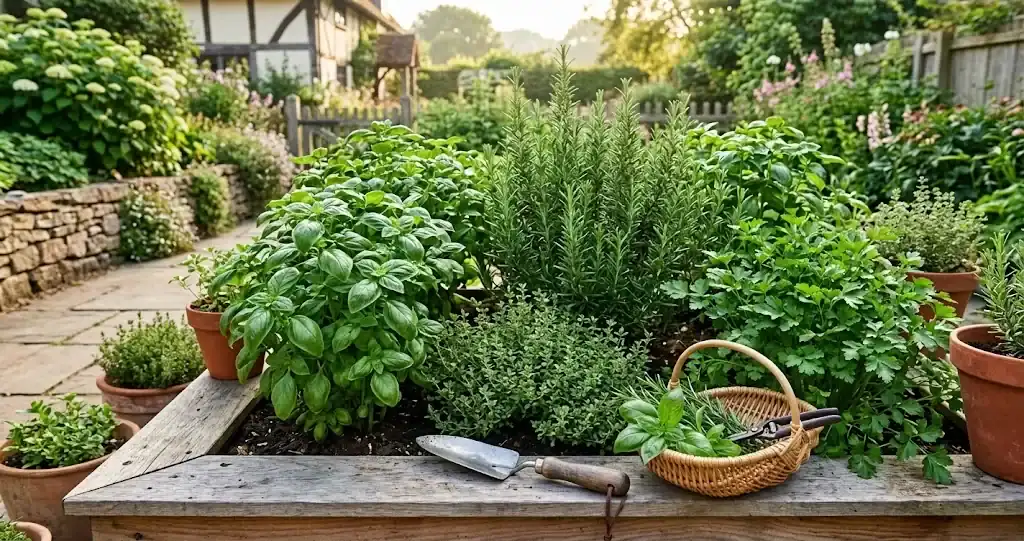
Starting an herb garden is one of the most rewarding ways to bring fresh flavors, vibrant greenery, and fragrant beauty to your home. Whether you have a spacious backyard, a sunny balcony, or just a small windowsill in your kitchen, learning how to grow an herb garden allows you to harvest fresh herbs whenever you cook. Growing culinary herbs requires minimal space and equipment, making it an ideal project for any home gardener looking to start growing from scratch.
To grow herbs successfully, you only need to understand four core fundamentals: sunlight, well-drained soil, proper moisture management, and consistent harvesting. When given the right growing conditions, an herb plant produces robust foliage throughout the growing season and provides culinary rewards that far exceed store-bought seasonings.
Starting an Herb Garden: Essential Planning and Site Selection
The first step in planning your kitchen garden is selecting an ideal location. Most culinary herbs thrive best in full sun, requiring at least six to eight hours of direct sunlight daily to develop their concentrated essential oils and rich flavors. Sun-loving Mediterranean herbs, such as rosemary, thyme, oregano, and sage, demand bright light and warmth to grow best.
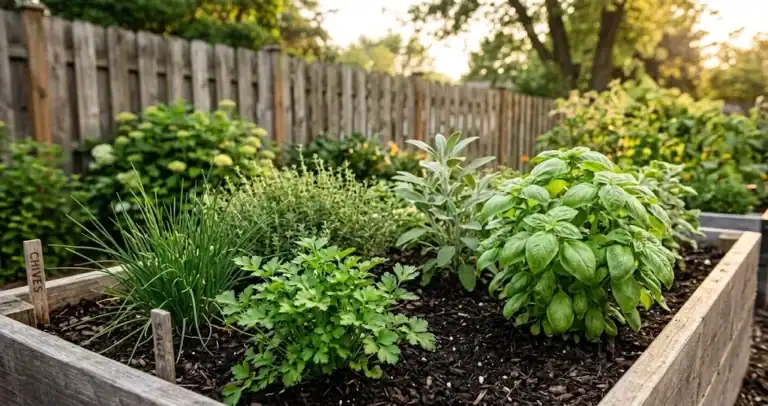
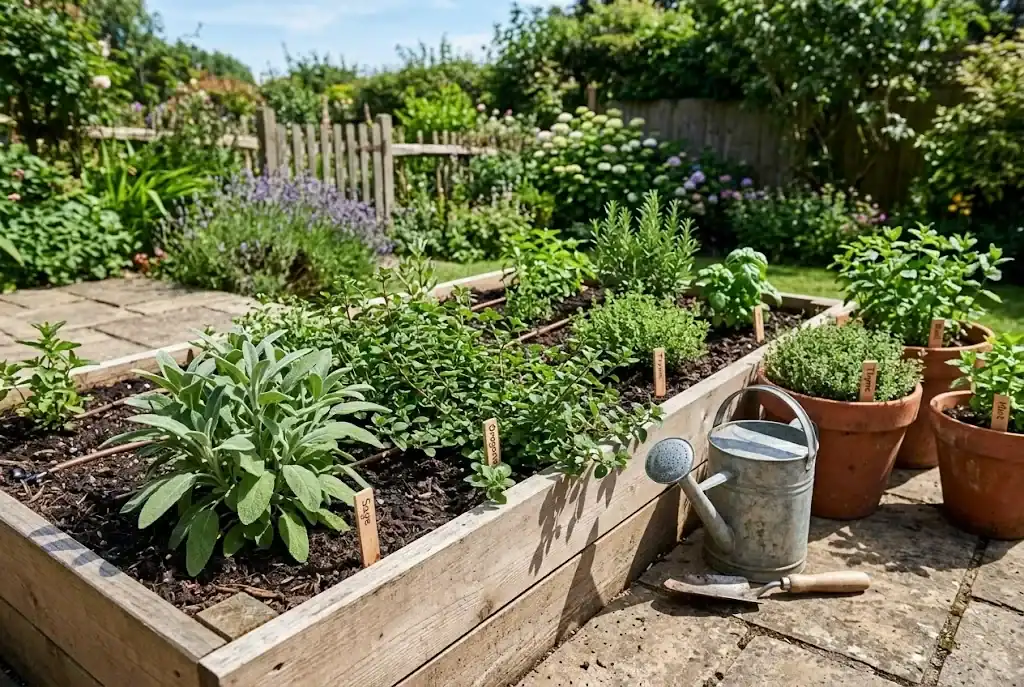
When assessing your garden space, decide whether you will plant directly in the ground, build an outdoor raised bed, or focus on growing herbs in containers. Planting directly in the ground works well if your garden offers naturally loose, well-drained soil. If your native earth consists of dense, heavy clay, a raised bed allows you to customize the soil mix completely, preventing waterlogged roots while warming up earlier in the spring growing season.
For gardeners with limited outdoor space, a container garden offers exceptional flexibility. Pots can be moved to follow the sun across a patio or brought indoors when cold weather threatens. No matter which setup you choose, grouping herbs together with compatible sunlight and watering needs ensures healthy, balanced development across the entire planting bed.
To plan your first bed or container grouping, match plants with similar watering and sunlight requirements. Mediterranean varieties such as rosemary, thyme, oregano, and sage thrive together in warm, fast-draining soil with modest watering. Leafy culinary herbs like parsley, cilantro, and basil perform best with steadier moisture. Always keep vigorous spreading mint in its own dedicated container to protect neighboring root zones.
Selecting the Best Herbs to Grow for Beginners
Choosing the best herb to grow depends on what you enjoy cooking and how much space you have available. Herbs generally fall into two broad categories: annual herbs that complete their lifecycle in a single season, and perennial herbs that return year after year.
Here are some of the easiest herbs to grow for beginner gardeners:
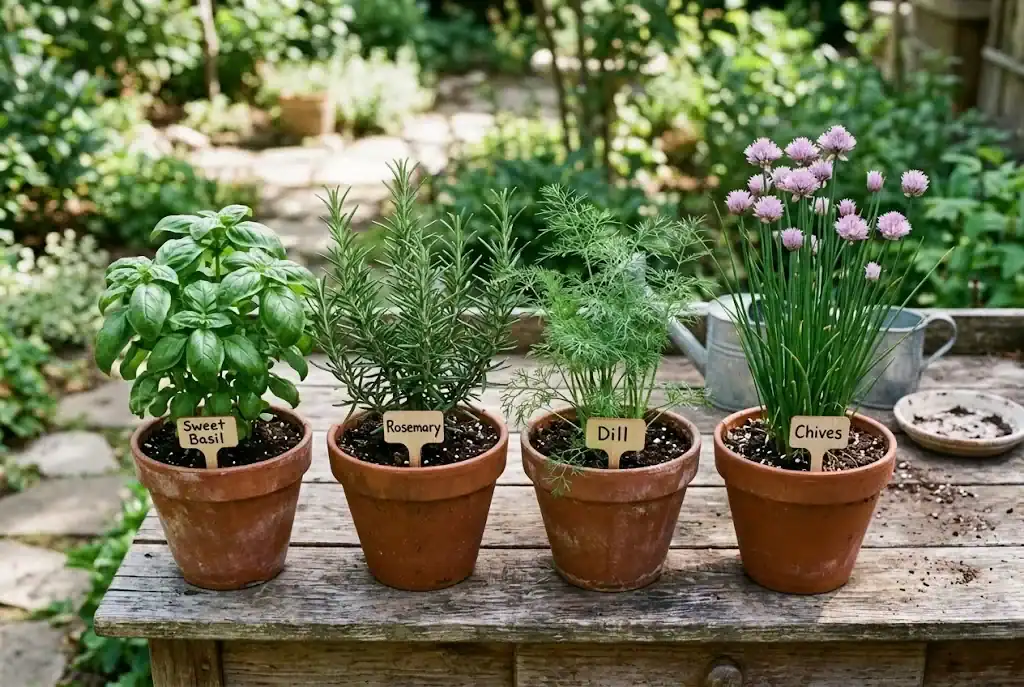
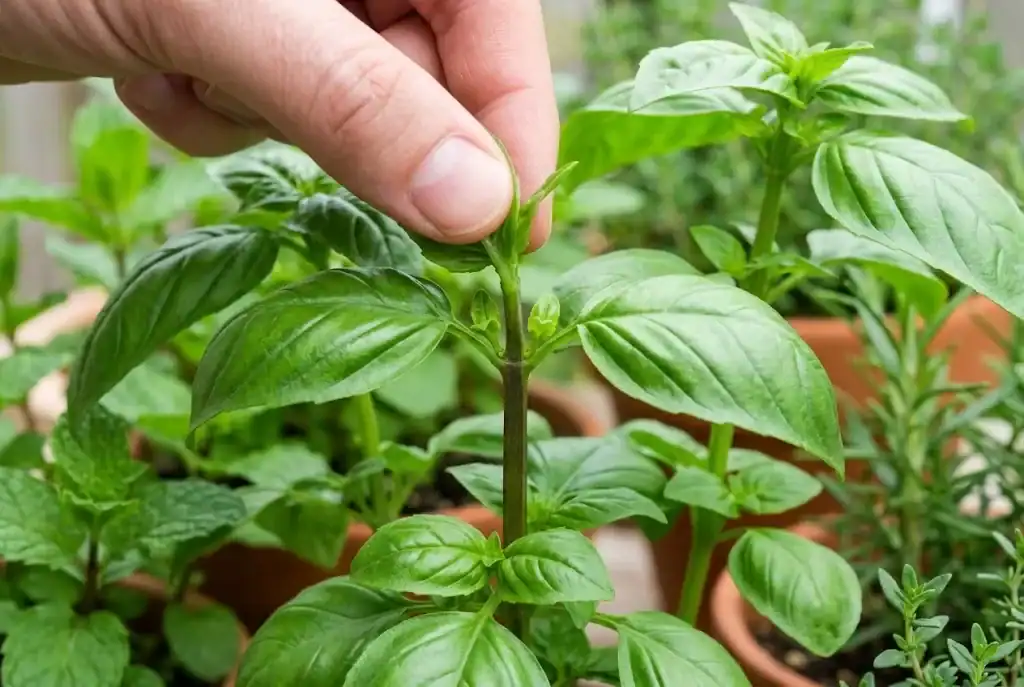
- Sweet Basil (Ocimum basilicum): A tender annual culinary herb that loves warm weather and full sun. When you grow basil, pinch the central stems regularly to prevent flowering and stimulate lush, leafy growth for kitchen use.
- Rosemary (Rosmarinus officinalis): A woody perennial that thrives in mild climates with gritty, well-drained soil. Rosemary requires minimal watering once established, but gardeners in cold-winter regions need protective mulching or a bright indoor windowsill setup to keep plants healthy through freezing weather.
- Thyme (Thymus vulgaris): Compact and resilient, herbs like thyme form attractive groundcovers or container specimens that pair well with roasted vegetables, soups, and poultry.
- Oregano (Origanum vulgare): A vigorous perennial herb that flourishes in warm soil and direct sunlight, delivering intense savory flavor when dried or used fresh.
- Sage (Salvia officinalis): Known for its velvety, grey-green leaves, sage is a drought-tolerant perennial that adds earthy warmth to autumn dishes and stuffing.
- Parsley (Petroselinum crispum): A biennial culinary herb commonly grown as an annual, parsley prefers steady moisture and rich soil in full sun or light afternoon shade.
- Cilantro (Coriandrum sativum): Fast-growing cilantro produces delicate leaves in cool weather, followed by aromatic coriander herb seeds as the weather warms.
- Chive (Allium schoenoprasum): An easy-to-grow perennial member of the allium family that produces slender, onion-flavored stems and edible purple flowering blossoms.
- Dill (Anethum graveolens): An annual herb prized for its feathery foliage and distinct flavor, ideal for seafood, dressings, and pickling recipes.
- Spearmint and Peppermint (Mentha spp.): Vigorous perennials that spread rapidly through underground runners. To grow mint safely without taking over your garden, always isolate mint in its own individual pot.
Beginners can choose to purchase young nursery starter plants or start from seed using high-quality, non-gmo seeds. Starting seeds allows you to explore rare heirloom varieties, while nursery transplants give you an instant head start on the season.
Understanding Soil, Potting Mix, and Moisture Requirements
If there is one universal rule in herb growing, it is that herbs despise sitting in waterlogged, stagnant soil. Roots need access to oxygen just as much as they need moisture. Inadequate aeration and standing water lead rapidly to root rot, yellowing foliage, and stunted growth.
When growing in outdoor beds, mix organic compost into the native soil to improve soil texture, promote good drainage, and regulate moisture without creating overly rich conditions. Unlike heavy-feeding vegetable garden crops, many herbs lose their concentrated essential oil potency if given excess synthetic nitrogen fertilizer. To master the foundational chemistry and texture required for healthy root systems, explore the soil side of growing herbs before planting your first bed.
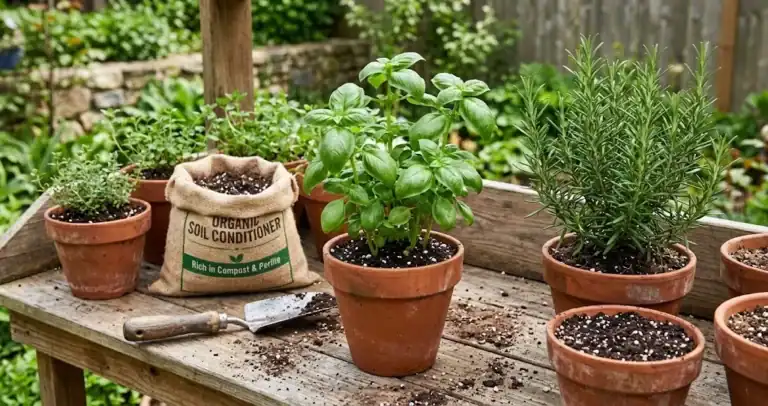
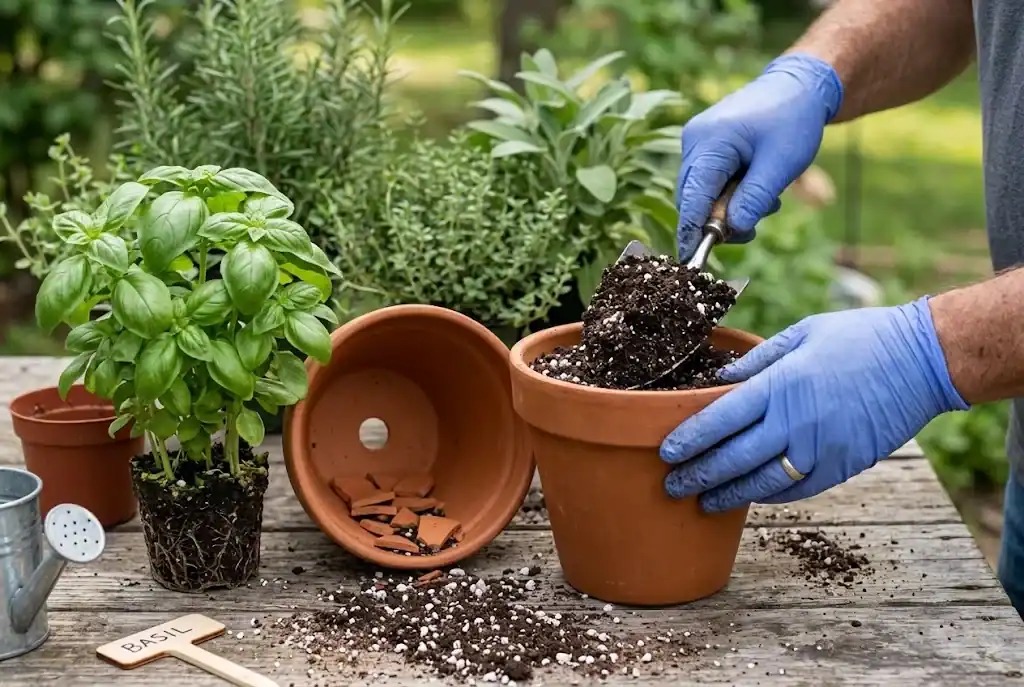
For container herb growing, never use dense garden topsoil in pots. Instead, choose a light, porous potting mix formulated with peat moss or coco coir, perlite, and coarse sand. Always ensure every pot features functional drainage holes at the base so surplus water flows freely away from root zones.
How to Grow Herbs Indoors on a Sunny Window or Under Grow Lights
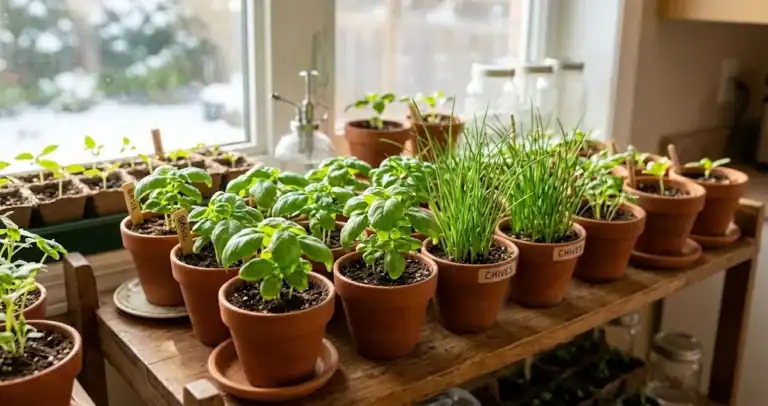
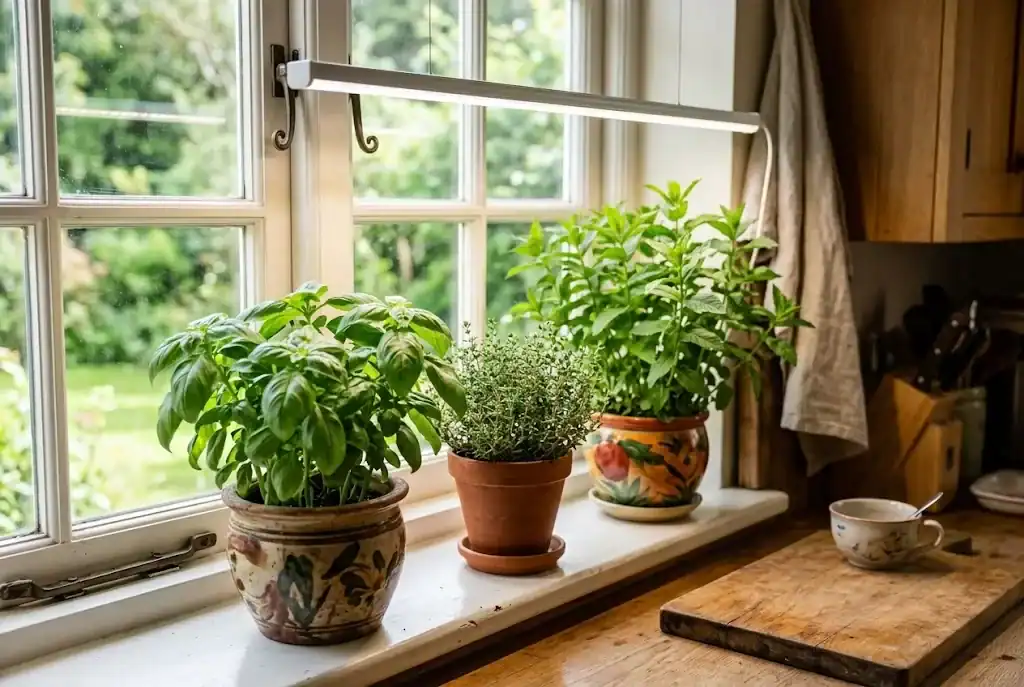
You do not need an outdoor yard to enjoy garden-fresh seasonings. Setting up an indoor herb garden allows you to harvest fresh herbs right in your kitchen year-round. Indoor herb plants require bright light, adequate airflow, and attentive moisture management to thrive inside modern living spaces.
Position your indoor containers on a south-facing sunny window where they can receive at least five to six hours of direct sunlight daily. During dark winter months or in rooms with limited window exposure, supplement natural daylight with an adjustable full-spectrum LED grow light positioned six to twelve inches above plant canopies for twelve to fourteen hours per day.
Indoor air can become dry during heating and cooling seasons. Avoid placing pots directly beside radiator vents or air conditioning drafts. If you want to expand your indoor collection from scratch, learn how indoor sowing actually works to achieve strong seedling germination and sturdy indoor root systems.
Day-to-Day Herb Growing, Watering, and Maintenance
Maintaining an herb garden is straightforward when you establish a consistent care routine. Rather than watering on a rigid calendar schedule, check the moisture of the soil with your fingertip. Water thoroughly only when the top inch of soil feels dry to the touch, allowing excess water to drain out completely.
Routine care involves simple tasks that keep plants vigorous and healthy:
- Pruning and Pinching: Pinch the growing tips of young stems above a leaf node to encourage branching. This prevents leggy stems and stimulates bushy new growth.
- Removing Flower Buds: As culinary herbs prepare to bloom, their energy shifts toward flower and seed production, often turning leaf flavors bitter. Snip off early flowering buds on basil, oregano, and cilantro to prolong leaf harvesting.
- Seasonal Protection: In cold climates, tender perennial herbs will die back during hard freezes if left unprotected. Mulch perennial garden beds in late autumn or move potted plants into sheltered indoor spaces before frost arrives.
For a detailed breakdown of daily care schedules, pest monitoring, and seasonal adjustments, consult our guide on day to day herb garden care.
Harvesting Techniques for Continuous New Growth and Kitchen Use
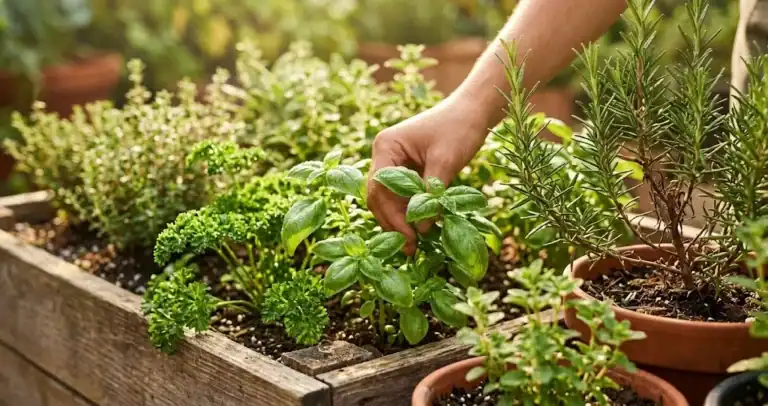
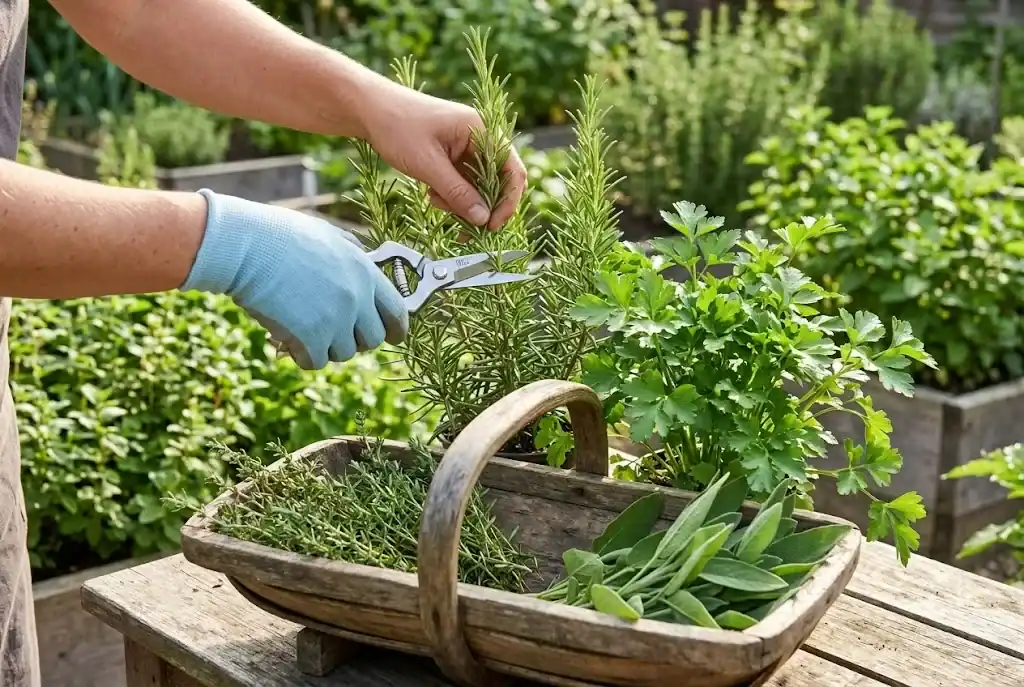
Regular harvesting encourages continuous new growth and keeps culinary herbs productive throughout the growing season. Harvest in the morning after morning dew has dried, when leaves are crisp and clean.
Use clean, sharp kitchen shears or garden snips to harvest leaves and stems as needed without stripping the plant bare. As noted in the University of Minnesota Extension herb growing guide, harvesting fresh clippings regularly keeps plants vigorous and supplies a steady supply of flavorful seasonings for kitchen use.
Enjoy your freshly harvested clippings immediately in culinary recipes, or preserve extra bounty as dried herbs hung in airy bundles or frozen in olive oil trays. With proper site selection, well-aerated soil, and routine care, your home herb garden will supply flavorful, fresh harvests for seasons to come.