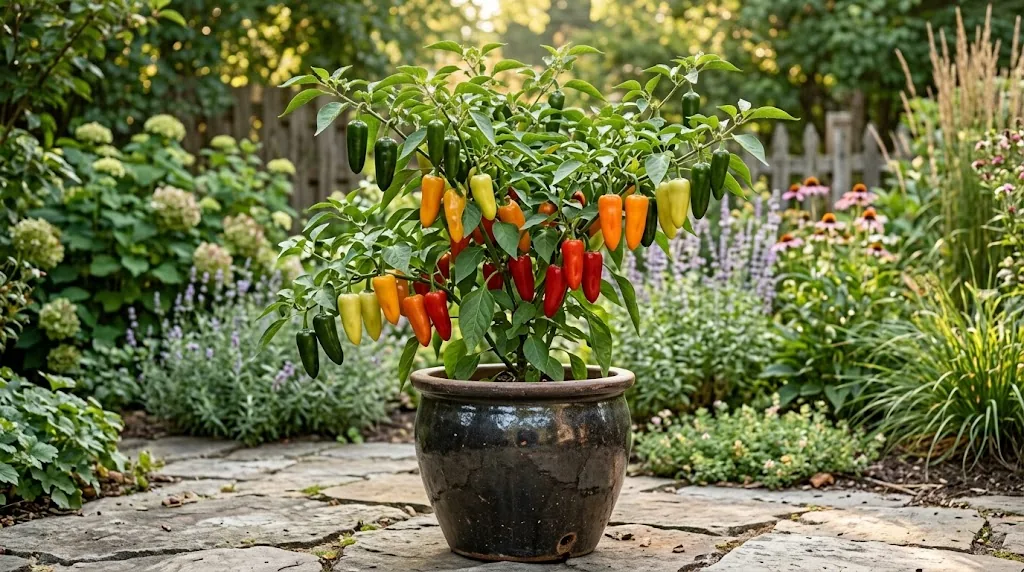
Santa Fe Grande peppers suit gardeners who want a colorful, mildly hot crop for fresh meals and pickling. A Santa Fe Grande pepper is easy to grow as a warm-season vegetable. The blunt, tapered pods ripen from green to pale yellow, then amber and scarlet. Seed catalogs place their pungency around 500 to 700 Scoville heat units (SHU), though actual warmth varies by pod and growing conditions.
Origin and identity
This open-pollinated cultivar belongs to Capsicum annuum, the species that includes bell peppers and jalapeños. Tomato and eggplant are different species in the same nightshade family, Solanaceae. Reimer Seeds lists this variety as a U.S. pepper; some sellers describe it as a New Mexico or Güero-type pepper. Güero, also written Guero, is a broad common name used for more than one golden chili, so a regional label alone does not confirm identity. Reliable sources consulted here do not provide a consistent account of the breeder or release date, so precise origin stories deserve caution.
Look for an upright plant and smooth, conical pods with a blunt tip and medium-thick walls. Stokes Seeds lists pods about 3.5 inches long by 1.5 inches wide, on plants 24 to 28 inches tall. Reimer describes fruit around 3 inches long. These seller-specific figures vary by seed line; the thick wall and tapered shape are more useful clues than an exact measurement.
For a broader look at shapes and pungency across the crop, see our guide to the range of chili peppers.
Taste and warmth
Stokes and Reimer both publish a 500 to 700 SHU range. That places the cultivar near the mild end of hot peppers, but Scoville figures are estimates rather than a promise about every pod. Take a small taste before adding a whole one to a dish.
Seed sellers describe the flavor as mildly sweet. Younger pale-gold pods are crisp and bright; mature scarlet ones tend to be sweeter. Their substantial walls hold shape when cooked, unlike thin-walled types usually grown for drying. For a much hotter profile, compare Armageddon peppers, which suit a very different heat preference.
Growing in the garden
Start pepper seeds indoors about 8 to 10 weeks before outdoor planting time. Reimer’s general hot-pepper directions recommend sowing about 1/4 inch deep in warm mix, around 80°F to 85°F. Under those conditions, seeds may take 14 to 28 days to germinate. Keep the tray evenly moist and move each seedling into strong light after it emerges. Cool mix can delay germination.

Set stocky seedlings outdoors after frost danger has passed and the ground has warmed. Utah State University Extension recommends transplanting peppers when soil reaches at least 60°F. Choose full sun and well-drained soil; plants struggle in heavy, wet ground. A roomy container also works if it has drainage holes. In short growing zones, a sturdy transplant can save time, while starting indoors gives you more choice. Give pepper plants light afternoon shade during extreme summer temperatures.
Water deeply when the soil begins to dry, then let excess drain away. Uneven watering can contribute to flower drop and blossom-end rot. Avoid overfeeding: Utah State Extension notes that excess fertilizer can push leafy growth and delay flowering. Use a soil test and the product label to guide feeding rather than adding more by habit.
Days to maturity vary by seller. Stokes lists 75 days after transplanting; Reimer lists 85 days. These estimates assume favorable conditions. Cool nights slow growth, and very hot spells may cause flowers to drop before they bloom. Stokes describes the plant as productive, but actual yield depends on sunlight, water, and the length of the growing season. Watch the pods and weather instead of relying on the calendar alone.
When to harvest
Pick at the stage that suits the dish. Pale yellow, orange, and red peppers are all useful at different stages; the first color change signals that pods are developing. Clip stems with clean scissors so branches do not snap. Pick regularly as new pods mature. Gloves help prevent chili oils from irritating sensitive skin; wash hands and tools before touching your face.

Cooking and preserving
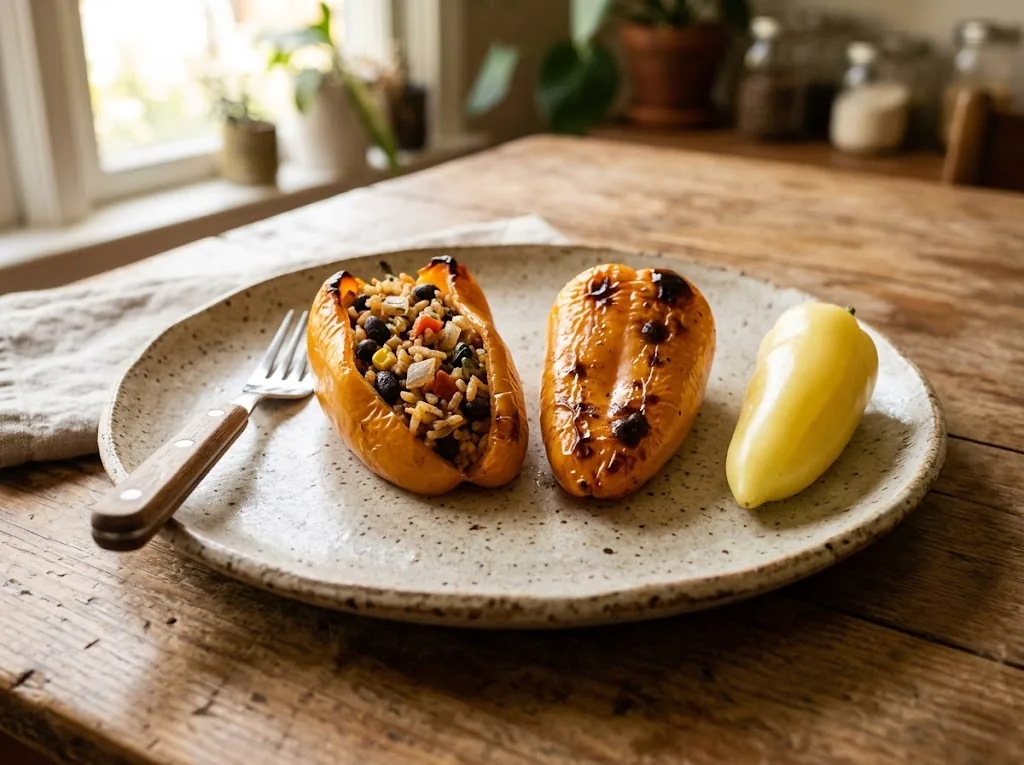
Use the thick-walled pods raw in sandwiches or salads, chopped into tomato salsa, blistered in a skillet, roasted, or stuffed. Their gentle warmth suits guests who like a bit of heat without a strong burn. Add a small amount, taste, then adjust. You can char a batch, peel the skin, and fold the strips into eggs or beans. They also make tasty fresh toppings for tacos and salsas. For another C. annuum with slimmer fruit and a hotter bite, see Santaka peppers.
For a shelf-stable pickle, follow a tested canning recipe exactly. Peppers are low-acid vegetables, and the National Center for Home Food Preservation warns that changing proportions in a canning recipe can make the result unsafe for room-temperature storage. Keep improvised pickles refrigerated. Fresh pods can be chilled or frozen for cooked dishes; freezing softens their texture. Dry slices in a dehydrator according to its instructions until brittle, cool fully, and store airtight in a cool, dry cupboard.

Common questions
Will this cultivar grow well in a container?
Yes. Seed sellers list it for home gardens and patio growing. Give the plant full sun, a large pot with drainage, and steady moisture. A bigger container gives roots more space than a small starter cup. This pepper can produce well in a sunny, well-watered spot.
Do the pods have to turn scarlet before picking?
No. Pick them pale gold, amber, or scarlet. Earlier pods tend to be crisper, while later ones have had more time to mature.
Can I save seed?
Reimer identifies this cultivar as open-pollinated, so gardeners may save seed from fully ripe, healthy pods. Peppers can cross-pollinate with nearby cultivars, however, so saved seed may not come true if other plants are flowering nearby. Buy fresh seed when you need predictable traits.
Sources
- Stokes Seeds: plant height, pod size, color, relative days, and SHU listing
- Reimer Seeds: open-pollinated status, cultivar description, SHU, and seed-starting guidance
- Utah State University Extension: transplant conditions, irrigation, and fertilizer guidance
- National Center for Home Food Preservation: safe proportions for canned pepper pickles
- Kew Science: accepted name and taxonomy of Capsicum annuum
- Utah State University Extension: drying, freezing, and storage guidance for chiles
- University of Minnesota Extension: open-pollinated pepper guidance
- University of California, Davis: pepper self-pollination, cross-pollination, and cultivar isolation
- Seed retailer listing: New Mexico label and cultivar traits
