
A Big Jim chile pepper is large enough to fill with cheese and serve as a chile relleno, but its heat can vary from plant to plant. NuMex Big Jim is a New Mexican chile cultivar known for long, thick-walled fruit that is easy to roast and freeze. Mature green fruit averages about 7.7 inches long, according to NMSU’s cultivar report. It belongs to the species Capsicum annuum, the same species as many familiar garden peppers. If you are comparing fruit shapes and heat across the wider group, start with our guide to New Mexican and other chili pepper varieties.
Where Big Jim came from
Plant breeder Roy Nakayama released NuMex Big Jim through New Mexico State University in 1975. It is a named cultivar in the New Mexican type, not a generic name for every long green chile or a landrace. The Chile Pepper Institute explains that varieties developed at NMSU carry the NuMex prefix. Its history page says the Guinness Book of World Records lists a 13.5-inch Big Jim as the longest chile ever grown. That is a historical record entry, not a claim about today’s record holders.
Big Jim shares its broad New Mexican background with other named cultivars, but the shape and intended uses differ from variety to variety. For another C. annuum profile with a very different fruit form, see Peter peppers.
What Big Jim peppers look and taste like
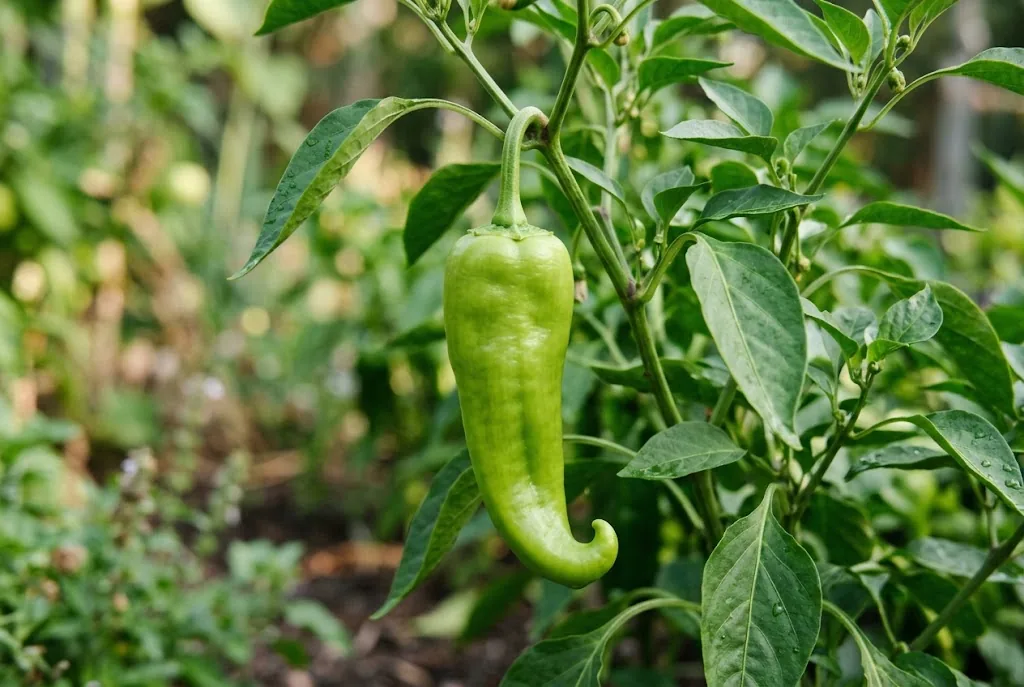
The mature green fruit is long, smooth, fleshy, and moderately flattened, with a hooked tip. It averages 7.68 inches long and 1.89 inches wide, though the historic record entry is larger. It is usually light to medium green when picked for green chile, then turns red if left to mature fully, as noted by a Big Jim seed grower. A full-size pod should feel firm and crisp at harvest. Thick walls make this pepper practical for roasting and stuffing.
How hot is a Big Jim pepper?
Heat figures vary across sources and plants. The 2022 report gives a measured figure of 6,500 Scoville heat units (SHU), while an earlier NMSU cultivar table lists 500 to 2,000 SHU. One seed seller describes its Big Jim seeds as mildly spicy. The newer report notes that pungency varies from plant to plant, so one fruit may taste mild while another is hotter. Treat these descriptions as guides, not promises for every pepper. The latest cultivar report is the strongest variety-specific reference here.
For another named chile cultivar with a different species and fruit profile, read about White Ghost peppers.
When buying seeds, check the full name on the packet. NuMex Big Jim is the original cultivar; NuMex Heritage Big Jim is a later selection bred for more uniform heat. NMSU reports 7,000 to 9,000 SHU for the Heritage selection, compared with noticeable plant-to-plant variation in the original. Seed catalogs may shorten both names to “Big Jim,” so verify the listing if a predictable heat level matters.
Growing Big Jim from seed to harvest
Start seeds indoors about six to eight weeks before your area’s last expected frost. One seed seller lists germination in roughly 10 to 20 or more days and maturity from transplant at 75 days or longer; use those as estimates because seed source, temperature, and growing conditions change the calendar. In places with a long warm season, direct sowing is possible, but transplants give the plants a head start.
Move plants outside after frost danger has passed and the soil has warmed. Choose a sunny spot with well-drained soil, and space plants according to the seed packet; a Big Jim grower lists at least 12 inches between plants. Water consistently so the root zone stays evenly moist. NMSU Extension notes that irregular watering can contribute to flower drop and smaller fruit, while excessive wetness can encourage root disease. During flowering, daytime temperatures of 65 to 85°F and nights of 60 to 70°F favor growth and fruit set; blossoms may not set when nights fall below 60°F or days rise above 90°F. Avoid pushing nitrogen too heavily: lush leaves are not the same as a good fruit set. See NMSU Extension’s chile-growing guidance for regional timing and care, and Utah State’s pepper guide for site and soil basics.
The cultivar averages 16 to 26 inches tall, according to NMSU’s report. Its large fruit can weigh down branches, so a seed grower recommends supporting a heavily laden plant. Pick green peppers when they are full size, firm, and crisp. Cut the fruit from the stem rather than pulling on the branch, and leave selected fruit to turn red if you want mature red chile for drying.

Harvesting, handling, and storing
Big Jim is often harvested green for roasting, but both green and ripe red fruit can be used. Utah State University Extension advises wearing gloves and keeping hands away from eyes while handling pungent chile. Heat can vary, so use that care even when a previous fruit from the same plant seemed mild.
Fresh chile keeps in the refrigerator for a limited time; Utah State University Extension gives two to three weeks as a general guideline. For longer storage, roast and peel the peppers, then pack and freeze them, or dry fully ripe fruit until brittle and store it in a glass jar. Use tested directions for any canning or pickling project. Do not improvise a shelf-stable recipe from oil, vinegar, or a refrigerator method.

How to use Big Jim in the kitchen
The large, meaty fruit is especially suited to chile rellenos: roast and peel it, make a lengthwise opening, remove the seeds if desired, then fill it with cheese or another chosen filling. Roasted green Big Jim also works chopped into fresh salsa, blended into cooked salsas, folded into eggs, stirred through beans, or added to soups and stews. The peppers can also flavor a cooked sauce or chili seasoning. A jalapeño is another familiar option when you want a spicier batch.

Red Big Jim chiles can be dried and ground into flakes or powder. Use the dried chile sparingly at first, then adjust to taste because plants and harvests can differ in pungency. Whether green or red, this pepper’s thick flesh makes it practical to roast, stuff, or preserve.
