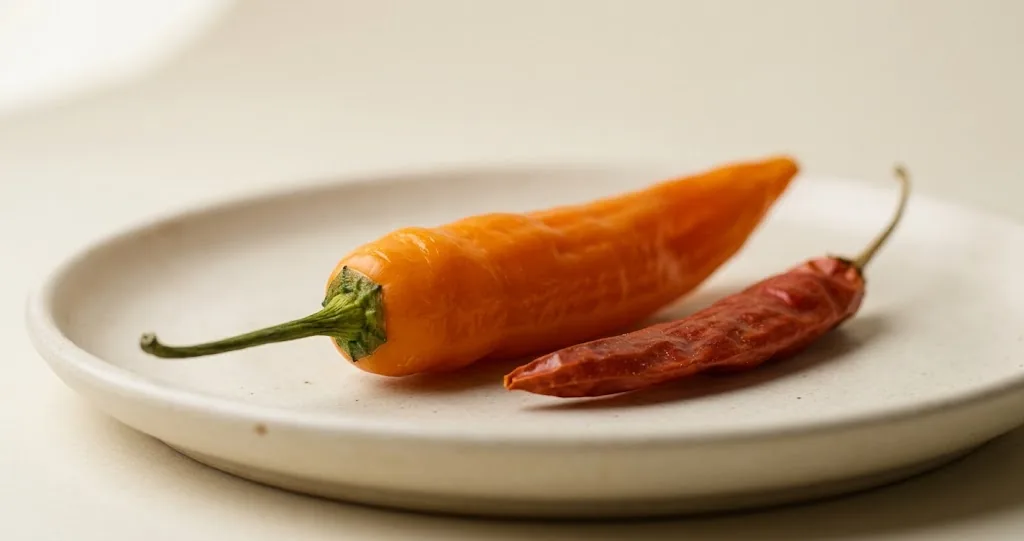
Ají amarillo is the orange pepper behind Peruvian cuisine’s best-known sauces, from the cheese dressing poured over papa a la huancaína to the creamy chicken stew ají de gallina. It has a medium heat level and a fruity flavor, berry-like and bright, that suits dairy far better than a harsher pepper would. Cooks find it fresh, dried and as a jarred paste, and gardeners elsewhere can grow it from seed. This guide covers where it comes from, how hot it is, how to grow, harvest, dry and store it, and what to cook with it. If you are new to the wider family, start with our guide to types of chili peppers.
Origin and name
The name is Spanish. Ají is the general word for chile across much of South America, and amarillo means yellow. The pepper itself is orange when it matters: Wikipedia’s entry on the species notes that the yellow appears only when it is cooked, while the mature pods are bright orange. Seed sellers describe it as native to the Andes (Bolivia or Peru), and it is a staple ingredient in Andean cooking.
The same pepper turns up under a few names. When dried it is sold as ají mirasol (some catalogs add Cusqueño), and the Wikipedia entry on the pepper lists ají escabeche as another name for it. English-language recipes often write “Peruvian yellow chili”. Catalogs also print it as aji amarillo pepper without the accent, and the word itself appears as chili, chile or chilli depending on the shop.
The plant
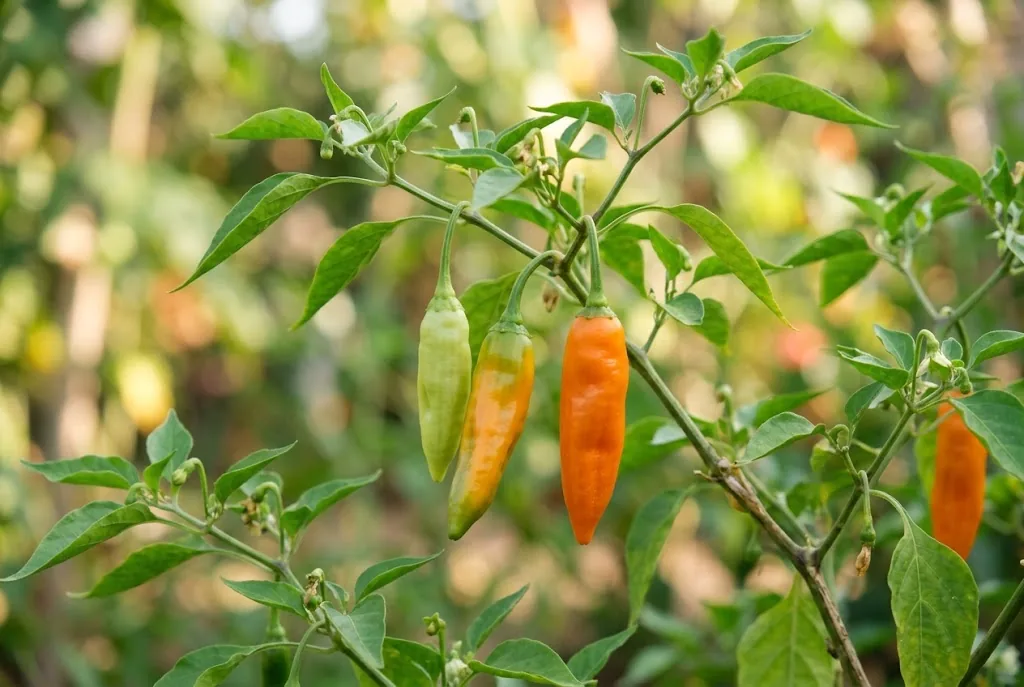
Ají amarillo is a Capsicum baccatum variety, a perennial shrub whose pods typically hang downward and often carry a fruity or citrus note. The flowers are white or cream with green or gold markings on the petals, which is the easiest way to tell a baccatum from an annuum or chinense when the plant is in bloom. Expect a tall, branching plant that usually needs a stake or cage once it is carrying fruit.
For cooks who want to explore other baccatum peppers, the guide to ají lemon drop peppers covers a close cousin and how its aroma and heat differ.
The pods are tapered and slightly rippled, about 4 to 5 inches (10 to 13 cm) long, according to Chili Pepper Madness, with smooth skin. They start green and finish a deep orange. Do not confuse them with habanero (Capsicum chinense, lantern-shaped and much hotter), cayenne (Capsicum annuum, long and thin) or bell pepper (no heat, thick-walled and glossy).
Heat and flavor
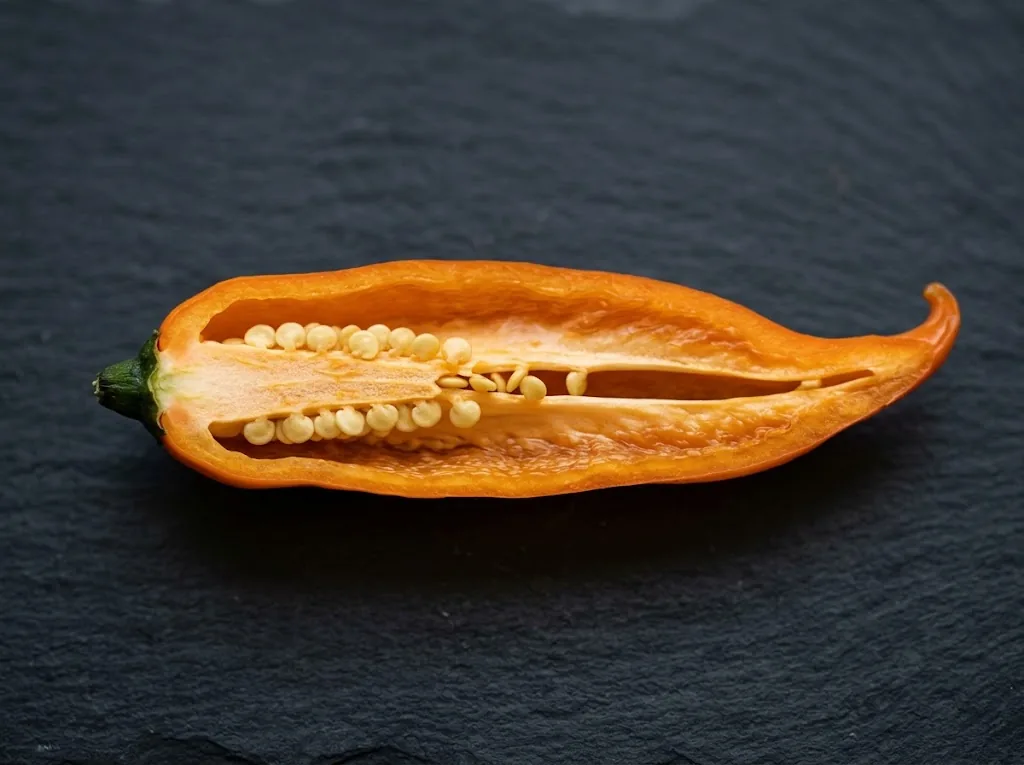
It measures about 30,000 to 50,000 Scoville heat units. PepperScale gives a median of 40,000 SHU and calls it roughly 4 to 20 times hotter than a jalapeño, and other references list the same range (all checked September 2026). Heat shifts with the plant, the season and how ripe the pod is at harvest. Most of the capsaicin sits in the pale ribs that carry the seeds, so removing the ribs and seeds calms a dish considerably.
The taste is why cooks reach for it. One pepper guide describes a fruity, berry-like flavor, and PepperScale finds tropical fruit and a slightly raisiny finish. Dried ají mirasol is more concentrated, with a sweetness closer to raisins. That fruit note survives cooking, which is why the pepper works in cream and cheese sauces where a fiery pepper would taste sharp. On the Scoville scale it reads as moderate, nowhere near a super hot pepper, and in the mouth the flavor matters more than the burn.
Growing amarillo peppers
Starting and transplanting
It wants full sun, steady warmth and well-drained soil, and it is reasonably easy to grow once germination is past. Start seeds indoors several weeks before the last frost, pressing pepper seeds into moist seed-starting mix. Baccatum seed can be slow to sprout and does best in warm soil; a heat mat helps, and a pot deserves several weeks before you give up on it. Keep each seedling in bright light, then transplant once nights are reliably warm. Give the pepper plants generous room, because they grow tall and sprawl once fruit sets. Seed suppliers such as Truelove Seeds list roughly 90 to 100 days to maturity.
Care and pests
Mulch to hold moisture steady and feed lightly. Heavy nitrogen once flowering starts builds leaves at the expense of fruit. In a cool climate a tunnel or cloche keeps the roots warm, and cold nights can make flowers drop. Aphids, whitefly and spider mites are the usual pests, and a strong spray of water handles most outbreaks. Water at the base rather than over the leaves to limit fungal problems.
A perennial where frost never comes, ají amarillo is grown as an annual in cooler regions, and a container works if it is large and the plant is staked.
Harvesting and handling
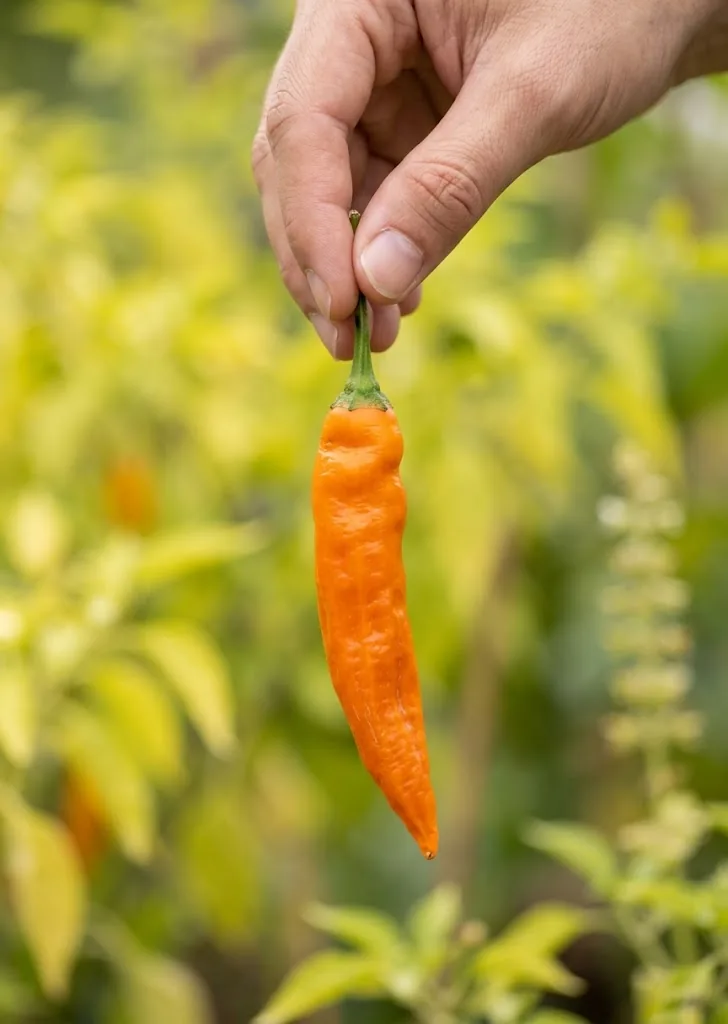
Pick when the pods are fully orange and slightly soft to the touch. Use scissors or snips and cut just above the calyx rather than pulling, which spares the branch. Wear a glove on the hand that holds the pods, and gloves for a long cutting session: at 30,000 to 50,000 SHU the pods can irritate skin and eyes, especially when you are processing a large crop, and hands should stay away from your face. If frost is coming, pull the whole plant and hang it upside down in a cool, ventilated shed so the remaining pods can finish.
Drying, freezing and storing
Sun-drying
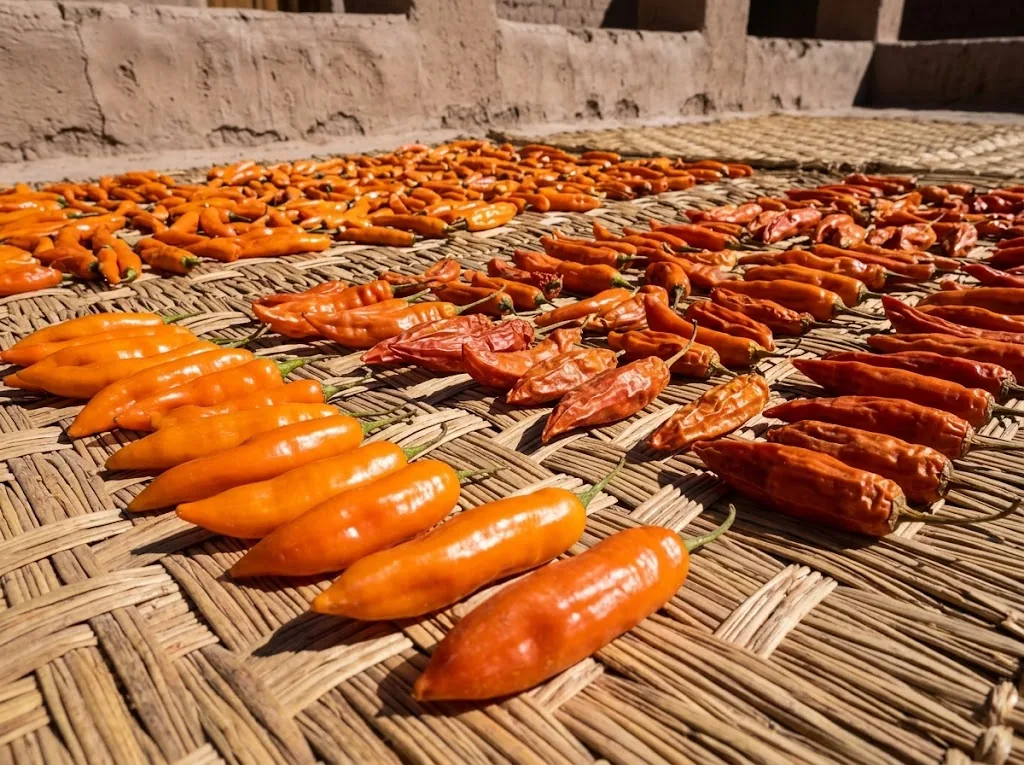
In the Andes, ripe pods are dried on woven mats in strong sun until they turn deep brick orange and feel leathery, and the dried result is ají mirasol, while the fresh pods are used fresh in salsas and sauces. At home, spread single layers on a screen in direct sun and bring them in at night. Where the air is humid, a dehydrator on a low setting is more dependable, and an oven at its lowest temperature with the door cracked works in a pinch if you check it often so the pods do not scorch.
Freezing
Fresh pods freeze well. Wash and dry them, leave them whole or slice them into rings, freeze on a tray, then bag them. The texture softens, which suits purées, stews and sauces but not raw garnishes, and frozen pods go straight into a hot pan.
Storing paste and powder
Homemade paste keeps for a couple of weeks in the fridge under a thin layer of oil, and longer frozen in small portions. Ground dried pods work as a spice and keep their color and taste best in a sealed jar kept cool and dark.
Ají amarillo paste and the dishes built around it
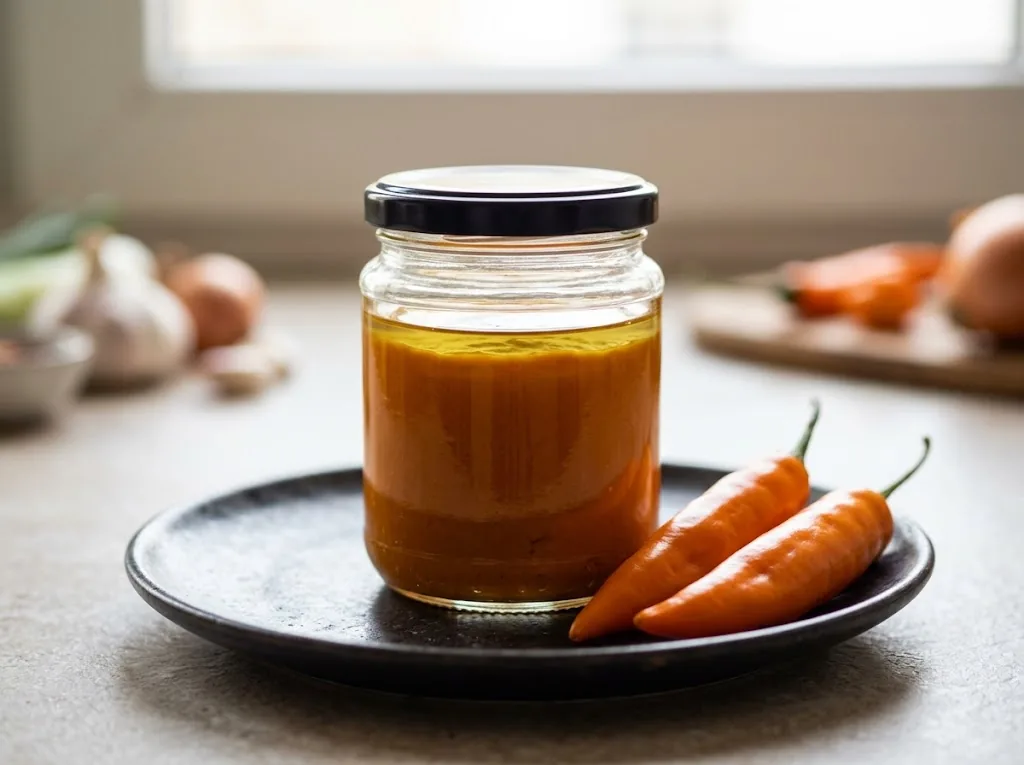
For cooks outside the Andes, the paste is the most useful form of the ingredient. To make it, cut open the pods, scrape out the seeds and veins, and peel them if you want a smoother texture. Blend in a blender with onion and garlic sautéed in vegetable oil, then cook it down until thick and glossy with salt and a splash of lime or vinegar. It keeps well and anchors the region’s best-known Peruvian recipes, including ají de gallina, causa rellena and lomo saltado. Peruvian cooks sometimes blend in a little ají panca for a smoky counterpoint. Store-bought jars are a fair shortcut when fresh pods are out of season.
Salsa huancaína
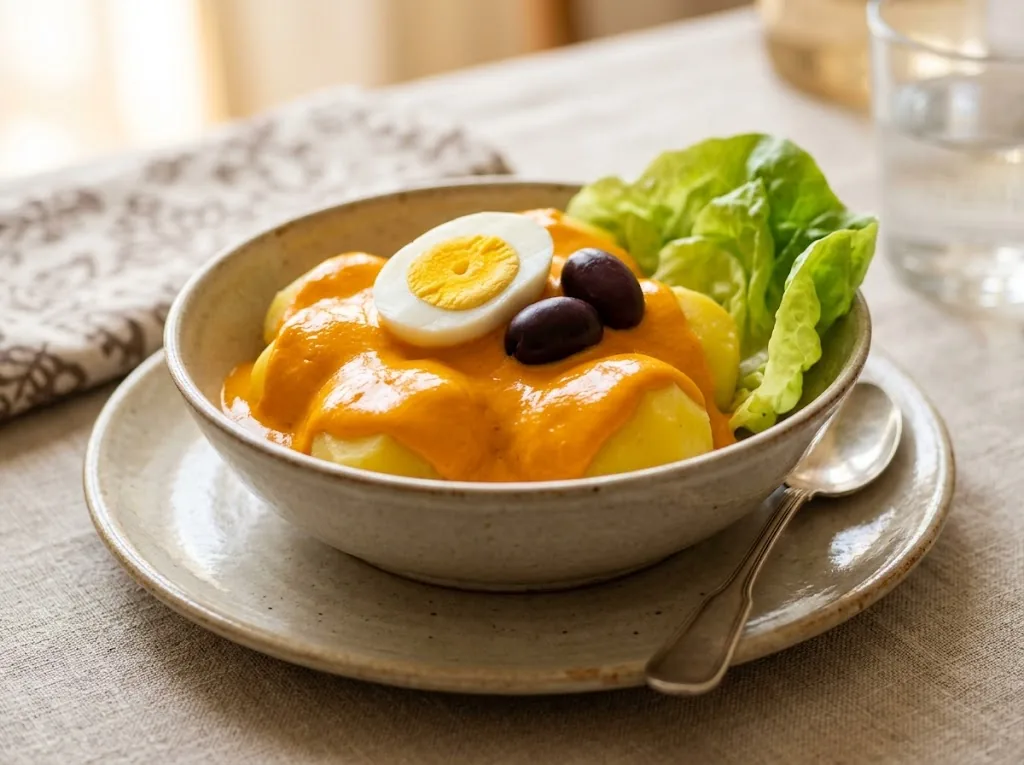
This is a thick, glossy cheese sauce served cold over sliced boiled potato. Warm the purée in oil with a little sautéed onion and garlic, then blend it with fresh white cheese (queso fresco, feta or a mild farmer’s cheese all work), evaporated milk and a few saltine crackers for body. Garnish with hard-boiled egg, black olive and lettuce. The dressing is only as good as its base, so cook the paste until the oil turns a deep orange before the dairy goes in.
Ají de gallina
Shredded chicken simmers in a golden sauce built from the purée, sautéed onion, bread soaked in milk, walnuts, parmesan and a little stock. Serve it over rice with boiled potatoes and black olives. The bread gives body, the walnuts add a nutty edge, and the paste supplies both color and the fruity warmth.
Ceviche and seafood
A spoonful, with a pinch of sea salt, gives raw fish a mild, fruity heat that softens the sharpness of lime and adds color. Make the dish just before serving, since citrus dulls bright color over time.
Soups, stews and rice
A tablespoon stirred into lentil soup, white bean stew or rice pilaf adds a quiet, sunny warmth. It also appears in lomo saltado and in braises such as adobo arequipeño, which can use dried ají mirasol.
Pairings and substitutes
It pairs naturally with cilantro, garlic, onion, lime, evaporated milk, white cheese, walnuts, rice and sweet potatoes. Outside the Andes it also works with thyme, oregano, smoked paprika and a little honey.
If fresh or frozen pods are hard to find, ají mirasol (the dried form, ground or soaked) gives similar heat with a deeper, raisin-like taste, and ají panca gives a fruitier, smokier and milder result. One guide suggests habanero or Scotch bonnet if you want heat, used sparingly since both are much hotter, or sweet orange or red bell peppers for a similar look and fruity note with no burn. A jar from a South American grocer is the easiest route to an authentic Peruvian flavor. The classic pairing is dairy.
Frequently asked questions
Is ají amarillo the same as ají mirasol?
Nearly. Ají mirasol is the dried form of the ripe pod, sold whole or ground. It tastes deeper and more raisin-like than the fresh pepper. If a recipe calls for ají mirasol, the dried pods are what you want.
How spicy is it?
About 30,000 to 50,000 SHU, or roughly 4 to 20 times hotter than a jalapeño. Most people find the warmth lively but comfortable, particularly once it is cooked into a dish.
What is ají amarillo called in English?
The name translates literally as yellow chili, so English recipes use the Spanish name as is or add “Peruvian” in front.
Where is it grown?
Mainly in Peru, where one guide says it is grown in all areas of the country and is the most popular pepper there. Outside its home country you will most often find it as jarred paste or dried ají mirasol, and fresh pods are rare in supermarkets, though gardeners can grow their own.
The bottom line
This fruity, medium-heat pepper turns a cheese dressing into a Peruvian classic and a chicken stew into ají de gallina. For something off the beaten path, rare chili peppers worth growing opens up a wider list of unusual varieties to try next.
