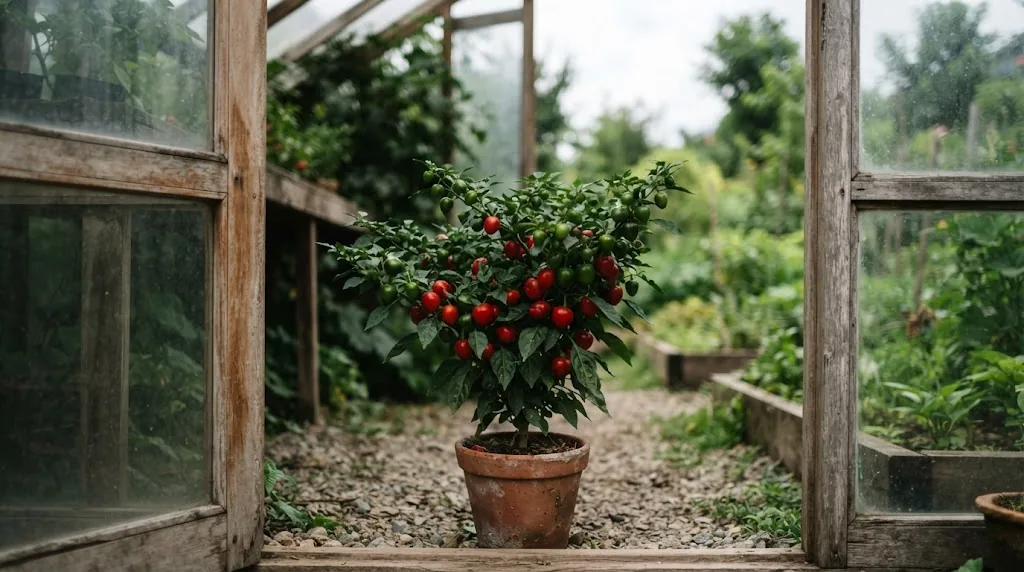
Dalle Khursani is a small, round red chili from the eastern Himalayas, known for a sharp burn and fruity flavor. It is grown in Sikkim and nearby hill districts in India, as well as across neighboring Himalayan communities. It is often labeled Capsicum chinense, but botanical studies have questioned that classification. A 2017 study of seven populations from West Bengal found them polyploid (2n = 4x = 48) and perennial, and a newer study calls the type a polyploid landrace. The name covers regional material, so the exact species placement remains unsettled. [Jha et al., 2017; Ghimiray et al., 2025]
Readers looking for context on other chili varieties and their Scoville levels can continue with our types of chili pepper guide.
Origin and local names
The name is associated with the eastern Himalayan region. “Dalle” refers to its rounded form, while “khursani” means chili in Nepali usage. The variety is also called Akabare Khursani. These local names refer to regional material, not necessarily a single breeder’s release. For a contrasting variety profile, see Malagueta peppers.
India registered Dalle Khursani as a geographical indication (GI tag) in 2021. The GI links the name to its recognized regional identity and production area. That does not mean every local crop sold under a similar name has identical pungency or growing traits. [North Eastern Hill University, GI compendium]
What the pods look and taste like
The fruits are spherical to slightly oval and ripen from green to bright red. Their compact shape distinguishes them from long, tapered cayenne types. Depending on the population and conditions, plants may grow as bushy shrubs and can persist for more than one season in a suitable climate. A 2017 study of seven Darjeeling populations described plants as perennial and documented variation among their traits. [Jha et al., 2017]

Its flavor is often described as fruity, with a direct, forceful burn. Individual pods can vary, so treat tasting as a cautious process: begin with a tiny amount and increase only if you know your tolerance. Its size is not a reliable guide to mildness.
How hot is Dalle Khursani?
Older references commonly place Dalle Khursani on the Scoville scale around 100,000 to 350,000 Scoville Heat Units (SHU). A 2025 laboratory study measured seven accessions from the eastern Himalayan region and reported approximately 304,863 to 456,636 SHU. That result shows why one fixed number can mislead: the tested accessions differed, and other populations or growing conditions may produce different results. [Ghimiray et al., 2025; NEHU GI compendium]
For perspective, this is very hot territory. Handle the pods with gloves, avoid touching your face, and wash hands and tools thoroughly with soap after cutting. Keep raw pieces away from children and pets. If you are new to the pepper, use a small quantity in a dish that can be diluted or divided before adding more.
Growing the plant
In its Himalayan hill region the crop grows in cool-to-mild conditions, but seed availability and local strains vary. Start with seed from a reputable supplier that identifies the pepper clearly. Warmth and steady moisture help pepper seeds germinate; the 2017 study of seven populations recorded germination over roughly 8 to 15 days, though home results vary with seed age and conditions. Use clean seed-starting mix, keep it evenly moist rather than waterlogged, and move seedlings gradually into brighter conditions once they emerge. [Jha et al., 2017]
After frost risk has passed, transplant sturdy seedlings into a sunny, sheltered bed or a large container with drainage. In hot climates, afternoon shade can help reduce stress. Keep the soil consistently moist and let excess water drain; avoid leaving the pot in a saucer of standing water. A stake or cage can support a heavily fruited plant. Gardeners who cultivate this chili should protect plants from cold, especially during flowering and fruit set. Treat any regional timing as a local reference point, not a guaranteed schedule in other climates. At harvest, use fruit color and supplier guidance rather than a universal maturity number.

Check plants regularly for aphids, mites, and leaf damage. Water the soil rather than repeatedly wetting foliage, provide airflow, and remove badly damaged leaves with clean tools. Bright light, warmth, and free-draining soil keep the plant productive.
Harvesting and handling
Pick ripe pods when they have reached their full red color, using clean snips so you do not tug branches. Wear gloves, especially when harvesting or processing a large batch. Avoid rubbing your eyes, and wash your hands and equipment with soap after handling. If juice gets into an eye, rinse it immediately with room-temperature running water for 15 to 20 minutes. Contact a poison center or seek medical advice if irritation persists. Poison Control recommends prompt eye irrigation after capsaicin exposure.

Storing, drying, and preserving
Refrigerate fresh, dry pods in a breathable bag and use them promptly. For longer storage, dry whole pods in a dehydrator or another food-safe setup until they are brittle throughout, then cool them and keep them in a clean, airtight container away from light and moisture, since dried foods need protection from humidity. Grind dried pods in a ventilated area and avoid breathing dust. [National Center for Home Food Preservation, dried-food storage]
The pods are also made into pickles, paste, and dried chili in the region. For fermented products, use a tested recipe and keep its salt and acidity proportions intact rather than improvising a shelf-stable process. The National Center for Home Food Preservation notes that acidity and tested ingredient proportions are safety controls in pickled foods. [NCHFP fermenting guidance; NEHU GI compendium]
Ways to use the pods
Across Sikkim, Darjeeling and eastern Nepal, it is used in a chutney or sauce served with meals and dumplings, as a pickle or paste. Its burn can dominate quickly, so start with a little in a sauce, finely chopped relish, or curry. Pair it with acidic ingredients such as tomato or citrus and with rich foods that can soften the perception of heat. A small amount can bring its fruitiness forward without making the whole dish difficult to eat. For another regional profile, read about Aji Chombo.
Frequently asked questions
Are the pods mild?
No. A 2025 study of seven accessions measured roughly 304,863 to 456,636 SHU, which is very hot. In some English-language sources the pepper is called Red Cherry Pepper, but that nickname describes its appearance, not a mild flavor.
Is Dalle Khursani always Capsicum chinense?
No single answer is settled across the sources. Some references use C. chinense, while the studies cited above describe the type as a polyploid landrace of the Himalayan region of India. Treat the species label as unsettled and rely on the pod description and your seed source when choosing plants.
Can I grow it in a pot?
Yes, if the pot is large enough for a mature pepper plant and drains freely. Give it ample light, water consistently, and protect it from cold. Local conditions and the seed line affect the final size and harvest timing.
