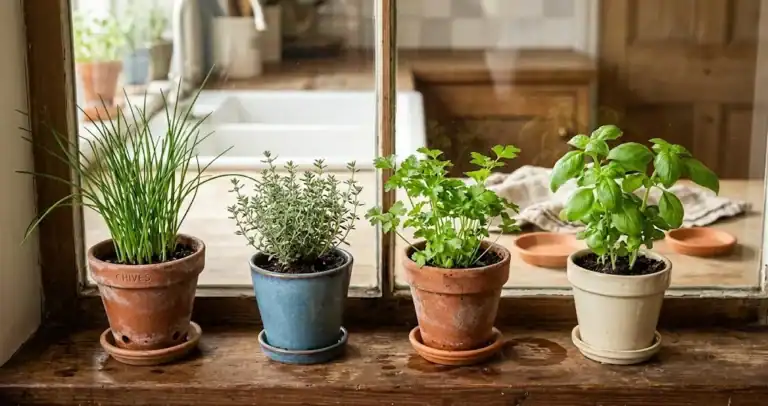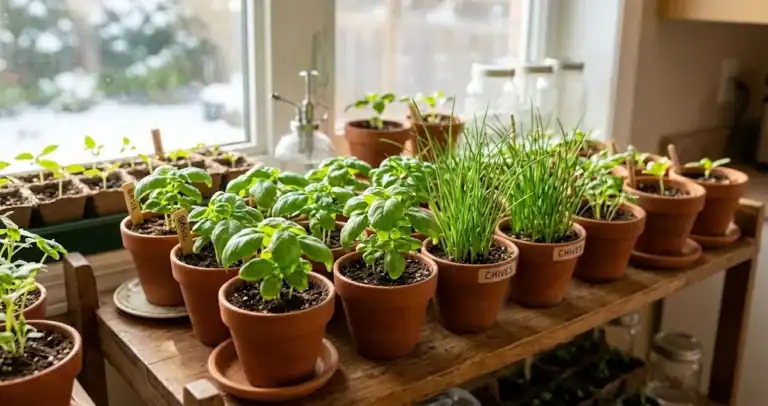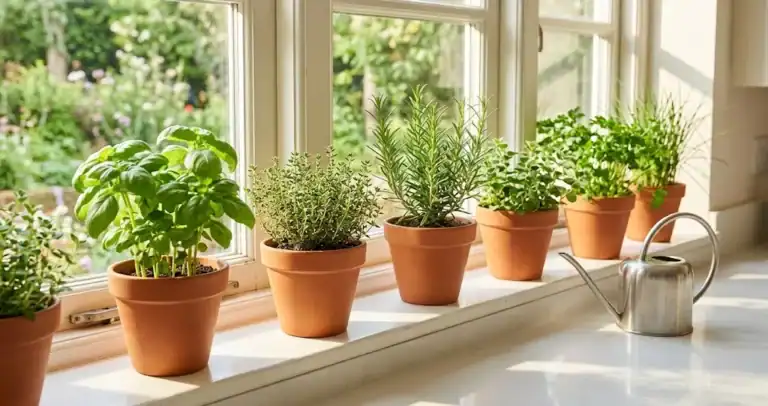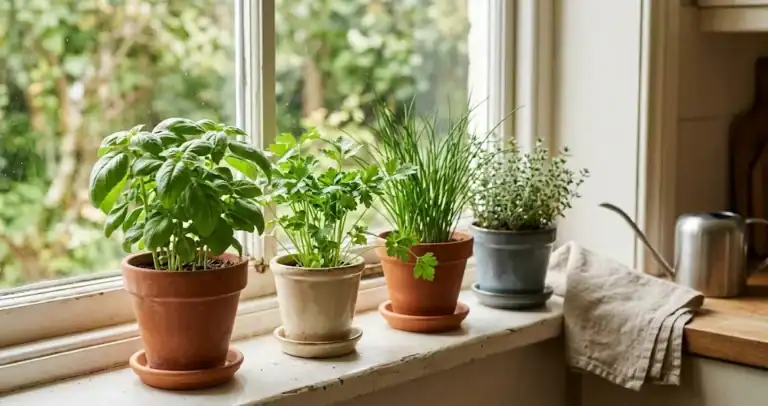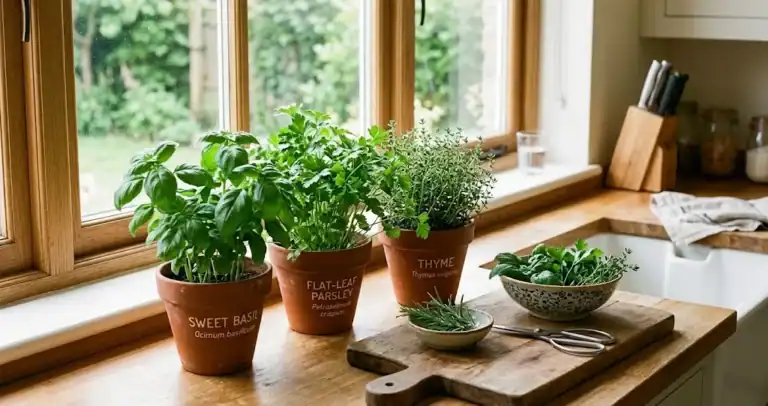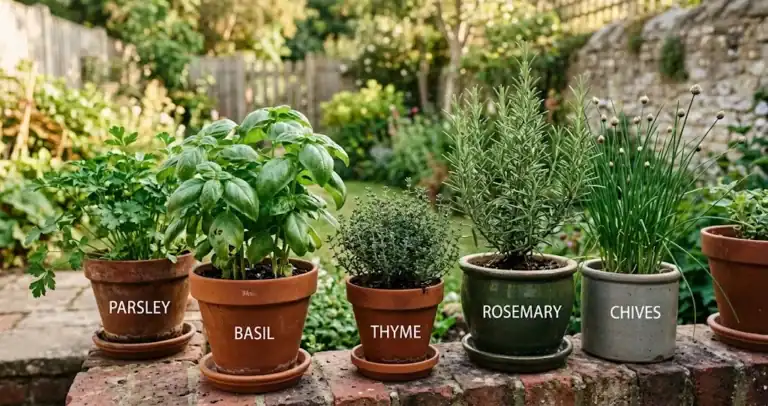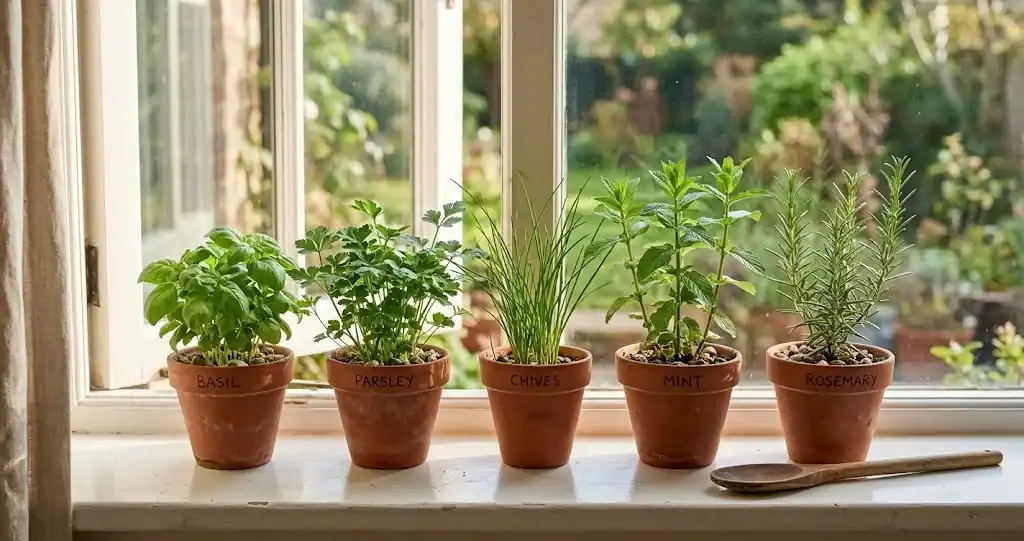
A windowsill covered in fresh herbs is one of the most rewarding things a home gardener can grow. Indoor herb growing is forgiving. Most culinary herbs come from sunny, dry regions and adapt well to a bright window, a steady watering routine, and a container that drains. Growing herbs indoors in your home is one of the simplest ways to keep fresh flavors within arm’s reach of the stove, whether you are new to growing herbs in pots or adding to a kitchen garden you have tended for years. Many people who have never grown herbs at all find that a couple of pots on the kitchen counter turn into a year-round supply. This guide covers what to pick, how to set up the pots and soil, how to give them enough light and water, how to sow and start new plants, how to keep them healthy through the year, and how to fix the small problems that show up in the first few weeks.
Pick herbs that fit your light and your cooking
The easiest way to fail with indoor herbs is to choose plants that need more sun than your window gives them. Before you buy anything, watch the brightest window in your home for one full day. A south-facing window with full sun and southern exposure gives six or more hours of direct sun, which suits the Mediterranean group: rosemary, oregano, sage, and tarragon. East or west windows give three to five hours, which still grows parsley, chives, mint, cilantro, and lemon balm. North-facing windows give weak, indirect light, which is enough only for mint, parsley, and chives, which tolerate indirect light better than the sun-loving Mediterranean herbs, and even then growth will be slower.
Then narrow your list to what you actually cook with. Sweet basil, parsley, chives, and mint cover a wide range of dishes and all grow well inside. If you cook Mediterranean food, add rosemary and sage. If you bake or make tea, mint, lemon balm, and sage are worth the space. Skip the herbs you reach for once a year. Five healthy containers beat twelve struggling ones, and most indoor herb gardens work better as a tight little collection than as a sprawling array.
If you are still at the planning stage and want a fuller picture of what to sort out before you bring any plants home, the guide on setting up an indoor herb garden walks through the same decisions in more detail.
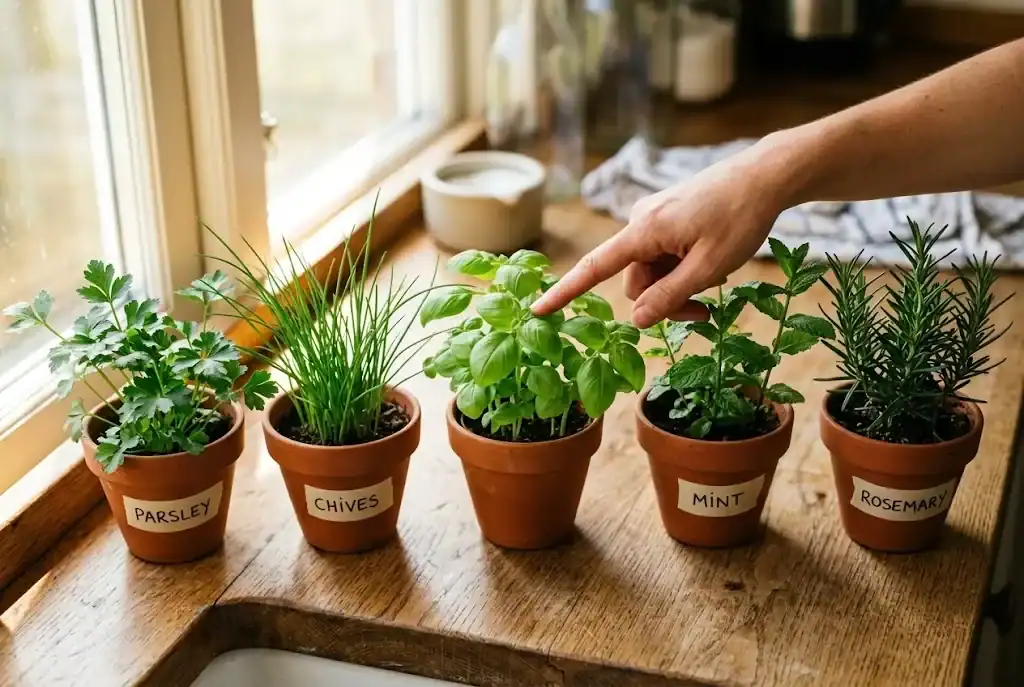
Match the pot, soil, and drainage to the herb
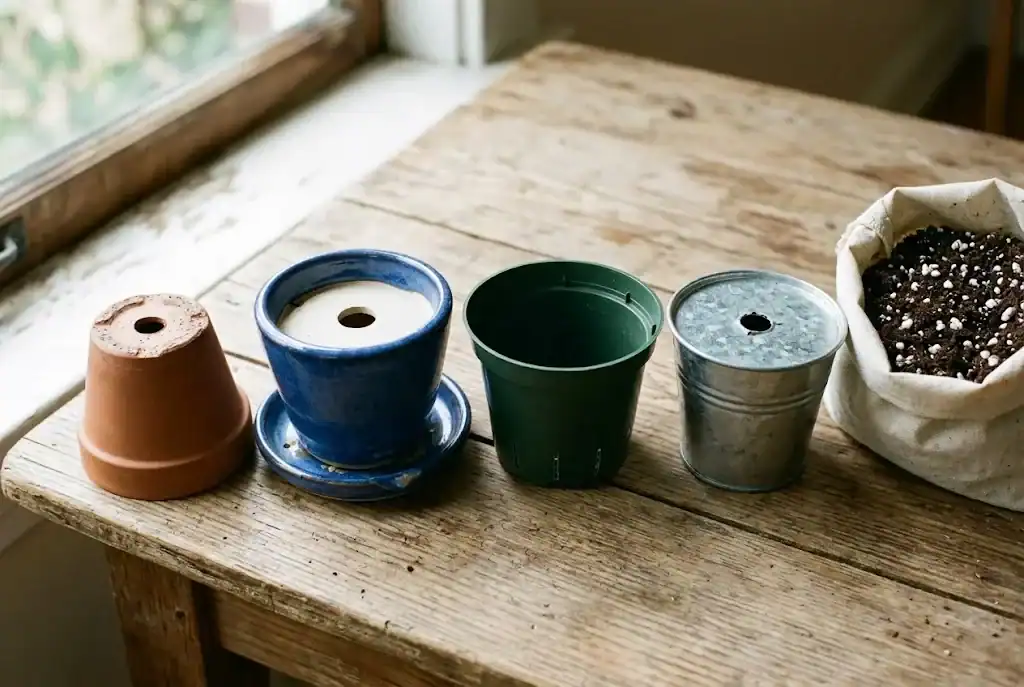
Most herbs hate wet feet. A container without a drainage hole is the single most common cause of failure, because water pools at the bottom, the roots rot, and the plant goes down before you notice the problem above the soil. Use a container with at least one drainage hole, and put a saucer underneath to catch the runoff so you do not ruin the sill.
Terracotta breathes and helps soil dry out evenly, which suits the Mediterranean group. Glazed ceramic and plastic hold moisture longer, which suits leafy herbs like parsley and mint. A four to six inch container holds one plant comfortably. Bigger containers hold more soil and dry out more slowly, so they suit plants that drink heavily and do not like to dry between waterings. Once a plant has been in the same container for six to eight weeks, a half strength feed is enough to keep new leaves coming.
Use a potting mix, not garden soil. Garden soil compacts in a container and stays too wet. A standard peat or coir based mix with perlite for drainage works for almost every herb and gives roots the airy growing medium they need. If you want to mix your own, combine two parts potting mix with one part perlite. Skip the fertilizer at this stage; a plain mix gives roots time to spread before you start feeding. If you keep houseplants on the same shelf, this is the same basic mix most of them like. The same basic plant care applies: enough light, a steady watering rhythm, and a watchful eye for pests.
Set up light, temperature, and humidity for your indoor herbs
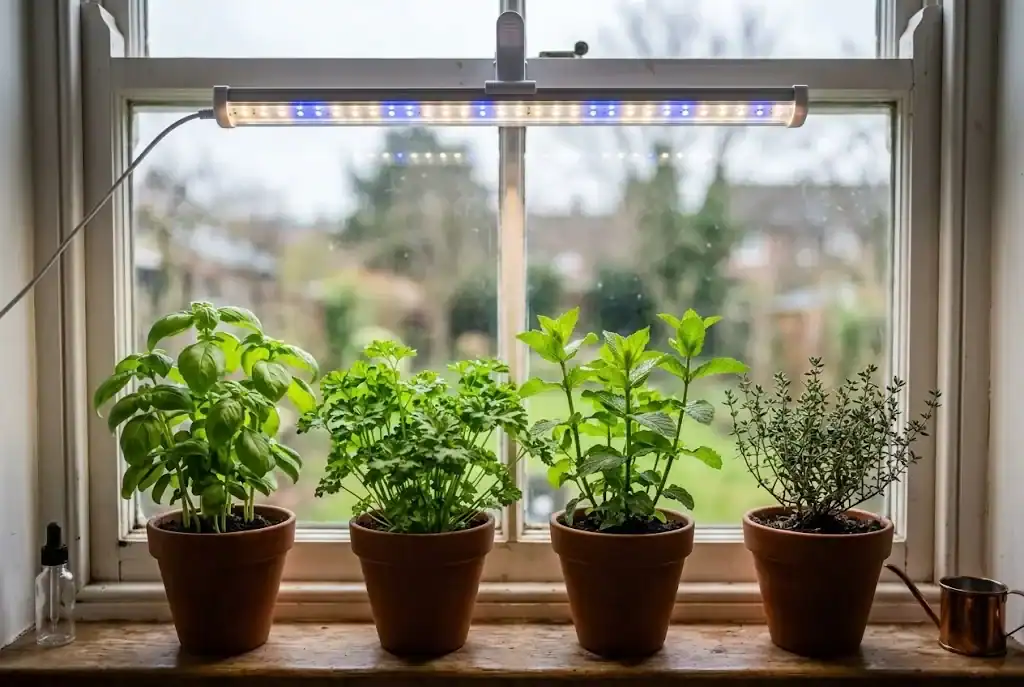
Light is the next big decision. A sunny windowsill with southern exposure and six or more hours of direct sunlight is enough for sun-loving herbs, and any sunny location with enough bright hours will do the same job. If your best window gives less than four hours of sunlight, or if your winters are dark, a simple full-spectrum LED grow light on a timer for twelve to fourteen hours a day closes the gap. Hang the light six to twelve inches above the tops of the plants and raise it as they grow. Rotate pots often so that each side gets enough light for uniform growth, and the shape stays even. Windowsills that face east or west give partial sun that suits many herbs around the plants, and a small grow light on the darker side fills the gap.
Most culinary herbs are comfortable at the same temperatures you are. Daytime temperatures of at least sixty five degrees Fahrenheit and nights no colder than about fifty five suit them well. Keep containers away from cold drafts in winter and away from radiators and heating vents that dry the air and bake the soil. Successful indoor growing depends more on steady temperatures than on perfect light.
Humidity matters less than people think. Basil likes humidity above fifty percent and sulks in dry winter air. Grouping containers on a pan of moist pebbles with a little water in the bottom raises the humidity right around the leaves without wetting the soil. Misting does very little and can encourage fungal problems on leaves that stay damp.
Place your herbs where they will actually thrive
Where you put the pots is the difference between herbs that thrive and herbs that sulk. A countertop next to a busy stove looks lovely in a magazine but cooks the leaves with heat and grease. A spot in a south-facing window with full sun suits the Mediterranean group: rosemary, sage, and tarragon. An east-facing window with a few hours of morning sun suits parsley, chives, mint, and cilantro, which prefer gentler light.
Place your herbs in the brightest spot you can give them, and let each container be its own little microclimate. Many herbs do better clustered together, since the leaves transpire and raise the humidity around the pots, but they also need enough space between them for air to move. A few inches of gap between pots is usually enough. Place herbs where you will see them every day; an out-of-the-way windowsill is the surest way to forget a watering.
Start growing herbs from seed, starts, or cuttings
You can start your indoor garden from seed, from nursery starts, or by taking cuttings from plants you or a friend already grow. Each has its place, and the right choice depends on the herb, the season, and how soon you want to snip. Many herbs are easy to start growing from a single healthy stem, and seed gives you the widest variety. Starting the indoor garden from seed or cutting means you can plant any time of year without waiting for the last frost, so the calendar is less of a constraint than it is for outdoor beds. Healthy starter plants from a nursery give you a head start, and cuttings from a friend’s plant are free. Most setups at home start with three or four pots and grow from there.
Nursery starts give you a harvest sooner. Buy from a local grower if you can, because the plants have already adapted to your climate. Avoid containers crammed with many seedlings, since the roots have tangled and the plants struggle after you separate them.
Seeds are cheaper and offer varieties you will not find in a grocery store. The leafy group (cilantro, parsley, chives, dill) starts easily from seed, and a single chive plant gives a season of snips once it settles in. The Mediterranean group is slower and uneven, so beginners usually do better with starts for those; rosemary and thyme are the slowest to come up from seed and benefit from nursery starts. Starting herb seed under a clear cover helps keep the soil moist until the seedlings break the surface.
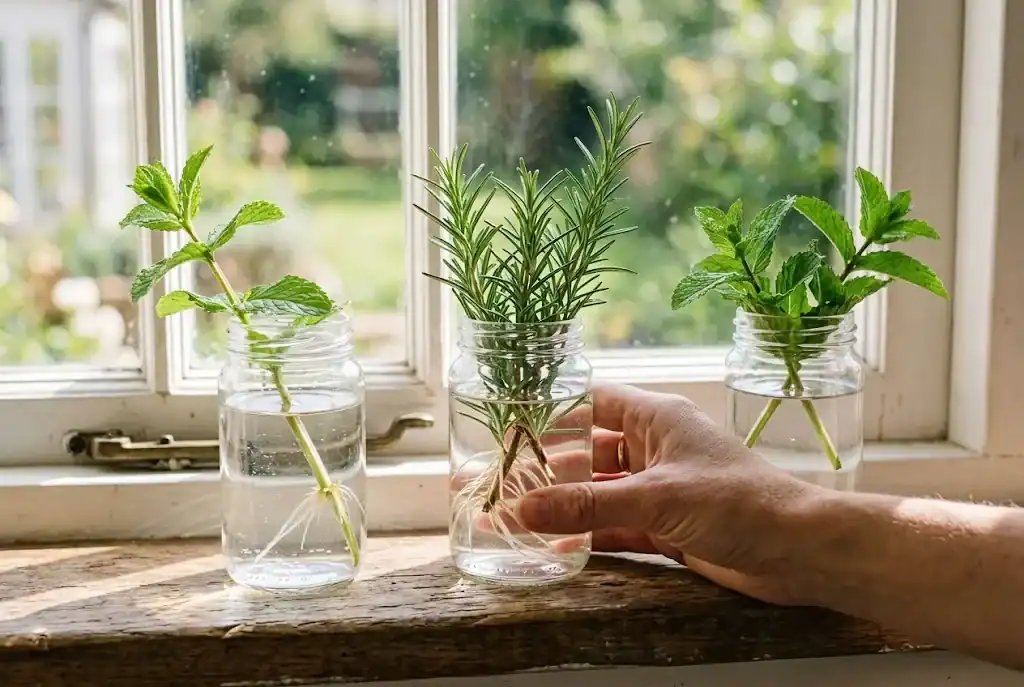
Cuttings are the fastest route to a new plant. Snip a four inch stem of mint or rosemary just below a leaf node, strip the lower leaves, and set the stem in a glass of water on the windowsill. Roots appear in one to three weeks for mint, two to four weeks for rosemary. Pot the cutting up once the roots are an inch long.
For a fuller walkthrough of starting herbs from seed, the indoor seed sowing guide covers timing, depth, and the first transplant.
Care through the year: water, feed, pinch, renew
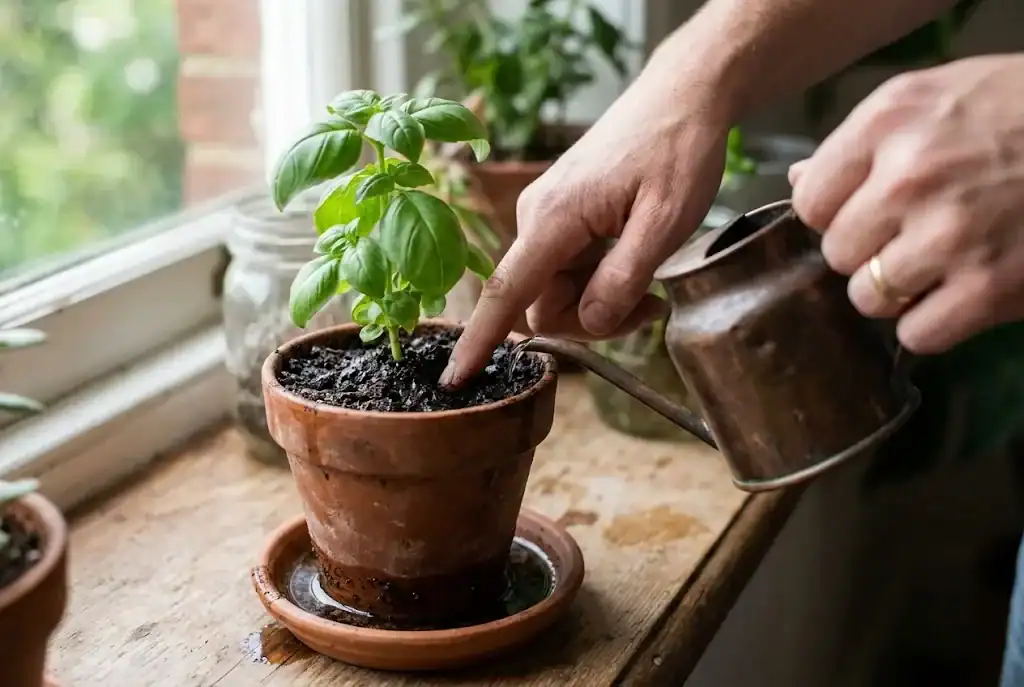
Watering is the skill that decides whether the garden thrives or slowly fades. The right approach is to check the soil, not the calendar. Push a finger an inch into the potting mix. If it feels dry at that depth, water thoroughly until water runs out the drainage hole. If it still feels damp, wait a day. Empty the saucer after twenty minutes so the container does not sit in standing water. Let the surface dry out completely between waterings, especially in winter when indoor plants drink more slowly. Refill the watering can with room temperature water so cold water does not shock the roots.
Indoor herbs do not need much fertilizer, but a light feed keeps the leaves coming. Once a plant has been in the same container for six to eight weeks, water with a half strength liquid seaweed or fish emulsion every two to four weeks during the active growing season. Skip feeding in winter when growth slows. If the plant looks hungry and the new leaves produce smaller leaves than usual, a low dose of a water-soluble fertilizer at every other watering is enough. Fertilize herbs with a low dose, never at full strength, since salts build up in a small container.
Pinching is what turns a thin, leggy stem into a bushy plant. When a stem has four to six sets of leaves, pinch off the top set just above a leaf pair. The plant sends out two new stems from that point, and the next pinch doubles it again. Pinch mint and the leafy herbs regularly, and use the cut leaves in the kitchen. Never let basil flower if you want a long harvest; flower spikes turn the leaves bitter and the plant stops producing.
Most culinary herbs last one to three years inside before they get woody or exhausted. Basil is usually grown as an annual and replaced each spring. Mint and sage can be renewed by cutting back hard, repotting into fresh mix, or replacing with a cutting from the parent plant. When the roots crowd the container or the water runs straight through, it is time to repot one size up with fresh soil.
Common problems and quick fixes
Yellow leaves usually mean overwatering. Let the soil dry more between waterings and check that the container drains. Soggy soil that does not drain lead to root rot, which is the surest way to lose a herb. If the lower leaves yellow and the new growth stays green, the plant probably needs a light feed rather than less water. A compost tea, watered on the soil once a month, is a gentle way to add micronutrients without the salt build-up of stronger feeds. Yellow leaves on a single stalk while the rest look healthy often means the plant is just shedding an older leaf, not a problem to chase.
Leggy, stretched stems with pale leaves mean insufficient light. Move the container closer to the window, add a grow light, or both. Pinch the stretched tips back to a healthy leaf pair to encourage bushier regrowth.
White fuzzy growth on the soil surface is usually harmless saprophytic fungus that appears when the soil stays too wet. Scrape off the top half inch, water less, and let the surface dry between waterings.
Small flying insects around the soil are fungus gnats. They thrive in damp soil and are mostly a nuisance. Let the surface dry out completely between waterings, top dress the container with a thin layer of coarse sand or perlite, and they will fade within a couple of weeks.
Powdery white patches on the leaves are powdery mildew, usually from poor air circulation. Space the containers so air moves between them, water at the soil rather than over the leaves, and remove badly affected leaves. A spray of one part milk to nine parts water on the leaves once a week helps on the leafy herbs.
Aphid and whitefly are the usual pest problems on indoor herbs. A sharp spray of water in the sink knocks most of them off. Insecticidal soap or a neem oil spray applied weekly for two to three weeks handles the rest. Always check new plants before adding them to the kitchen shelf, since a single infested plant can spread to the others fast, and isolated infested plants go straight into a quarantine bag rather than back onto the shelf. Quarantine any new plant for a week and watch for pest activity, yellowing leaves, or sticky residue on the soil. Mint spreads fast and can crowd out the plants around it if left in the same small space too long.
A short plan for the first month
- Week one: pick three to five herbs you cook with, find your sunniest window, and buy containers with drainage holes and a bag of potting mix.
- Week two: pot up the plants, water them in, and set up a simple watering rhythm based on how the soil feels rather than the day of the week.
- Week three: pinch the tops of mint and the leafy herbs to encourage bushy growth, and start a feeding routine with a half strength liquid feed every two weeks.
- Week four: evaluate each plant. Anything stretched, yellowing, or sulking probably needs more light, less water, or both. Replace weak plants with stronger ones rather than nursing them along.
Common questions gardeners ask about indoor herb gardens
How much light do indoor herbs really need?
Most culinary herbs need six or more hours of direct sun, or twelve to fourteen hours under a full-spectrum grow light. The Mediterranean group (rosemary, sage, and tarragon) sits at the high end. Parsley, mint, chives, and cilantro tolerate a few hours less. If the stems stretch and the leaves pale, light is the first thing to fix.
How often should you water indoor herbs?
There is no set schedule that fits every pot in every home. Push a finger an inch into the soil. Water thoroughly when it feels dry at that depth, and wait another day if it still feels damp. Most herbs prefer the surface to dry out completely between waterings, with the deeper soil staying lightly moist. Overwatering leads to root rot faster than underwatering does.
What kind of pots work best for indoor gardening?
Anything with at least one drainage hole. Terracotta breathes and dries evenly, which suits Mediterranean herbs. Glazed ceramic and plastic hold moisture longer, which suits parsley and mint. A four to six inch container holds one plant comfortably; bigger containers hold more soil and dry more slowly. If you do not want to fuss with soil at all, an aerogarden or other small hydroponics kit gives you a controlled environment with built-in lighting and a timer, though the leaves it produces have reduced aroma compared with sun-grown plants.
Do these herbs need fertilizer?
Yes, but only lightly. Once a plant has been in the same pot for six to eight weeks, a half strength liquid feed every two to four weeks during the active growing season is enough. Skip feeding in winter when growth slows, and stop altogether if the plant looks lush but the leaves have lost their flavor. Herbs need nutrients more than they need much else, so a steady light feed beats a few heavy ones.
Best herbs for an indoor herb garden at a glance
If you only have room for a few pots, here is the short list of culinary herbs that perform reliably on a kitchen windowsill. Each is a perennial except where noted, and most will reward a year of steady care with a year of harvest.
- Sweet basil (Ocimum basilicum): an annual that wants full sun, steady warmth, and regular pinching. Best fresh; pinch off flower spikes to keep the leaves coming.
- Parsley (Petroselinum crispum): a biennial that often self-seeds, suited to partial sun, slower to start but tolerant of cooler windows.
- Chives (Allium schoenoprasum): a clump-forming perennial that lasts many years. Cut leaves to the base and they regrow in a few weeks.
- Mint (Mentha spicata): a hardy perennial that needs containment, very forgiving of low light and inconsistent watering.
- Oregano (Origanum vulgare): a Mediterranean perennial that wants full sun and dry conditions between waterings.
- Rosemary (Rosmarinus officinalis): a woody perennial that likes a cool room and as much direct sun as you can give it; resents wet feet.
- Thyme (Thymus vulgaris): a low perennial that wants full sun, dry soil, and a tight pot.
- Sage (Salvia officinalis): a Mediterranean perennial that likes sun and dry conditions; trim annually to keep the plant from getting woody.
Most indoor herb gardens at home settle on three to five of these and grow from there. Choose the herbs you actually cook with, give them the brightest spot you have, and the rest is watering and pinching.
Harvest and use the herbs you grow
Indoor herb gardens give you fresh herbs at the kitchen counter rather than a walk to the back of the yard. Pinch or snip leaves in the morning when the essential oils are most concentrated, and never take more than a third of a plant at one time so it can recover. Pinching any leaf pair sends out new stems from that joint, so a regular haircut is the same as harvest. Mint responds the same way and gives a steady supply for several months. Rosemary and sage also branch out fast after pinching, and the cut leaves drop right into the kitchen.
Match the herb to the dish. The leaves pair well with tomato, mozzarella, olive oil, eggs, grain salads, roasted vegetables, potatoes, cream cheese, bread, and roasted meats. Sage (Salvia officinalis) and rosemary anchor roasts, stews, and bread. Mint pairs with fruit, yogurt, tea, and lamb. Use the leaves fresh within a day or two for the strongest aroma and flavor.
If you have more than you can use, store the surplus for later. A jar of leaves in olive oil, a few sprigs of mint in a pitcher of water, or a butter log rolled with chopped chives all extend the harvest. Most culinary herbs also dry well: hang small bundles in a warm, dry room for a week, then store the crumbled leaves in an airtight jar away from light.
Build on the basics with a broader herb garden plan outdoors
Once the indoor pots are settled and you are using the leaves in your cooking, the next useful step is to think about herbs outside the kitchen as well. The beginner’s guide to growing an herb garden covers how an herb garden comes together indoors and out, including the soil, light, and layout decisions that decide whether a kitchen garden or a larger herb garden holds up through a full season, whether you grow herbs for the cooking you do today or are planning a greenhouse or hydroponic setup for year-round production.