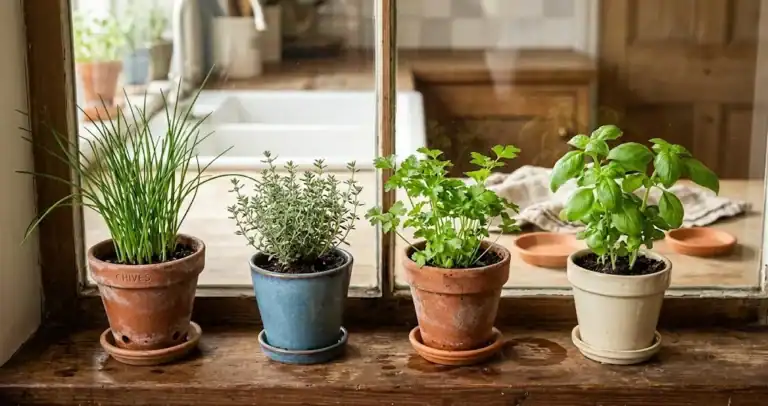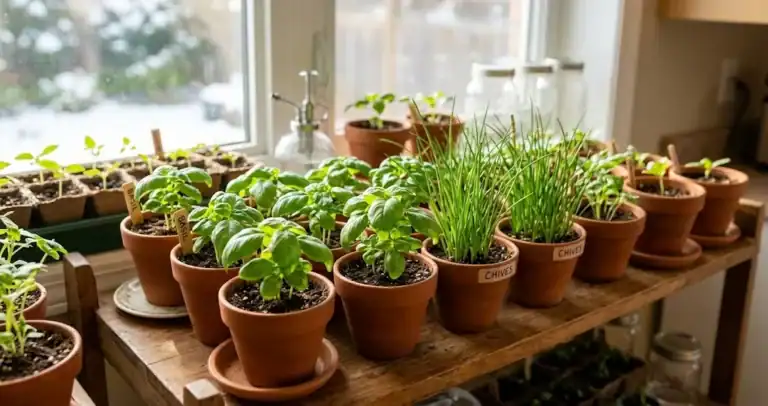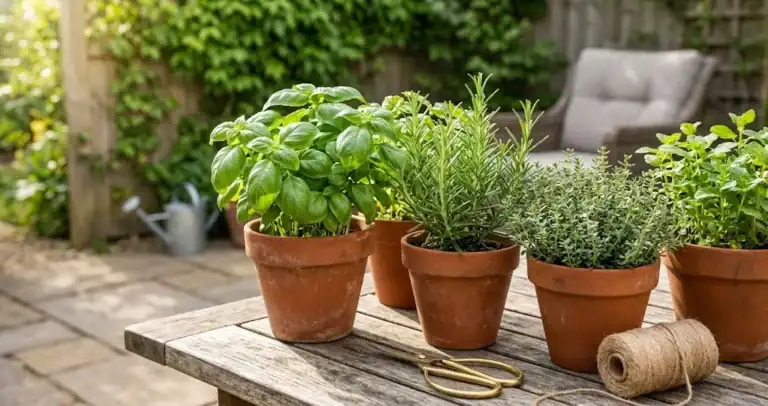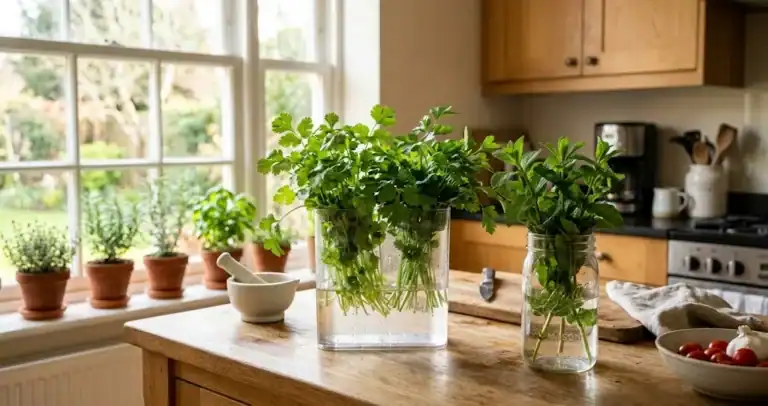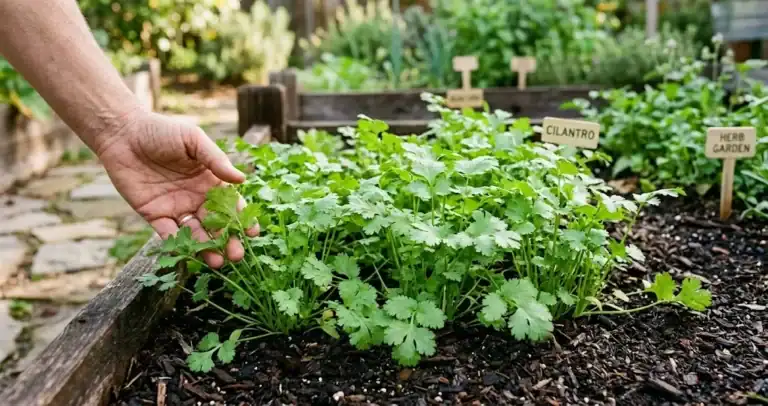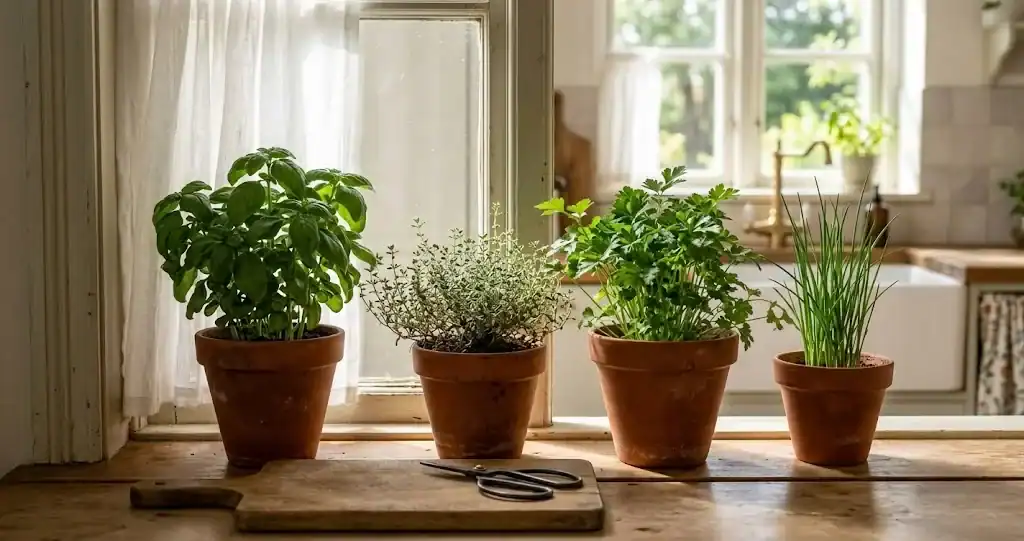
A few pots on a sunny sill can replace a summer garden for most of the year, and the herbs you grow at home are often closer to the stove than the ones you would buy. Potted herbs need the same basics as outdoor ones: real light, water without sitting in it, a pot that drains, and a temperature range they actually enjoy. Once those basics are in place, the difference between an herb that thrives and one that sulks usually comes down to a few small habits. Whether you want to grow a single pot on the kitchen counter or start a full kitchen herb garden with several different herbs, these practical tips cover the steps in plain order.
This guide walks through the practical tips that make the difference. If you want a fuller overview of starting an herb garden from scratch, our beginner’s guide to growing an herb garden covers the bigger picture.
Pick herbs that suit an indoor spot
Not every herb is an easy plant to keep inside. The varieties that are easiest to grow indoors are the ones that come from Mediterranean climates and tolerate drier air and less-than-perfect light. Most of these herbs settle in well in a basic herb garden setup as long as their watering and light are in line with their needs. Choose herbs that suit your light and the way you cook, rather than chasing unusual varieties for their own sake. The best herbs for a first indoor herb garden are the ones you reach for often in the kitchen. Start with these and add others once your setup is dialed in:
- Sweet basil or Genovese basil, for warm-season cooking.
- Chives, with mild onion flavor and good tolerance of indoor light.
- Parsley, both flat-leaf and curly.
- Mint, in its own pot so it does not take over.
- Common thyme or lemon thyme, dependable and forgiving.
- Oregano, the standard culinary variety.
- Rosemary, though it needs cooler nights and careful watering.
Annual herbs such as basil grow fast and run out of energy after a few months. Perennial herbs such as thyme, oregano, rosemary, chives, and mint keep coming back year after year indoors as long as you do not overwater them. Choose annuals if you cook with them heavily and want frequent fresh harvests; choose perennials if you want a steady background plant that asks for very little attention. Both groups are easy to grow indoors once their watering rhythm matches their pot, and most herbs grow well in any home where a sunny window and a steady watering hand come together.
If you want the easiest herbs to grow indoors, the consensus among experienced kitchen gardeners is basil, chives, parsley, mint, and thyme. Those five tolerate a wide range of conditions and bounce back from the small mistakes beginners make. You can add more unusual varieties to your indoor herb garden once you have a feel for how your specific spot in the house performs, and grow herbs indoors that fit that microclimate.
Match each herb to the light you can give it
Most culinary herbs need six to eight hours of direct sunlight a day, and a south-facing window is the easiest way to give that to them. East and west windows work too, but the plants will grow more slowly and lean toward the glass, so rotate the pots a quarter turn every few days to keep growth even. Place your herbs where the natural light is strongest first; you can always add a grow lamp later for the plants that need more. Next to a window with morning light is the second-best spot, since the sun is gentle and the soil dries evenly.
If your kitchen is short on bright windows, a simple grow light fills the gap. A full-spectrum LED panel set about 6 to 12 inches above the tops of the plants, on a timer for 12 to 16 hours a day, is plenty for a small herb garden. Basil in particular struggles under low light, so if you only have a north-facing window, plan to grow it under a lamp rather than next to it.
Watch the leaves and the plants will tell you what they need. Stretched stems and small pale leaves mean the herbs are not getting enough light. Yellowing leaves on the side facing the window often mean the light is too intense or too close, especially under a lamp.
The mix of sun and a grow light also lets you start an indoor herb garden in the darker months. Most herbs will not go fully dormant indoors, so with enough hours under a grow light you can harvest fresh herbs all year, not just through the long days of summer. That is also how growers keep herbs going through the winter without the leaves going thin and bitter, and the same setup works for herbs like basil and parsley that want steady light.
Water without waterlogging
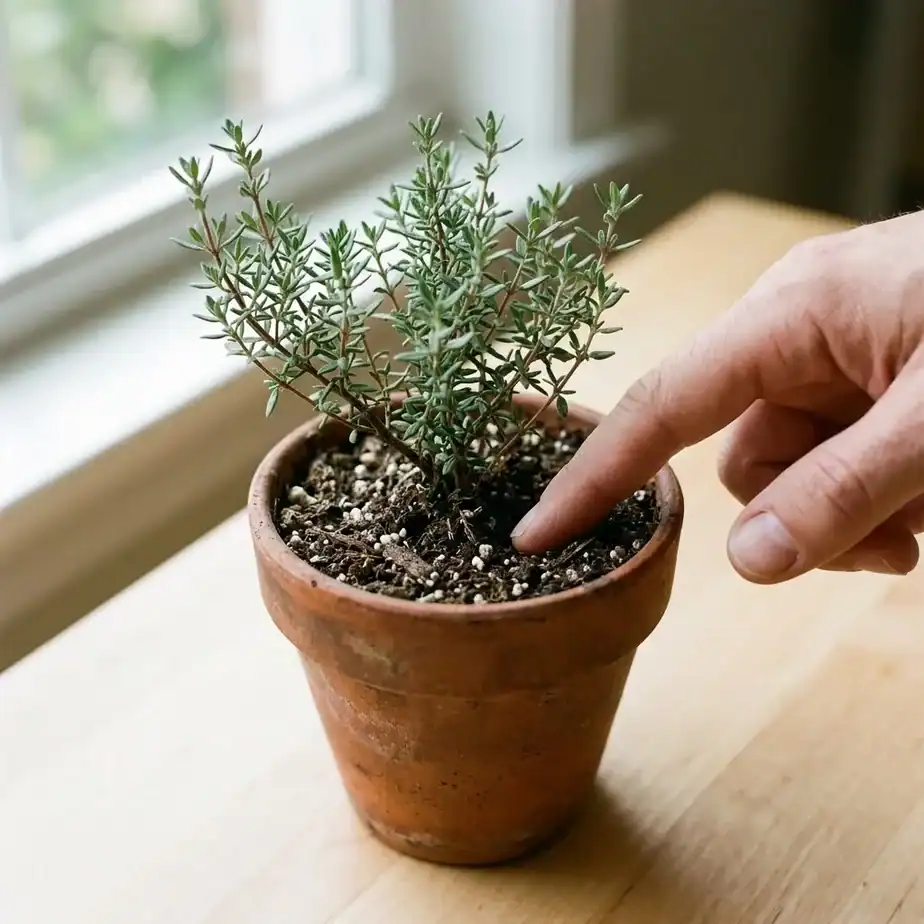
Overwatering is the single most common reason indoor herbs fail. The roots need moisture and oxygen in roughly equal measure, and a pot that sits in soggy soil suffocates them. Water thoroughly until you see a little drain out of the bottom, then let the top inch of soil dry out before you water again. Stick a finger in the soil. If the top inch feels dry, water. If it feels cool and damp, wait.
The herbs themselves are useful guides. Sweet basil and parsley want steady moisture and wilt visibly when they get thirsty. Thyme, oregano, rosemary, and chives do best once you let the soil dry out a bit between waterings. Mint tolerates wetter conditions but still wants drainage.
How often you water depends on the time of year. During the active growing months in spring and summer, potted herbs dry out faster and may need water every two to three days. In winter, when the days are short and the plants grow slowly, they often need water only once a week. Always check the soil rather than watering on a fixed schedule.
Room-temperature water is gentler on the roots than very cold water straight from the tap. If your tap water is heavily chlorinated, fill your watering can the night before and let it sit overnight so the chlorine dissipates.
Use pots that drain
Every herb pot needs drainage holes. Decorative pots without holes are fine as outer covers, but the herb itself should sit in a nursery pot or grow bag that lets excess water escape. Standing water in the bottom of a pot is the fastest path to root rot.
Terracotta breathes and helps soil dry evenly, which is a real plus for herbs that resent wet feet, such as thyme, oregano, and rosemary. Glazed ceramic and plastic pots hold moisture longer and work well for leafy herbs such as parsley and mint. Whatever the material, a 6 to 8 inch pot is enough for most individual herbs; mint and rosemary appreciate a slightly larger pot because their root systems grow quickly.
Skip gravel in the bottom of the pot. The old idea that a gravel layer improves drainage is a garden myth that does not hold up indoors. A layer of gravel actually raises the water table in the pot and makes the soil above it wetter for longer, which is the opposite of what you want. If you want to be sure your herbs have space to grow, choose a slightly larger pot and use a proper potting mix rather than tinkering with the bottom of a small one.
Use a light, well-draining potting mix
Herbs do best in a fresh, light potting mix rather than garden soil. Garden soil compacts quickly in a pot and holds too much water. A standard indoor potting mix works for most herbs, and you can loosen it further by mixing in a little extra perlite or coarse sand for herbs that prefer drier conditions, like thyme and rosemary.
Most herbs do not need heavy feeding. A light application of a balanced liquid fertilizer, diluted to half strength, once a month during active growth is plenty. Indoor herbs also require steady drainage and fresh soil more than they require additional feed. Over-fertilizing produces lush leaves with weaker flavor and can build up salts in the soil that burn the roots. If you would rather grow organic herbs, a dilute fish emulsion or a gentle seaweed feed every few weeks is plenty.
Some tender herbs such as basil and parsley have shallower root systems and respond to a slightly more frequent, lighter feeding. Mediterranean herbs such as rosemary, thyme, and oregano thrive on leaner soil and only need a feed every six to eight weeks during active growth. Always water the soil before fertilizing so the roots do not sit in concentrated nutrients.
If you are unsure, skip the fertilizer altogether and repot with fresh mix every spring. Most potted herbs settle in perfectly well in fresh soil with no added feed, and the risk of over-fertilizing is greater than the risk of under-fertilizing for a kitchen windowsill. Healthy herb gardens are usually underfed rather than overfed, and a simple soil refresh once a year does most of the work. That is also the simplest way to grow herbs that keep their flavor strong rather than turning watery.
If you would rather start with seeds rather than nursery plants, our guide to raising herbs indoors from seed covers the timing, lights, and small transplanting steps that work for kitchen windowsills.
Keep temperatures comfortable
Indoor herbs are happy at the same temperatures most people are, roughly 65 to 75 degrees F during the day. Most herbs tolerate cooler nights down to about 55 degrees, and that small day-to-night swing actually helps them grow more compact and flavorful. Rosemary in particular benefits from cooler nights and struggles in a kitchen that stays warm all evening.

Avoid placing herbs next to a hot radiator, a heating vent, or a cold draft from an old window. Dry air from a heat source dries out the leaves and the soil faster than you expect, and a steady cold draft chills the roots. A little airflow from a normal room is fine; strong drafts are not. Indoor temperatures in most homes stay well within the range that herbs prefer, so as long as the pots are not on a freezing sill or right against a heat register, the plants will be comfortable.
Harvest the right way
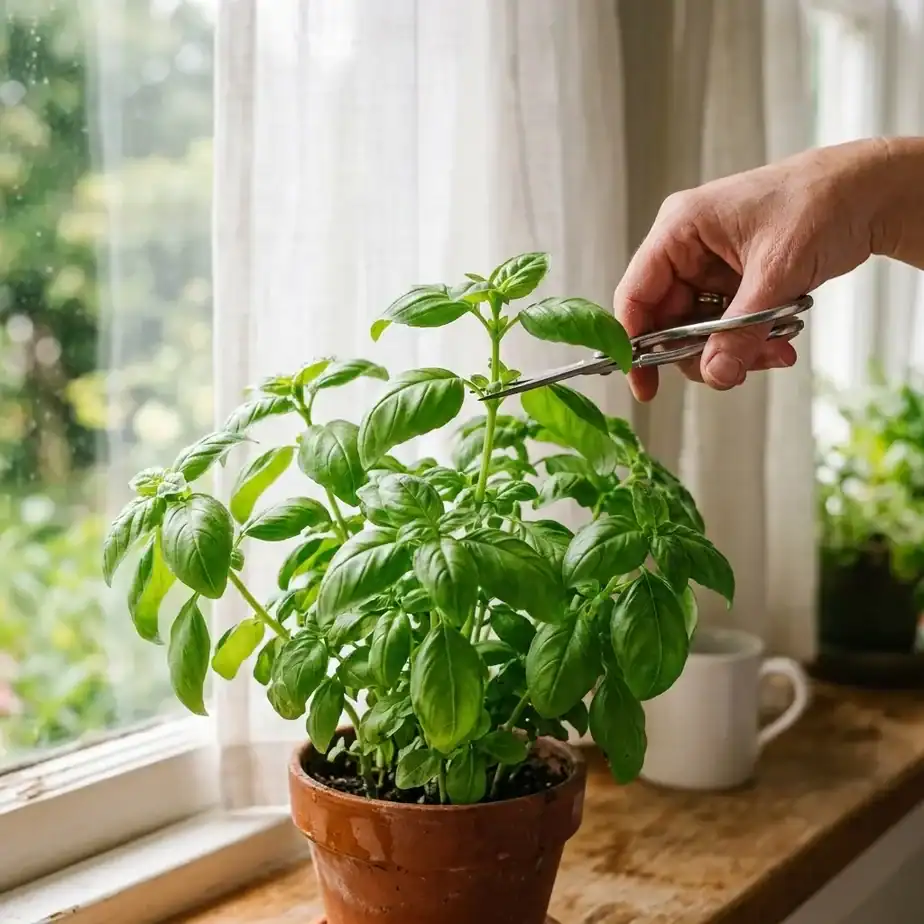
The best tip for keeping plants productive is to harvest often. Pinching off the growing tips encourages the plant to branch and grow fuller rather than tall and thin. For leafy herbs such as parsley and mint, pinch off the top few inches just above a pair of leaves, and the plant will respond by sending out two new stems from that point. Pinching regularly is also how beginner growers keep their indoor herbs growing the way they want rather than tall and sparse.
Many leafy herbs can grow back from a hard cut if you leave a few inches of stem and healthy leaves below the cut. Woody herbs such as rosemary and thyme need a lighter touch; never cut into the bare woody part of the stem, because that section will not reshoot.
Take no more than a third of the plant at a time. A heavier cut sets the plant back and slows regrowth. For woody herbs such as rosemary, thyme, and oregano, snip whole sprigs rather than individual leaves and strip the leaves off the stem once you are back in the kitchen.
If you have more than you can use fresh, dry the extra or freeze it in olive oil for cooking later. A small bundle of thyme or oregano hung in a warm, airy spot dries in a few days; basil keeps its color and flavor better when chopped and frozen in olive oil in an ice cube tray. Either way, harvest fresh herbs often and your indoor garden will keep producing new growth through the warm months of the year, and the same plant will keep thriving indoors during the winter under a lamp.
Quick troubleshooting for indoor herbs
Most indoor herb problems trace back to a small handful of habits. Watching for these will save a lot of replanting.
- Crowding too many herbs into one pot. Each herb has its own root system and its own preferred watering rhythm. Mint and rosemary in particular do best in their own containers.
- Putting herbs on a windowsill that gets very cold at night. A frosty pane chills the leaves and the soil and stresses the plant.
- Watering on a schedule rather than by feel. Light, humidity, and season all change how fast a pot dries out. Check the soil rather than watering on a fixed day.
- Leaving flowers on leafy herbs. Once cilantro or parsley bolts, the leaves turn bitter. Pinch the flower buds off as soon as you see them to keep the leaves coming.
- Placing herbs near ripening fruit. Many fruits, especially bananas and apples, give off ethylene gas that speeds up the decline of nearby indoor plants.
- Ignoring how much light the spot actually gets. A bright-looking window may only deliver a couple of hours of direct sun. If your herbs stretch and fade, the answer is almost always more light, not more water.
A few quick symptoms help you tell what is going wrong. Yellow leaves near the bottom of a plant usually mean overwatering, while yellow leaves with dry soil point the other way. Long pale stems mean the herb wants more direct sun, while crispy leaf edges often mean dry indoor air or a draft from a heat register. If you give your herbs the right light, the right pot, and water based on the soil rather than the calendar, indoor growing conditions stay easy to manage for most kitchen gardeners.
What three herbs thrive in the same pot?
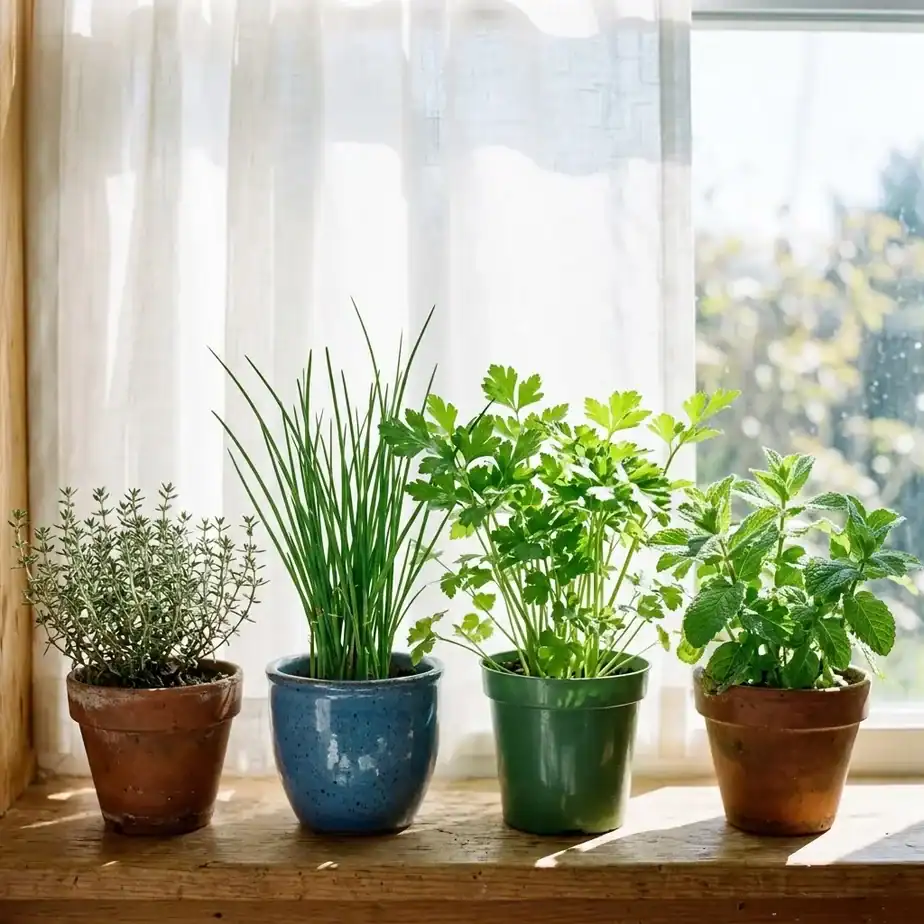
For a starter trio, the easiest combination is basil, parsley, and chives. All three want steady moisture and bright light, which makes them a natural beginner set, but each herb has its own root system and preferred watering rhythm, so they grow best in separate pots even when the pots sit together on one sunny windowsill. Avoid pairing mint with anything except other mints; its roots run fast and it will crowd out the slower herbs in the same pot within a season. Line the three small pots up on a single ledge and you get a wide range of cooking without any of the small problems that come from sharing one container.
What herbs should not be potted together?
Herbs that lean toward dry soil should not share a pot with herbs that like steady moisture. Thyme, oregano, and rosemary want to dry out between waterings, while parsley and chives prefer consistent moisture. Putting them in the same container usually ends with one group overwatered and the other underwatered. Mint is the rule-breaker and should always have its own pot, even among other herb gardens.
What are the most common mistakes growing indoor herbs?
The three mistakes that come up most often are overwatering, not enough direct sun, and harvesting too little. A pot that stays wet, a windowsill that gets only indirect light, and a plant that never gets pinched will all slowly decline. Adjusting those three habits solves the majority of indoor herb problems and gets the plants back on track.
Try one herb first, then expand
If this is your first herb garden indoors, start with one pot of chives on the brightest windowsill you have. Get a feel for how often it actually needs water, how it responds to a harvest, and how the light shifts across the seasons. Once one herb plant is thriving, add a second and a third. The habits you build with the first plant carry straight over to the next, and the indoor herb garden grows almost on its own from there. You will also learn which herbs to grow and which to skip next time you plant.
For a step-by-step walkthrough of starting from seed indoors, our guide to raising herbs indoors from seed covers timing, lights, and transplanting.
Before you set up your space, our list of what to sort out before growing herbs indoors is a useful preflight check.