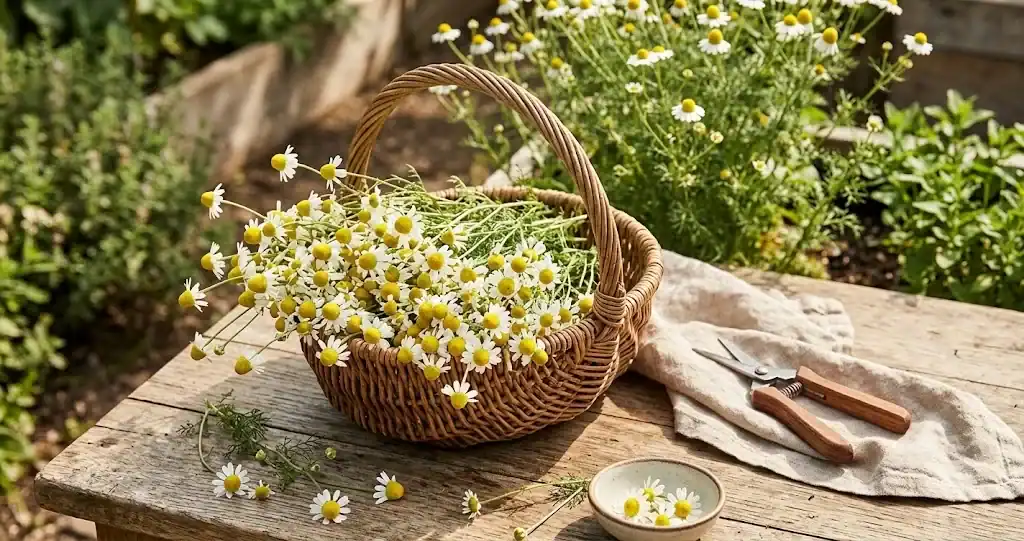
This herb rewards a light touch. Pick the open flowers on a dry morning, snip them just behind the head, and the plant keeps producing new flushes through the growing season. Get the timing or the technique wrong and you end up with closed buds, ragged petals, or a bitter cup of tea. The fix is a few simple choices about which type you grow, when you cut, and what you do with the pickings immediately afterward.
This guide covers how to cut the flowers for tea, including German chamomile (Matricaria chamomilla) and Roman chamomile (Chamaemelum nobile), both of which grow in herb gardens across most of the US. You will learn when the flowers are ready, how to pick them so the plant keeps producing, and what to do with the harvest when you want to dry it, store it, or brew it.
When the flowers are ready and how often to pick
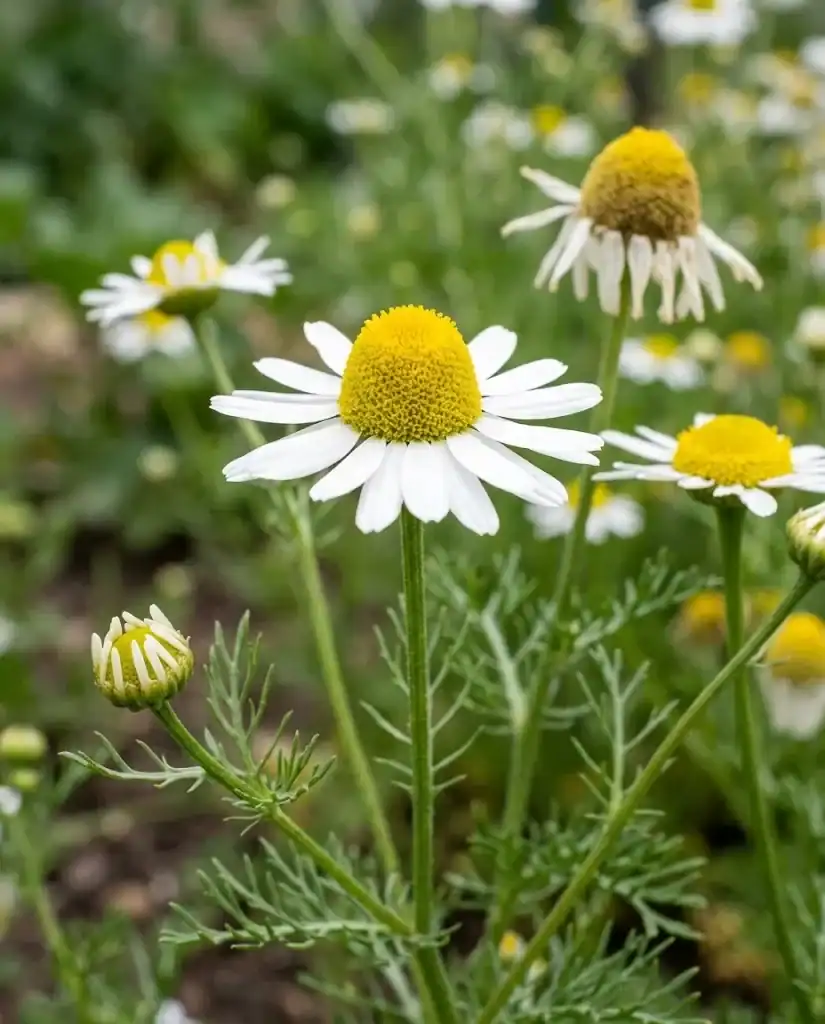
The flowers reach their best flavor at the moment the white petals lie flat and the yellow center has lifted into a small rounded cone. Botanists call this stage full bloom, and home gardeners usually describe the same flowers as ready for harvest. Once the chamomile flowers are ready, closed buds have little flavor and never open off the plant. Flowers past full bloom, where the petals are browning or falling away, have already started to lose their essential oil content, so picking at the right moment keeps the cup mild rather than bitter. In a healthy patch, they stay in full bloom across the bed for several weeks running.
The best time to harvest chamomile is mid-morning, after dew has dried but before the afternoon heat. Picking wet flowers encourages mold during drying, so always cut on a dry day. A single plant will throw flushes of flowers throughout the growing season, which means you can plan to pick every two or three days during peak flowering rather than stripping the plant once. Frequent harvesting encourages the plant to produce more flowers and keeps the harvest going, so the picking window extends across several weeks.
How to pick German chamomile
The annual species (Matricaria chamomilla) is the type most home gardeners grow for tea. It branches freely and produces dozens of small daisy-like flowers over several months. Each flower sits at the tip of a slender stem, which makes this species quick to pick but slower to dry because of the long stems. If you are starting from chamomile seeds, expect flowers about ten weeks after sowing.
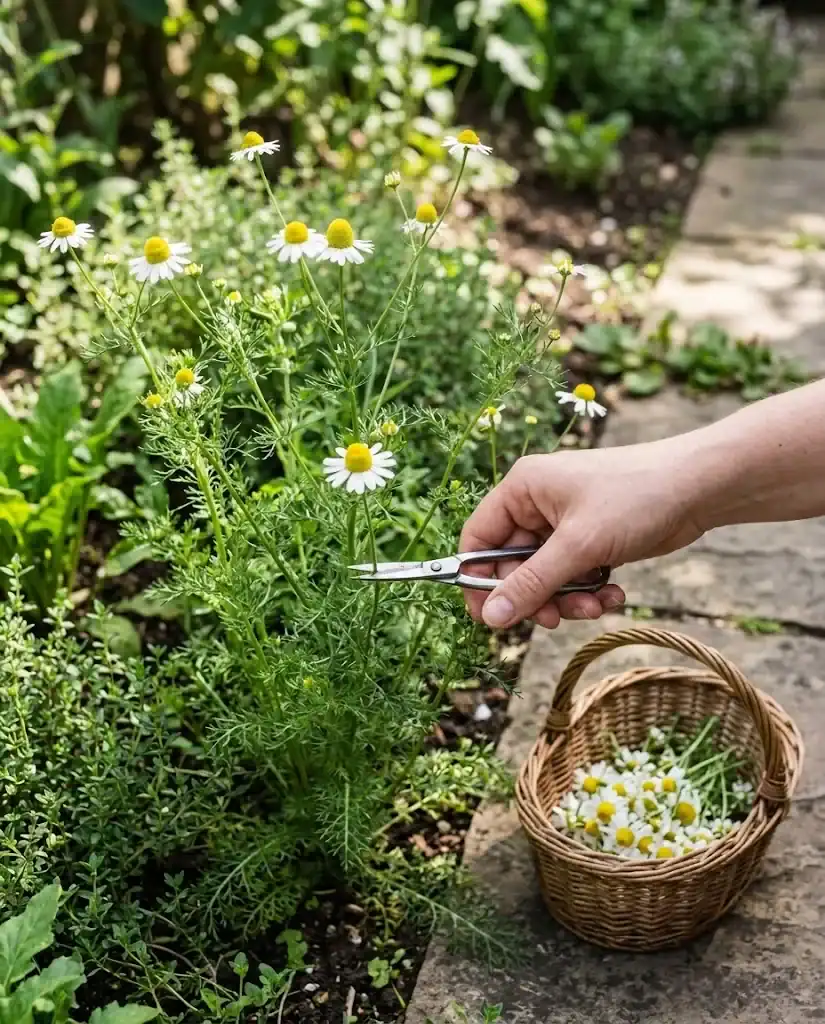
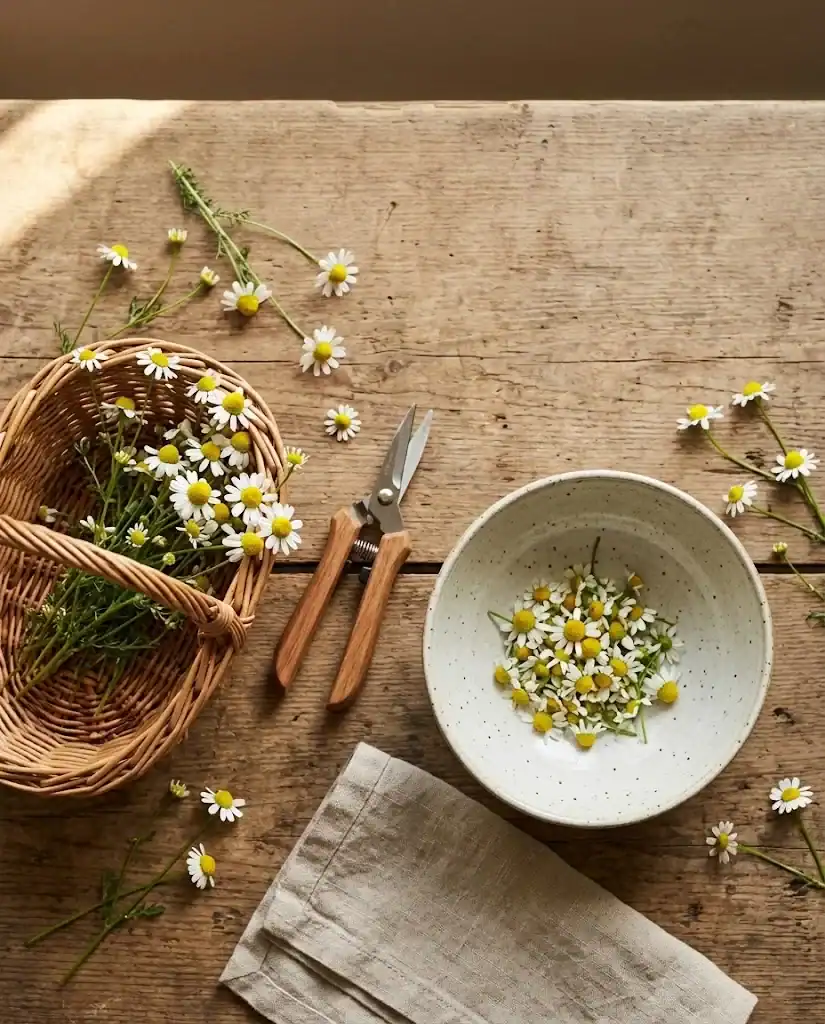
To pick, pinch the stem just behind the head and pull gently to snap the head free, or use small scissors or snips to cut the top inch or two of the stem along with the flower. Take the open flowers and leave the closed buds for the next pass; harvest the flowers as they open rather than waiting. A pair of small pruning snips saves time and keeps your hands from cramping during a long session. Avoid yanking whole branches; the stems bruise easily and the plant responds by setting fewer flowers afterward. Pick into a shallow basket rather than a deep pail so the flowers do not crush each other under their own weight.
How to pick Roman chamomile
Roman chamomile (Chamaemelum nobile) is a perennial that hugs the ground rather than reaching upward. The flowers grow close to the leaves, so picking is slower and the motion is more like plucking than snipping. Roman chamomile has a stronger, slightly bitter flavor than the German type, and many gardeners grow it as a lawn substitute or ground cover rather than for tea.
Use the same rules as for the German type: pick open flowers in mid-morning on a dry day, leave the closed buds, and avoid stripping the plant bare. Because Roman chamomile grows low, you may find it easier to take one or two stems with several flowers attached rather than picking individual blooms. Trim no more than a third of the plant at any one time so it has enough foliage left to keep producing through the rest of the season.
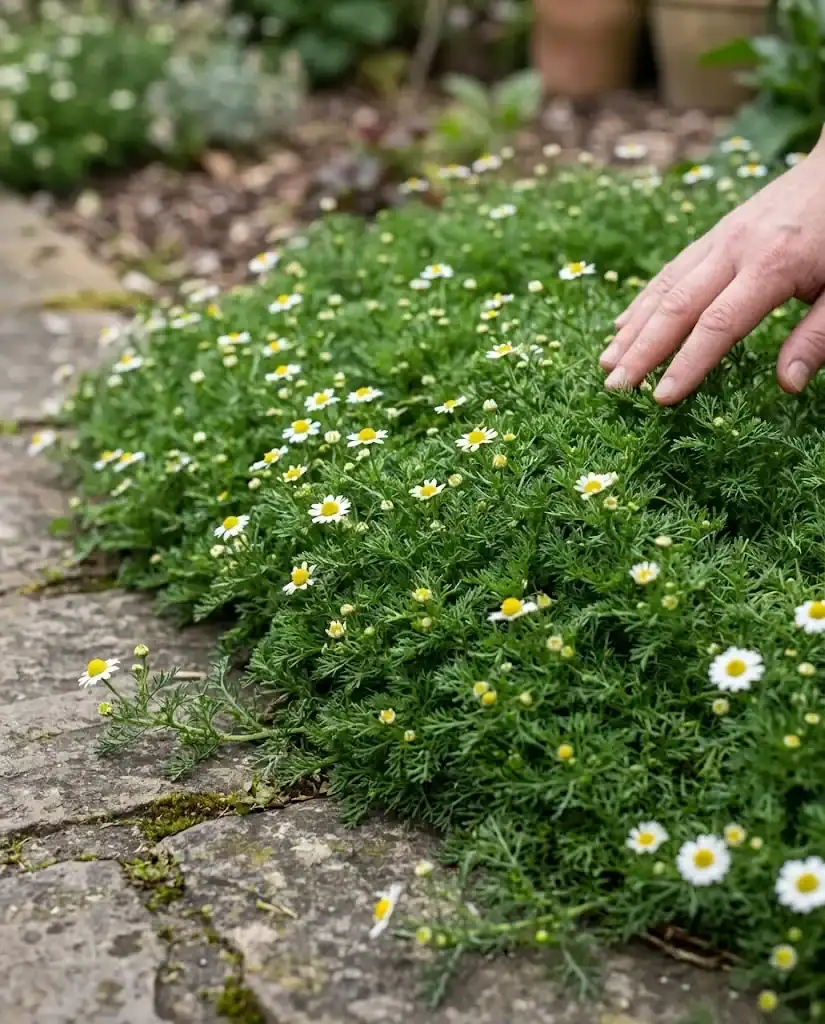
How to pick flowers for tea
Chamomile is one of the easiest herbs to harvest because the flowers are easy to spot, easy to grip, and forgiving of small mistakes. Pinch the stem just below the head and the head snaps free cleanly. Pull only the open flowers and leave the rest; the same plant will keep offering new flowers every few days through midsummer.
The trick to a long chamomile harvest is to keep cutting. Frequent picking keeps the plant from setting seed, which is what tells the plant the season is over. If you stop for a week or two, you will see the petals turn papery and brown, the seeds form, and the show is done. Cutting every few days pushes the plant to produce more blooms, and many gardeners describe this as harvesting my chamomile flowers weekly, the way they would cut basil or mint. The result is a long, steady supply instead of one big flush. Frequent harvesting is the single biggest difference between a bed that gives for weeks and one that gives for a weekend.
When you pick, the parts of the plant you want are the flowers and a short length of stem just behind each one. The leaves and stems lower down the plant are bitter and not worth picking for tea. As you cut, drop the flowers into a wide basket so they do not bruise or sweat. Spread them in a thin layer on the tray as you go so the petals stay intact. If a flower head still feels cool or spongy at the end of drying, leave it on the rack for another day.
Tools and technique
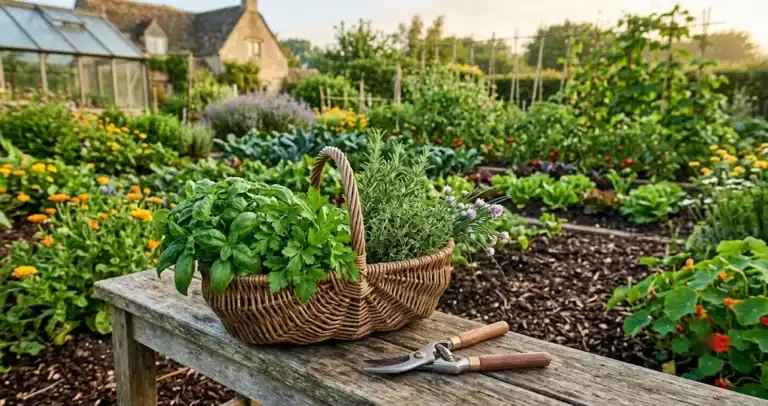
For a home herb garden, you need very little: a small basket or shallow tray to catch the pickings, a pair of snips or kitchen scissors, and a clean surface to spread the flowers on as you pick. Avoid plastic bags. Condensation builds up inside closed containers and turns the flowers brown before you can dry them.
Pick gently, dropping each flower head into your basket rather than tossing or piling them. Spread them on your tray or screen so the petal stays intact. If you are harvesting a large patch, work along the rows in one direction and revisit the same plants every few days. This rolling approach keeps the plant in active flower rather than exhausting it in one pass. For technique that carries across many herbs, not just chamomile, see our broader guide to harvesting herbs.
Drying chamomile after picking
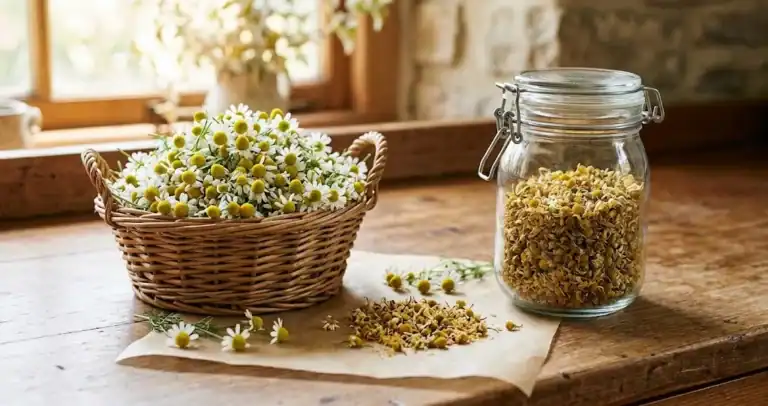
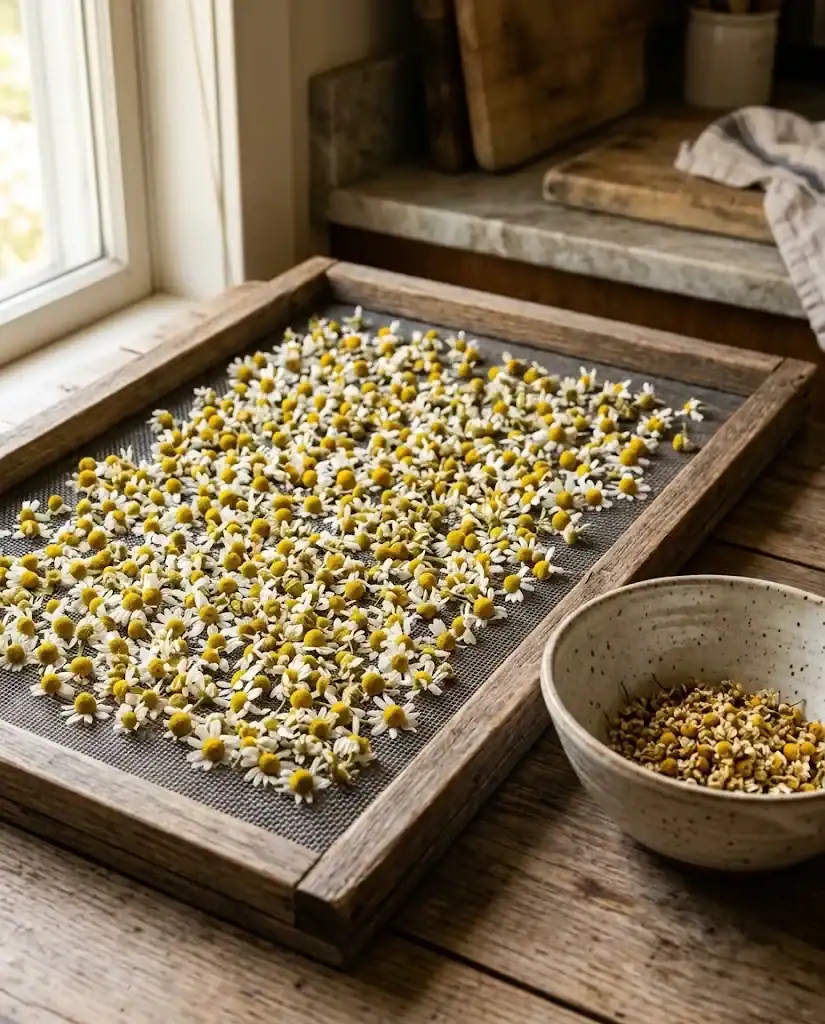
The flowers dry well in a dehydrator set to 95 to 110 degrees F, on a screen in a warm, well-ventilated room out of direct sunlight, or in an oven on the lowest setting with the door propped open. Spread the flowers in a single layer so air circulates around each one. They are completely dry when the petals feel papery and the yellow center is hard rather than spongy, usually two to four days on a screen in a dry room.
To dry in bulk, spread the freshly picked flowers on a mesh drying rack or a dedicated herb drying rack and leave them in a warm, dark corner of the kitchen for several days. Stir or rotate them once a day so air moves around each flower. The flowers are ready when the petals feel brittle and the yellow center snaps cleanly in half rather than bending. At this point the blooms are fully dried and ready to jar. Properly dry flowers should snap, not bend; if a bloom still feels spongy or cool in the center, it needs another day or two on the rack before storage.
Harvest and dry chamomile as soon as the flowers are picked, since the volatile compounds begin to fade within hours of cutting. Waiting even a day or two in an open container can let moisture creep back into the petals and ruin an otherwise good batch. Move quickly from pick to dry storage or to the cup, and dry the flowers in small batches rather than waiting for a giant pile that will take a week to dry evenly. Stored dry enough, it will keep for the year.
Storing dried chamomile
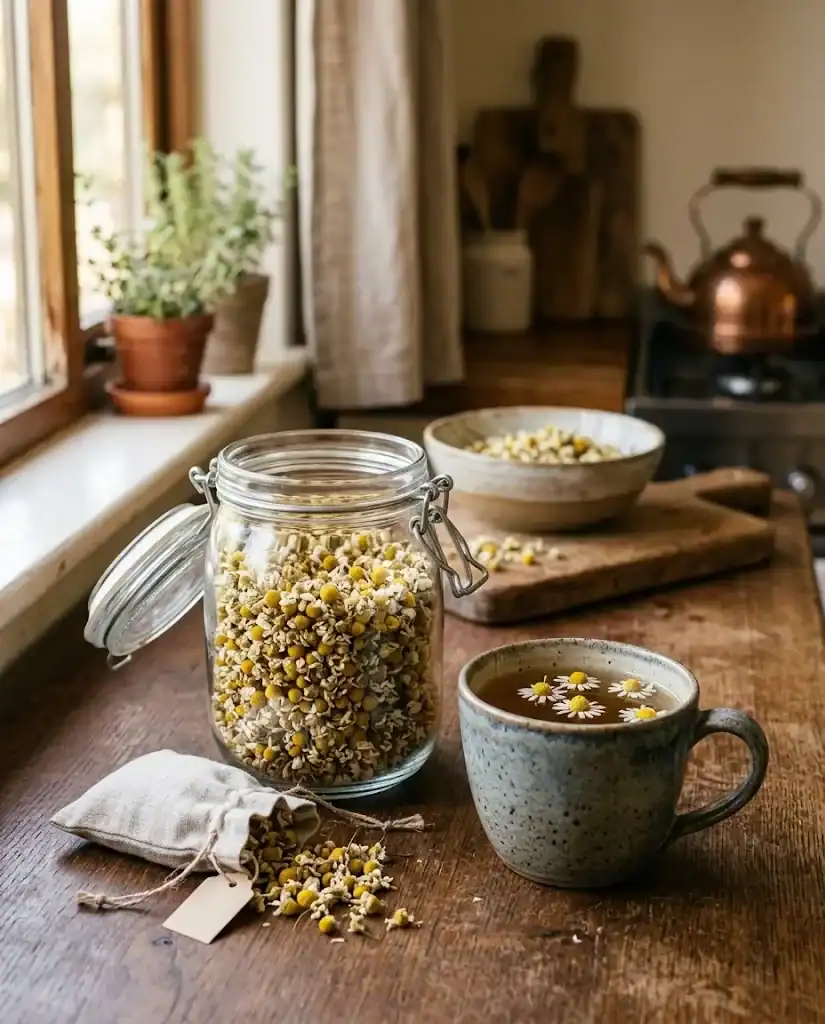
Once it is fully dry, pack it into a sealed jar in a cool, dark cupboard. A glass jar with a tight lid works well, and labeling it with the date helps you remember which batch to use first. Properly dried and stored, the harvest keeps its flavor for about a year, though the aroma fades faster than the calming compounds. Do not store in direct sun or above the stove, where heat breaks down the essential oils that give it flavor and aroma.
If you grow more than you can drink in a season, store dried chamomile in small jars rather than one big one. Every time you open a jar you let in a little moisture and a little light, and small jars keep the rest sealed until you need it. Stored this way, a single picking can carry a home tea drinker through the winter and into the next flush. Dry and store chamomile as soon as the harvest is fully dried, since chamomile after harvest continues to lose aromatic oils if it sits in open air.
Brewing fresh and dried chamomile
Fresh flowers make a gentle, slightly grassy tea. Use two or three fresh blooms per cup, steep for five to seven minutes in water just off the boil, and strain. Dried chamomile flowers are more concentrated, so one teaspoon per cup is enough. Either way, the chamomile for herbal tea is the same plant at different stages, and both will give you the gentle, floral cup the plant is known for. A jar of dried flowers also works as homemade chamomile tea when you are out of fresh flowers.
To make tea, measure the loose flowers into a strainer or directly into the cup, pour hot water just off the boil, and steep covered so the essential oils do not evaporate. Most home drinkers settle on five to seven minutes of steeping. This is one of those forgiving herbs where a longer steep brings more flavor without going bitter. Drink the cup plain, with a slice of lemon, or sweetened with a little honey.
A jar of dried flowers keeps the highest concentration of essential oils when the dried flowers are stored sealed and used within six to nine months. Beyond that, the flavor is still pleasant but quieter. Fresh flowers used the same day of picking make the brightest cup of all; the volatile compounds begin to fade within hours of harvest. Spread the chamomile into small jars as soon as it cools so the cup stays bright through the season.
Starting chamomile in your garden
Chamomile is one of the easiest herbs to start at home, either from seeds or seedlings in spring. You can grow chamomile in your garden in any sunny spot with well-drained soil, in a dedicated herb garden, or in a small corner of a tea garden. The German type is one of the easiest growing herbs and sprouts readily from chamomile seeds scattered over prepared soil and lightly covered; they germinate in a week or two in warm weather. The Roman type is usually planted as small plants or divided from an established patch, since the named varieties do not set viable seed. Growing German chamomile from seed is the cheapest way to start a bed, and success growing chamomile from a packet of seeds is the norm rather than the exception.
Planting chamomile in spring after the last frost gives the plants time to settle in before they start flowering. Pick a spot that gets at least six hours of direct sun, and leave room between plants for airflow; the plants tend to sprawl a little, and good airflow helps prevent mildew later in the season. Once established, the annual type reseeds readily, and volunteer chamomile seedlings often show up the next year along the edges of beds and paths.
Choose a site with at least a square yard of growing space per plant, since the German type can reach two feet across by midsummer. The Roman type needs less growing space and makes a solid ground cover in a year or two. Climate and growing conditions matter less than drainage; the plant will tolerate a range of soils, but it hates wet feet. Slightly sandy or gravelly soil suits it well, and the same conditions that suit thyme or lavender will usually suit it in your garden.
If you are growing it as part of a wider herb garden, plant it near other sun-loving, well-drained-soil herbs like thyme, oregano, and sage. Companion planting with these herbs also makes for easier picking days, since you can cut a basket of mixed herbs in one pass. The same drying rack and sealed jar will work for the lot, which is half the appeal of growing chamomile at home in the first place.
Putting the harvest to use
Once the harvest is dry and stored, the natural next step is a cup of tea. The flavor and aroma are at their peak in the first few months after picking, then gradually fade. If you grow more than you can drink, a small jar of dried flowers makes a thoughtful gift for anyone who enjoys an evening cup. Chamomile recipe ideas are a natural next step once the harvest is safely stored away. Picking the chamomile weekly and spreading the harvest across small jars keeps the cup bright until the next flush.
It also fits naturally into a wider herb garden routine. The same drying screen and storage jar work for mint, lemon balm, and lavender, so the session often kicks off a broader preserving project. If you grow it alongside culinary herbs, the same rolling pick keeps the whole garden productive.
And once dry, keep it in a sealed jar and store it somewhere cool and dark. Properly stored, the harvest stays usable across the off-season and into the next flush.
Frequently asked questions
Can you make chamomile tea with fresh flowers or do they have to be dried?
You can brew chamomile from the fresh-picked flowers. The flavor is slightly greener and the cup is less concentrated than with dried flowers, so use two or three fresh blooms per cup rather than the one teaspoon you would use of dried. The cup is best the day you pick it because the volatile compounds begin to fade within hours.
How long does it take chamomile to dry?
Drying takes two to four days on a screen in a warm, well-ventilated room, or about four to six hours in a dehydrator set to 95 to 110 degrees F. The flowers are ready when the petals feel papery and the yellow center is firm rather than soft. Storing before it is fully dry leads to mold, so test a few flowers by snapping them in half before packing the batch away.
Should you wash chamomile after picking?
Most home gardeners do not need to wash after picking, especially if the plants have been grown without pesticides. A quick visual check for insects or debris is enough. If you do need to rinse, do it quickly under cool water, shake off the excess, and air dry the flowers thoroughly before storing or brewing. Wet flowers turn brown quickly and mold during drying.
How many harvests can you expect from one chamomile plant?
A single plant of the annual type typically produces flowers over six to eight weeks, with the heaviest flush in early to mid-summer. Picking every two or three days during that window can yield several rounds of harvest. The Roman type, as a perennial, returns year after year and produces a steady supply of flowers from late spring through early fall. Either way, the harvest usually tapers as the heat of midsummer arrives, and you can let the last flowers go to seed so a fresh batch of volunteers shows up next year.
What is the best way to store chamomile after picking?
For longer storage, dry the flowers thoroughly and pack them in an airtight container in a cool, dark cupboard. Our guide on storing fresh chamomile walks through the few extra steps that keep the flavor bright across seasons.