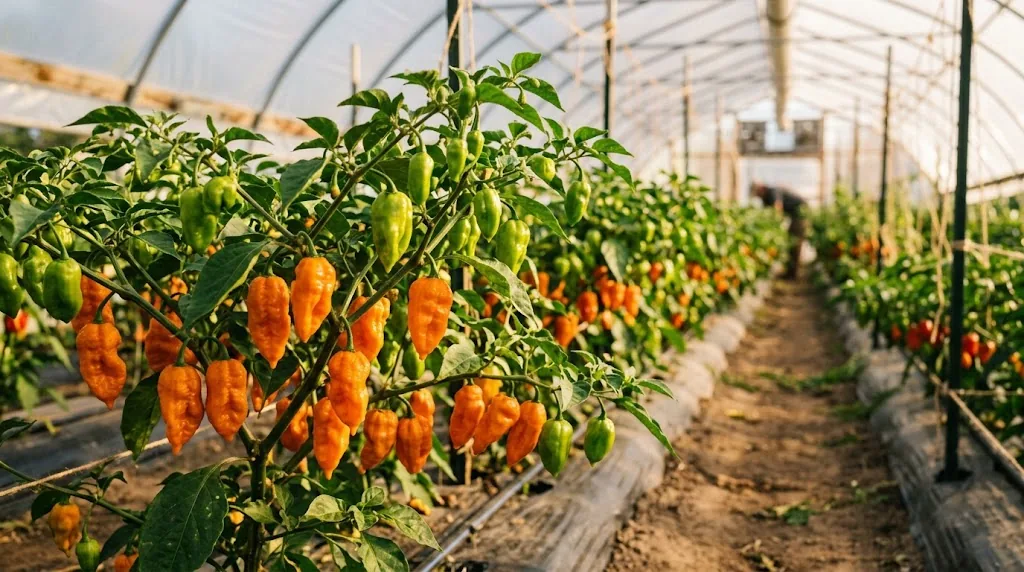
This Cornell-bred Habanada cultivar looks like a small, wrinkled orange chili, but its best-known feature is what it leaves out: the burn. This Capsicum chinense keeps the fruity aroma associated with its hot relatives in a sweet cultivar that can be eaten fresh or cooked generously. Often sold as a “heatless habanero pepper,” it suits cooks who want that family’s fragrance without the fire. If you want the wider family context, start with our guide to the many types of chili peppers.
Habanada cultivar and origin
This named cultivar was bred by Cornell plant breeder Michael Mazourek. It belongs to Capsicum chinense, the same species as the habanero pepper, but breeding selected it for a fruity aroma without the usual fiery bite. Cornell lists it among its specialty, not-hot peppers and says the aroma becomes sweet as the pods ripen. Read about a related Capsicum chinense variety, the Komodo Dragon cultivar, to see how much heat can vary within this species.
The name is a small explanation in itself: “haba-nada” pairs the familiar start of habanero with nada, meaning “nothing” in Spanish, according to the Royal Spanish Academy dictionary. Cornell’s plant-varieties catalog uses the wordplay to describe its lack of fiery heat. It is a named cultivar of Capsicum chinense.
Row 7 Seed Company traces the story to 2001, when Mazourek, then studying at Cornell University, received seed from researchers in New Mexico. The seed carried a naturally low-heat mutation and became the subject of his doctoral research. Years of crossing, selection, and DNA analysis helped Mazourek preserve its aromatic, melon-like character while limiting the burn. His goal was a sweet pepper with that recognizable aroma and no fiery finish.
That selection took repeated tasting as well as work in the field. A Cornell Small Farms account reports that Mazourek evaluated thousands of peppers over thirteen generations before stabilizing a line with the floral aroma he wanted. Chefs later helped showcase it as a variety worth growing for its taste, not just for its unusual lack of heat.
What does it look like?
The vigorous plants carry many pendant, wrinkled pods about 2 to 3 inches long. Each pod starts lime green and matures to bright orange. Row 7 describes the mature fruit as longer and more tapered than a traditional habanero. Confirm the cultivar name on the seed packet, then label the plant so nobody mistakes the sweet pods for a hot variety.
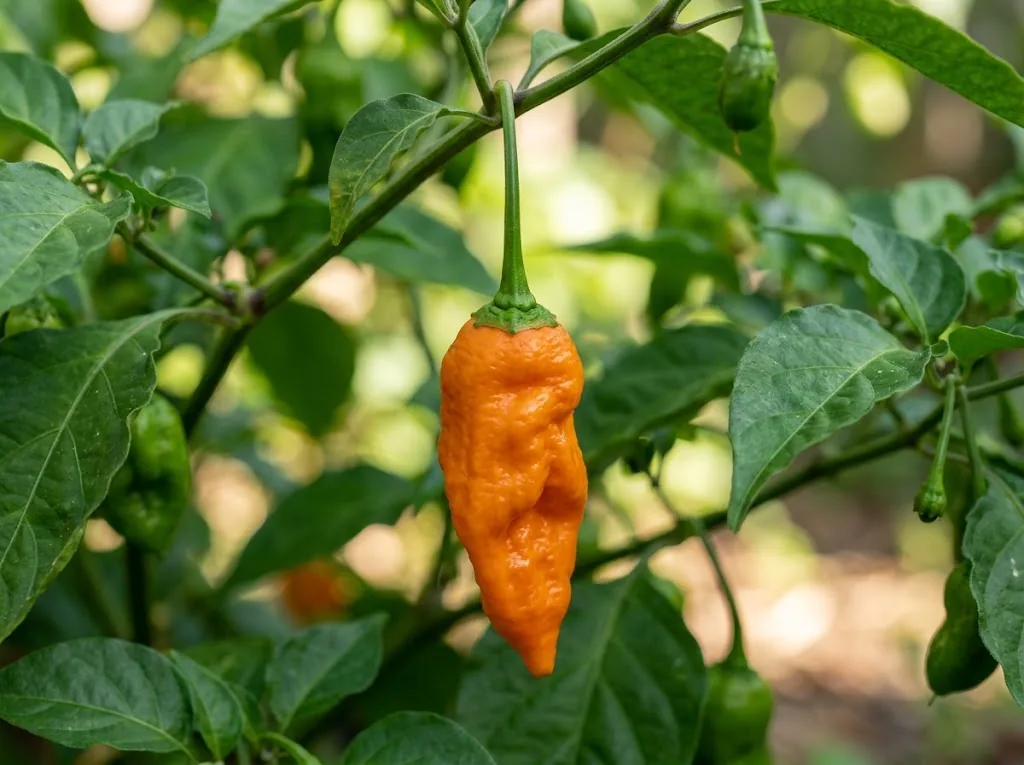
Pick a fully orange pod for peak flavor and the sweetest, most developed taste. Green, unripe pods are edible and still aromatic, but the ripe orange stage is where the cultivar reaches its full flavor potential. Cornell’s variety listing gives about 75 days to green peppers and 100 days to orange ones. Those figures are estimates, not a promise for every garden.
How hot is it?
Catalogs sell this as a no-heat or sweet pepper. Pepper Joe’s lists this cultivar at 0 Scoville heat units (SHU), while Cornell describes the variety as having no spice. Treat the catalog figure as a seller description, not a lab guarantee for every pod.
Gardeners grow it for the floral, fruity aroma, which turns sweeter as the pepper colors. Cornell notes that the white ribs contribute to its taste and recommends enjoying the pod intact. Unlike a hot relative, the point is to use the whole pod instead of trimming away the inner ribs. The flavor is often described as melon-like, but ripeness, weather, and growing conditions all affect taste.
Planting and growing Habanada peppers from seed
Plan for a long, warm season. Cornell lists about 75 days to green peppers and 100 days to orange ones. Row 7 Seed Company lists 70 days for green peppers and 100 days for fully ripe orange pods. These cultivar-specific figures are estimates; growing conditions can shift the actual harvest date, so check the packet’s time-counting convention. In a short-season climate, start indoors early or buy a healthy transplant.
- Sow indoors: Start seeds indoors eight to ten weeks before the planned transplant date, rather than direct sowing outdoors. Use your last frost date to plan the schedule. To sow seeds, use a clean seed-starting mix and a depth of about ¼ inch. Row 7 recommends four seeds per inch in a tray with a heat mat; warm, moist mix and bright overhead light help seedlings get established without becoming leggy. With steady warmth, germination usually begins in about 10 to 15 days.
- Move seedlings and harden off: Shift young plants into larger cells or containers once a set of true leaves forms. Gradually expose them to outdoor light and breezes over a week or more, protecting the seedlings from wind and cold while they adjust.
- Transplant into warm ground: For planting outdoors, wait until frost danger has passed and soil temperature reaches about 70°F. Choose a sunny spot with fertile, well-drained soil. Row 7 suggests about 15 inches between plants in a single row, or 18 to 24 inches in a double row. A large container also works if it drains freely and gives this vigorous crop room to grow.
- Support the branches: Row 7 recommends trellising or other support to make picking easier, improve yield, and help productive branches carry their load. A row cover can protect young plants, but remove it when temperatures climb above 85°F so heat does not build up around flowers. Check leaves for aphids as the plant grows.
- Keep moisture even: Water deeply when the growing medium begins to dry, rather than giving frequent shallow sprinkles. A layer of mulch helps steady moisture. Row 7 recommends fertile soil that drains well, with an optimal pH near 6.5, and little extra fertilizer. Avoid excess nitrogen before flowering, which can delay fruit set; follow a soil test before adding phosphorus.
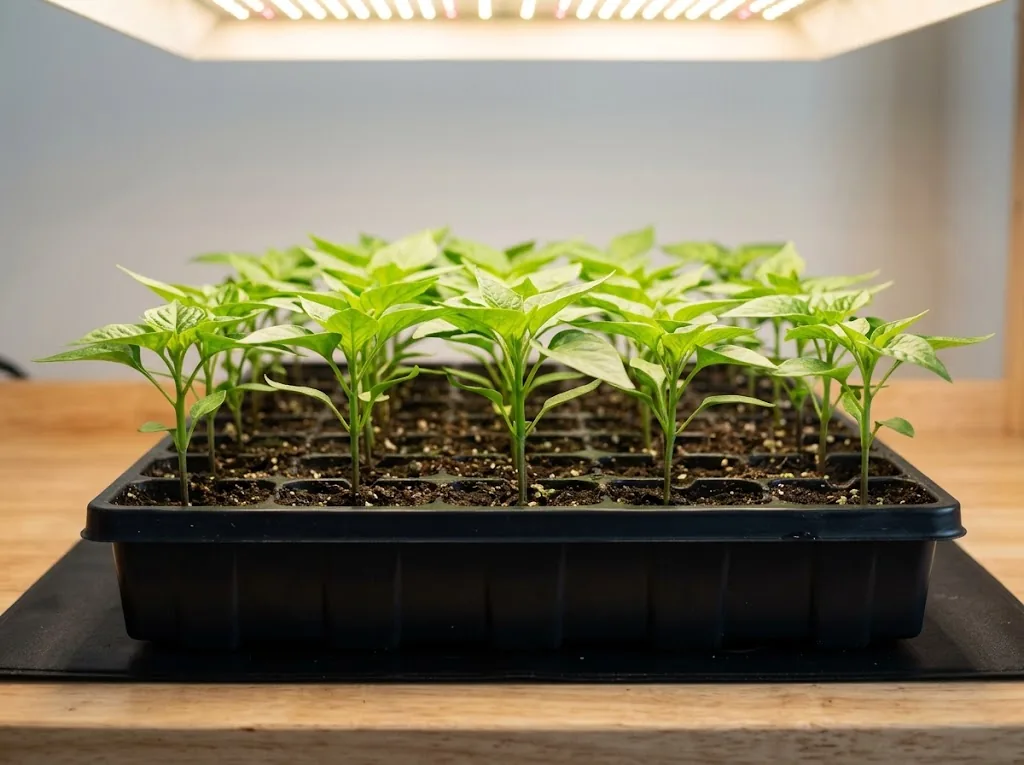
This cultivar can take patience in cooler regions. Cornell notes that it benefits from the extra growing-degree days available in a high tunnel. Very cool nights, drought stress, and high heat can weaken pepper growth and interfere with flower set, so choose a warm, sheltered location and allow the season to run as long as possible. For general planting timing, see the University of Minnesota Extension’s pepper-growing guide.
Can you save seeds from the plants?
Yes, if your seed source lists the cultivar as open-pollinated. Choose a healthy plant, then leave a pod until it is fully colored and beginning to wrinkle. Open it, spread the seeds on a paper towel, and let them dry thoroughly before labeling and storing them in a tightly sealed container in a cool, dark place. Peppers are usually self-pollinating, but another variety of the same species nearby can still cross with them, so saved seed may not grow true to type. If preserving the cultivar’s exact traits matters, isolate the flowers or buy fresh seed from a trusted source. Oregon State Extension explains pepper seed maturity; Penn State Extension covers drying and cross-pollination.
When to harvest and how to pick
You can pick a pod once it reaches full size, but wait for bright orange color for the ripe taste the cultivar is known for. Use clean snips to cut the stem instead of pulling on a branch loaded with peppers.
This variety is bred for sweetness, not capsaicin heat. If you also handle hot varieties, keep their pods and preparation separate, avoid touching your face or eyes during preparation, and wash hands and tools afterward. Poison Control notes that capsaicin can irritate skin and eyes.

How to store and preserve extra peppers
For a short hold, keep whole peppers refrigerated in a produce bag. Row 7 says they can retain flavor and crispness for one to two weeks. Save the best-looking orange ones for fresh eating, salads, salsa, or a snack plate.
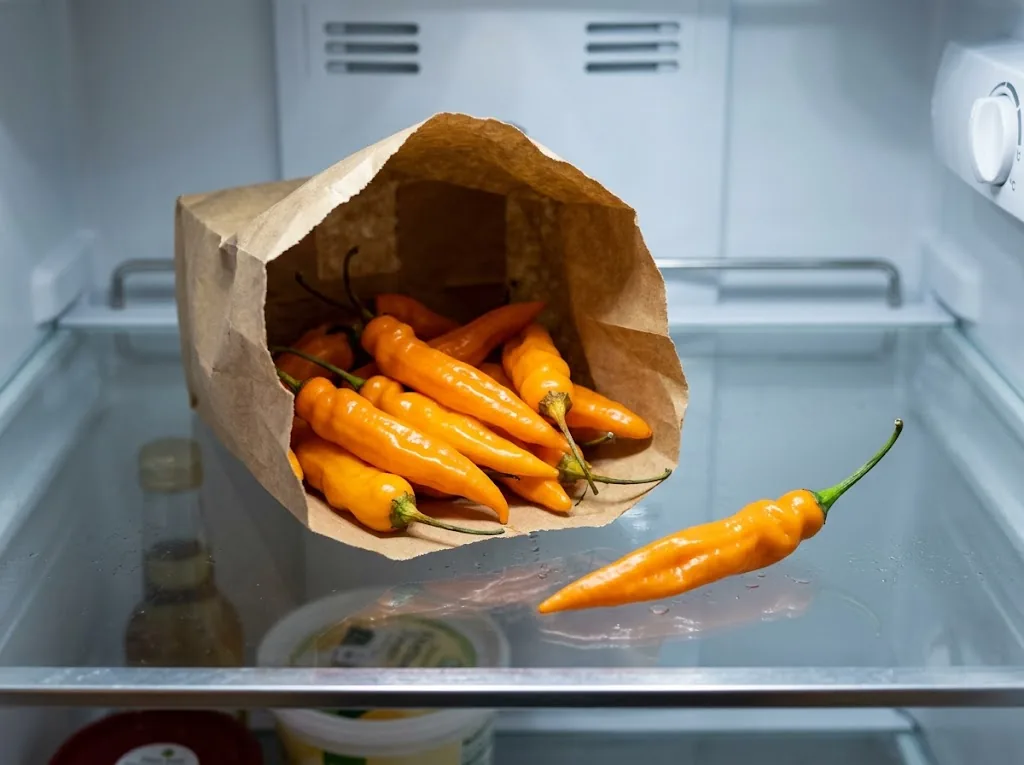
To freeze extras, wash them, remove stems, and package whole or cut peppers in freezer-safe bags or containers. The National Center for Home Food Preservation recommends freezing peppers raw when you want a crisper texture; blanched peppers are better for cooking. You can also dehydrate thin strips and store them once fully cool and crisp in a clean, sealed container in a cool, dark cupboard. For pickling or canning, use a tested pepper recipe; peppers are low-acid, so do not improvise a shelf-stable preserve by changing the vinegar or oil.
If you want a second sweet pepper with a different fruit character, compare this cultivar with the Sugar Rush Peach pepper, which has its own ripe color and flavor profile.
Ways to use the peppers
Use ripe orange peppers anywhere you want a fragrant, non-spicy vegetable. Slice one raw as a snack or into salad and salsa, roast it until the skin blisters, or sauté it with onions and summer vegetables. Its sweetness also works in a quick pan sauce, a mild hot sauce, or a stuffed pepper filling. For pickles or pepper jelly, choose a tested home-canning recipe rather than improvising a shelf-stable preserve. Since the heat is absent, you can use it more generously than a hot pepper and let the aroma carry the dish.
The plant also makes an attractive patio or greenhouse ornamental when orange pods hang among green leaves. Label it clearly if children or guests might confuse it with a spicy pod.
Common questions
Can you eat the peppers raw?
Yes. Wash a pod, remove the stem, and slice it into salads, salsa, or a snack plate. Cornell notes that the sweet seeds and white ribs contribute to its taste, so you do not need to remove them to reduce heat.
Is it the same as its hot namesake?
No. Both are Capsicum chinense, and this cultivar was bred to keep the aroma of its spicy namesake, but it is a named sweet type selected for little to no heat. A true hot variety is different.
Can it grow in a container?
Yes. Peppers can grow in containers when the pot drains well and has room for the plant. See the University of Minnesota Extension’s container-gardening guidance for choosing a suitable setup. Start with a sturdy transplant if your growing season is short, and water consistently as flowers and peppers develop.
Where can you buy Habanada pepper seeds?
Look in current seed catalogs or specialty pepper listings, and confirm that the packet names the cultivar and Capsicum chinense. Sellers may file it under sweet peppers: Baker Creek’s sweet-pepper listing identifies the variety, while Row 7 offers seed packets in several sizes, including a certified organic option. Row 7 says seed sales support public plant-breeding research at Cornell University. Stock changes by season, so check current catalogs before ordering.
Sources: Cornell Cooperative Extension’s variety profile; Cornell’s plant-varieties catalog; Row 7 Seed Company’s growing and seed guide; University of Minnesota Extension on growing peppers; National Center for Home Food Preservation on storing dried foods; its freezing guide; its tested pickled-pepper recipe; its tested-recipe guidance; and the University of Minnesota Extension on container gardening.
