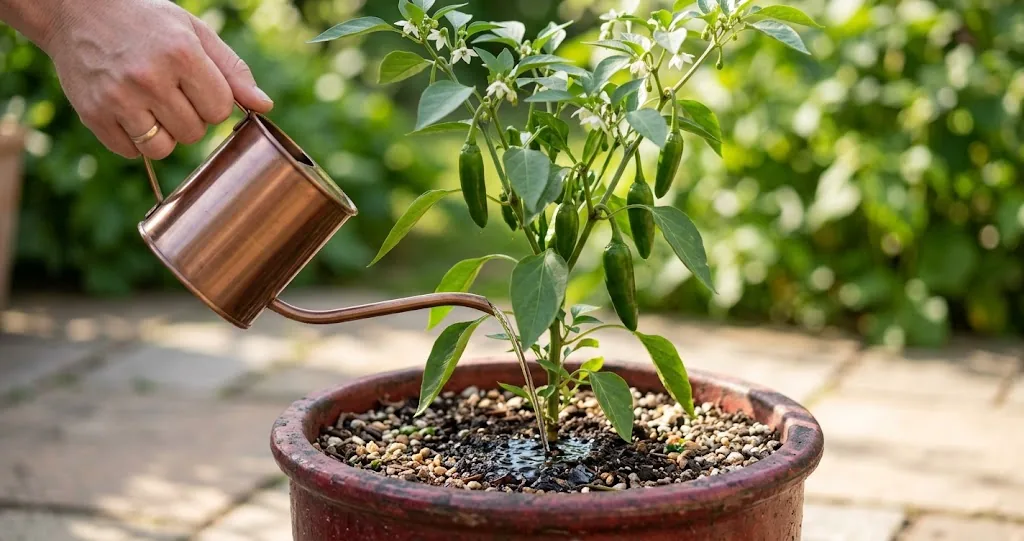
Chili plants survive on a simple rule. Water deeply when the top inch of compost is dry to a fingertip, and let the soil dry back slightly between drinks. Most healthy plants in a bed or a large container need a thorough soak every two to three days in warm weather, every day in a heat wave, and only once a week when the season cools down. The schedule is less important than the check, because climate, container size, the soil, and the stage of growth all change the answer.
Watering mistakes are one of the most common reasons a chili struggles at home. Both extremes cause trouble. Too much water suffocates the soil and invites fungal disease. Too little shuts down flowering and fruit set. The good news is the leaves tell you which way the balance has tipped, once you know how to read the leaves and the soil.
The working rule of thumb
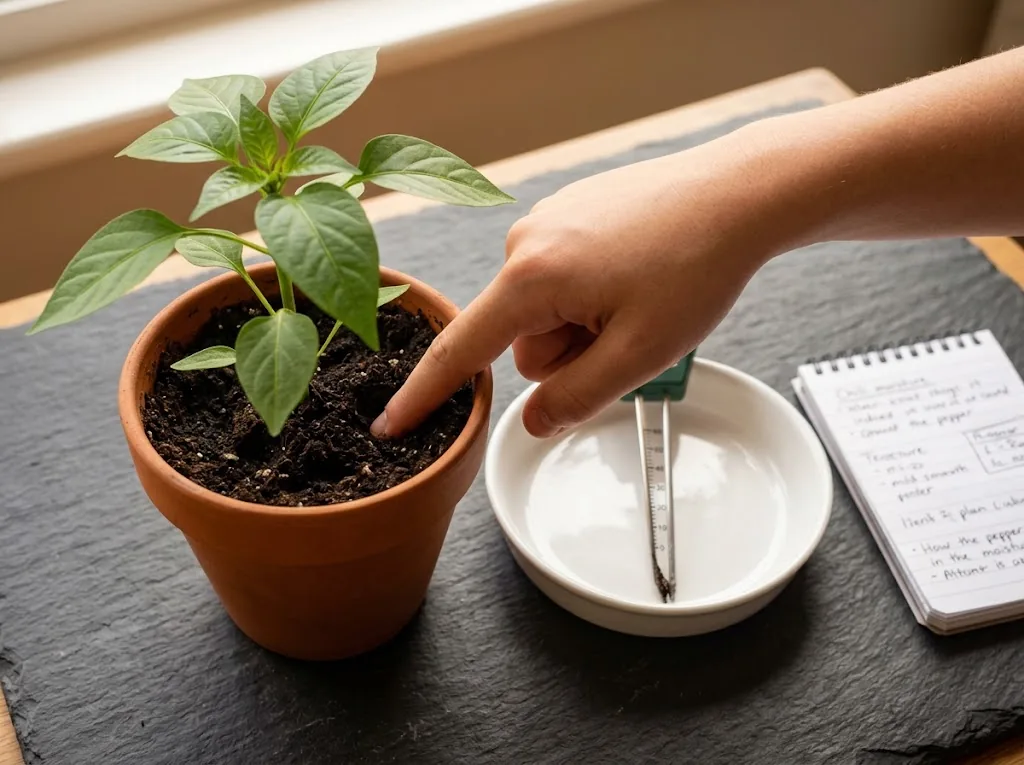
Forget a fixed number of days. Use the finger test instead. Push a clean finger into the compost up to the second knuckle. If it feels dry at that depth, water. If it feels cool and slightly damp, leave it and check again the next day. The test works whether the plant is in a five-gallon container on a balcony, in a raised bed, or in open ground.
When you do water, water deeply. A short sprinkle that wets the surface leaves the deeper soil dry, which trains the roots to grow up toward the moisture and leaves them more vulnerable to a hot afternoon. A slow soak until excess runs out of the drainage holes pulls moisture all the way through the soil and encourages roots to grow down, where it stays evenly moist.
Aim to wet the entire root ball, then let the top inch or two dry before the next watering. In practice, this means a deep drink every two to three days for a plant in a large container during the growing season, a similar cadence in a bed during warm dry spells, and longer gaps during cool or rainy stretches.
Watering by growth stage
The age of the plant changes how much water it pulls through the leaves and how forgiving it is when the compost goes a bit dry.
Seedlings and young plants. Small plants in small containers have small root systems and dry out fast. A two-week-old seedling in a four-inch container may need watering every day in warm indoor conditions, sometimes twice on a sunny windowsill. Keep the compost consistently moist, never soggy. Bottom watering works well at this stage: stand the container in a shallow dish of room temperature water for ten or fifteen minutes, then lift it out and let the excess drain.
Established leafy growth. Once the plant has filled its final container or its roots have spread in the bed, the watering rhythm slows. The plant uses more water overall, but the larger reservoir dries more slowly. Two to three deep waterings a week is a reasonable starting point during the warm season, with the finger test as the final say.
Flowering and fruiting. This is the stage where consistent moisture pays the most. Irregular watering during flowering causes blossoms to drop and small fruit to fall. A long dry stretch followed by a heavy soak can split ripening pods. Keep the compost evenly moist through this period. If the plant wilts in the afternoon sun but perks up by morning, the roots cannot keep up with the day’s demand. A thicker mulch and an extra deep soak in the morning usually solve it.
Container vs garden bed
Containers dry faster than beds because the volume of growing mix is small and the sides are exposed to air. A plant in a terracotta container on a sunny patio can dry out twice as fast as the same one in a glazed ceramic pot in the same spot, and both will dry faster than one in open ground. Plastic and glazed ones hold moisture longer; terracotta breathes and dries faster, which is great for roots prone to rot but punishing in a heat wave.
Drainage matters as much as the watering itself. A container without drainage holes traps water at the bottom and rots the roots, no matter how carefully you measure the drink. For the right size, potting mix and the difference drainage makes, the guide to container setup and drainage walks through all three and how to tell if drainage is actually working.
In a raised bed or open ground, water less often but more deeply. Soak the bed until the top six to eight inches are moist, then let the surface dry before the next round. A bed with heavy clay holds water longer than a sandy bed, so adjust the rhythm to the earth, not to the calendar.
Time of day and watering technique
Early morning is the easiest time to water. The plant drinks through the day, the leaves dry quickly if any splashes up, and the water has time to soak in before the heat of the afternoon. Evening watering is fine in warm climates, but in humid regions it leaves the foliage wet overnight and gives fungal diseases a head start.
Water the soil, not the leaves. Wetting the foliage wastes water through evaporation and encourages leaf spot, powdery mildew, and other fungal problems that thrive on damp leaves in still air. A watering can with a long spout, a drip line on a timer, or a soaker hose laid along the root zone all deliver water where it does the most good.
Bottom watering is the most reliable method for seedlings and small plants. Top watering is fine for established plants in containers and beds, as long as the water soaks in rather than running off the surface. If the surface has crusted, break it up gently before watering so the moisture can penetrate rather than run off the sides.
Climate and seasonal adjustments
Temperature, humidity, wind, and rainfall all change the answer. A plant in a humid coastal garden uses less water than the same variety in a dry inland plot, because the leaves lose less moisture to the air. A windy balcony dries containers fast. A heavy summer rain may skip the next watering entirely.
During a heat wave, water in the early morning and check the containers again in late afternoon. Large containers can dry out in a single hot day, and a plant that wilts at noon and does not recover by evening needs a second watering. Move containers into afternoon shade if a heat wave stretches past two or three days, especially for the smaller fruiting varieties, which cook faster than big leafy plants.
In cool weather the plant slows down, the compost stays wet longer, and overwatering becomes a real risk. Cut back the frequency and rely on the finger test. A chilli plant in a cold frame in early spring may only need water once a week, and a dormant one kept indoors over winter needs even less, sometimes a sip every ten days to keep the compost from going completely dry.
Mulch and water efficiency
A two to three inch layer of organic mulch around the base of the plant cuts water loss through evaporation, smooths out the swings between waterings, and keeps the temperature even. Straw, chopped leaves, grass clippings (used sparingly so they do not mat), and compost all work. Pull the mulch back an inch from the stem so it does not stay damp against the collar, where rot can start.
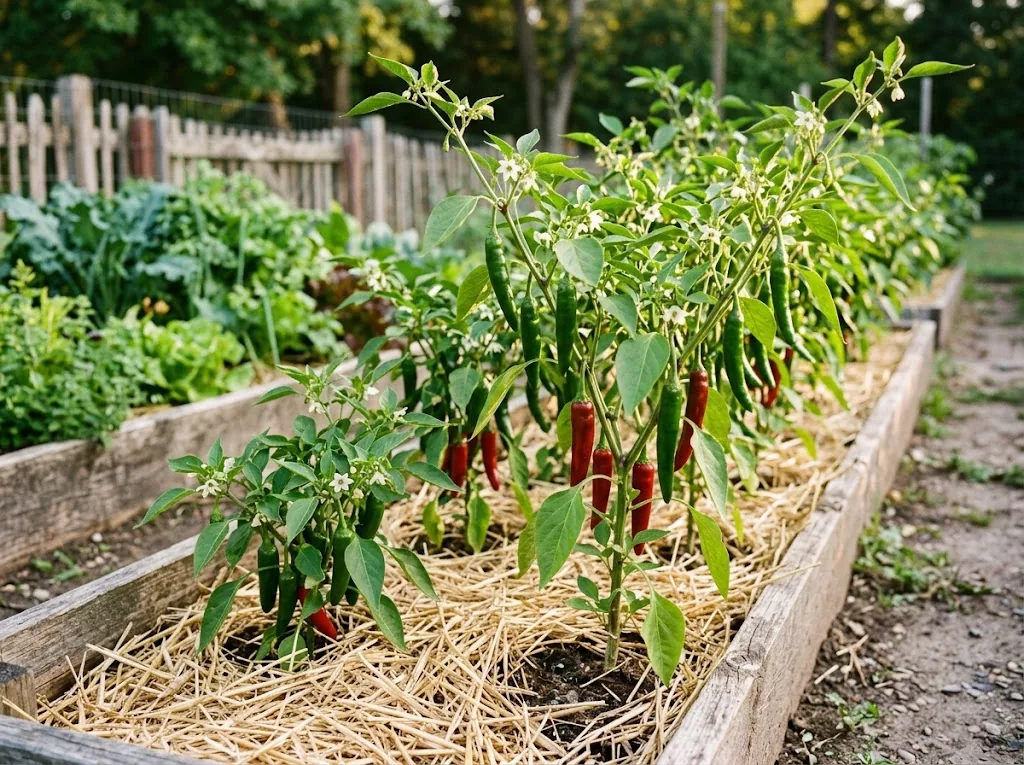
Mulch is not optional in hot, dry climates. A bare surface in full sun can lose most of a morning watering to evaporation by the afternoon. A mulched bed holds that moisture through the day, which means less work and a steadier supply overall.
Signs of overwatering
The most common signs are misleading, because they look like the plant needs more water.
- Yellow leaves, starting from the bottom. Waterlogged roots cannot pull nutrients up, so the plant moves nitrogen out of the oldest leaves first.
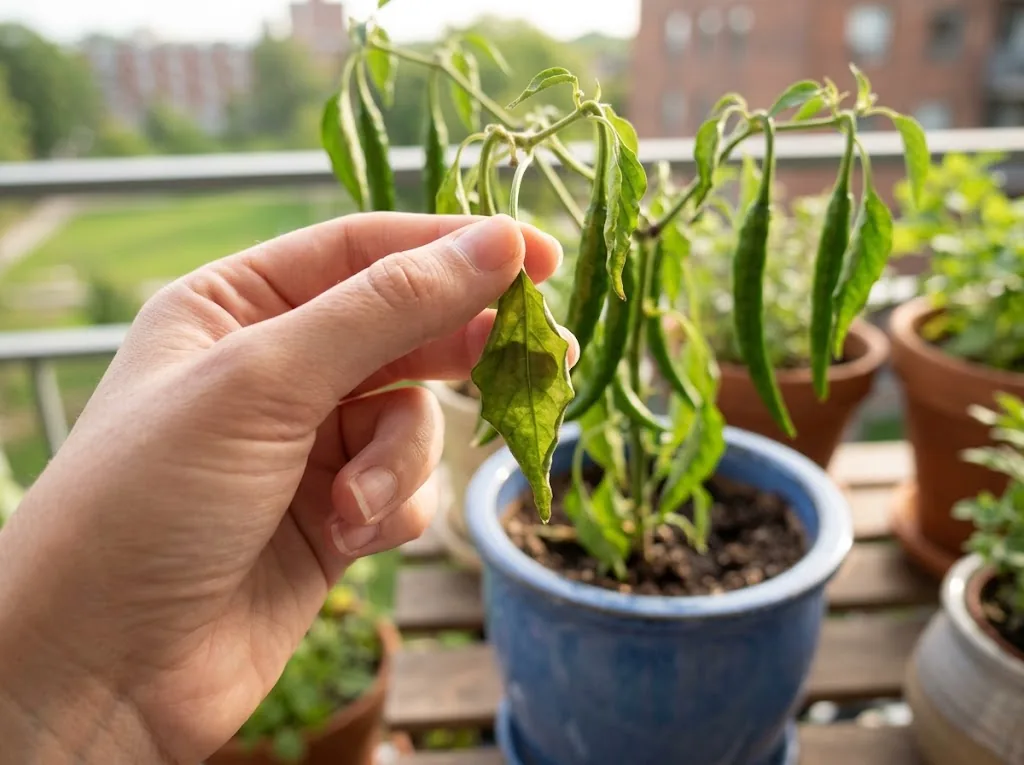
- Wilting with wet potting mix. If the plant droops but the mix is damp, the roots are suffocating. Watering more makes it worse.
- A sour or stagnant smell from the potting mix. The compost has gone anaerobic and is starting to rot.
- Soft brown roots instead of firm white ones. Lift the plant gently and check.
- Green algae or fungus on the surface. A sign that the surface stays wet for too long.
- Leaf drop without a dry spell. Sudden shedding of healthy-looking leaves often traces back to soggy roots.
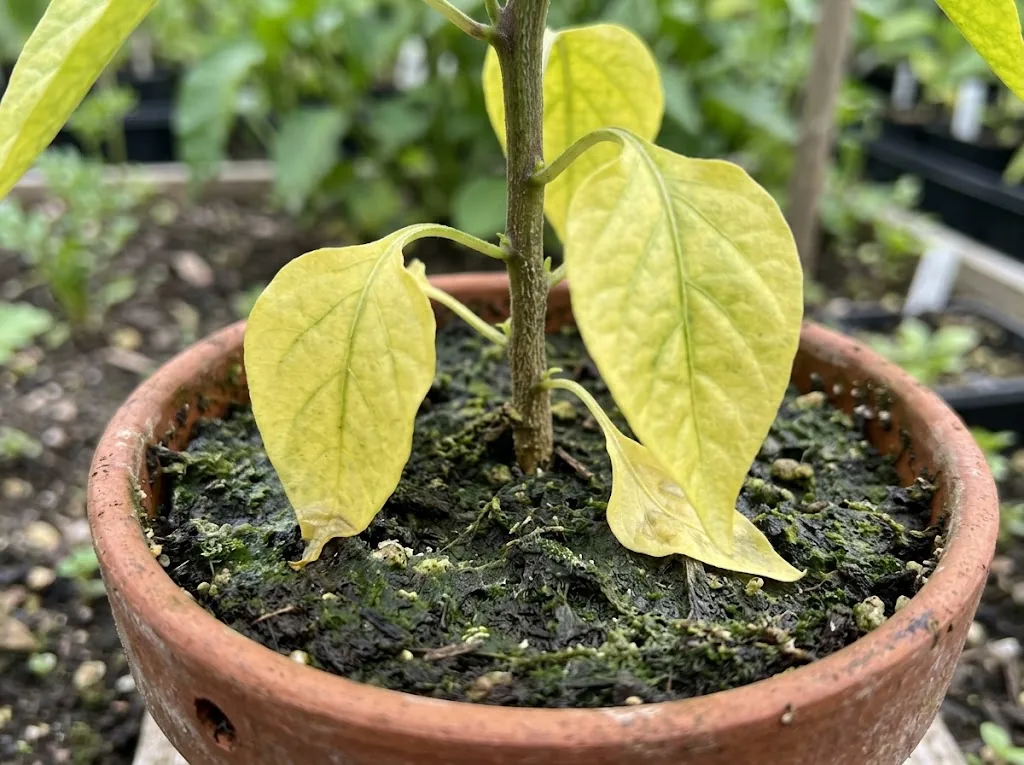
Recovery starts with stopping the watering and letting the potting mix dry back. Tip the container on its side for an hour or two to drain any standing water at the bottom. If the roots are brown and mushy, trim them back to firm white tissue, repot into fresh dry compost, and hold off on watering for a few days. Going forward, water only when the finger test says the compost is dry.
Signs of underwatering
The plant is more honest about being too dry than about being too wet.
- Wilting that recovers by morning. The plant cannot keep up with the day’s demand but recovers overnight.
- Leaves that droop and stay down, even in cool weather.
- Crispy leaf edges and a papery feel.
- Flowers falling without setting fruit. The plant is shutting down reproduction to save water.
- Small, leathery pods that ripen unevenly.
- Compost pulling away from the sides of the container. The mix has shrunk and the water is running straight down the gap without soaking in.
If the compost has pulled away from the container, soak the whole container in a bucket of room temperature water until bubbles stop rising, then let it drain. After that, return to a regular watering rhythm based on the finger test, and consider a thicker mulch to slow the next dry cycle.
Does less water make chilies hotter?
The short answer is yes, mildly, when the stress is mild and well-timed. A slight reduction in water as the fruit ripens pushes the plant to concentrate its capsaicin production, and many growers report a measurable bump in heat under controlled stress. Heavy, prolonged drought damages the plant, drops the yield, and produces smaller pods with no real gain in heat. The interesting question is what counts as useful stress versus damage, and that is where the evidence is more mixed than the internet makes it sound. For the full breakdown of what the research actually shows on stress, drought, and capsaicin in chili pods, the guide to stressing plants for more heat walks through the studies and the practical limits.
A simple weekly rhythm
For most home growers, a workable rhythm during the warm growing season looks like this.
- Check the top inch every morning. Finger test it in two or three spots around the plant.
- Water deeply on the days the test says to. Aim for a slow soak that wets everything down to the drainage holes, not a quick sprinkle.
- Skip the next watering if the forecast calls for a long steady rain.
- Mulch. Two to three inches of organic mulch, pulled back from the stem.
- Recheck after a heat wave or a stretch of cool wet weather. The rhythm changes fast when the weather does.
- Hold back slightly as the first pods ripen. A modest reduction in water for the last two to three weeks of ripening concentrates the flavor and can lift the heat.
Where to go next
Watering is one piece of a much larger puzzle. Light, potting mix, feeding, container size, and pruning all shape how a plant drinks and how much fruit it carries through the season. For the full season walkthrough from seed to harvest, the guide to growing peppers from seed to harvest covers the broader framework and the related paths through the year.
