Oregano is one of the most versatile kitchen plants in home cooking. While many cooks associate it strictly with pizza sauce, exploring dedicated oregano recipes reveals how this aromatic herb elevates roasted meats, vegetable medleys, dressings, and savory spreads. With its warm, peppery bite and pungent herbal aroma, cooking with oregano brings rich Mediterranean depth to everyday weeknight dinners and weekend feasts alike.
Understanding the culinary difference between fresh and dried leaves is the key to unlocking the best flavor in your kitchen. Exploring varied oregano herb uses allows you to match the right form of the seasoning to the cooking method, whether you are searing poultry in a hot skillet or building a slow simmer sauce.
How to Use Fresh and Dried Oregano in Cooking
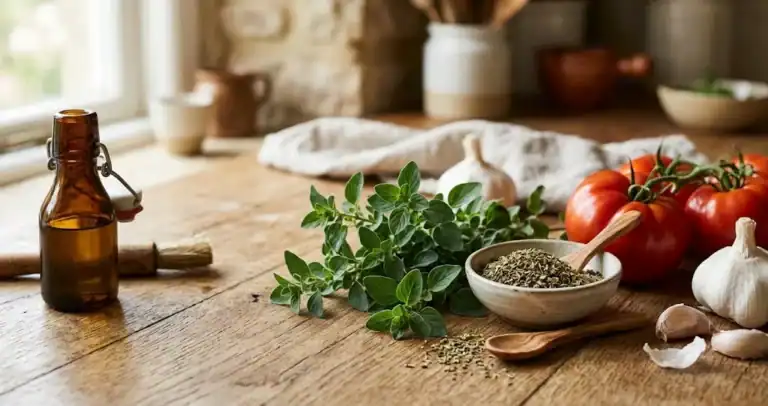
Fresh and dried seasonings behave differently under heat. Fresh herb leaves contain delicate essential oils that provide a bright, slightly sweet, and pungent punch. In contrast, dried oregano delivers an earthy, concentrated depth that stands up well to long baking times and simmering tomato sauces.
- When to use fresh oregano: Add freshly chopped leaves near the end of cooking, or use them raw in pestos, vinaigrettes, compound butter, and table garnishes.
- When to choose dried seasonings: Add dried leaves early in slow-cooked stews, dry rubs, and roasted vegetable seasonings so the heat blooms their concentrated oils.
- Substitution ratio: Because drying concentrates the flavor, use one teaspoon of dried oregano for every one tablespoon of fresh leaves called for in a recipe.
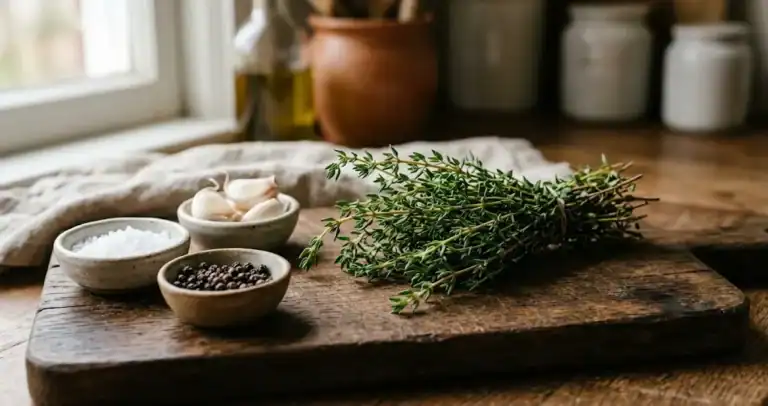
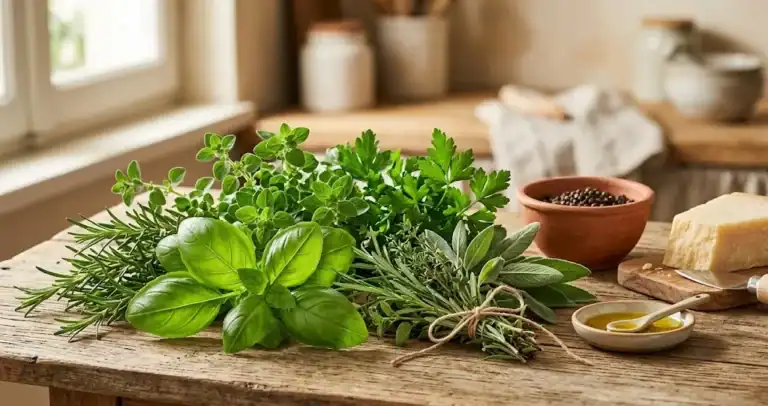
When selecting your simple ingredients, explore how oregano pairs with the wider family of kitchen herbs such as fresh thyme, rosemary, tender greens, and fresh basil to create balanced seasoning blends.
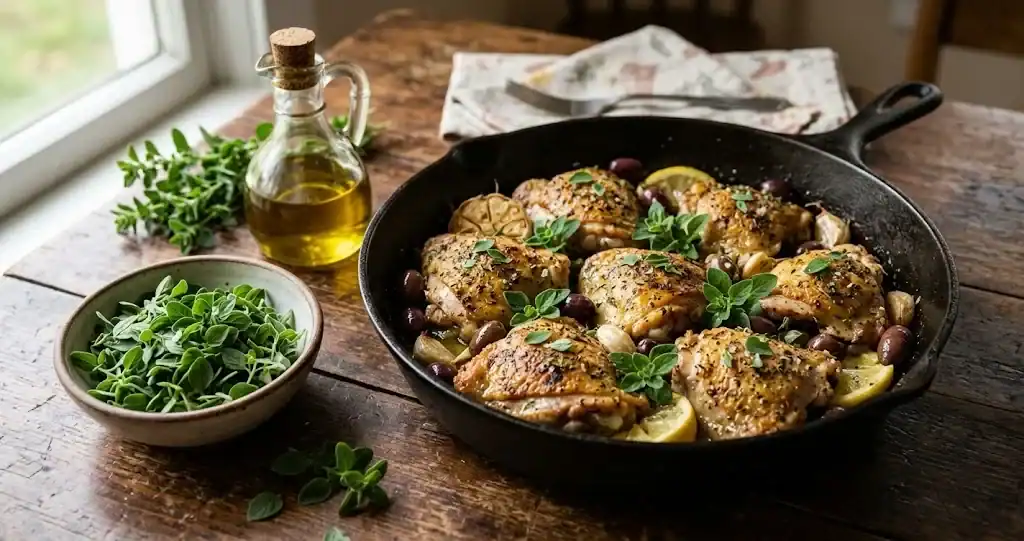
Classic One-Pot Greek Lemon Oregano Chicken
This classic oregano chicken dish is a vibrant, one-pot dinner that delivers tender meat, crispy skin, and a bright pan sauce. Cooking everything in a single heavy cast iron skillet locks in moisture and creates caramelized pan drippings.
Ingredients for Greek Skillet Chicken
- 2 pounds bone-in, skin-on chicken thighs (or boneless chicken breasts)
- 3 tablespoons extra virgin olive oil
- 4 aromatic cloves of fresh garlic, minced
- 2 tablespoons freshly chopped oregano leaves
- 1 lemon, juiced (about 3 tablespoons lemon juice) plus 1 lemon cut into wedges
- 1 teaspoon lemon zest
- 1 teaspoon smoked paprika
- 1/2 cup pitted kalamatas (Greek olives)
- 1/2 teaspoon coarse salt and pepper
Step-by-Step Cooking Instructions
- Prepare the marinade: In a medium bowl, whisk together the golden pressed oil, lemon juice, lemon zest, minced allium, chopped seasoning, paprika, salt and pepper.
- Marinate the chicken: Coat the chicken thighs thoroughly in the marinade. Let the meat rest at room temperature for 20 minutes, or refrigerate in a covered dish for up to 4 hours.
- Sear the skin: Heat a large skillet over medium-high heat with a splash of oil. Place the poultry skin-side down and sear for 5 to 6 minutes until deeply golden and crisp.
- Bake and simmer: Flip the meat. Scatter the kalamata olives, lemon wedges, and the whole cloves around the chicken. Transfer the one pot vessel to an oven preheated to 400 degrees Fahrenheit (204 degrees Celsius).
- Roast to temperature: Roast for 20 to 25 minutes until the internal temperature reaches 165 degrees Fahrenheit (74 degrees Celsius). Garnish with a fresh oregano sprig and serve with warm crusty bread to soak up the flavorful pan juices.

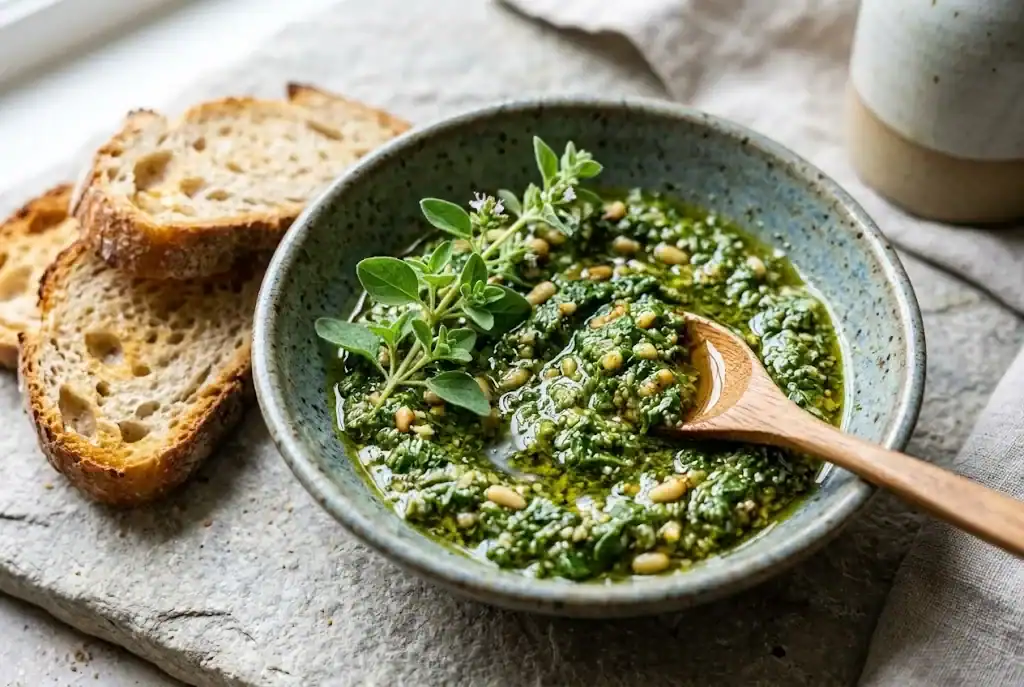
Vibrant Fresh Oregano Pesto with Toasted Pine Nuts
While traditional pesto is a summer staple, making a rustic oregano pesto offers a bolder, pleasantly peppery condiment. Because pure oregano can be intense, balancing fresh oregano leaves with flat-leaf parsley creates a smooth, rounded green sauce.
Ingredients for Rustic Oregano Pesto
- 1 cup packed green oregano leaves (stems removed)
- 1 cup fresh flat-leaf parsley leaves
- 1/3 cup toasted pine nuts or walnuts
- 2 cloves, peeled
- 1/2 cup finely grated Parmesan or Pecorino Romano cheese
- 1/2 cup high-quality extra virgin olive oil
- 1 tablespoon fresh lemon juice
- Pinch of fine sea salt and pepper
Preparation Method
Place the gathered leaves, tender greens, peeled alliums, toasted nuts, and a pinch of salt into a food processor. Pulse several times until coarsely chopped. With the motor running on low, slowly stream in the golden oil until a textured paste forms. Transfer the pesto to a small ceramic bowl, stir in the grated cheese and lemon juice, and taste for seasoning. Spoon this zesty sauce over grilled chicken, roasted fish, boiled baby potatoes, or warm pasta.
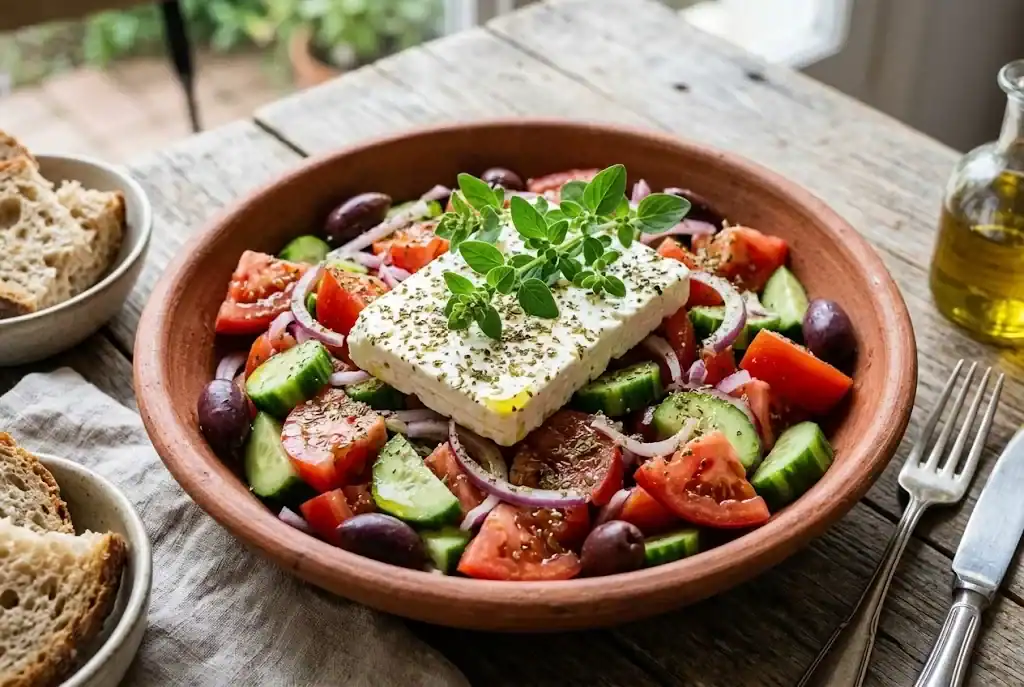
Authentic Greek Salad with Feta and Dried Seasoning
An authentic greek salad does not use leafy lettuce filler. Instead, it relies on crisp garden vegetables, brined kalamata olives, creamy feta cheese, and a generous dusting of dried seasonings to create a refreshing, summery bowl.
- Vegetable base: Combine 4 ripe vine tomatoes cut into wedges, 1 English cucumber sliced into thick half-moons, and 1/2 thinly sliced red onion in a wide salad bowl.
- Savory additions: Toss in the brined fruit. Top the vegetables with a thick single slab of authentic Greek feta.
- Dressing: Drizzle generously with 2 tablespoons extra virgin oil and 1 tablespoon red wine vinegar.
- The herbal finish: Crush 1 teaspoon of dried oregano between your palms directly over the feta cheese and vegetables. The friction releases the aromatic oils, infusing the entire salad with classic Mediterranean cuisine flavor.
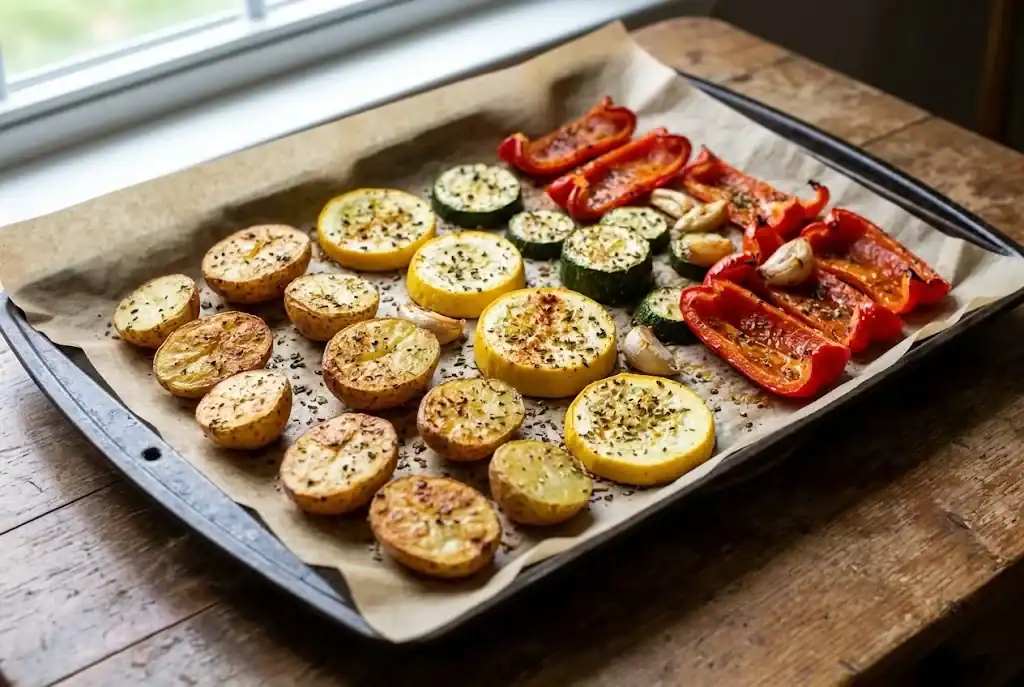
Sheet Pan Roasted Vegetables with Savory Herb Seasoning
Roasting vegetables at high heat caramelizes their natural sugars, while smoked paprika, savory spices, and dried herbs provide delightful contrast. This simple side dish works alongside roasted meats or as a wholesome vegetarian main course.
Cut baby red potatoes, zucchini, and sweet bell peppers into bite-sized chunks. Toss the vegetables on a baking sheet with 2 tablespoons cooking oil, 4 crushed garlic cloves, 1 tablespoon dried oregano, 1/2 teaspoon paprika, salt and pepper. Spread the mixture in a single layer and roast at 425 degrees Fahrenheit (218 degrees Celsius) for 30 minutes, tossing halfway through, until the edges are nicely browned and crisp.
Savory Herb Compound Melted Butter
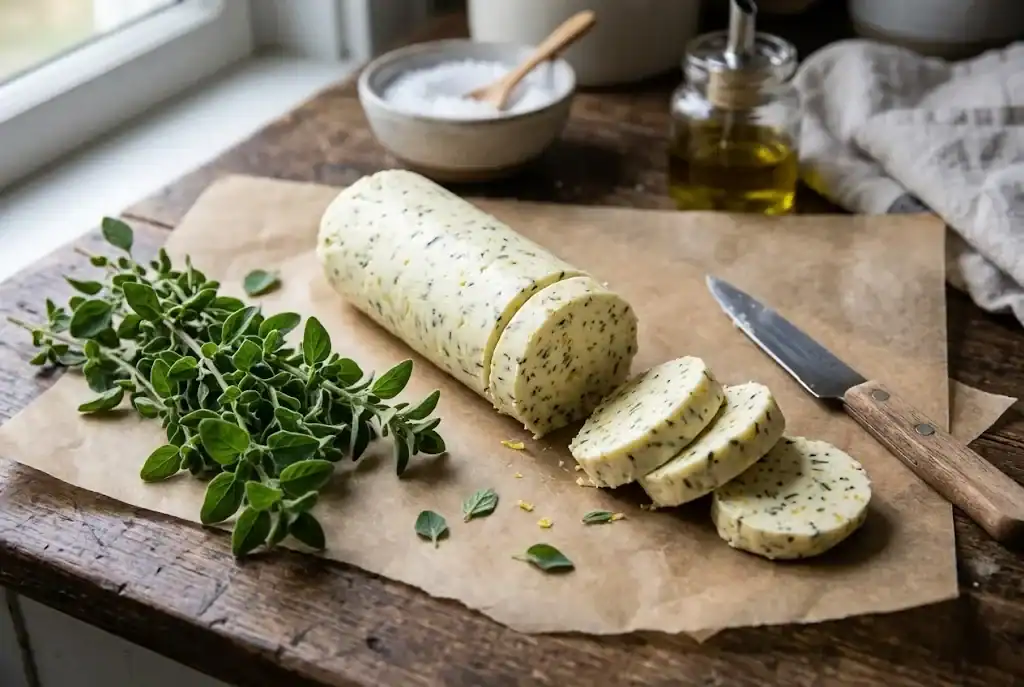
Compound butter is an effortless way to preserve and concentrate garden flavor. Soften 1/2 cup unsalted butter at room temperature. Finely snip 2 tablespoons of fragrant oregano leaves and combine with 1 minced garlic clove, 1/2 teaspoon lemon zest, and a pinch of sea salt. Roll the butter in parchment paper into a log and chill until firm. Slice a round of cold butter over grilled steak, steamed vegetables, or warm dinner rolls, letting the melted butter release its fragrant herbal oils.
How to Store Oregano and Select Fresh Bunches
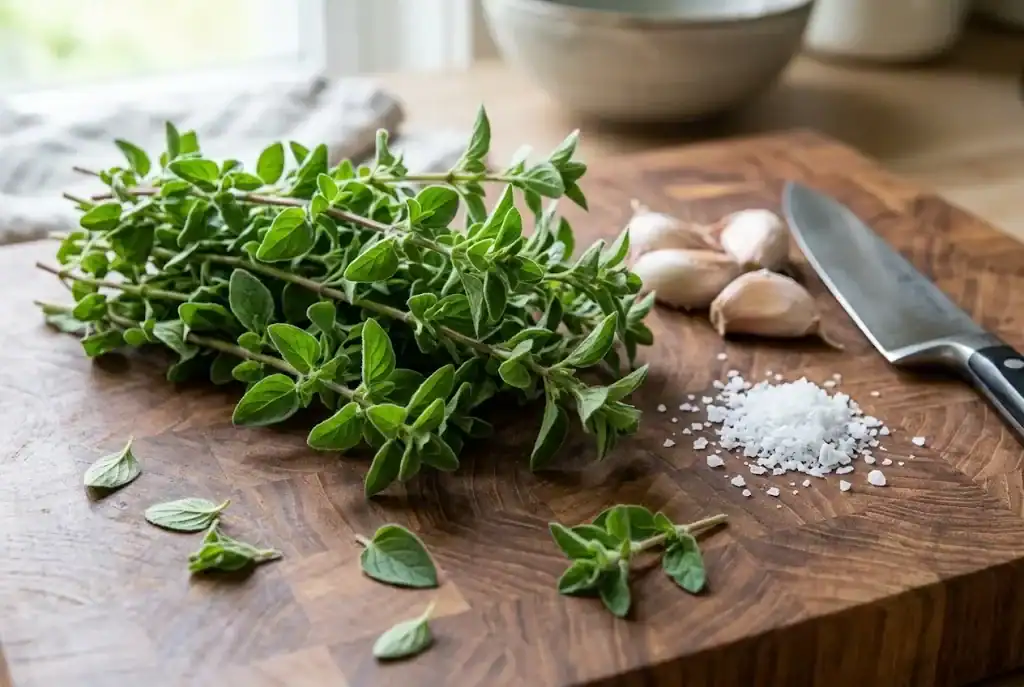
To get the most vibrant flavor from your recipes ideas, choose bright green sprigs with firm, unblemished leaves. When you pluck foliage from woody stems, hold the stem at the top tip with one hand and slide your fingers downward to strip the leaves quickly.
If you harvest a large bundle from your garden or purchase a fresh bunch, learn how to store oregano properly in the refrigerator or by hanging bundles to dry for long-term pantry storage.
Frequently Asked Questions About Oregano Recipes
Can I substitute fresh oregano for dried herbs in recipes?
Yes. As a standard rule of thumb, use three times as much fresh herb as dried seasoning, since drying concentrates the aromatic oils. For one teaspoon of dried seasoning, use one tablespoon of finely chopped garden oregano leaves.
How do I tame the strong flavor of fresh oregano?
Fresh oregano can be quite pungent. To mellow its intensity in raw preparations like pestos or dressings, blanch the leaves in boiling water for five seconds and plunge them into an ice bath, or combine fresh oregano with milder favorite herbs such as tender chervil, mint, or marjoram.
What foods and ingredients pair best with oregano?
Oregano pairs exceptionally well with alliums, lemon, tomatoes, feta cheese, chicken, lamb, roasted potatoes, eggplant, and other favorite herbs like thyme, rosemary, and basil.
Is oregano oil the same as culinary oregano extract?
No. Concentrated essential oregano oil is an extract meant for aromatherapy or specialized supplement use and must never be used interchangeably with culinary cooking oils or fresh herb seasoning in food recipes. Checking nutritional information and ingredient labels ensures you use food-grade culinary products safely.