Oregano can do more than make tomato sauce taste familiar. Its warm, peppery flavor works in slow-cooked dishes, quick dressings, roasted vegetables, and fresh finishing sauces. The useful distinction is simple: add oregano early so it can bloom in heat, and add fresh oregano later when you want a brighter, greener flavor.
Most oregano herb uses are culinary. That is also the form with the clearest everyday safety record. Oregano oil, extracts, and concentrated supplements are different products, so they deserve more care than a pinch of dried leaves in dinner.
What is oregano?
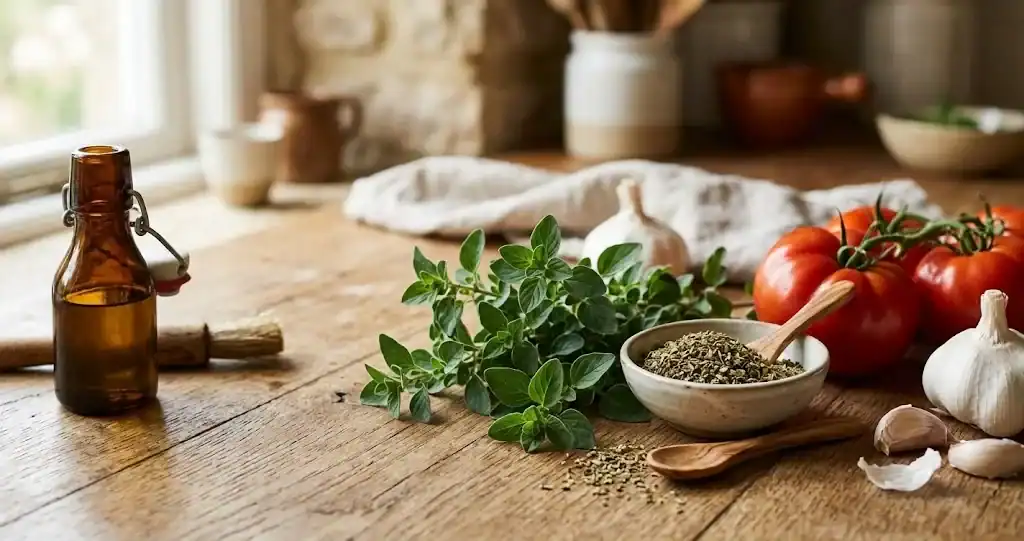
Oregano is an aromatic herb in the mint family. The name commonly refers to Origanum vulgare, although Greek oregano and Mexican oregano are not identical plants and do not taste exactly alike. Mediterranean oregano has a savory, slightly bitter, peppery profile that stands up well to garlic, olive oil, tomato, beans, cheese, eggs, and grilled foods.
Fresh leaves are softer and more floral than oregano. Dried leaves taste more concentrated, which is why a recipe usually needs less of them. As a starting point, use about one teaspoon oregano for each tablespoon fresh, then adjust after tasting.
Everyday oregano plant uses in the kitchen
Season tomato dishes, beans, and soups
Add oregano when onions, garlic, or spices first meet warm oil, then let it cook in sauce, soup, chili, or beans. Heat helps the plant release its flavor. Start with one-half to one teaspoon for a pot that serves four, because oregano can become bitter when it is overdone.
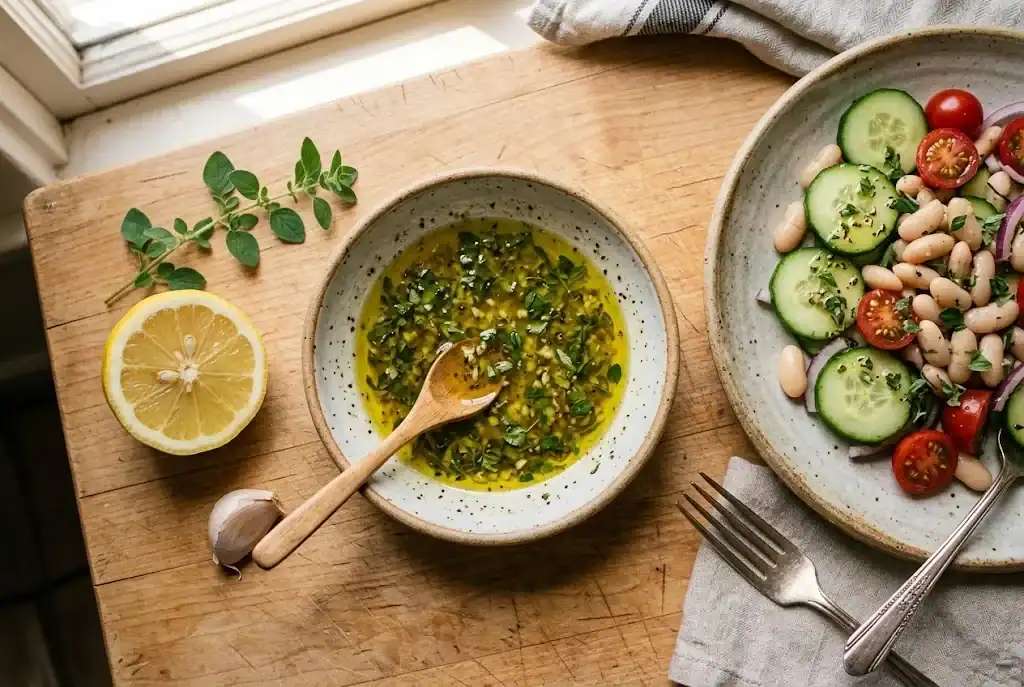
Make a simple oregano vinaigrette
Whisk two tablespoons olive oil with one tablespoon lemon juice or red wine vinegar, a small grated garlic clove, salt, pepper, and one-half teaspoon oregano. Use it on cucumber salad, white beans, grilled zucchini, or chicken. Fresh leaves work well here too, especially when chopped just before serving.
Use it in marinades and rubs
Oregano pairs naturally with lemon, garlic, paprika, cumin, and black pepper. For a quick marinade, stir olive oil, lemon zest, garlic, oregano, and salt together. Coat vegetables, tofu, fish, or chicken, then cook as usual. Keep the mixture for flavor, not as a substitute for safe cooking temperatures.
Finish vegetables, eggs, and flatbreads
Fresh oregano is especially good scattered over roasted potatoes, mushrooms, scrambled eggs, or a warm flatbread after cooking. The leaves add a clean herbal edge without overwhelming the food. If you want more recipe ideas, explore these ways to cook with oregano.
Fresh versus dried oregano
Choose oregano for dishes that simmer, bake, or roast for a while. It needs time and moisture to soften. Choose fresh oregano for a salad, salsa verde, grilled food, or anything that benefits from a final burst of aroma.
- Dried oregano: stronger, earthier, and best added early.
- Fresh oregano: lighter, greener, and best added near the end.
- Whole sprigs: useful in a braise or stock, then removed before serving.
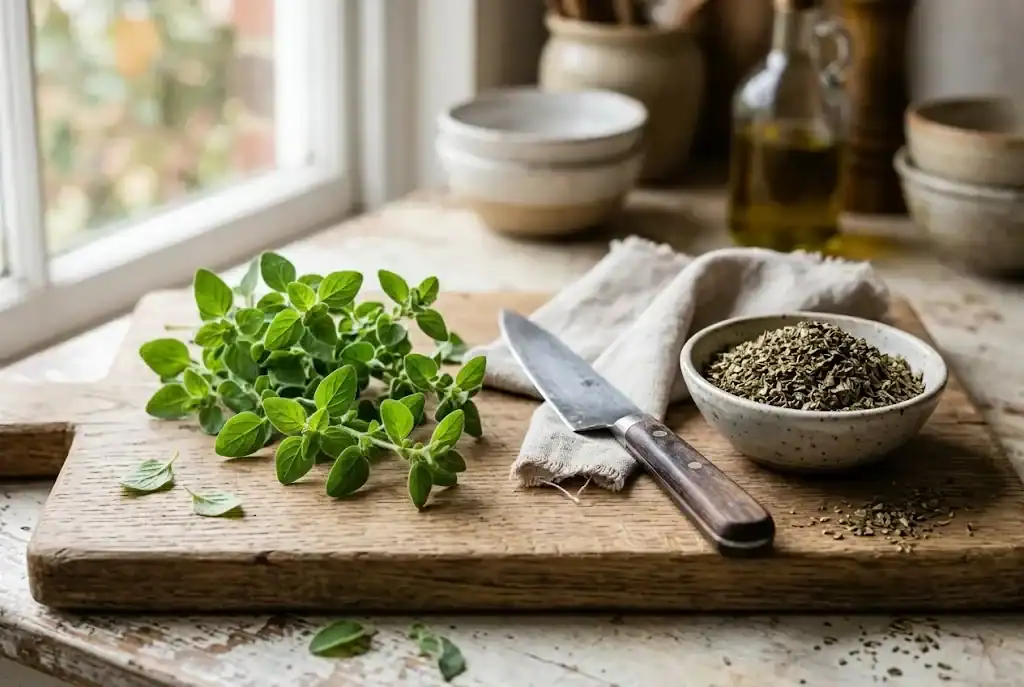
Keep oregano in a sealed container away from heat and light. Fresh sprigs keep best in the refrigerator, loosely wrapped in a barely damp paper towel. For a fuller guide to preserving a harvest, see how to store oregano after it is harvested.
Can you eat raw fresh leaves?
Yes. Fresh leaves are edible, but their flavor is intense. Tear a few small leaves into a salad, chop them into a yogurt dip, or mix them with parsley and basil for a plant sauce. Large, mature leaves can feel a little tough, so mince them finely or add them to cooked food.
Can you make oregano tea?
Oregano tea is easy to make from culinary leaves. Steep one to two teaspoons oregano, or a few fresh sprigs, in hot water for five to ten minutes. Strain and drink it plain or with lemon. It is best viewed as a warm herbal drink, not a proven treatment for an illness.
If you are pregnant, breastfeeding, take medication, have a chronic condition, or are considering oregano tea regularly for a health concern, ask a clinician or pharmacist first. Food-level use is not the same as using a concentrated supplement.
What the research says about potential health benefits
Oregano contains plant compounds such as carvacrol and thymol, and it contributes antioxidants to food. Laboratory studies of oregano and its extracts can be interesting, but they do not prove that oregano oil prevents or treats infections, cancer, diabetes, or other health conditions in people.
That distinction matters. Research on an extract in a test tube, or on a specific supplement product, cannot automatically be applied to a seasoning used in a meal. For most people, the practical health benefit of oregano is that it makes vegetables, beans, fish, and home-cooked meals more appealing without relying on heavy sauces or excess salt.
For a broader introduction to cooking herbs, including how they fit into everyday meals, see this guide to culinary plants.
Oregano oil and supplements need extra caution
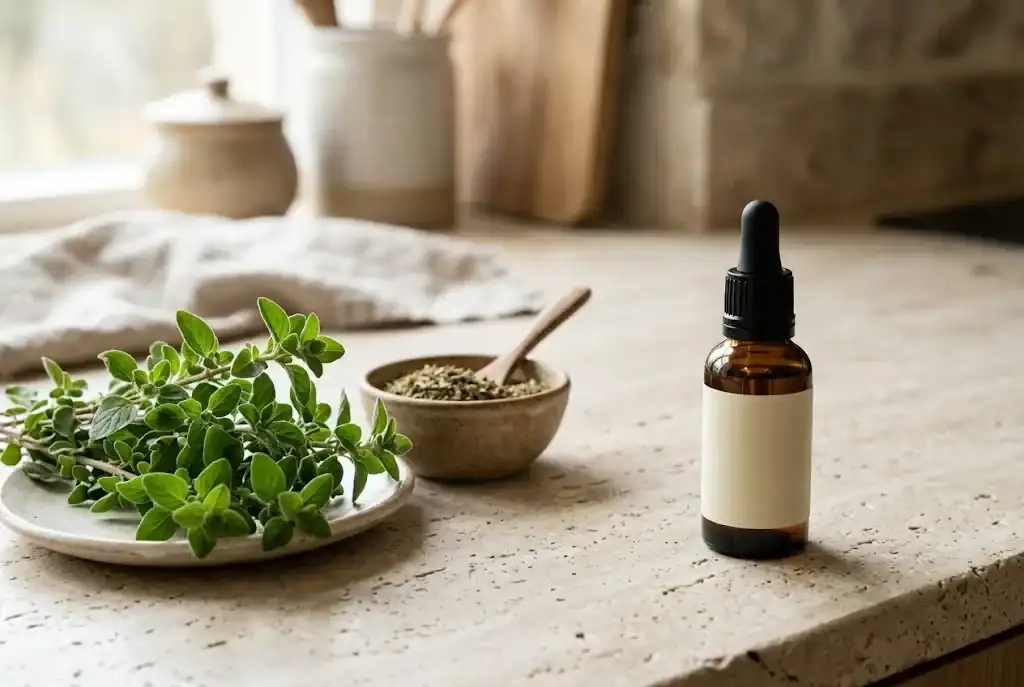
Oil of oregano is much more concentrated than the plant. Do not assume that a product is safe or effective simply because oregano is a familiar food. Dietary supplements can interact with medicines, and product quality and dose can vary. The U.S. Food and Drug Administration advises discussing supplements with a health professional, especially when you take prescription or over-the-counter medicines.
Do not swallow essential oil straight from the bottle or put it directly on skin or inside the nose, mouth, or ears. Essential oils can irritate skin and mucous membranes, and misuse can cause poisoning. Follow the product label and seek urgent expert advice after an accidental ingestion or a severe reaction.
Who should be careful with oregano products?
Using oregano as a seasoning is generally different from taking capsules, extracts, or oil. Talk with a qualified clinician before using a concentrated oregano product if you are pregnant or breastfeeding, preparing for surgery, managing a health condition, or taking medicines that affect blood clotting or blood sugar. Stop a product and get medical help for trouble breathing, swelling, widespread rash, severe vomiting, or other signs of a serious reaction.
Children should not be given concentrated essential oils as a home remedy. Keep these products out of reach, and use poison-control guidance if a child swallows one.
Quick ways to use oregano this week
- Stir oregano into lentil soup or tomato sauce.
- Rub fresh leaves with olive oil, lemon, and garlic for grilled vegetables.
- Mix chopped fresh oregano into a bean salad.
- Add a pinch to eggs, roasted potatoes, or sautéed mushrooms.
- Use it with thyme and marjoram in a Mediterranean-style herb seasoning blend.
- Steep culinary leaves for a simple tea when you enjoy the flavor.
Frequently asked questions
What is the best way to use oregano?
Add oregano early in a cooked dish and fresh oregano near the end. The best choice depends on whether you want a deep, savory flavor or a bright herbal finish.
Is oregano oil the same as oregano seasoning?
No. Oregano seasoning is the dried or fresh culinary plant. Oregano oil, essential oil, and supplements are concentrated products with different risks and should not be used interchangeably.
Can oregano replace medical treatment?
No. Oregano may be a flavorful part of a balanced diet, but it does not replace medical care, prescribed medicines, or evaluation of persistent or severe symptoms.
Make oregano useful, not complicated
Keep oregano in the pantry and fresh sprigs in the refrigerator when you can. Add oregano to long-cooked dishes, save fresh leaves for a finishing touch, and treat oil or supplements as separate products that call for careful advice. That approach gives you the flavor of oregano without turning a kitchen herb into an unsafe cure-all.
Sources: FDA: mixing medications and dietary supplements; LactMed: oregano; Poison Control: essential oils.