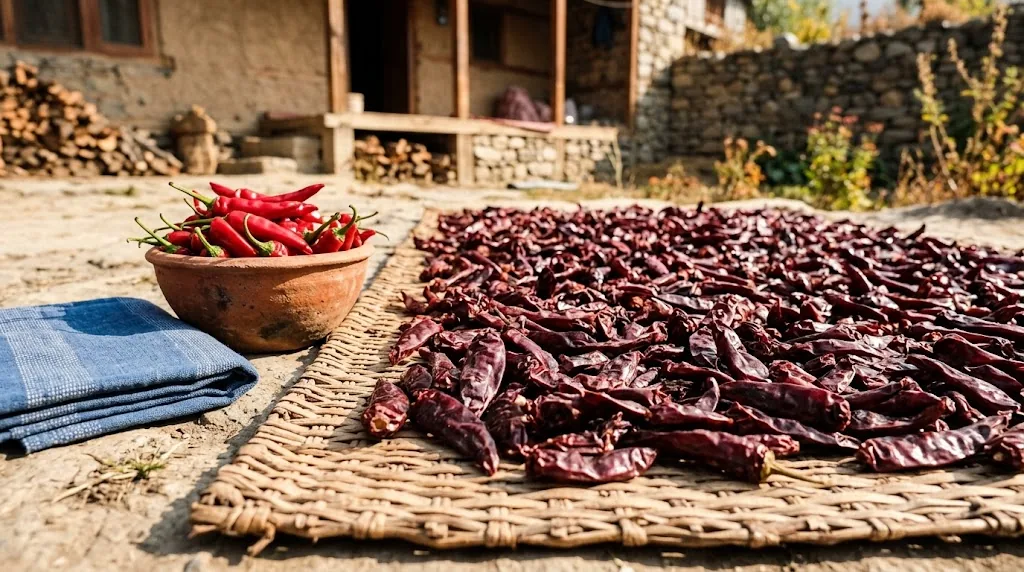
Kashmiri chilies give Indian dishes a vivid red color with relatively gentle heat. ChilliChump Seeds lists its Kashmiri Mirch selection at 1,000 to 2,000 Scoville heat units. That is a supplier range, not a guarantee for every bag of ground spice. Start with the quantity in your recipe, then taste before adding more.
Kashmiri red chili is sold as whole dried pods and Kashmiri chili powder. A small jar is useful for curries and grilled marinades, while whole pods let you grind a fresh batch when needed. Do not treat similarly colored Indian powders as interchangeable; check the name and ingredients.
Where the variety comes from
The name points to the Kashmir region of India. ChilliChump identifies its seed selection with that origin, but a grocery label is not proof of one uniform cultivar or a precise growing location. Deggi mirch may be a blended seasoning, so read its ingredients instead of assuming it is another name for this pepper.
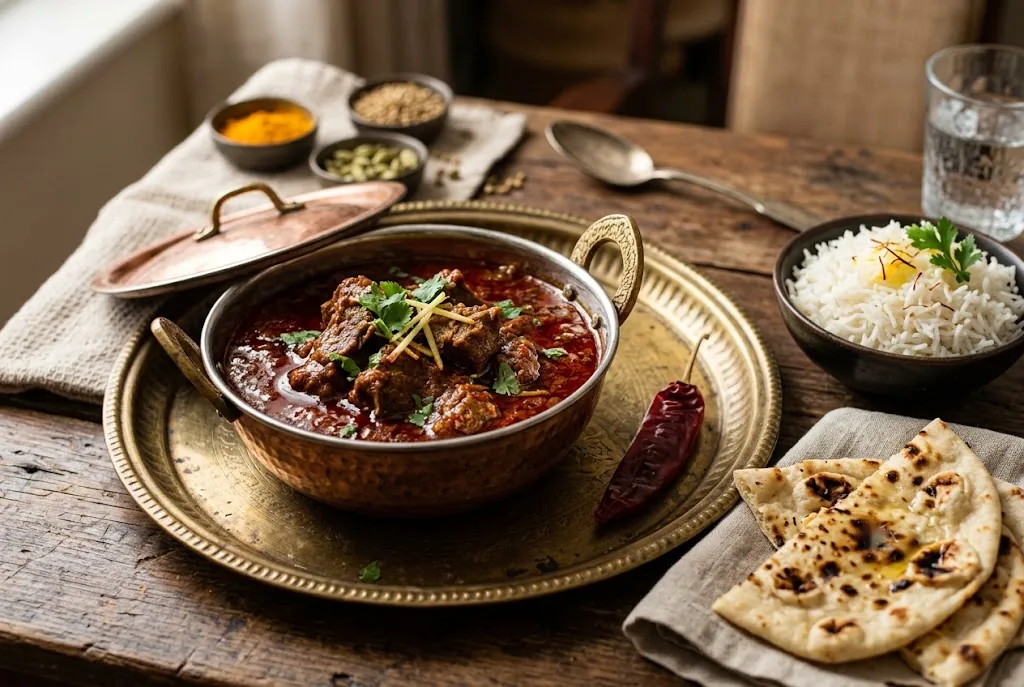
Use the spice in dishes such as rogan josh, dum aloo, and tandoori chicken marinades when a recipe asks for a red chili with gentle heat. It can also color butter chicken or a vegetable curry. Garam masala is a variable spice blend, not a fixed eight-spice formula.
The plant and the pod
Seed suppliers identify this as Capsicum annuum. Shape and growth vary with the selection: Seedmart describes its plants as about 100 centimeters tall. Use the actual packet description when allowing space rather than a universal compact-bush estimate.
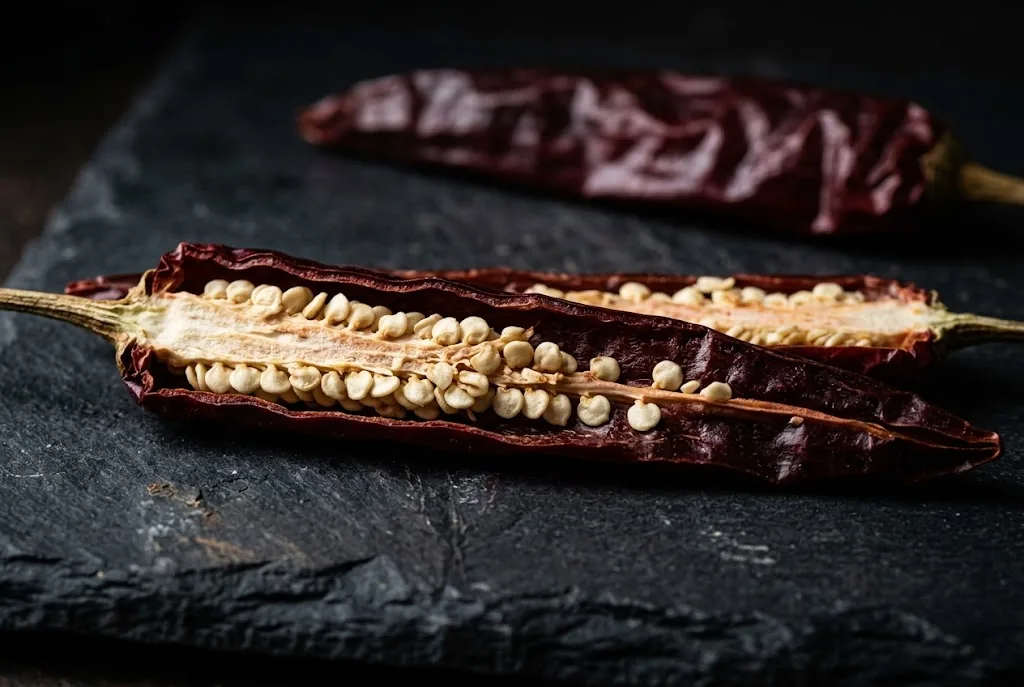
Harvest at the fully red stage for drying. Do not expect every selection to pass through a fixed brown stage. Drying changes texture and concentrates the ingredient, but it does not guarantee a smoked flavor unless smoke is part of the process.
Different seed lots and grocery products may differ in color and pungency. A clearly named selection makes growing expectations easier to check. For cooking, use the package heat information and ingredient list rather than judging by color alone.
Heat and flavor compared to other peppers
The 1,000-to-2,000-SHU range quoted by the seed supplier describes a mild selection. A commercial blend may not match it. The amount in the dish matters too: add gradually rather than assuming any heaped teaspoon will be gentle for every diner.
A pungent red pepper can overwhelm a recipe written for mild seasoning. Match the heat as well as the color, and check whether a substitute includes cumin, oregano, garlic, or salt. Those additions change the flavor balance.
A mild single-ingredient red spice can supply color with less heat, but it changes the flavor. Byadgi is another Indian red chili that may suit a recipe; taste the particular product before substituting. A very hot variety is a poor direct replacement when the purpose is gentle warmth.
Why the heat level stays so low
Capsaicin is produced mainly in the placental tissue inside the fruit. A mild selection contains less pungency than a pungent one, but the color alone does not tell you its concentration. Choose a product intended for the dish instead of adding extra spice solely to deepen the red.
Whole dried pods let you inspect the condition and grind only what you need. Keep them dry and away from light. Buy a smaller bag if you cook with the spice only occasionally.
Growing Kashmiri pepper at home
Grow these as tender warm-season peppers. University of Maryland Extension recommends starting peppers indoors 8 to 10 weeks before transplanting. Seedmart lists 7 to 14 days to germinate for its selection; follow your packet for conditions and allow for variation.
Choose full sun, drainage, and consistent moisture. Follow the selection’s spacing; Seedmart lists 45 centimeters. Base fertilizer on the soil and avoid excessive nitrogen rather than switching to a fixed feeding formula at flowering.
Seedmart lists a 60-to-80-day red-fruit harvest estimate, without establishing that as a universal transplant-to-harvest interval. Use your supplier’s timing and local conditions. Cool weather can delay ripening, and drought or saturated soil can damage plants; mild heat does not make them tolerant of stress.
Harvesting and handling
Snip sound fully red pods from the plant. Wear gloves for trimming and keep contaminated hands away from your face. Poison Control explains capsaicin handling precautions. Green pods will not give the same red finish.
Use a controlled dehydrator method to dry pods completely before pantry storage. University of Minnesota Extension specifies a brittle endpoint for dried vegetables. Do not seal a batch merely because it feels flexible or leathery. Drying time varies; cool the pods before checking for moisture and packing them airtight.
Storing whole and ground
Keep whole pods and the ground spice tightly sealed in a cool, dark place. Grind small quantities as needed and keep the working container away from steam and the stove. Light and heat can fade color and aroma.
Follow the package storage guidance and buy small amounts. Discard moldy or musty spice. A change in color alone does not establish safety or prove adulteration.
Using Kashmiri chili powder in Indian cooking
Use Kashmiri chili powder in a tandoori chicken marinade or the tomato base of a curry when the recipe calls for it. A small amount stirred into yogurt adds color and warmth; taste before increasing it. Follow a full recipe when preparing meat rather than relying on a spice quantity alone.
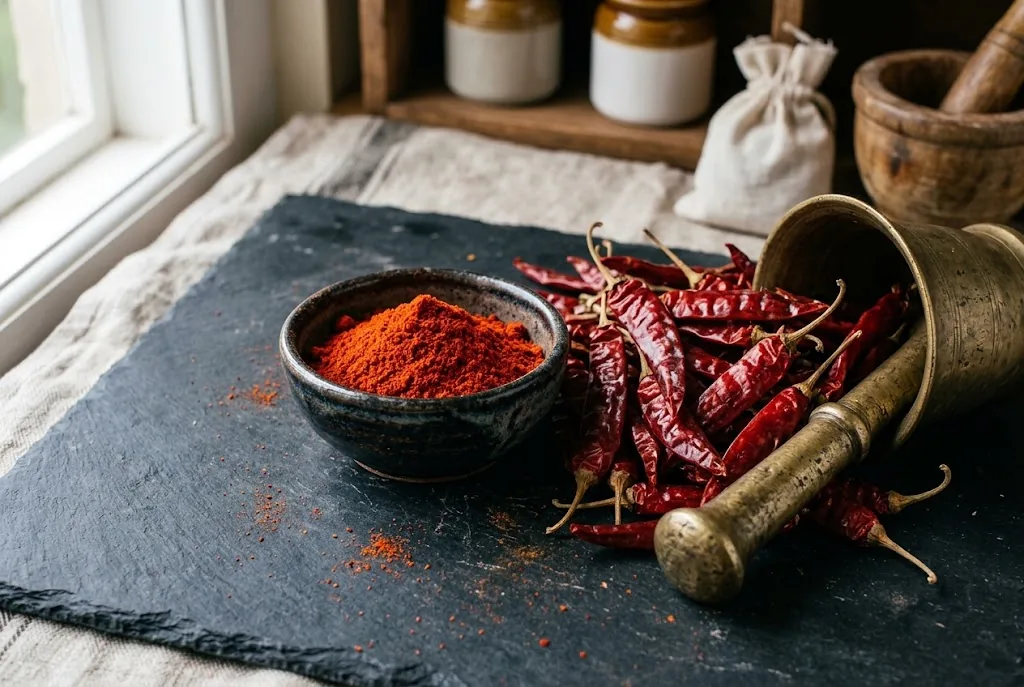
Beyond curries, the spice lifts a bowl of biryani by tinting the rice and adding a soft warmth that complements saffron. Mix a pinch into mayonnaise or yogurt for sandwich spreads and dips that need color without much heat. A small amount blended into a fresh chutney alongside mint and coriander colors the chutney without making it hot. As a finishing seasoning, a pinch over roasted vegetables or sweet potato adds a vivid red without the burn of strong ground peppers.
For a small finishing oil, warm 1 tablespoon of fully dried pods in 200 milliliters of neutral oil, then strain after it has flavored the oil. Keep homemade pepper-infused oil refrigerated, use within four days, or freeze, following Oregon State Extension guidance. Do not keep it indefinitely on the table or in a cupboard.
For a wider look at mild peppers that work in similar roles, the guide to mild chili peppers with big flavor compares several other varieties that bring color more than burn.
Substitutes when you cannot find it
Use the sweet red spice named in the comparison above when color matters most. Start with a smaller amount and adjust after tasting. Another mild single-ingredient red chili is preferable to a mixed American seasoning when you want to keep the original spice balance.
Hot red powder can make the dish much more pungent, so avoid a direct volume swap. Check the ingredients of blended products before using them in an Indian recipe. There is no fixed quarter-teaspoon conversion that works across all brands.
When a milder, slightly fruity dried pepper is what a recipe calls for, Aleppo peppers are a useful Mediterranean alternative that share the color-without-the-burn character.
Buying and authenticity notes
Buy a clearly labeled product from a supplier with ingredient and date information. Check whether it contains only ground chili or a blend. Deep red color is desirable in cooking but does not prove origin, freshness, or purity; deggi mirch should not automatically be treated as an equivalent.
Choose sealed packaging and reasonable turnover. Whole pods give you a view of shape and condition, but they still need sound storage. There is no saffron-thread test for chili authenticity. Avoid informal home tests and buy a quantity you can use while its flavor remains fresh.
For occasional cooking, start with a small jar and replace it when the aroma fades. A whole-pod bag makes sense if you regularly grind spice yourself; keep the grinder dry and clean.
Where this variety fits in the broader world of chili varieties
This pepper is useful when you want red color with relatively gentle warmth. Other mild red peppers can play a similar role, but neither their heat nor their texture is identical. Compare the actual product rather than assuming regional labels are a fixed heat ranking.
The guide to chili pepper varieties compares the wider range. Choose a mild red product for color, and a pungent one when the recipe needs more bite.
Frequently asked questions
Is it the same as sweet paprika?
No. Sweet paprika can provide color with a different flavor and usually less heat. Kashmiri chili powder is a chili ingredient, while paprika describes another selection and product style. Taste the substitute and adjust rather than assuming identical results.
Is this chili very hot?
The cited seed selection is listed at 1,000 to 2,000 SHU. Check the package for commercial spice because labels and blends vary. Start with a small amount in food and increase after tasting.
What is a good substitute?
Try a mild, single-ingredient red chili when color matters most. Both change the flavor; a hotter product changes the heat as well. Read the label and adjust gradually.
What is the difference between this and regular chili powder?
Kashmiri chili powder is normally sold as ground chili. Many US chili powder blends add cumin, oregano, garlic, or salt, although products vary. Read the ingredient list rather than assuming every generic blend is hotter.
Can I use it beyond Indian cuisine?
Yes. Stir a little into yogurt for roasted vegetables or into a bean dish for color. For Indian food, keep the other seasonings in balance rather than replacing a mild ingredient with cayenne at equal volume.
