A small handful of chives can wake up a quiet dish. Their clean, mild onion flavor works best when it stays bright, so the simplest habit is also the most useful: cut them finely and add them near the end of cooking.
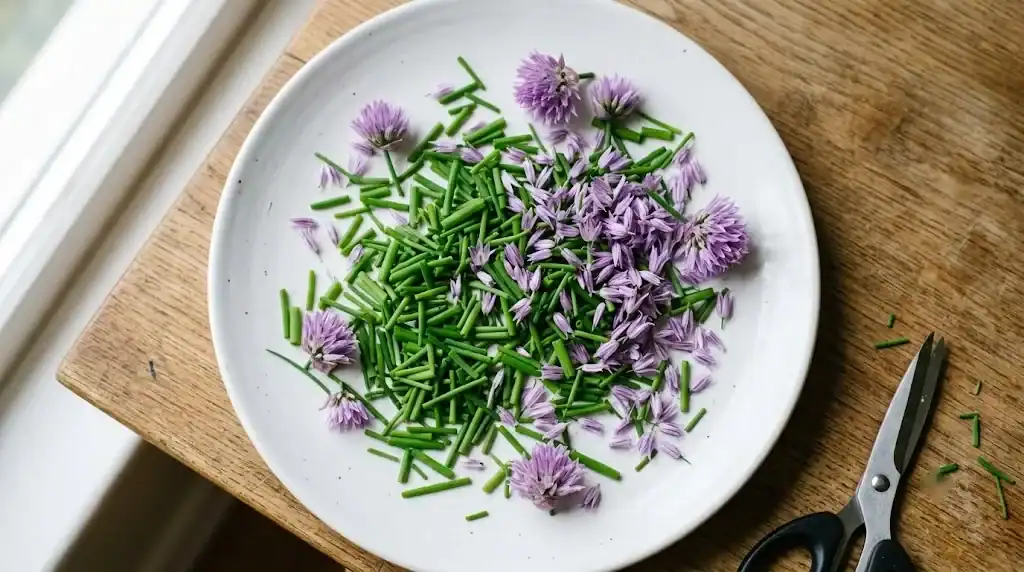
Chives are a slender-leaved member of the allium family, related to garlic, leek, and shallot. They are a fresh herb rather than a tiny scallion. The leaves bring a delicate allium note, while the edible purple chive blossom has a slightly sharper taste and makes a pretty finish for a platter or serving board.
What do chives taste like?
Fresh chives taste gently oniony, grassy, and less sharp than a raw bulb relative. That makes them easy to pair with eggs, potatoes, fish, creamy foods, and spring vegetables. Garlic chive leaves are broader and flatter, with a more direct garlic flavor, so use them when a dish can take a bolder savory note.
As a food, chives add very few calories in the small portions most cooks use. They still contribute flavor and a little color without relying on extra salt. For nutrient details, the USDA FoodData Central entry for raw chives is a useful reference.
Prepare chives without bruising them
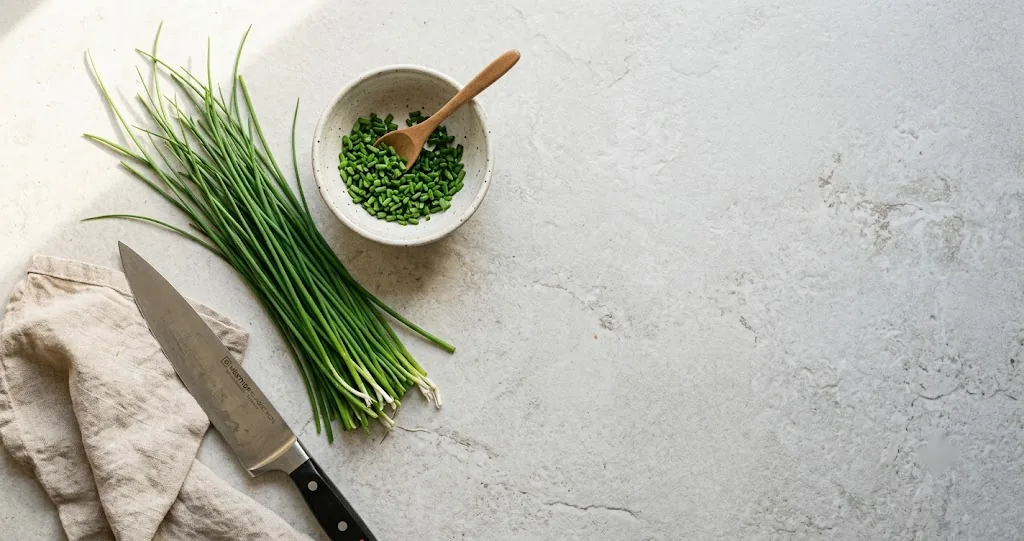
Rinse the leaves under cool running water, then dry them well in a clean towel or salad spinner. Gather a small bundle and cut across it with a sharp knife or kitchen scissors. A food processor tends to crush such fine leaves, so it is not the best tool here.
Keep the cut pieces fairly short. Long strands can tangle around a fork, while chopped chives scatter evenly through a dip or egg dish. If your garden is producing more than dinner needs, this guide on how to store chives covers the next step without turning this cooking guide into a preservation manual.
When to add chives to hot food
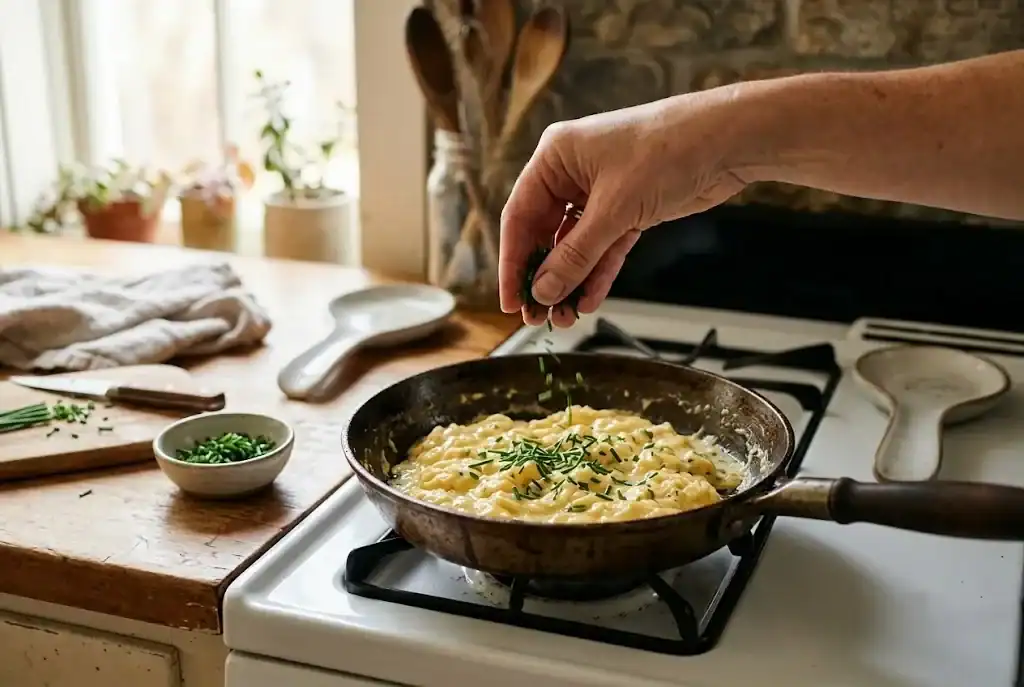
For the clearest flavor, stir chives into warm food after the heat is off, or sprinkle them on just before serving. A minute or two of gentle warmth is fine, especially in soft eggs or soups, but a long oven cook or simmer dulls their color and fragrance.
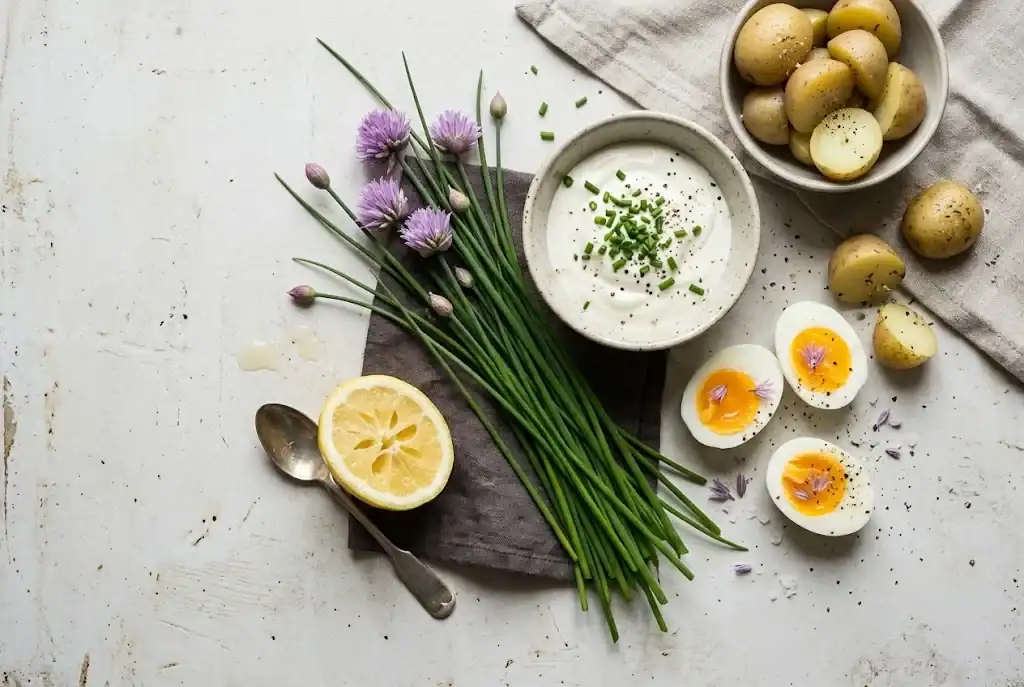
Use the same timing with chive blossoms. Pull the individual florets apart and scatter them over a finished dish. They are especially good where a little acidity or cream is already present, such as a vinaigrette, soft cheese, or sour cream and chives.
Easy ways to use chives at everyday meals
- Eggs: Fold them into scrambled eggs after they set, or finish an omelet with them.
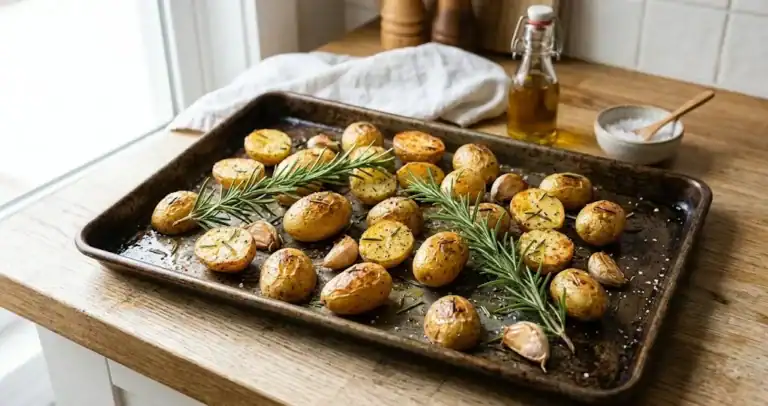
- Potatoes: Stir a spoonful into mashed potatoes with butter, salt and pepper, or add them to a warm potato salad.
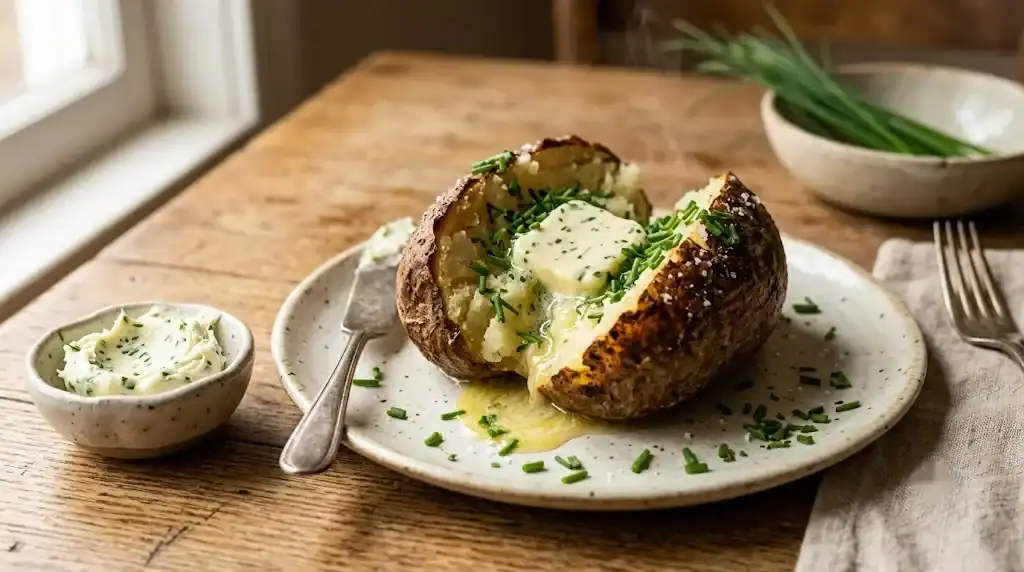
- Dips or sauces: Mix them into yogurt, sour cream, mayonnaise, or a simple vinaigrette for vegetables and baked potatoes.
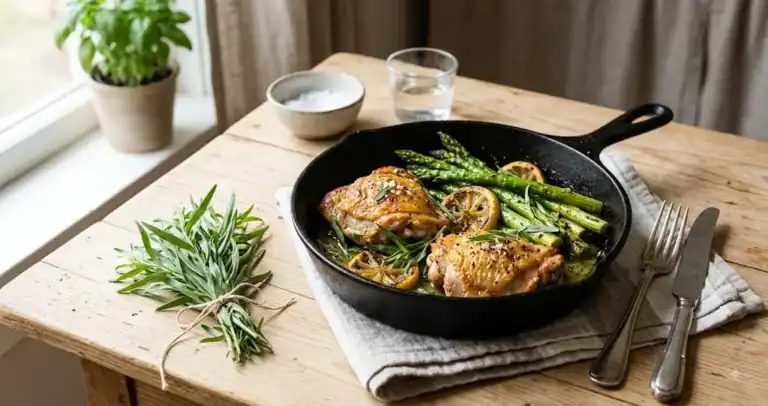
- Fish and chicken: Finish salmon, roasted chicken, or pan juices with a handful just before serving.
- Vegetables: Scatter them over peas, asparagus, roast carrots, or a bowl of greens with fresh dill and parsley.
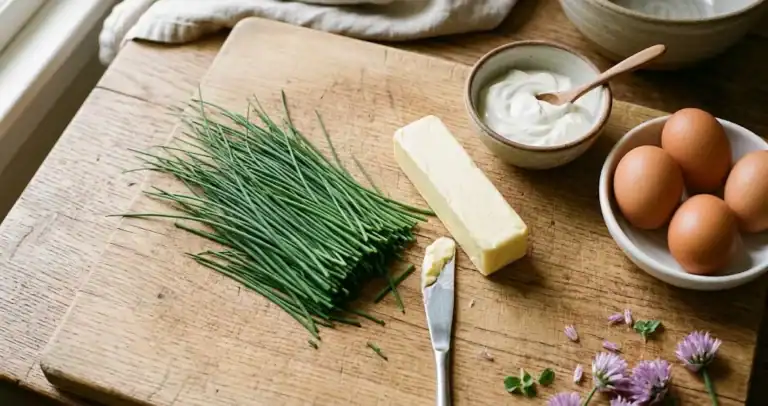
For a quick chive compound butter, mash softened butter with chopped leaves, a pinch of salt, and lemon zest. Chill it in a small dish, then let a pat melt over steak, corn, or baked potato. A little goes a long way, which keeps the mild flavor in balance.
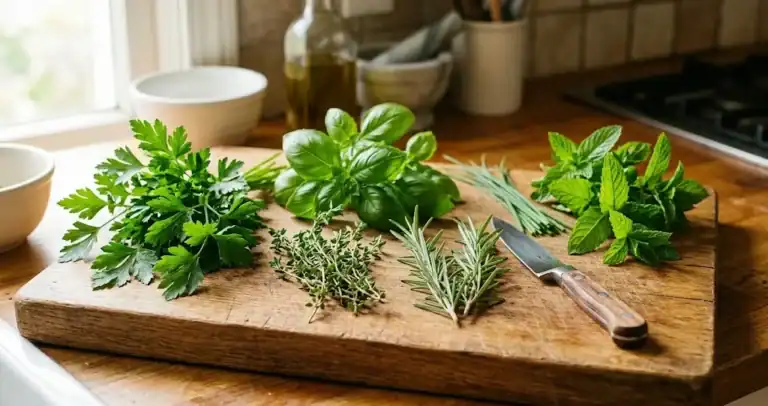
Chives also belong in the larger family of kitchen herbs that make simple food taste more deliberate. If you are building a small everyday herb toolkit, our culinary herbs guide can help you choose complementary leaves and flavors.
What foods pair well with chives?
Think creamy, eggy, buttery, or lightly acidic. Chives go well with cream cheese, goat cheese, blue cheese dressing, potatoes, mushrooms, seafood, and roasted vegetables. They also add a welcome fresh note to richer dishes such as quiche, pancake-style savory batter, or a creamy soup.
For a dressing, whisk olive oil with vinegar, salt, pepper, and the leaves just before serving. Avoid making it hours ahead if you want the bright green color and aroma. In a warm dressing, add them after tasting so you can keep the seasoning restrained.
Fresh, dried, and substitute options
Fresh leaves are the best choice when they are available. Dried chives can add a gentle savory note in a dip or dry seasoning blend, but they will not give the same lively texture or bright finish. Rehydrate them briefly in a moist mixture when possible.
If you need a substitute, use the green tops of a scallion for a stronger but related taste, or use a small amount of minced shallot in cooked dishes. Parsley can replace the green color but not its savory character. They are a good swap when their stronger character suits the meal.
Use the leaves and flowers with confidence
Chive plants are hardy perennial plants, so a home garden often offers a steady supply in spring and summer. The leaves are the everyday kitchen ingredient, while each rounded blossom can be broken into individual florets. Both are edible when they come from plants that have not been treated with chemicals not labeled for edible crops.
Professional chefs often use chives as a final fresh layer rather than a main cooked vegetable. Treat them the same way at home: choose one dish that needs a gentle savory note, then add only enough to lift the other ingredients. That is a more reliable way to use chives than adding them to every plate.
Questions home cooks ask about chives
Can chives be eaten raw?
Yes. Raw leaves work well as a garnish on eggs, baked potatoes, and soft cheese. Their texture is tender, and their flavor is most noticeable before heat softens it.
What can I do with a lot of chives?
Make a compound butter, fold them into a cream cheese spread, stir them into a dressing, or freeze finely cut leaves in small portions for cooked dishes. The best chive recipes use them as a finishing touch, so begin with a dish you already cook often.
Make the most of a chive harvest
Use freshly cut leaves within a few days for the best flavor. Wrap them loosely in a barely damp paper towel and refrigerate in a container or bag. Wash only what you plan to use if the bunch is very fresh, since excess moisture shortens its useful life.
Once you know the basic timing and pairings, it is easy to move beyond a finishing touch. For focused meal inspiration, browse these chives recipe ideas. Start with eggs, potatoes, or a creamy dip, then notice how the same leaves change a dish when it arrives at the last minute.