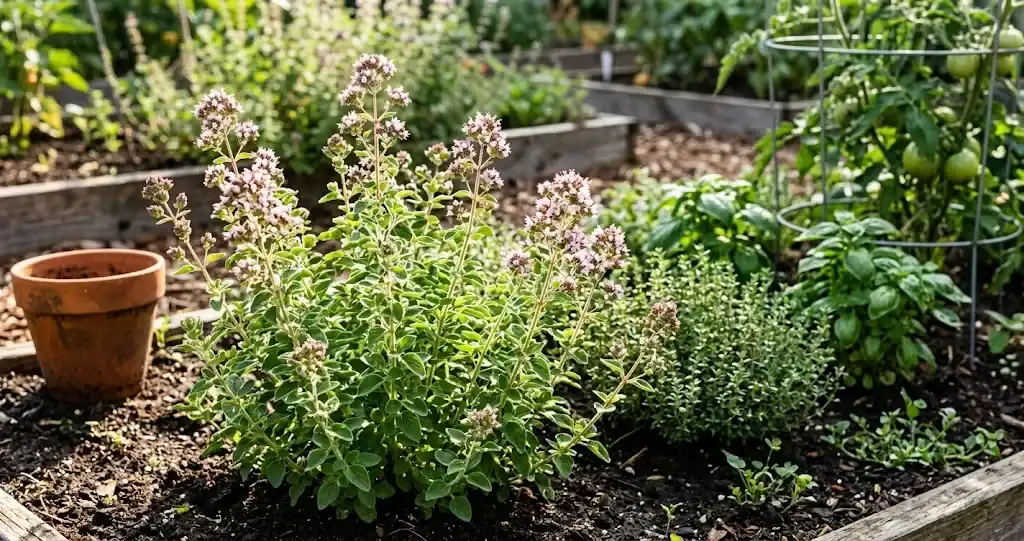
Oregano earns a spot in the garden because it earns its neighbors. Its leaves carry a sharp, peppery scent that gardeners often cite as a useful trait in companion planting, and its small flowers pull in bees, hoverflies, and other pollinators that share the bed. Pair it well, and a single plant quietly improves the bed it shares.
This guide is for home gardeners who want this herb to do that work. You will find the herbs, vegetables, and flowers that pair well with it, the plants it does not get along with, and the spacing and care notes that keep the bed healthy. The beginner’s guide to growing an herb garden covers the groundwork.
Looking for the best oregano companion plants? A shortlist covers basil, thyme, rosemary, sage, parsley, chives, marigolds, calendula, lavender, tomatoes, cucumbers, and bush beans. The rest of this guide walks through why each of those works, what to plant apart from oregano, and how to lay out a bed that lets them all thrive.
Why oregano works as a companion plant
Companion planting with herbs is the practice of placing crops near each other so they help rather than hinder. Oregano is often chosen for two reasons in companion-planting guides: a strong scent that may make it harder for some pests to find their host plants, and small flowers that provide nectar to beneficial insects. Aromatic herbs like these make useful companion plants in a mixed bed.
The aromatic oils in this herb are pungent. Gardeners often cite oregano as a candidate to interplant with crops that struggle with cabbage moths, cabbage loopers, cucumber beetles, flea beetles, aphids, and carrot flies, though field evidence for any single pairing is mixed. The Old Farmer’s Almanac companion-planting guide is a useful starting point that treats oregano as one tool among many, not a silver bullet. Sources differ on how strong the effect is; some suggest the pungent oils may help repel pests and deter aphids and cabbage moths, while others call the evidence limited. Strong-smelling herbs like this one work best when planted throughout the bed rather than tucked in one corner. A single aphid on its own is rarely a problem, but a swarm can ruin a brassica row in days, and spider mites can spread fast through a stressed bed, which is one reason gardeners reach for aromatic herbs in the first place. Growing it near the vegetable garden can be part of a broader plan to support a healthy bed over a whole season. The practical payoff is steady pollination across the bed and a more diverse mix of beneficial insects, rather than a dramatic reduction in any one pest.
The flowers may support beneficial insects when allowed to flower. The pinkish-white blooms that appear in mid to late summer are a reliable nectar source for honeybees, bumblebees, and hoverflies. Letting at least a few plants flower is the simplest way to make that work for you. Attracting beneficial insects like bees and hoverflies is one of the cheapest moves a home gardener can make.
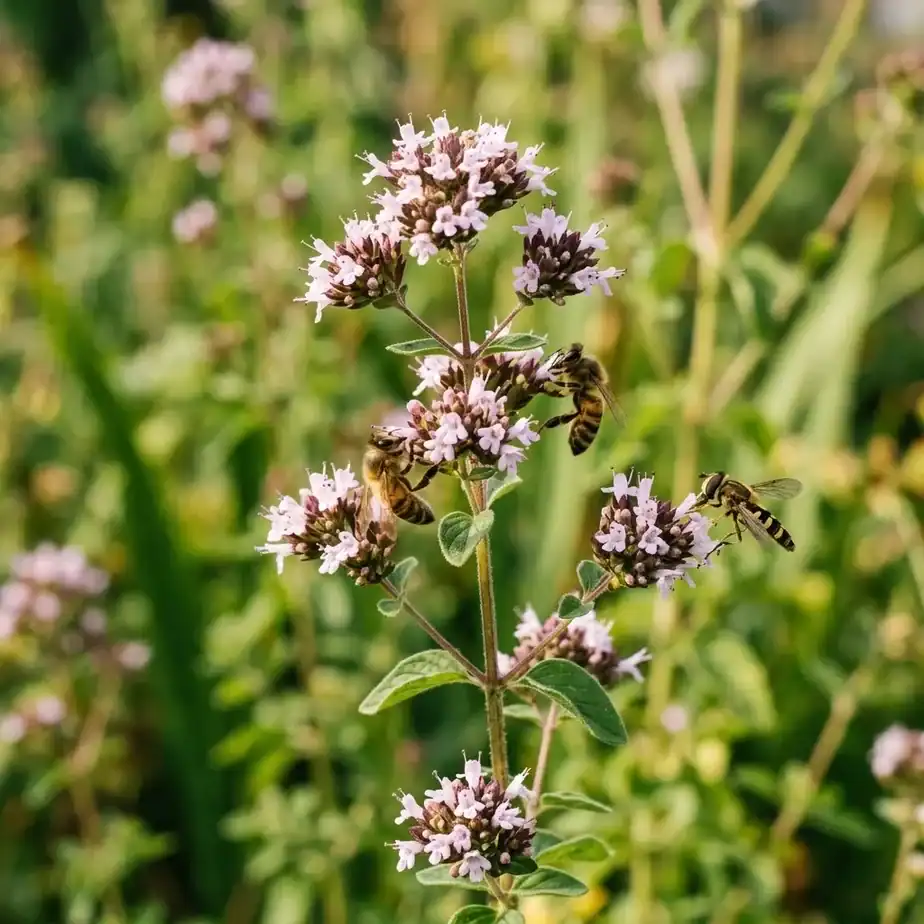
It also grows well in average soil, tolerates dry conditions once established, and stays compact, so it fits between other crops without crowding them out. In warm climates it is perennial, so a single planting returns year after year.
Where oregano fits in a vegetable garden
It is a useful addition to the vegetable garden because it does not compete for water or nutrients with most fruiting crops, and it gives more than it takes. Oregano is a good companion to most vegetables, especially the heavy-feeding brassicas and the long-season fruiting crops. Plant it at the corners of the bed, or in clumps along the edge, so it does not shade smaller crops.
The plants that benefit most from a nearby clump are the ones most bothered by leaf-eating caterpillars and sap-sucking insects: tomatoes, peppers, cucumbers, brassicas, and bush beans. Let it sprawl into the path if you have room, where it acts as a living mulch and keeps the soil cooler. As a culinary herb, it sits comfortably between the herbs and vegetables in the same bed. Many herbs grow well together in the same bed because they share conditions similar to it: sun, lean soil, and not too much water.
Best herb companions for oregano
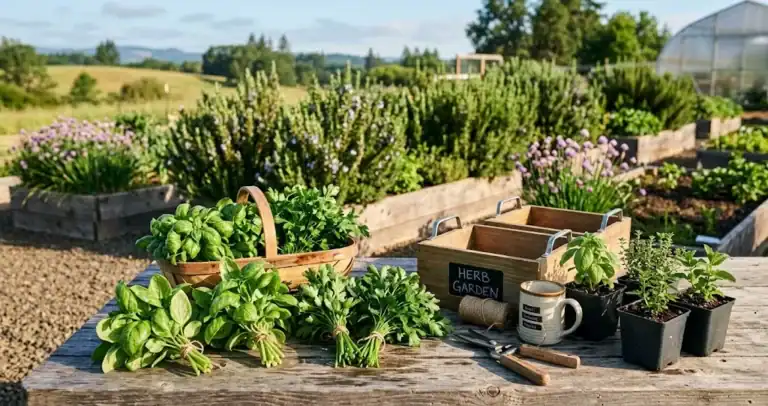
Most Mediterranean herbs share this one’s love of bright, dry conditions, which is why they pair so easily. They also tend to flower at slightly different times, spreading the pollinator buffet across more of the summer. Plant them with it in the same bed, or in nearby pots, and the pollinators will keep coming from spring into fall. Many of these are the best companion plants in any sunny bed.
The best herbs to grow alongside oregano are those that match its soil and water needs and do not compete aggressively for space. Below are the best things to plant with it, with per-plant notes.
Basil
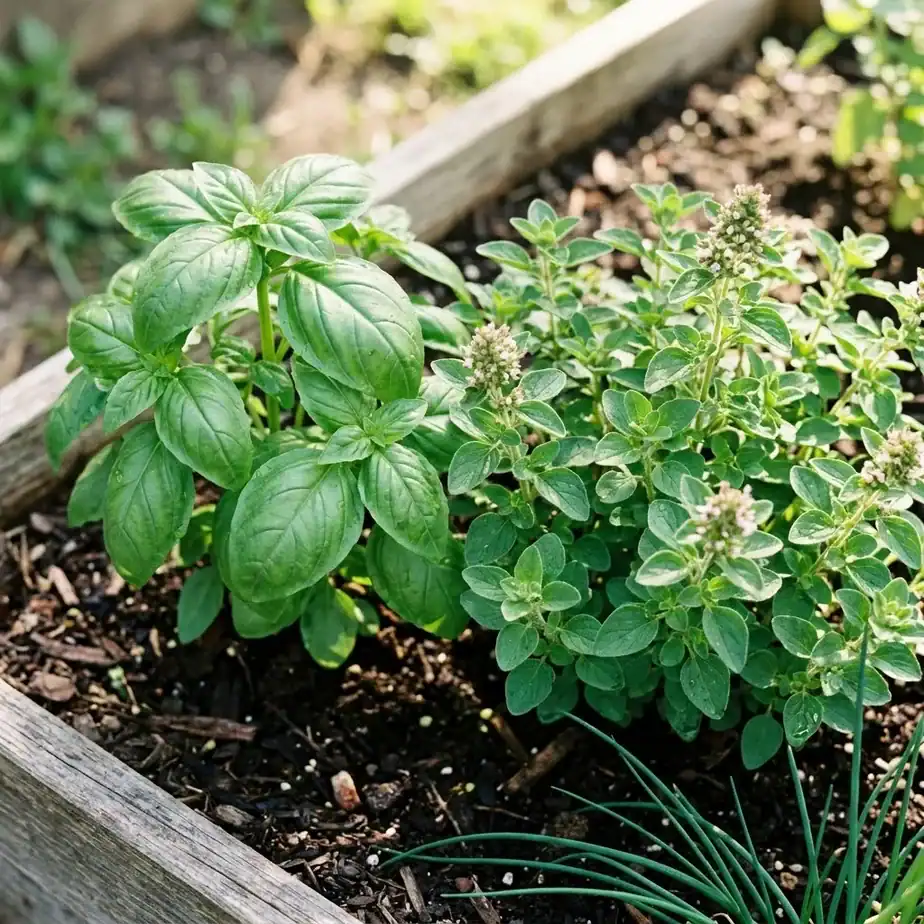
Basil is a great companion and they make a classic kitchen pair. Both want sun, both tolerate the same watering rhythm, and both pull in pollinators when they flower. Basil is a great companion in any sunny bed. Plant basil a hand’s width away so the roots do not crowd. In containers, a 12-inch pot holds one of each comfortably.
Thyme
Thyme and oregano share the same lean, fast-draining soil and flower at similar times. The bees that visit its flowers visit thyme flowers right after, which extends the pollinator window in a small bed. Thyme stays lower to the ground, so plant it on the south side so the lower-growing oregano does not get shaded out. Thyme and oregano are two herbs that look almost identical in the bed; if you cannot tell them apart at first glance, you are not alone.
Rosemary
Rosemary grows taller and woodier than oregano, which makes it a good background anchor for the bed. Both tolerate dry soil and full sun, and both flower in a way that pulls in bees. Give rosemary at least 18 inches of space so the more vigorous plant does not crowd the smaller one. In a hot climate, rosemary may need afternoon shelter, which the smaller plant can provide without suffering.
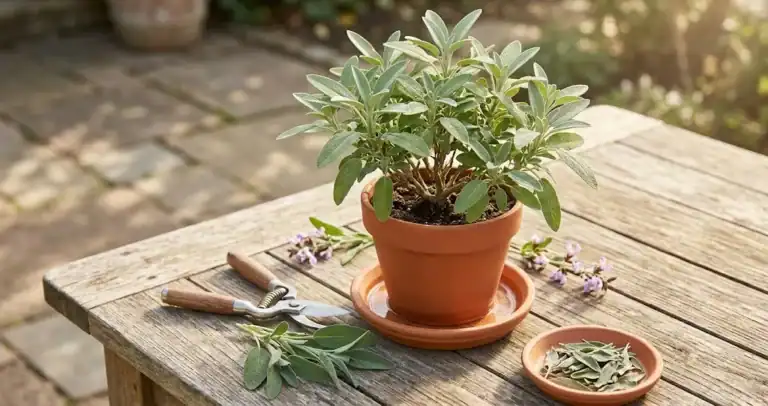
Sage
Sage is a strong match in a Mediterranean bed. Sage and oregano are a great pair in any herb bed. Sage’s silvery leaves and the bright green of this plant offer a useful contrast in the garden, and both are commonly listed in companion-planting guides for their scent. Keep the two at least 15 inches apart so neither roots out the other, and avoid heavy watering, which both dislike equally.
Parsley
Parsley prefers slightly richer and more consistently moist soil than oregano does, but parsley still grows well nearby. Plant parsley on the side of the bed that gets afternoon shade from taller herbs. Parsley flowers pull in hoverflies, adding to the diversity of beneficial insects that already feed in the bed.
Chives
Chives do something special nearby. Their mild onion scent is often cited in companion-planting guides as a deterrent to aphids and Japanese beetles, and their purple flowers in late spring attract bees before oregano starts blooming. Plant chives in a clump at the edge of the bed, leaving at least a hand’s width of space so the roots of both plants do not compete.
Best vegetable companions for oregano
Vegetables that struggle with leaf-eating caterpillars and sap-sucking insects are the natural pairing candidates for this herb, especially brassicas and fruiting crops. Its scent is often listed as a plus when planted near them. Below are the vegetables that grow alongside it and what to plant near them.
Tomatoes
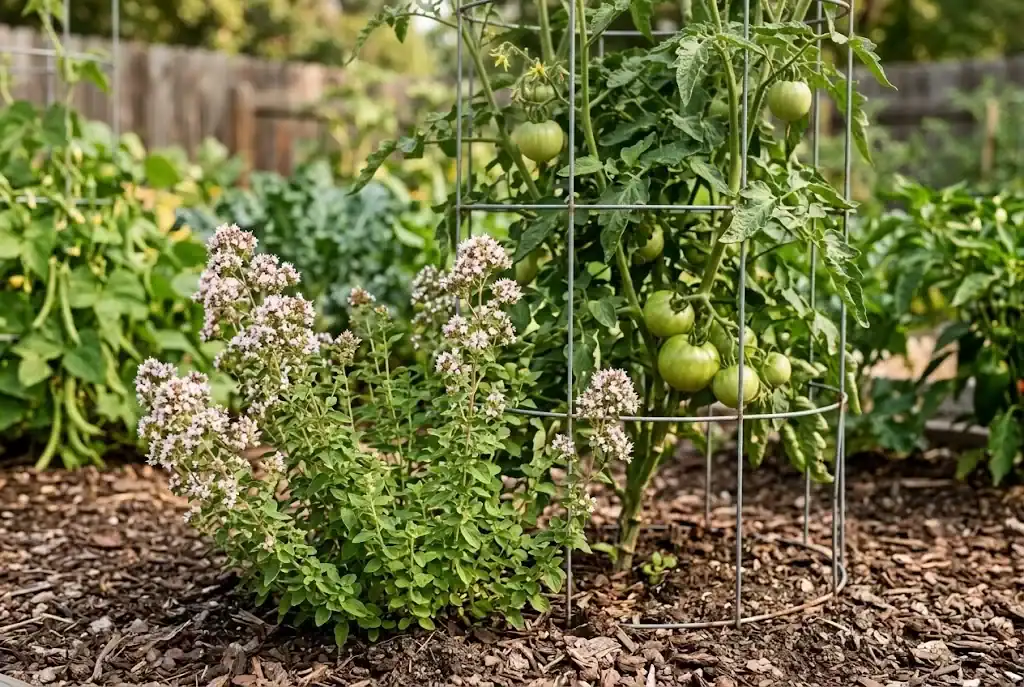
Tomatoes are the most commonly cited companion. The herb’s pungent oils are sometimes said to make tomato hornworms and aphids harder for those pests to find, and its flowers may support the small wasps and flies that visit a tomato bed. Treat it as one input among several rather than a guarantee. Plant at the base of tomato cages, leaving 10 to 12 inches of space. Avoid the very close ring planting sometimes recommended, since tomatoes need water more steadily than this herb likes.
Peppers
Peppers share a preference for sun and well-drained soil. Near peppers, oregano is often cited as a useful companion for aphids and thrips, though the effect is modest in practice. Plant at the edge of the pepper bed, not under the plants, where it would compete for water with the peppers.
Cucumbers
Cucumber beetles are a serious pest, and oregano is a common interplanting choice for the cucumber bed, even though the scent is just one input. Plant at the corners of the cucumber bed or at intervals along the row. The plant can also be allowed to sprawl into the path, where it acts as a living mulch and keeps the soil cooler.
Beans and peas
Bush beans and pole beans grow well nearby because the bed is drier and sunnier than beans usually get in a vegetable garden, which reduces the risk of fungal disease. Avoid planting directly next to pole bean trellises, which would shade the plant out. Peas prefer cooler conditions, so plant peas on the cooler side of the bed and this herb on the warmer side.
Brassicas: cabbage, broccoli, kale, and cauliflower
Oregano is often listed among useful companions for brassicas because of its pungent oils. Cabbage moths and cabbage loopers are the pests gardeners most hope to discourage, and the scent is one input among several. Plant in clumps around the brassica bed rather than between every plant, so you do not shade the lower leaves. Rosemary and sage make good partners in the same bed, and the combined Mediterranean scent is a useful part of a brassica-bed plan.
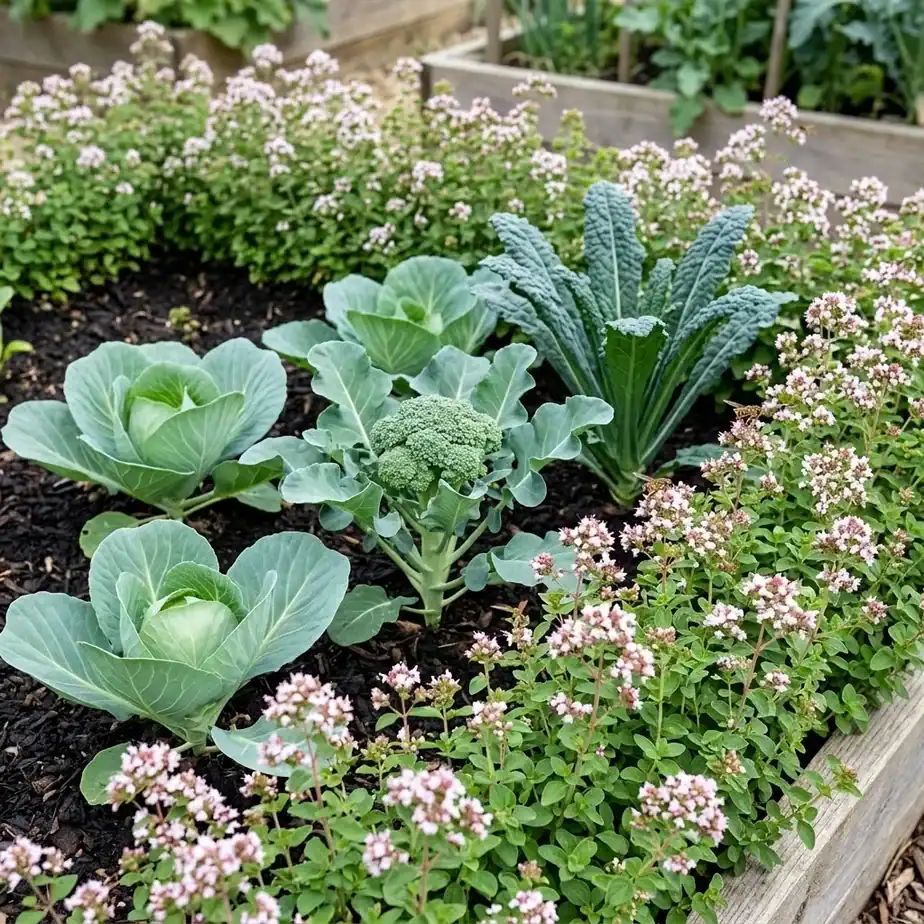
Flowers and pollinator-friendly companions
Flowers do double duty nearby: they attract pollinators and add color to a kitchen bed that is mostly green. The best choices bloom at the same time as it does, prefer similar dry, sunny conditions, and do not demand richer soil than this herb likes.
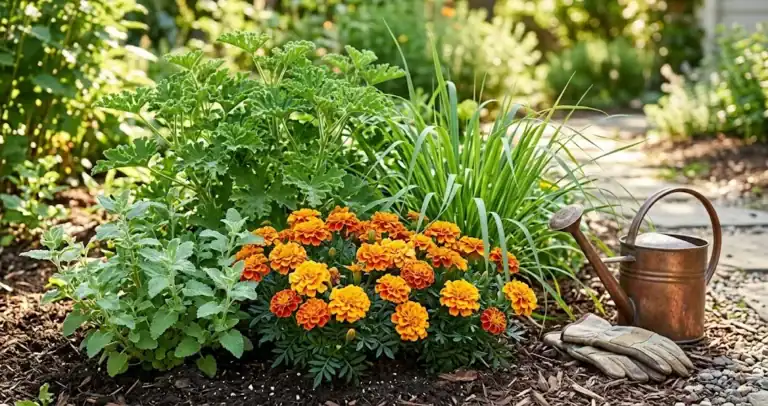
Marigolds are the most common choice. They are often cited in companion-planting guides as a deterrent to soil-dwelling pests, and their bright blooms add a useful contrast to a green herb bed. Calendula is similar and self-seeds easily, so a single planting returns year after year.
Lavender is a striking companion that shares the same Mediterranean roots and flowers in midsummer. Both pull in bees, and the combination of lavender’s purple spikes and pink flowers gives a long, useful bloom window. Give lavender at least 18 inches of space so the two do not compete.
Yarrow, cosmos, and zinnias all work in larger beds where the goal is to attract beneficial insects in larger numbers. Plant these in clumps at the back of the bed rather than scattered among the herbs, where their height would shade out the lower growers.
Plants to keep apart from oregano
Not every plant likes this herb. A few common crops and herbs do poorly nearby, and certain plants should not be planted with it.
Mint
Mint and this herb share the same plant family, but mint is far more aggressive. Mint spreads by underground runners and will quickly take over a bed that includes it, shading it out and stealing water and nutrients. If you want both, plant this invasive cousin in its own container sunk into the bed, or in a separate bed altogether.
Chives, with one caveat
Chives usually fit well, but in a small bed the chive clump can crowd the plant and steal water. If your bed is less than three feet across, plant chives and this herb in separate containers rather than sharing the soil.
Brassicas planted too close
Oregano is sometimes cited as a moth deterrent for brassicas, but it does not stop the moths entirely. If you plant directly next to brassicas, the leaves can rub against the lower brassica leaves and shade them. Keep at least 8 to 10 inches between this herb and the nearest brassica.
Plants that prefer wet or shaded conditions
Anything that wants consistently moist soil or afternoon shade will struggle nearby. That includes lettuce, spinach, most brassicas when they are young, and many ferns. Plant those on the cooler, shadier side of the garden, well away from this herb. They need more water than it prefers, which makes them poor neighbors in the same bed.
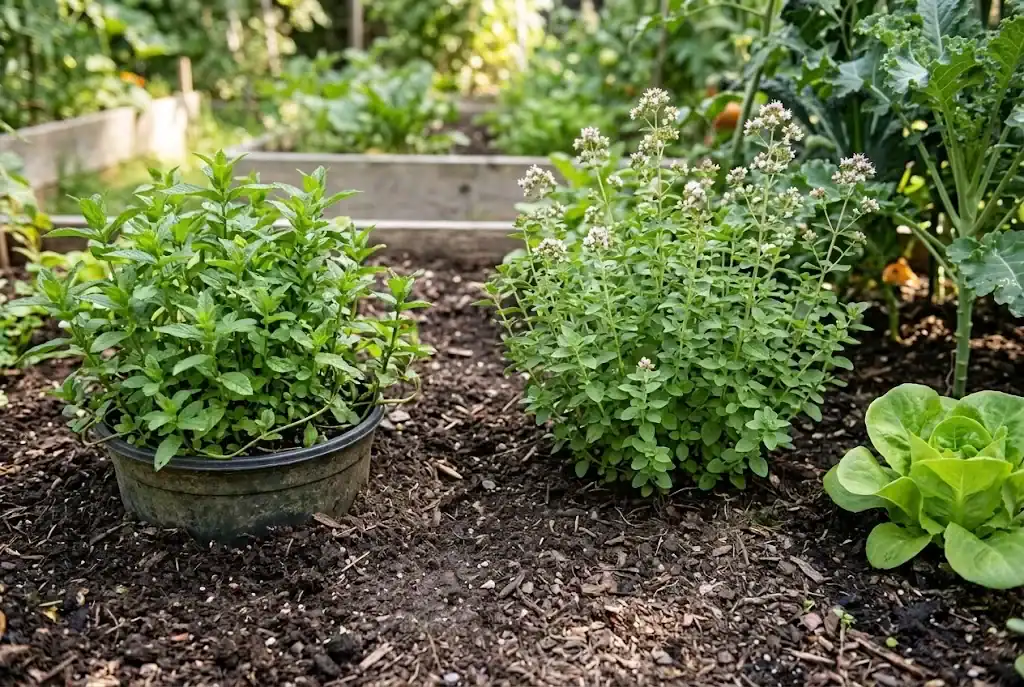
Spacing and layout for a companion bed
Most companion planting problems come from spacing, not from the plants themselves. The simple rule is to leave at least a hand’s width between it and its closest neighbor, and more for taller herbs like rosemary and sage. A crowded bed may look lush in early summer but it reduces airflow and lets pests move between neighboring plants easily.
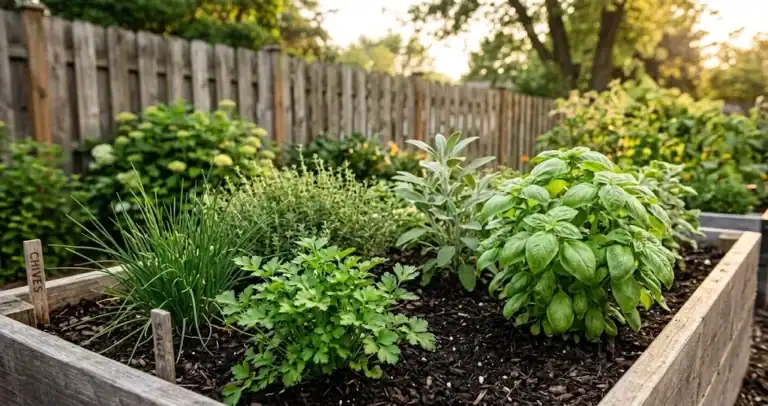
If you grow oregano in a small kitchen bed of four to six square feet, plant it as a center or corner anchor. Put rosemary or sage behind it, basil or thyme to either side, and parsley in the partial shade the taller herbs cast. Add chives at the corner and a marigold or calendula for color. In a Mediterranean bed, this herb pairs well with most of these choices because they share similar soil and water needs. Plants like these can also be planted together in containers on a sunny patio.
For a larger vegetable bed, plant in clumps of two to three plants at the corners and every 4 to 6 feet along the bed edge. Do not plant in a row through the middle of the bed, where it would compete for water and shade nearby crops. Plant oregano near the corners so it stays out of the main row paths.
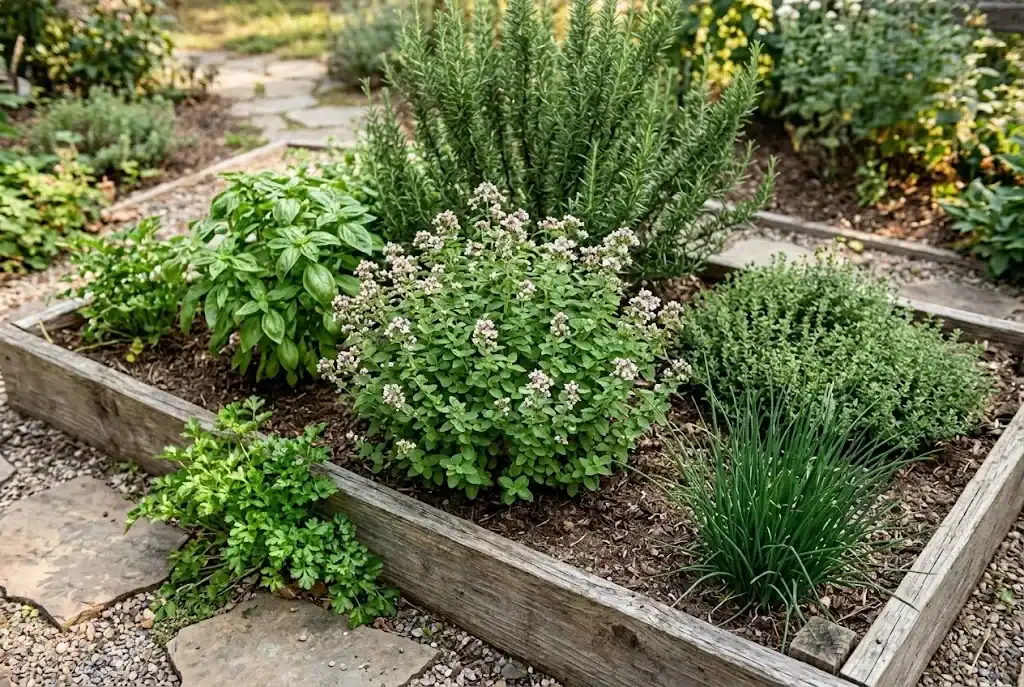
This herb spreads slowly by rhizome, so a small plant will fill a 12-inch circle within a couple of years. Plan for that expansion when laying out the bed, and divide the clump every three to four years to keep it vigorous. The growth of nearby plants is rarely affected by its roots, but the spacing still matters for airflow and bed health.
Care notes for oregano in a mixed bed
This plant is unfussy, but a few small choices keep it healthy in a companion bed. It thrives when its three core needs are met: full sun, well-draining soil, and not too much water, and it tolerates lean soil and dry feet better than rich soil and wet ones.
Plant in sun, ideally six hours or more a day. In hotter climates, light afternoon shade is fine, but deep shade reduces the oils that make this herb a useful plant in a mixed bed. It grows best in a sunny corner where air moves freely and the soil dries out between rains.
Soil should be average to lean and very well drained. It struggles in heavy clay or in soil that holds water after rain. If your bed drains poorly, plant on a small mound or in a raised bed. A sandy loam is ideal; this plant prefers not to sit in wet soil.
Water only when the top inch of soil is dry. Overwatering is the most common cause of failure, especially when this herb shares a bed with thirstier plants. Once established, it tolerates a missed watering better than most of its neighbors.
Trim back by a third after flowering. This keeps the clump compact, encourages fresh leafy growth for kitchen use, and prevents the center from getting woody. Fresh leaves can be used immediately, and stored leaves keep their flavor well into winter.
Leave at least a few flower spikes in place during the summer so the beneficial insects still have a nectar source, even if the bed is mostly for kitchen use.
Growing oregano in containers
Growing it in containers is one of the simplest ways to enjoy this herb if you do not have a garden bed. A single plant needs at least a 10-inch pot with drainage holes. Use a light potting mix with extra perlite, and water only when the top inch of soil is dry. Conditions similar to the garden setting work well: sun, lean soil, and not too much water.
When you plant oregano in a container on a sunny patio, you can pair it with thyme and basil in the same pot and still get the same benefits as in a bed.

Quick reference: oregano companion plant chart
Use this as a starting point. Local conditions, soil, and microclimate all affect what works in a given bed. Herbs grow well together in the same bed when their water and soil needs match.
- Good companion plants: basil, thyme, rosemary, sage, parsley, chives, marigolds, calendula, lavender, tomatoes, peppers, cucumbers, bush beans, and brassicas such as cabbage, broccoli, kale, and cauliflower.
- Plant apart from this herb (poor companions): mint, water-loving greens such as lettuce and spinach, and heavy feeders in very rich soil.
- Minimum spacing: 8 to 10 inches to most neighbors, 15 to 18 inches to larger woody herbs like rosemary and sage.
- Soil and sun: full sun, average to lean soil, fast drainage. Let the top inch dry between waterings.
- Best pollinators to expect: honeybees, bumblebees, hoverflies, lacewings, parasitic wasps.
Putting it together
Companion planting is not magic. It is a way of stacking small advantages, year after year, until the garden quietly does more for you than it would alone. This herb is one of the easiest to use this way: a tough, drought-tolerant plant that asks for little. Place it near your tomatoes, peppers, brassicas, and basil, keep it out of mint’s way, and let a few flower spikes bloom in summer. Herbs can be used fresh or stored for winter, so a single bed feeds the kitchen year-round.
For ideas on how to use what you have grown, see the roundup of oregano herb uses in the kitchen.
Whether you cook with it fresh, dry it, or freeze it, the leaves keep their flavor well into winter.
A quick note on storage before you go: once you have a good harvest, you will want to use it fresh and store the rest for the cooler months. The guide to storing oregano after harvest covers drying, freezing, and short-term keeping.