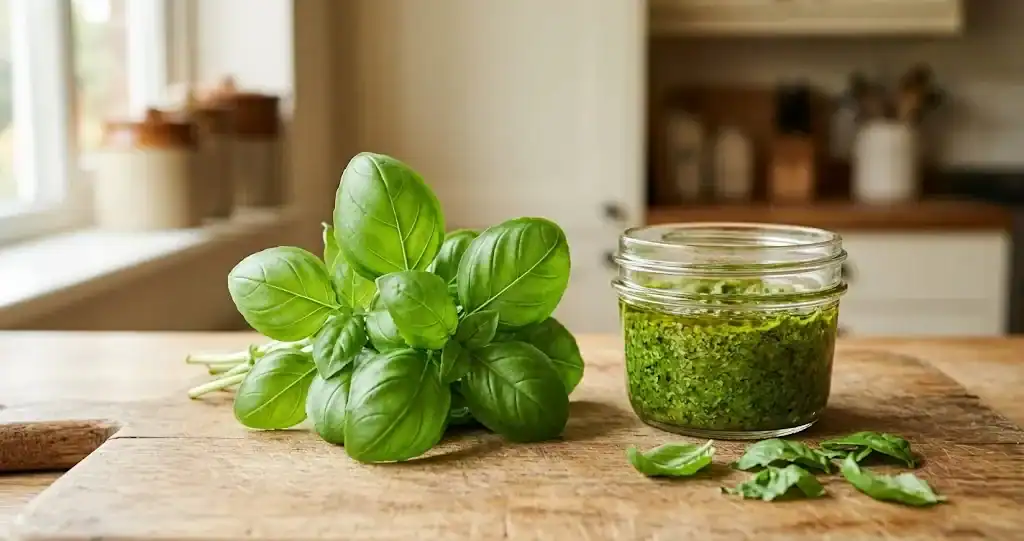
Fresh leaves turn an ordinary weeknight into something a little brighter, and the plant earns that reputation honestly. A small handful of torn greens lifts a bowl of noodles, settles into a salad, balances a dressing, and slips into a drink without losing its almost sweet perfume. Most cooks know the classic pesto, but the plant carries more range than one sauce: it also brings life to Thai stir-fries, anchors a caprese plate, makes a quick weeknight dinner, and folds surprisingly well into desserts and cocktails. These recipes show the wider territory, from a mortar-and-pestle pesto to a 15-minute shortcut and a few ideas you may not have tried.
Basil varieties worth knowing
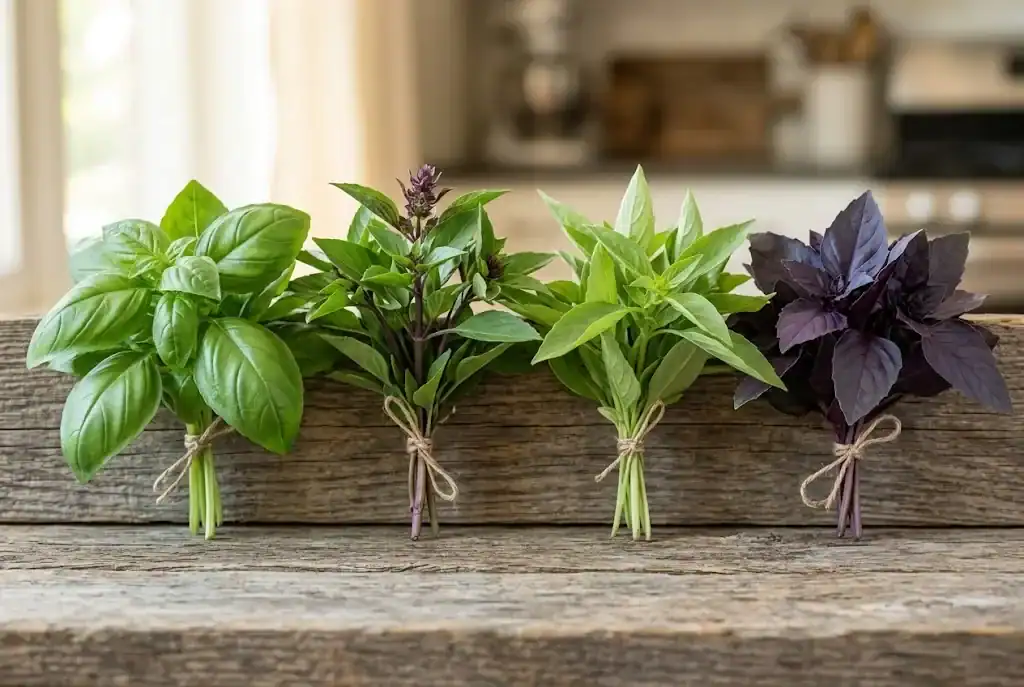
Sweet basil (the round-leafed Genovese type most markets sell simply as “basil”) is the workhouse of Italian cooking. Its flavor is soft and slightly sweet, pairing naturally with tomato, mozzarella, and good oil. Thai basil has narrower, pointed leaves with a hint of anise and a touch of pepper; it holds its shape in a hot pan, which makes it the right choice for stir-fries and curries. Lemon basil carries a true citrus note that brightens fish, chicken, and rice. Purple basil is mostly grown for its color and a slightly more clove-like edge. Holy basil (tulsi) leans peppery and is the traditional choice for Thai pad krapow. Picking the right variety is the difference between a recipe you remember and one you forget.
How to pick, store, and prep
Choose bunches with bright, perky leaves and no blackened edges. Avoid any cut that has been sitting in a cold case too long; basil turns gray and limp below about 40 degrees F, so a market display at room temperature is usually a better bet than one packed in ice. For a fuller primer on how to store basil, the methods are different from most leafy herbs, and the right approach depends on whether you plan to use it within a day or two or stretch it across the week. A short stack on the kitchen counter keeps leaves fresh for a few days, but anything longer calls for the freezer or the refrigerator, where pesto cubes and oil-packed leaves both keep their color and flavor for months.
If your bunch arrives slightly wilted, trim the stem ends and stand it in a glass with an inch of cool water, then loosely tent a plastic bag over the top. Most bunches perk back up within an hour. For longer storage, a quick blanch-and-freeze in oil locks in color and flavor for months, and the same snip-and-store rhythm is what keeps a productive plant giving all season.
Classic basil pesto
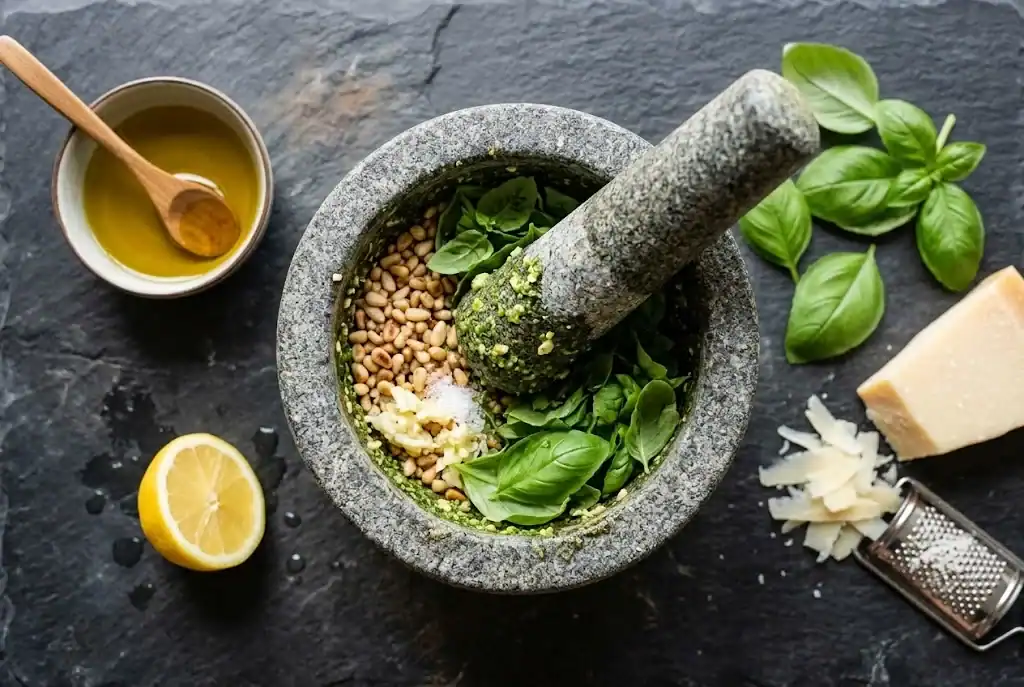
Pesto is the recipe that introduced most home cooks to this green, and the original method is still the best for flavor. A mortar and pestle bruises the leaves gently rather than slicing them, which keeps the oils bright and the color vivid. A food processor is faster but tends to bruise enough to dull the green. The resulting sauce is a vibrant flavor boost you can spoon over almost anything. The trade-off is yours.
For the pesto
- 2 cups packed fresh basil leaves
- 1/3 cup toasted pine nuts
- 2 small cloves, smashed
- 1/2 teaspoon fine sea salt
- 1/2 cup extra-virgin oil
- 1/2 cup finely grated Parmesan (Parmigiano-Reggiano if you can find it)
- 1 tablespoon fresh lemon juice
Make the pesto
- Add the pine nuts and smashed garlic cloves to a mortar and pestle and crush to a coarse paste. For a food processor, pulse the two together first.
- Add the leaves and salt, working in small handfuls. Grind or pulse in short bursts until they break down but the color stays green.
- Slowly stream in the oil while turning the pestle (or pulsing). Stop when the mixture looks glossy and loose.
- Stir in the grated cheese and lemon juice. Taste for salt.
The pesto keeps in the refrigerator for about a week under a thin layer of oil, and it freezes well in ice cube trays. Once frozen, pop the cubes into a freezer bag and grab one whenever you need a quick hit of flavor. A single cube is the right size to dress a bowl of noodles, infuse a soup with summer, or stir through rice when the rest of the dish needs a fragrant lift.
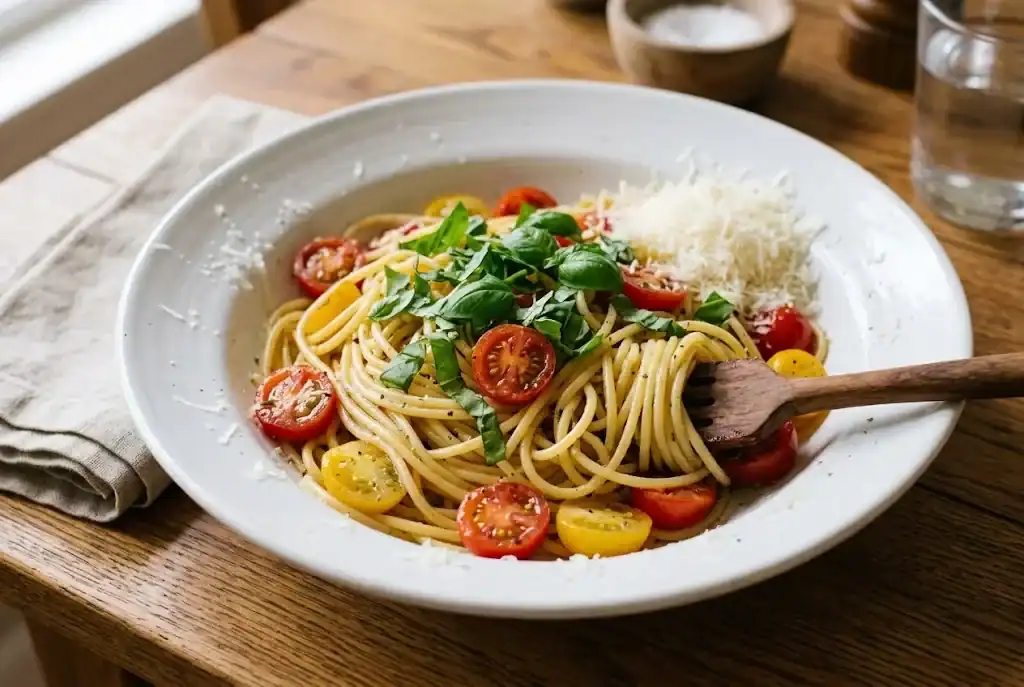
Weeknight spaghetti
When you have a small pile of leaves and 15 minutes, a simple dish with them is one of the best returns you can get. The trick is to add the greens at the very end of cooking, off the heat, so the flavor stays bright. Boiling the leaves turns them gray and turns the flavor flat.
For the dish
- 12 oz long pasta (spaghetti, linguine, or bucatini)
- 1/3 cup extra-virgin oil
- 3 cloves, thinly sliced
- 1/2 teaspoon red pepper flakes
- 1 cup cherry tomatoes, halved
- 1 cup packed torn basil leaves
- 1/2 cup grated cheese, plus more for serving
- Fine sea salt and freshly ground black pepper
Cook the spaghetti
- Bring a large pot of generously salted water to a boil and cook the noodles to just shy of al dente. Reserve 1 cup of the cooking water before draining.
- While the spaghetti cooks, warm the oil in a wide skillet over medium-low heat. Add the sliced cloves and red pepper flakes and cook gently until fragrant, about 2 minutes. Do not let them brown.
- Add the cherry tomatoes and a pinch of salt. Cook for 3 minutes, pressing some of the tomatoes with the back of a spoon to release their juice.
- Add the drained noodles and 1/2 cup of the reserved cooking water. Toss over medium heat until everything is coated, adding more water as needed.
- Take the skillet off the heat. Stir in the torn leaves and grated cheese. Taste for salt and pepper, and serve right away with more cheese on top.
Caprese and bruschetta
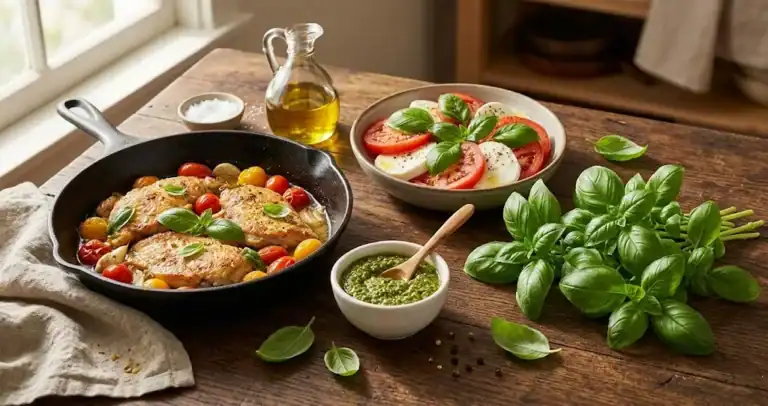
Tomato and basil are the most famous pairing in the garden, and for good reason. Two ripe ingredients, a generous pour of good oil, and a small handful of leaves is all you need. Caprese salad is the obvious place to start, and bruschetta on toast is its close cousin. Both reward the same rule: use the best tomatoes and oil you can find and treat them gently. Together they make a vibrant appetizer course for any summer table.
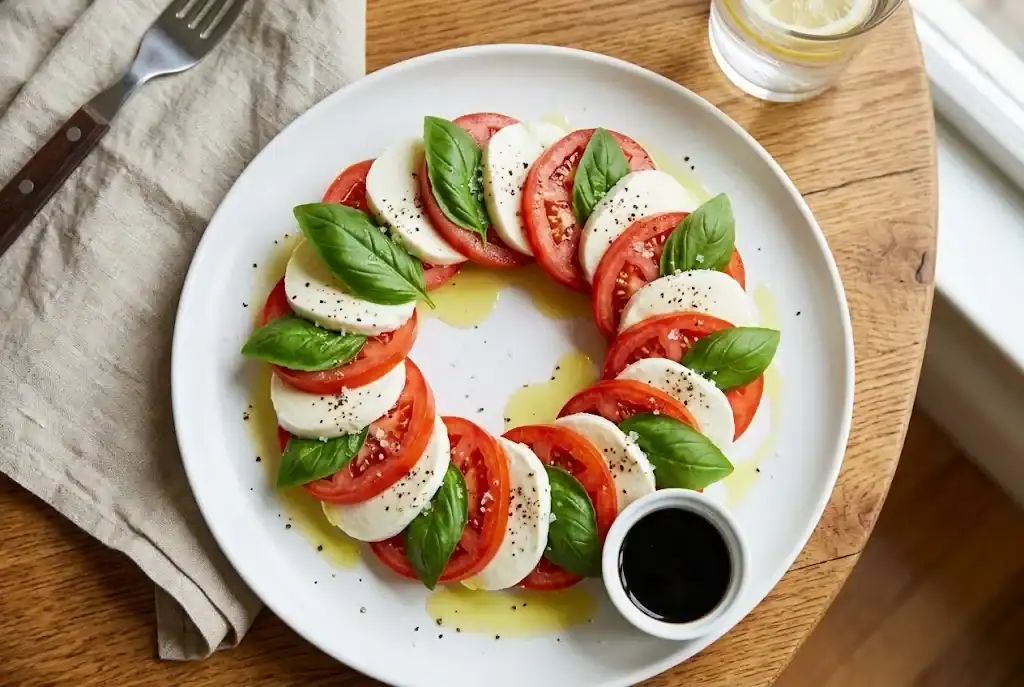
Caprese salad
Slice a pound of ripe tomatoes into thick rounds. Layer them with slices of fresh mozzarella, tuck whole leaves between each layer, and finish with flaky salt, cracked black pepper, and a generous drizzle of oil. A splash of good balsamic vinegar is optional but traditional.
Bruschetta on toast
Toast thick slices of country bread on a grill or under a broiler. Rub the warm toast with a halved clove, then pile on a mix of diced ripe tomatoes, sliced greens, minced shallot, oil, salt, and a splash of red wine vinegar. Flatbreads work the same way and are a natural fit for grilled flatbread pizzas finished with torn leaves right at the end. Eat while the bread is still warm.
Thai basil chicken
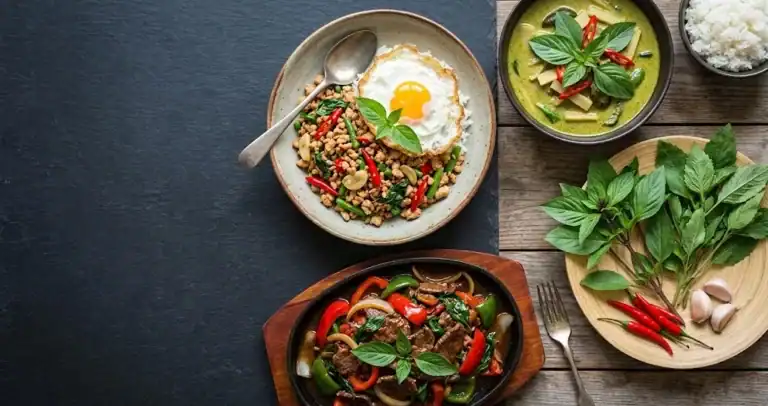
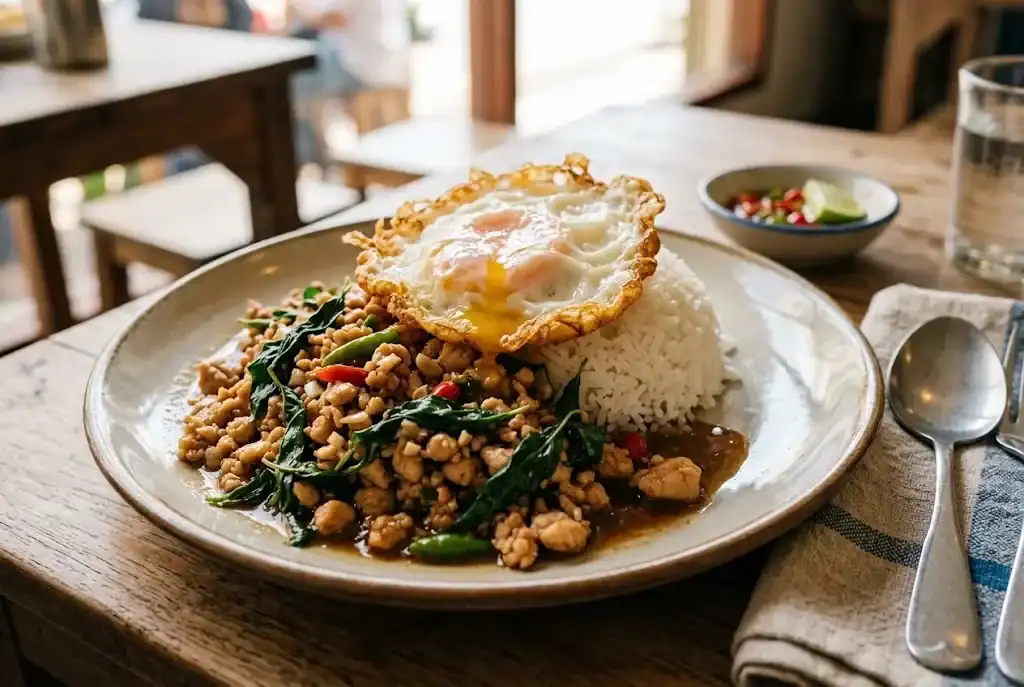
For Thai basil’s anise-edged, peppery flavor, the classic test is pad krapow, the stir-fry served over rice with a crispy fried egg on top. Holy basil is traditional, but sweet Thai basil is the variety most markets carry and works well here.
For the stir-fry
- 1 lb ground chicken (or ground pork)
- 3 cloves, minced
- 2 Thai chiles, thinly sliced (or 1 small serrano)
- 1 tablespoon vegetable oil
- 1 tablespoon fish sauce
- 1 tablespoon oyster sauce
- 1 teaspoon soy sauce
- 1 teaspoon sugar
- 1 cup packed Thai basil leaves
- Steamed jasmine rice and a fried egg, to serve
Cook the chicken
- Heat the vegetable oil in a wok or large skillet over high heat until just smoking. Add the minced cloves and chiles and stir for 15 seconds.
- Add the ground chicken and break it up with a spatula. Stir-fry for 3 to 4 minutes, until the meat is cooked through and lightly browned in spots.
- Add the fish sauce, oyster sauce, soy sauce, and sugar. Toss to coat, then cook for 1 more minute.
- Take the pan off the heat. Add the Thai leaves and toss until just wilted, about 30 seconds.
- Serve over jasmine rice, topped with a crispy fried egg whose runny yolk will mellow the heat of the chiles.
Beyond the plate
Its range doesn’t stop at savory dishes. A simple syrup (sugar, water, and a generous handful of aromatic leaves simmered together and strained) gives you a bright mixer for cocktails and lemonade. Torn greens finish fruit salads the same way mint does, particularly with strawberries, watermelon, or juicy stone fruit. And for cooked dishes, skip the homemade infused oil and finish with torn greens stirred in at the end with a drizzle of oil over the dish. Food-safety guidance from FoodSafety.gov flags fresh herbs steeped in oil and stored at room temperature as a botulism risk; do not make or store fresh-herb oil at home; use commercial products only according to their labels. A few torn leaves over a finished dish add a herby lift that nothing else quite replaces.
For a vibrant cocktail, muddle a small handful of leaves with a spoonful of the syrup and a squeeze of lime, then top with sparkling water or gin and a splash of soda. The leaves give the drink an aromatic edge that mint never quite matches, and the same syrup keeps in the fridge for two weeks. A gimlet, made by shaking gin, lime juice, and the syrup with a few torn leaves, is the recipe most bartenders reach for first when the plant is in season.
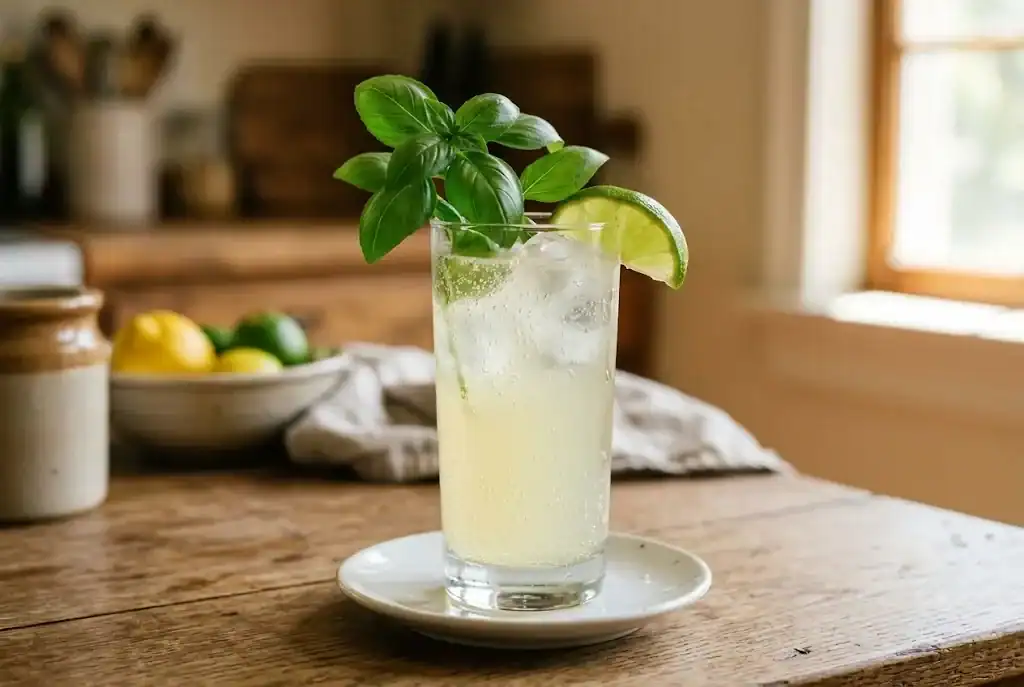
Lemonade with a sprig of leaves is the most refreshing of the no-recipe drinks: stir two tablespoons of the syrup into a tall glass of cold lemonade, drop in a sprig, and finish with a wedge of lime. The syrup carries through ice without losing its color, and the lemonade’s tartness keeps the drink from tipping into too-sweet. A sparkling version swaps plain lemonade for a half-and-half mix of lemonade and soda water.
If you want a sweet finish, this is a quiet partner in desserts. Chop a few leaves and stir them into whipped cream, or steep leaves in the cream for a panna cotta. A leaf garnish on a strawberry shortcake or a lemon tart is also the kind of small detail that makes a homemade dessert feel more thoughtful.
Putting a big harvest to work
When your plants are outpacing your kitchen, a few good preserves stretch the harvest across months. Homemade pesto is the obvious move and the easiest to make in bulk: blend a big batch, pack it into jars with a thin layer of oil on top, and freeze what you will not use within a week. Basil butter, made by softening a stick of butter and folding in finely chopped leaves plus a pinch of salt, then rolling it into a log in plastic wrap and freezing, is the secret to a flavorful finish on grilled fish, steak, or a steamy bowl of vegetables.
Basil salt is another small-batch preserve that adds an herby note to anything you would otherwise finish with flake salt: rub a handful of dried leaves into a quarter cup of flaky salt, let it rest overnight, and store it in a jar in the pantry. Basil syrup and basil vinegar round out the trio of quick infusions; skip the homemade infused-oil preserve, since FoodSafety.gov flags fresh herbs steeped in oil and stored at room temperature as a botulism risk. Each one takes about ten minutes to make and turns a few summer bunches into gifts that last well past the first frost.
Roasted vegetables with basil
Roasted vegetables are a year-round anchor, and a finishing handful of fresh basil turns them from a side into the point. Toss halved cherry tomatoes and cubed eggplant with olive oil, salt, and pepper, and roast at 425 degrees F until the edges char and the centers go creamy. Off the heat, add a generous tumble of torn leaves and a drizzle of oil. The aroma that rises from the pan is half the reason to make the dish.
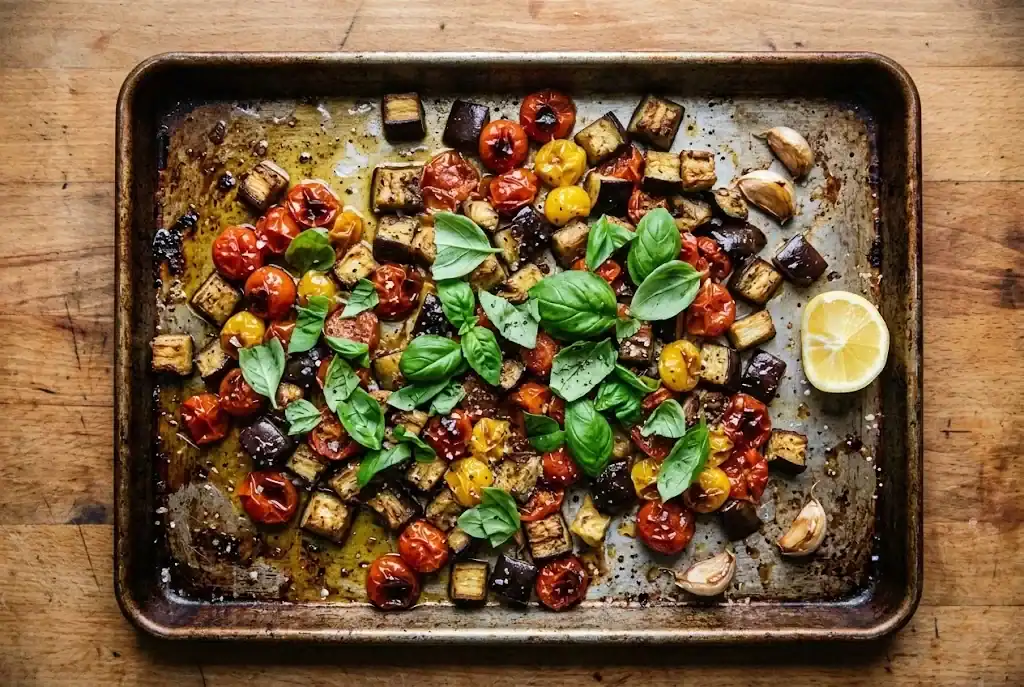
This is also the place to use a less-than-perfect batch of leaves: ones that have wilted in the fridge, ones with a few brown spots, anything you would not pile on top of a caprese. Heat softens the visual flaws and the flavor still pops. A rough chop at the end gives a topping that looks deliberate and rustic rather than tired.
Frequently asked questions
Can I freeze fresh basil?
Yes, and it is one of the best ways to keep the harvest after frost ends the garden season. The cleanest method is to blanch the leaves for 10 seconds, shock them in ice water, squeeze them dry, and pack them into ice cube trays with a splash of oil. Once frozen, the cubes go into a freezer bag and add a hit of summer to soups, dressings, and pastas any month of the year. You can also skip the blanch and freeze whole leaves flat on a sheet pan, then bag them once solid; they will darken but the flavor holds. The rhythm of cutting and freezing ties into how to harvest basil, since the same snipping cadence that keeps the plant productive also feeds your freezer.
What can I do with a lot of basil at once?
Make pesto and freeze it. A large harvest will turn into many jars of sauce that you can use across the fall and winter, and each recipe above doubles or triples with no extra work. Beyond pesto, basil butter and basil salt are two quick preserves that take very little time and stretch the harvest through the season. A simple vinaigrette of olive oil, lemon juice, Dijon mustard, and chopped greens works on salads all week.
Is dried basil a workable substitute for fresh?
It works in cooked dishes where the leaves have time to rehydrate, but it is not a one-for-one swap. Dried basil has a more muted, slightly hay-like flavor and no bright green color. The general rule is one teaspoon of dried for every tablespoon of fresh, and add it earlier in cooking rather than at the end.
Which basil is best for pesto?
Genovese, the large-leafed sweet variety sold in most markets, is the classic choice. Its flavor is sweet and round, with the least peppery or anise edge of the common varieties. If you grow your own, let the plant branch out before you take your first big harvest; the leaves are bigger and the flavor is fuller.
Where this fits in a wider cooking garden
This herb is one of the most rewarding herbs to grow because it gives back more than it asks for. If you are building a small kitchen garden of culinary herbs, it belongs alongside parsley, thyme, rosemary, and chives, and pairs especially well with the tomatoes and peppers that share its summer season. This is also one of the most delightful flavors of summer, and a backyard plant gives you more of it than most gardeners can use fresh. Cooks who use it often enough to want a more comprehensive treatment end up reaching for a dedicated cookbook section; for a fuller look at how the common culinary herbs compare and how to combine them in everyday cooking, facts about culinary herbs walks through the workhorses, the supporting players, and the herbs worth reserving for special dishes.