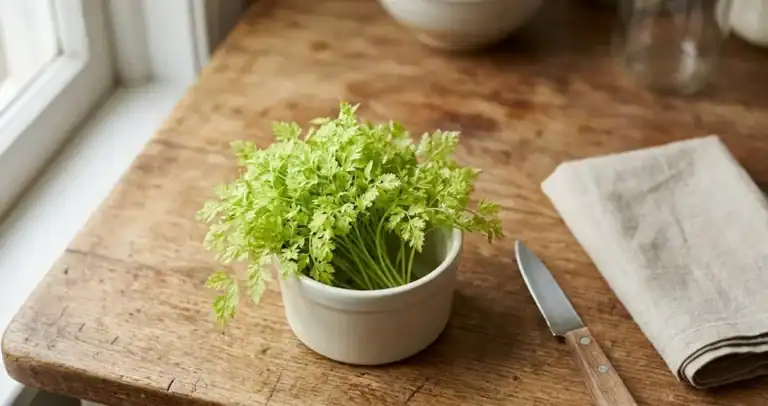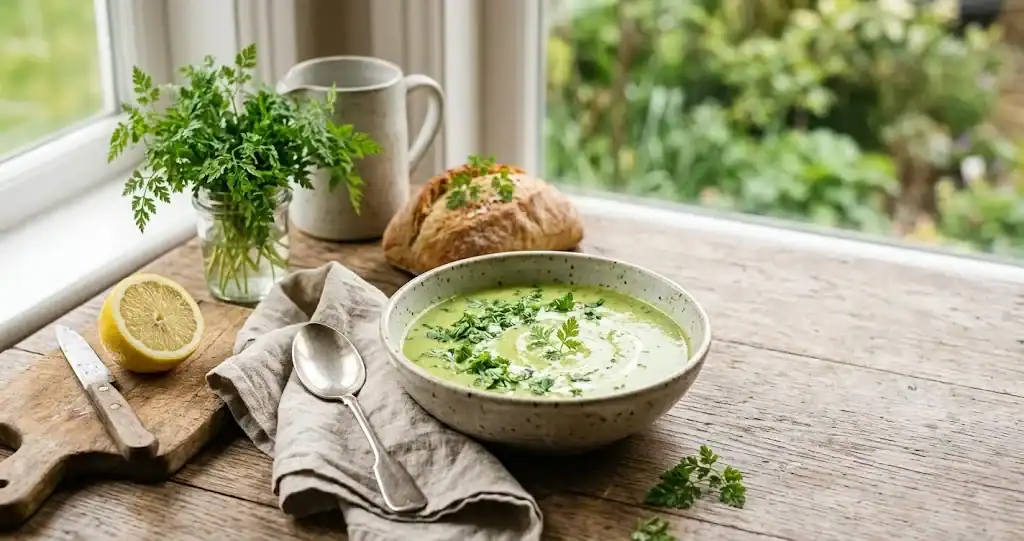
Chervil is at its best when treated gently. Soft, feathery leaves carry a light flavor that sits just off parsley, with a faint anise note. Added near the end of cooking, it brightens eggs, soups, salads, fish, and simple sauces without taking over.
If you are new to this French kitchen staple, start with a small bunch. It is one of the classic fines herbes, and it gives everyday ingredients a polished finish. For a wider look at flavor pairings and herb families, browse our culinary herbs guide.
What chervil tastes like
It tastes light, green, and gently sweet, with a faint licorice edge. The lacy leaves look familiar, but that delicate flavor is softer and sweeter, and it is not related to coriander. That character fades under long heat, so treat it as a finishing herb rather than something to simmer.
Buy bright, feathery sprigs with a clean aroma and keep the bunch loosely wrapped in a barely damp paper towel in the refrigerator. If you have more than you need, our guide on how to store chervil helps you use it up.
How to use chervil in cooking
Reach for it wherever you want a softer finish than sturdier leaves give. Chop it finely just before serving and stir it through warm food off the heat. It suits eggs, peas, potato, lemon, butter, cream, fish, chicken, and green salads.
Add most of the chopped chervil at the end, then keep a small sprinkle back for the plate. The dried herb loses most of its perfume, so fresh chervil is worth seeking out when a recipe is built around it.
6 chervil recipes to try
1. Lemon vinaigrette
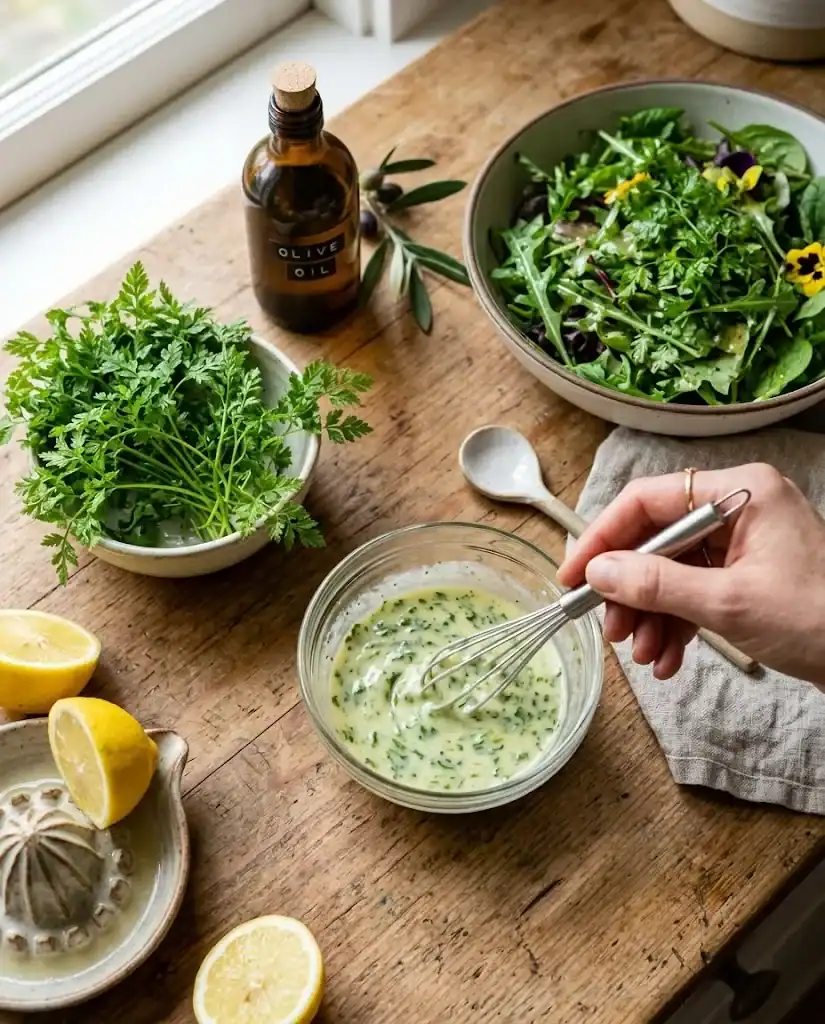
Whisk 3 tablespoons olive oil, 1 tablespoon lemon juice, and 1 teaspoon Dijon mustard with a pinch of salt and black pepper until glossy. Fold in 2 tablespoons of the finely chopped herb just before serving, and dress tender leaves, radish, or steamed vegetables. Make it fresh rather than well ahead.
2. Soft omelet with chive

Beat 3 eggs with salt and pepper and cook them gently in butter. As they finish setting, scatter over 1 tablespoon chopped leaves and 1 teaspoon snipped chive, then fold and serve. The aroma comes through best when it meets warm eggs at the last moment. A little lemon zest sharpens it if you like.
3. Spring pea and chervil soup
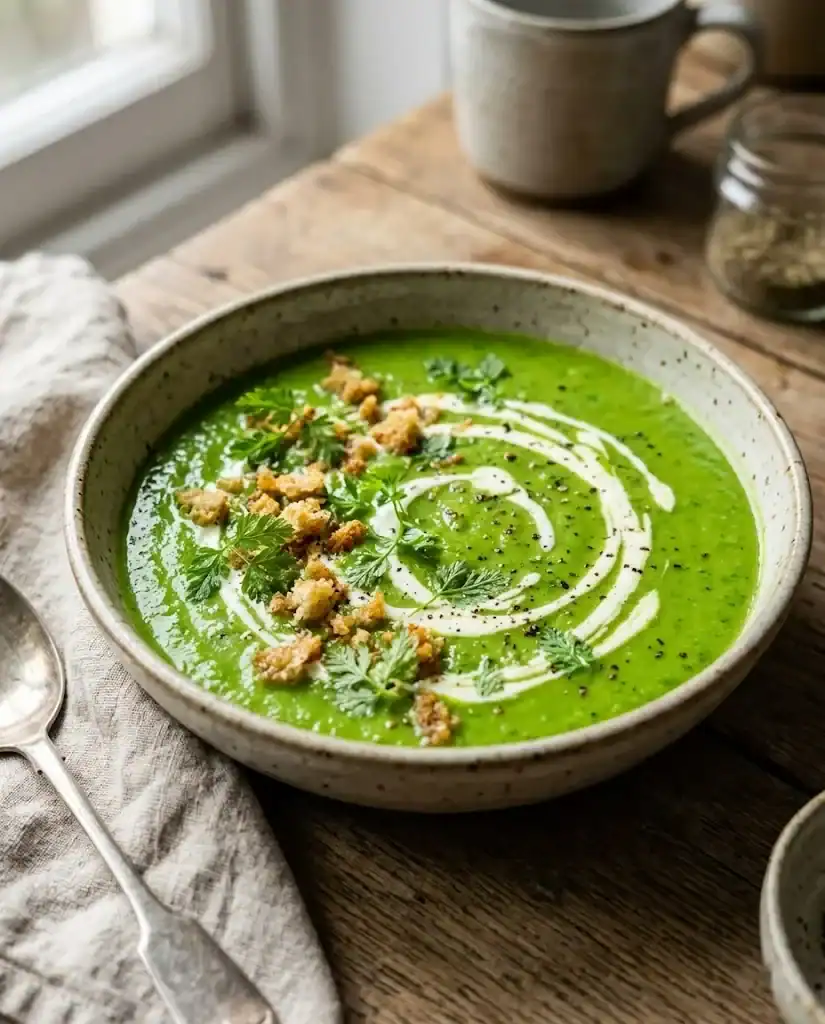
Soften a chopped shallot in butter, add 2 cups peas and 2 cups mild vegetable stock, and simmer until tender. Blend it smooth in a blender, season, and stir in 3 tablespoons of chopped leaves off the heat. A spoonful of creme fraiche makes it more substantial. Finish each bowl with a few whole chervil leaves, a drizzle of oil, and a scatter of toasted breadcrumbs.
4. Roast carrot salad
Roast carrot batons with oil, salt, and pepper until tender and caramelized, then dress them warm with the dressing above. Toasted hazelnuts and a little crumbled goat cheese turn it into a fuller plate. The sweet roots make a good side for grilled fish, or anything else off the grill.
5. Herb butter for fish and potatoes
Mash 4 tablespoons softened butter with 2 tablespoons of the finely chopped leaves, 1 teaspoon lemon juice, a pinch of salt, and pepper. Spoon it over steamed new potatoes, poached salmon, or warm artichoke leaves. Chill it as a small log, then slice off a round while the food is hot so it melts down into a glossy sauce.
6. Creamy sauce for chicken or salmon
After pan-cooking chicken or salmon, pour off the excess fat and add half a cup of dry white wine or stock. Simmer briefly, stir in a third of a cup of cream, and reduce until it lightly coats a spoon. Off the heat, add 2 tablespoons chopped leaves and a squeeze of lemon. Keep the simmer gentle once the cream goes in, so the green stays bright.
Mayonnaise and a classic butter sauce
For a quick mayonnaise, mince a tablespoon of leaves and fold them into half a cup of good mayonnaise with lemon zest and a pinch of salt. Serve it with poached salmon or steamed artichoke. The same leaves belong in béarnaise, the warm emulsion of egg yolks and butter behind so many classic French dishes, stirred in at the end so the perfume stays clear.
Easy substitutions
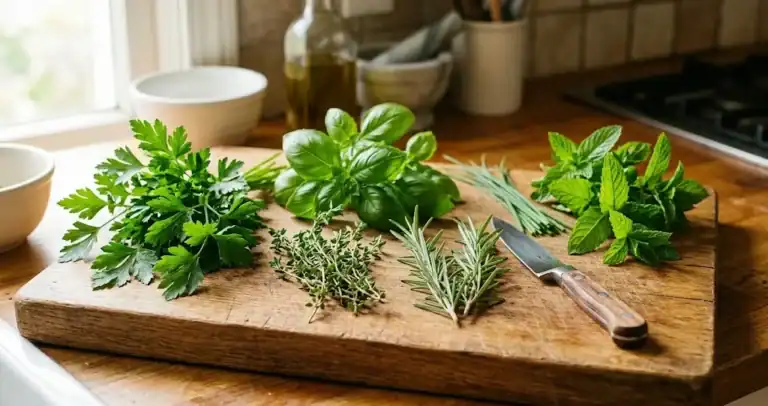
Nothing matches it exactly, but a dish still works without it. For a similar fresh character, use parsley and tarragon together, leaning heavily on the first. For salads and dressings, add a pinch of chopped fennel frond instead. Add either sparingly, since both are far more assertive.
For technique beyond this collection, see these ways to cook with chervil, which help you judge the right moment to add it.
Frequently asked questions
What can you make with chervil?
Dressings, omelets, soup, compound butter, salad, and light pan sauces. It is also a fine last-minute garnish for fish, chicken, peas, and spring vegetables.
Is it the same as parsley?
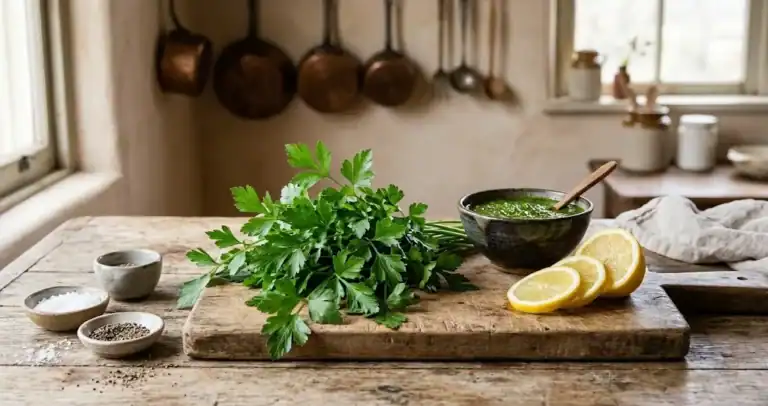
No. Both are soft leafy herbs, but this one has finer leaves and a gentler, faintly aniseed taste. Parsley stands in reasonably well, though it misses that sweetness.
Can you cook it?
Yes, briefly. Stir it into soups and eggs near the end, or use it raw in a salad to keep the aroma intact.
Where to buy it
Fresh sprigs can be difficult to find, so try a farmer’s market, a specialty greengrocer, or the herb shelf of a larger supermarket. Choose lacy bunches with a clean aroma and no yellowing.
Make the most of a fresh bunch
Start with one of these chervil recipes, then scatter what is left over a warm plate. That final sprinkle is often the difference between food that tastes good and food that tastes composed and unmistakably springlike.