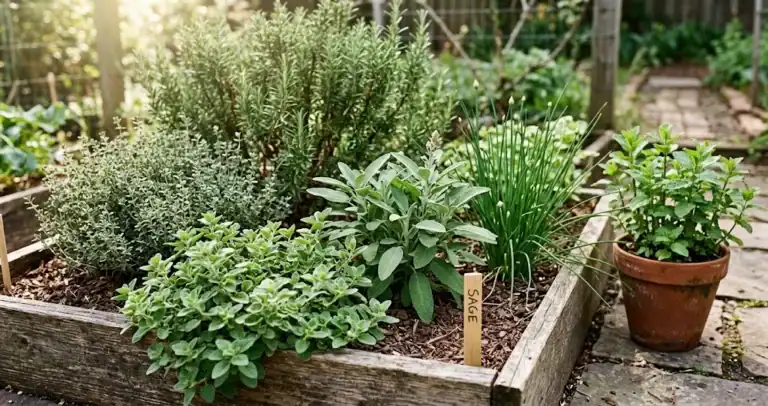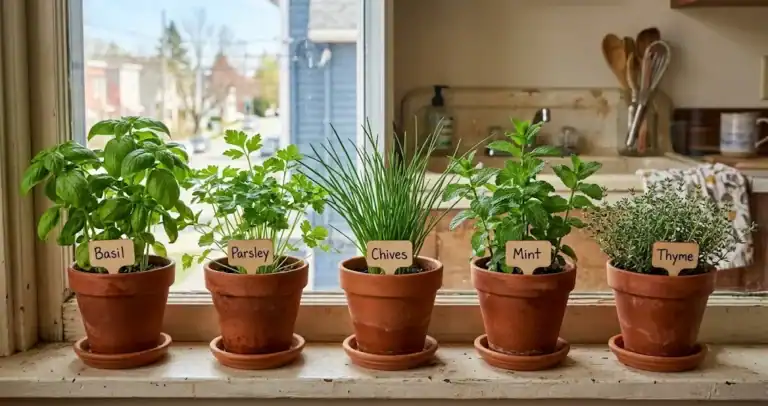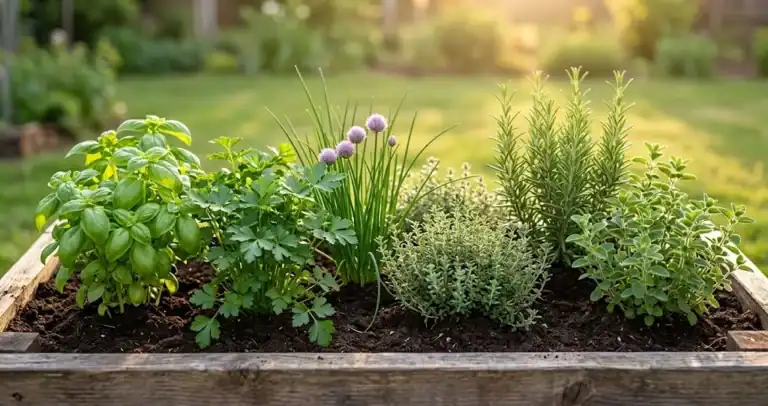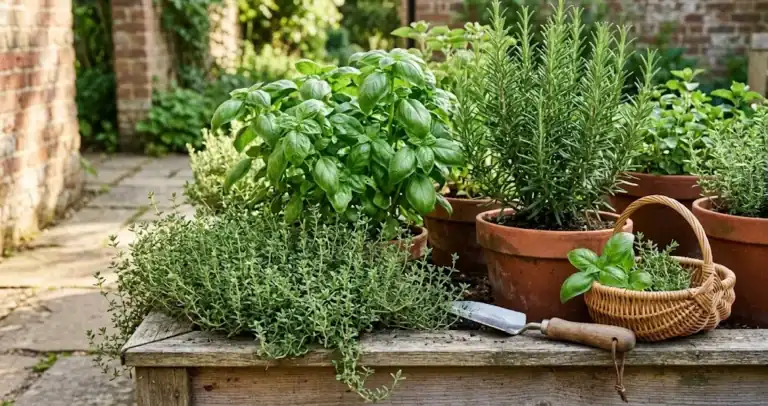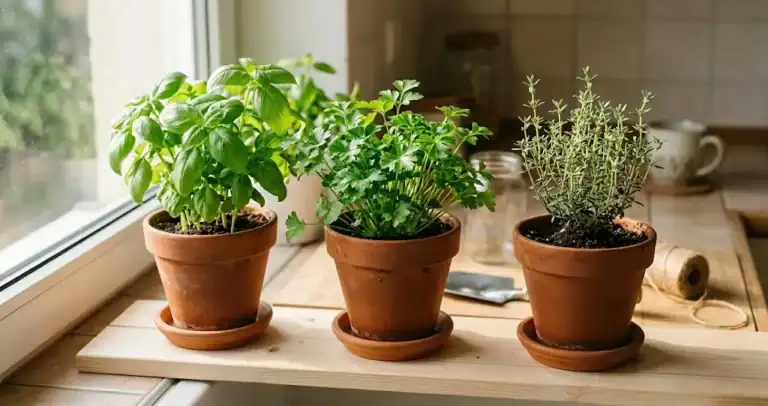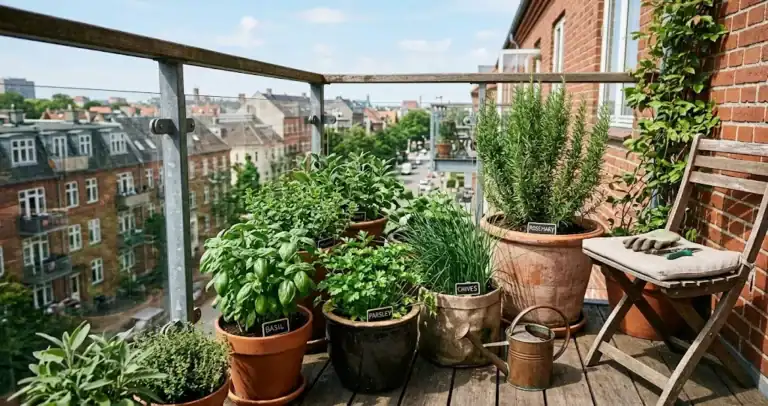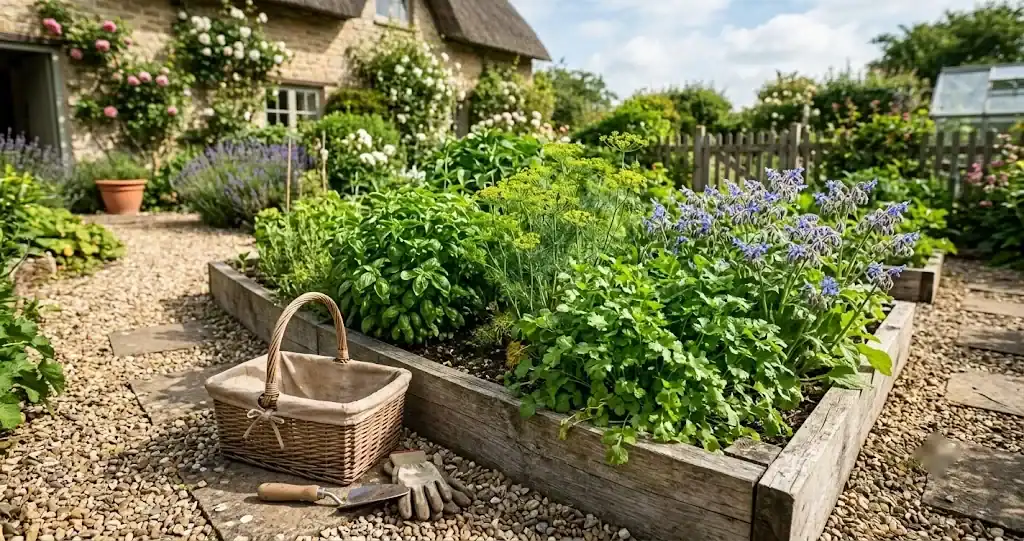
A few pots of basil, cilantro, and dill can change how you cook from late spring until frost. Annual herbs grow quickly, give generous harvests, and let you try new flavors every year without committing a garden bed for the long haul.
These plants complete their life cycle in one growing season. You sow or buy young plants in spring, harvest fresh leaves, stems, seeds, or flowers through the warm months, then replant the following year. In mild climates, some may linger longer, but their gardening role is still seasonal.
What makes a plant complete its cycle?
Some herbs fit a third category. This guide to biennial herbs explains plants that usually make leaves one year and seed the next.
An annual herb grows, flowers, sets seed, and dies within a single season. Long-lived herbs, such as oregano, sage, and many mints, can live for several years when the climate suits them. A few plants sit in the middle: parsley usually takes two seasons, making leaves in its first year and flowering in its second.
An annual vs perennial choice depends on your climate, space, and what you cook most often. That distinction helps with garden planning. Fill open spaces with quick-growing herbs for quick color and frequent picking, then give long-lived plants their own permanent spot. If you want the broader layout, this beginner’s guide to growing an herb garden walks through choosing a site, soil, and starter plants.
Seasonal herbs to grow
Choose a small group you will actually use. Most are easy to grow from seed or inexpensive as seedlings, and each brings a different flavor or texture to the kitchen.
Basil
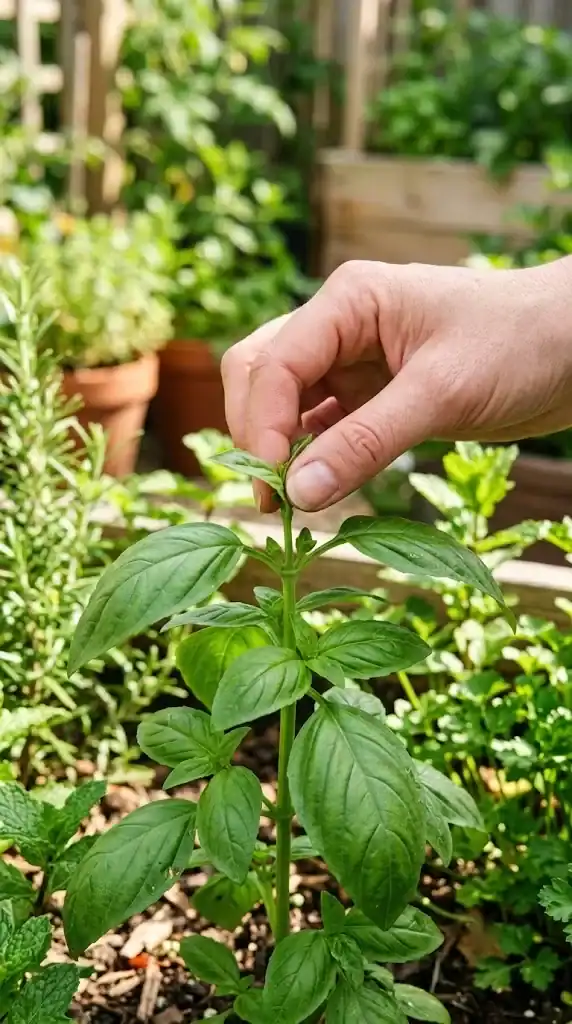
Basil is the warm-weather favorite for pesto, tomato dishes, salads, and fresh garnish. Grow it in full sun after the frost has passed. Pinch back the growing tips above a pair of leaves to encourage a bushy plant, and remove flower buds when leaf production is your priority. Fresh basil dislikes cold soil and chilly nights.
Cilantro and coriander
Cilantro gives tender, aromatic leaves, while coriander is the name for its mature seed. It grows best in cool spring and fall weather and often bolts when summer heat arrives. Sow a small patch every two or three weeks for a longer harvest. Let one plant bloom if you want pollinators and coriander seed.
Dill
Dill has feathery foliage, bright flavor, and useful leaves for fish, potatoes, cucumber salads, and pickling. Direct-sow it where you want it to grow because its taproot dislikes being disturbed. Harvest young leaves often, then allow a few umbrella-shaped flower heads to form if you want its fragrant seed. The leaves are especially good in soups and pickling brines.
Chervil and parsley
This gentle, anise-like culinary herb suits eggs, soups, and spring vegetables. It prefers cool conditions and partial shade in warm areas. Parsley is usually grown for one season of leaf picking even though it naturally runs to seed in its second year. Sow both early, keep the soil evenly moist, and cut the ferny leaves before the plants bloom.
German chamomile
German chamomile, Matricaria chamomilla, is grown for its small, daisy-like flowers. Give it sun to light shade and room for air movement. Pick the open flower heads on a dry morning. Gardeners often dry them for a fragrant herbal tea, although culinary use is not the same as using concentrated herbal products.
Borage, anise, and summer savory
Borage, Borago officinalis, makes blue edible flowers that look lovely in salads and drinks, while its fuzzy leaves have a cucumber-like note. Anise produces aromatic seed for baking and spice blends. Summer savory is a peppery herb that works especially well with beans. These plants add useful variety to a vegetable garden and make good companion planting partners when you allow flowers to encourage pollinators.
How to grow annual herbs
Most of these kitchen plants want six or more hours of sun, loose well-drained soil, and enough space for air to move around the leaves. Basil and anise need full sun. The cool-season leaf herbs tolerate some afternoon shade where summers are hot.
- Start at the right time: Sow cool-season choices in spring and fall. Plant this heat-loving favorite outdoors only after frost danger has passed and the soil has warmed.
- Do not overfeed: Compost mixed into garden beds is usually enough. Excess high-nitrogen fertilizer can produce soft growth with less concentrated flavor.
- Water the soil: Water deeply when the top inch feels dry, then let excess drain away. Constantly wet roots invite trouble.
- Thin seedlings: Crowded herbs stretch and stay damp. Give each plant its recommended room, even when the seedlings look small.
- Watch for pests early: Check tender new growth for aphids. A firm spray of water or hand removal is often enough for a small garden.
When you grow from seed, follow the packet for depth and timing. Some small seeds need light to germinate, while others do best with a thin cover of mix. Start a few herb plants indoors only when the season is short, then transplant them outside after frost. For fresh herbs from garden beds, choose a sunny site with well-drained soil and use companion planting as a simple way to mix flowers and vegetables without crowding the roots.
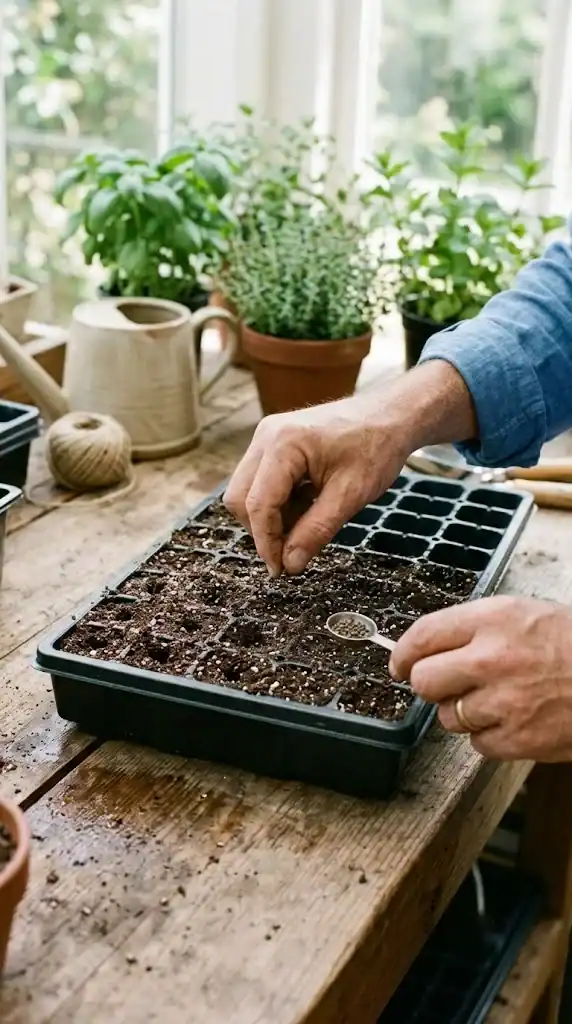
Seed packets may list scientific names as well as common names. The leaf and the seed come from one plant, Coriandrum sativum, and parsley is Petroselinum crispum. Those labels help you choose the right seed when several varieties share a similar common name.
Growing annual herbs in containers
Herbs in containers are a practical choice for patios, balconies, and renters. Use a pot with drainage holes and fresh potting mix, not heavy garden soil. A 10- to 12-inch pot suits one warm-season plant or a small clump of parsley. Dill and anise need deeper containers because they form longer roots.
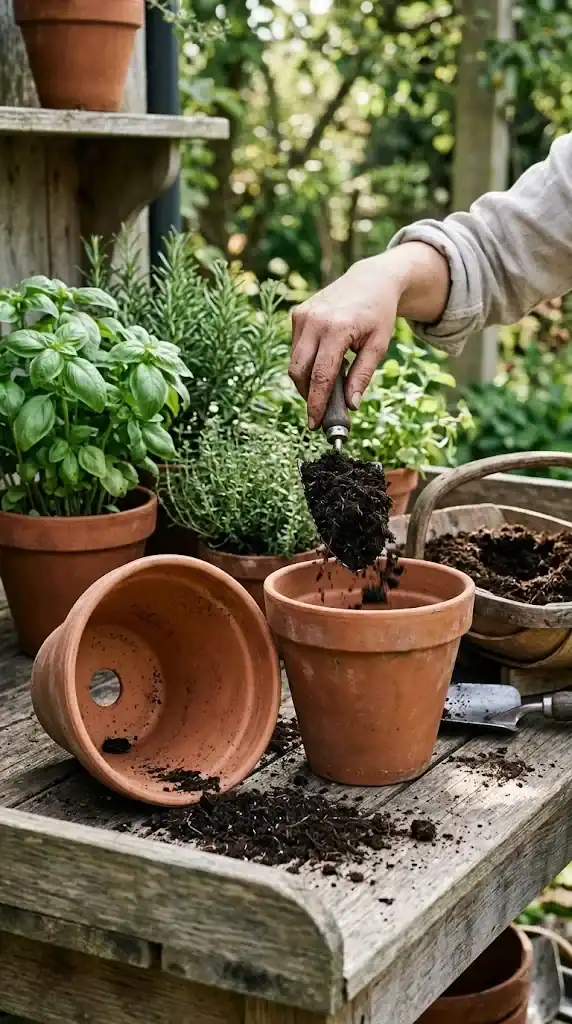
Container plants dry out faster than garden beds, especially in wind. Check them daily during hot weather and water until it runs from the drainage holes. Group herbs with similar needs instead of putting a thirsty plant beside a drought-tolerant perennial.
Harvesting keeps plants productive
In a long growing season, prune a few tips regularly rather than stripping a plant at once. Begin harvesting once a plant has several healthy stems. Take no more than about one-third of the leafy growth at a time, and cut above a leaf joint so the plant can branch. Morning harvests are pleasant and convenient, but the real goal is dry, clean leaves rather than a rigid clock.
Use the tender herbs fresh when you can, adding delicate leaves near the end of cooking so their aroma stays bright. When a frost is forecast, gather what remains. They freeze well as a blended pesto or chopped into oil, and the softest kinds keep best in small portions.
Annual herbs versus perennial herbs
These quick crops earn their space through speed and flexibility. They let you experiment with a new cuisine, fill a bare corner, and enjoy a generous crop from a packet of seed. Long-lived herbs reward patience with a lasting base of oregano, sage, and bay.
For a clearer look at the long-term side of the garden, see how to grow perennial herbs.
Make the most of one growing season
Staggering sowings turns a short burst of leaves into a steady supply. Sow cilantro every few weeks while weather is cool. Replace a bolted plant with basil as days warm. In a long growing season, start another round as summer heat fades.
Use seasonal choices to solve small garden problems. Put this plant close to tomatoes so both are easy to harvest for dinner. Edge a bed with parsley, or tuck borage near vegetables, where its blue flowers bring pollinator visits all summer. Keep vigorous self-seeders away from paths and storm drains, then collect seed before it drops if you want more plants next year.
Do not confuse a frost-tender plant with a one-season crop. Lemongrass, pineapple sage, stevia, lemon balm, and scented geranium may survive several years without frost, but gardeners in cooler hardiness zones often grow them as seasonal plants or move containers indoors before winter. Check your local frost date and overwintering conditions before deciding whether to replant.
A simple seasonal plan
Think of this as a small guide to growing herbs, not a rigid planting list. Start with three herbs you use often. Plant basil after cold weather, sow a second cool-season crop a few weeks after the first, and add one unfamiliar plant such as summer savory. Pick a little each week, let one or two plants flower for seed and beneficial insects. Use the leaves and flowers that suit your cooking, and make a note of what your kitchen missed most in winter. That list becomes next year’s herb garden.
Frequently asked questions about annual herbs
Which herbs need to be replanted each year?
Cilantro, borage, summer savory, and German chamomile are commonly grown for one season. Local climate matters. A plant that survives winter in a warm area may still need replanting where frost is hard or frequent.
Do rosemary and thyme come back every year?
Both come back year after year in climates where they are hardy. Rosemary is the less cold-tolerant of the two, so gardeners in colder regions often grow it in a pot and protect it indoors over winter.
Can these herbs grow indoors?
Yes, but light is the limiting factor. Put indoor herbs in the brightest available window or under a suitable grow light, use a pot with drainage, and avoid keeping the mix constantly wet. This warm-season favorite needs especially strong light to stay compact and flavorful.