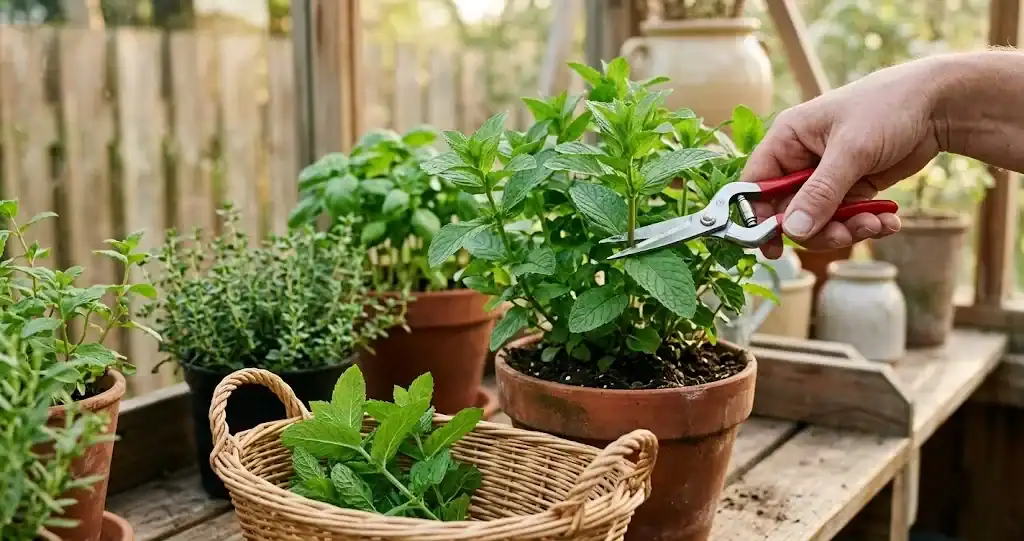
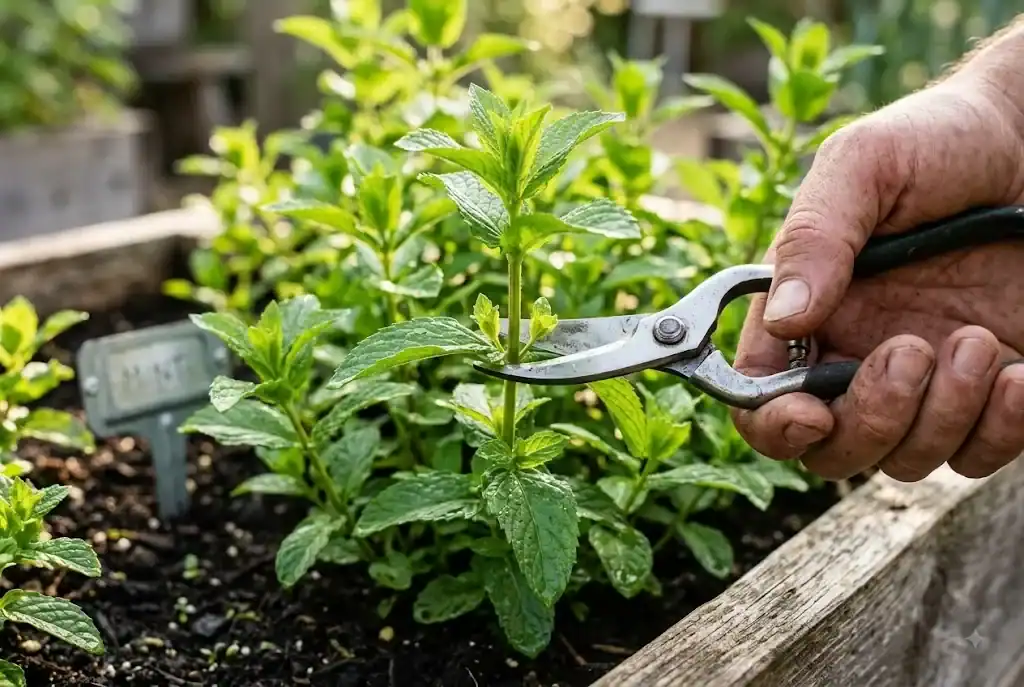
Mint is easiest to enjoy when you cut it little and often. To cut mint without slowing the plant, use clean snips to cut a healthy stem just above a pair of leaves. Take no more than one-third of a full mint plant at once, then let new shoots fill in.
For the broad rules that apply to culinary herbs, see this complete herb harvesting guide. Mint is forgiving, but clean cutting and quick handling protect its aromatic leaves and help it grow faster and fuller.
When is the time to cut mint?
Begin cutting after the plant has several sturdy stems and plenty of leaves. The best time to cut mint is in the morning, after dew has dried and before strong afternoon heat softens the foliage. The leaves are crisp then, and their minty flavor is at its brightest.
You can pick fresh leaves throughout the season. For the best flavor, cut mint before it flowers. Mint leaves remain useful after the first flowering, but stems can turn tougher and the flavor may be less sweet. Cut back mint when it begins to flower, then use the tender new growth that follows. A second flowering period is another cue to trim.
How to cut mint step by step
- Choose healthy vertical shoots. Look for clean, bright leaves and firm mint stems. Leave pest-damaged or wilted growth behind until you can remove it separately.
- Find a leaf pair. Follow the stem down to a pair of leaves, then snip just above it. New side shoots can grow from the node below the cut.
- Cut whole stems for a larger harvest. Always cut off whole stems from different parts of the plant rather than stripping every leaf from one shoot. For a drink or garnish, you may pluck a few individual leaves instead.
- Leave enough foliage. Stop at about one-third of the leafy growth. Taking more can weaken the plant, even though mint is fast-growing.
- Move the cut stems into shade. Keep the leaves and stems cool until you use or refrigerate them.
This method is pruning mint as well as harvesting. It encourages bushier growth, prevents a leggy plant, and gives you a steady supply of fresh mint. If you want to learn how to prune another culinary herb, use the same basic idea: make clean cuts above healthy leaves.
How often should you harvest mint?
A small bunch of freshly cut mint is often enough for a meal or pitcher. Light picking is fine whenever the plant is actively growing and full. A larger harvest works best every few weeks, after it has replaced what you removed. Let the size of the plant decide. Mint regularly cut back stays compact; a small plant needs more time.
Mint is a perennial herb. When you grow mint directly in the ground, its horizontally growing stolons and underground rhizomes can spread well beyond the original clump. Keeping mint in a large pot or planter is often the simplest way to prevent mint from becoming a garden-bed escapee. Use well-drained potting soil and give container mint air circulation around the foliage.
How growing conditions affect your harvest
A mint plant starts producing well once it has settled into a kitchen garden, raised bed, or container. Whether you sow seed, plant mint from a nursery start, or divide an established clump, harvest only after there is enough leafy growth to recover. Edible Mentha varieties respond well to routine trimming.
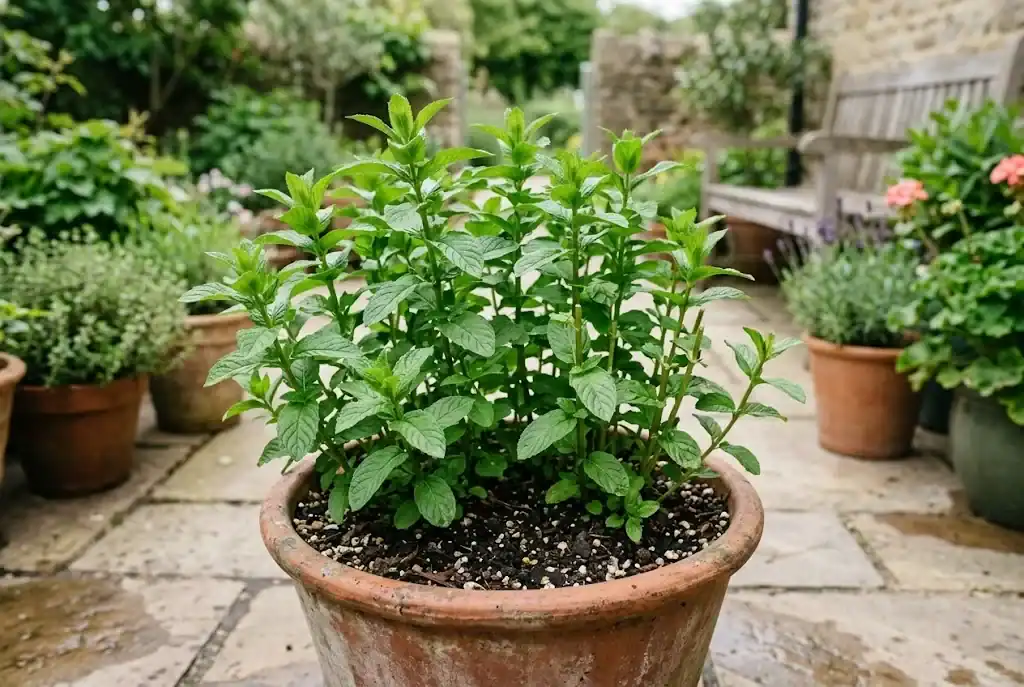
To grow mint the right way, keep the soil evenly moist but not waterlogged, remove weak stems, and cut flowering shoots before they set seed. A sunny spot with some afternoon relief suits many gardens. Mint does best in a container or beside other moisture-loving herbs, but give its vigorous roots their own space. Lemon balm looks similar in some settings, so label plants when you grow several members of the mint family.
Harvesting mint before winter
Before the first hard frost in a cool climate, take a final generous harvest from a healthy plant. Cut leafy stems while leaving some growth above the soil. Garden mint usually dies back and returns from its roots in spring. In mild climates, this perennial herb may keep producing through much of winter.
Do not make a severe cut on a struggling plant late in the year. Remove damaged stems, collect what you need, and let the roots rest. In many temperate gardens, August to September is a useful time to assess whether the plant needs a tidy cutback before colder weather.
Should you wash mint after harvesting?
Wash mint just before you use it, especially if you will store it for more than a day. Extra moisture can shorten the life of fresh mint in the refrigerator. Gently swish the leaves in cool water, then spin or pat them dry. Keep the leaves whole until you are ready to chop them.
If the crop is dusty or has been treated with a garden product, rinse it promptly and dry it thoroughly. Use only mint you can identify as an edible culinary variety. Do not eat leaves from an unknown plant simply because they have a pleasant odor.
How to store mint after harvesting
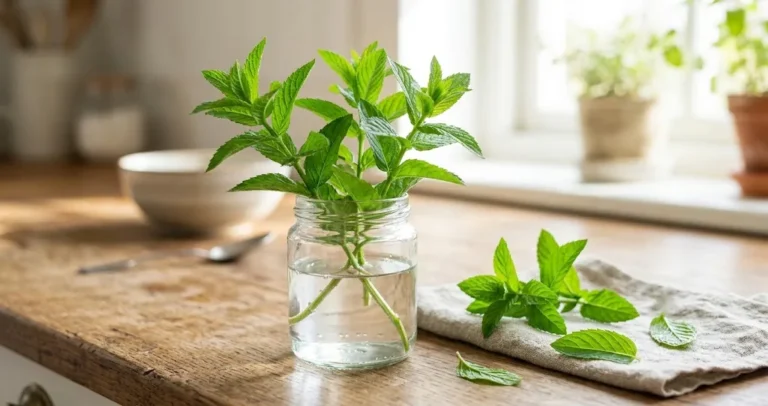
For mint you will use today, trim the stem ends and stand each sprig in a glass with a little water. Loosely cover the leaves with a plastic bag and refrigerate them. For a longer hold, harvest and dry mint, or freeze the leaves in a way that fits your recipe plans. This guide to how to store mint explains the practical options.
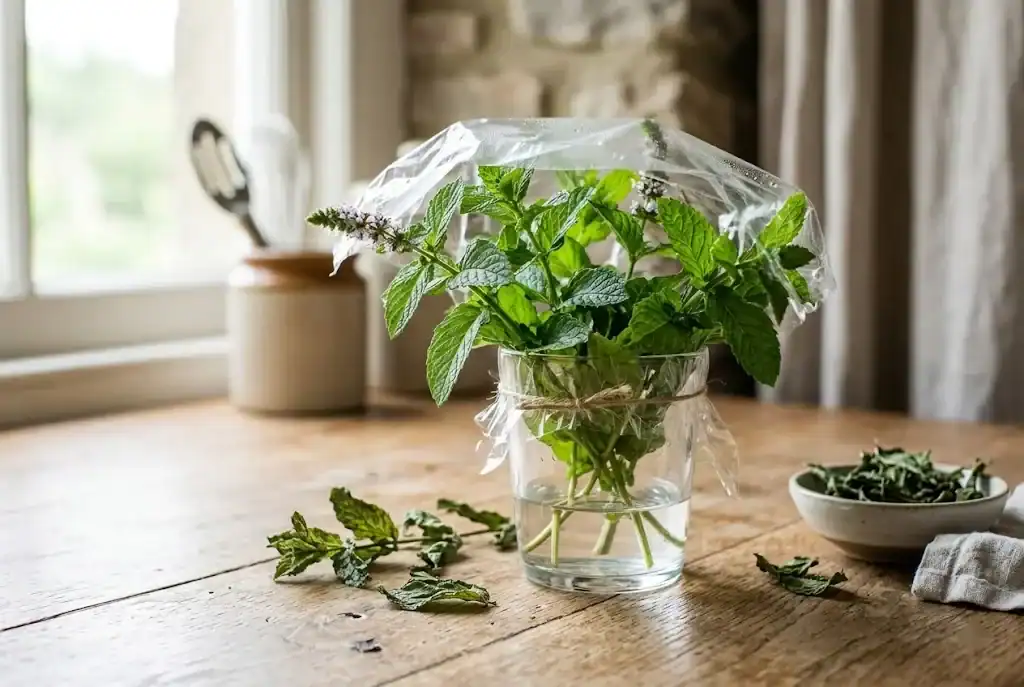
Dry mint works well for tea and pantry cooking. Spread dry, clean leaves in a single layer where air can circulate, then store them in an airtight container only when fully dry. For short-term storage, a damp paper towel around dry leaves can help, but do not seal wet foliage in an airtight container. Trapped moisture encourages spoilage and fungus.
Common mint-harvesting mistakes
- Stripping every leaf from one stem: cut above a leaf pair so the stem can branch.
- Taking too much from a small plant: wait for more leafy growth, then harvest lightly.
- Cutting in the heat: the leaves wilt faster and lose freshness.
- Leaving a harvest in the sun: shade the stems as soon as you cut them.
- Ignoring flowers and leggy growth: a timely trim keeps the plant productive.
Ways to use fresh mint
Fresh mint has many uses: cold drinks, fruit, salads, yogurt sauces, grain dishes, and mint tea. Tear or chop the leaves just before serving so their flavoring oils stay lively. Chamomile and mint can make a gentle-tasting tea blend, while orange, carrot, and cabbage salads benefit from a few chopped leaves. For more recipe ideas, explore these ways to cook with mint.
Frequently asked questions about harvesting mint
Does mint grow back after cutting?
Yes. Healthy mint usually sends out new shoots below a clean cut, especially when you cut above a leaf node and leave leafy growth behind.
Can you harvest mint after it flowers?
Yes, but the leaves may be less tender. Cut the flowering stems back and wait for fresh new shoots when possible.
Can you eat mint leaves straight from the plant?
Yes, if you have identified the plant as edible mint and the leaves are clean. Rinse them when soil, dust, insects, or garden treatments are a concern.
Is it better to pick leaves or cut stems?
Pick a leaf or two for immediate use. For routine harvesting, cut stems just above leaf pairs to encourage a fuller plant.
Keep the harvest habit simple
Check your mint often, cut a few healthy stems before it gets leggy, and handle the harvest gently. That habit gives you fresh leaves now while keeping the plant leafy for the next round.