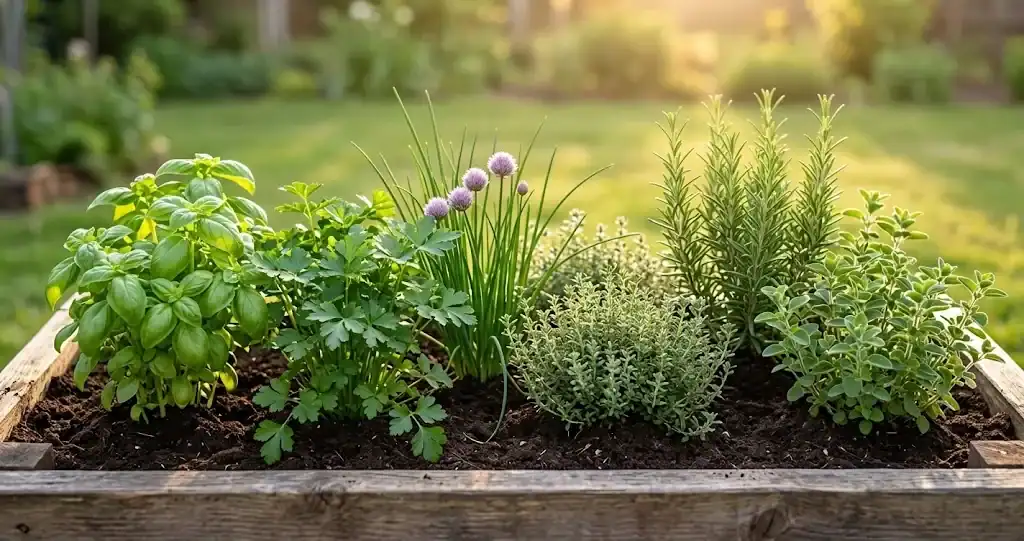
You do not need a big yard, expensive equipment, or years of practice to start an herb garden. A sunny patch of ground, a few clay pots on a porch, or a single window box is enough to grow herbs you will actually use. The plants reward ordinary care with better flavor than anything that has spent a week on a truck, and the home gardener who starts small usually ends up with more fresh sprigs than the household can use by midsummer.
This guide walks through the whole project in order: choosing a spot, deciding between a garden bed and containers, picking the herbs that suit your kitchen, building the soil, planting seeds or starter plants, watering, harvesting, and dealing with the few problems that reliably show up. It assumes you want fresh herbs for everyday cooking, not a botanical collection. By the end you should know which herb to grow first, where to put it, and how to keep it productive for years.
Pick a spot that already suits herbs
Before you choose plants, choose a place. Most culinary herbs want four things from a site, and getting any one wrong is what makes people give up:
- Six or more hours of direct sun. Mediterranean herbs like rosemary, thyme, oregano, marjoram, and lavender demand full sun. Leafy favorites such as basil, mint, and chives tolerate a half day of sun but still grow best with more light. A south or west facing wall, fence, or window is usually the right call in the Northern Hemisphere.
- Soil or potting mix that drains. Standing water at the roots kills more herbs than cold does. If your garden soil holds a puddle for more than an hour after rain, plan to work in compost and grit or grow in raised beds or containers.
- Water within reach. You will water herbs often, especially in pots. Pick a spot close to a hose, a rain barrel, or the kitchen sink.
- Protection from the worst wind. Tall herbs like dill and fennel flatten in wind. Tender annuals sulk in cold drafts. A wall, fence, or hedge on the prevailing wind side helps.

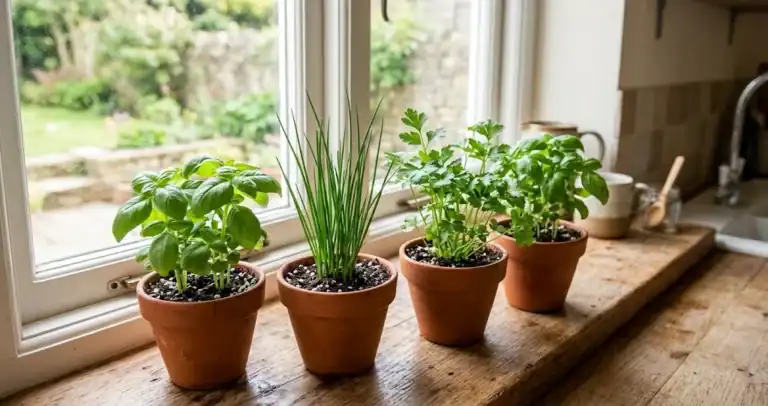
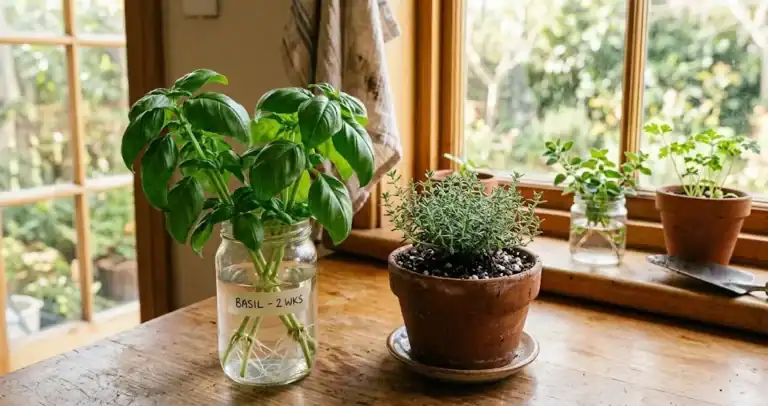
If you have a small yard, an apartment balcony, or just a fire escape, do not let that stop you. Most of the herbs people cook with grow happily in containers, and a single 18 inch clay pot can hold basil, chives, and another leafy green together. The herbs that grow outdoors also thrive indoors on a sunny windowsill, so the rules stay the same in either place. Even a small slice of garden space is enough to grow the herbs you need for everyday cooking, and a single herb to grow well teaches more than a dozen struggling in too tight a bed. The site rule does not change. The planter does.
Garden bed, raised bed, or containers
Each setup has tradeoffs, and the honest answer is to pick what fits the space and how you cook.
Direct in the ground works if you have a sunny patch with reasonable soil, and it sits naturally beside a vegetable garden if you already keep one. You spend the least money, but you give up the ability to move plants around as the season changes or the sun shifts. Many herbs planted directly in the ground grow best this way, especially deep-rooted perennials like lovage and horseradish.
Raised beds and raised garden beds solve two problems at once. They lift the soil above heavy ground so water flows through faster, and they bring the plants closer to you, which matters when you are bending down to snip thyme or pull mint. An 8 inch tall bed is enough for most herbs. Build the frame from untreated lumber, stone, or corrugated metal, and fill it with a mix of topsoil, compost, and a little coarse sand.
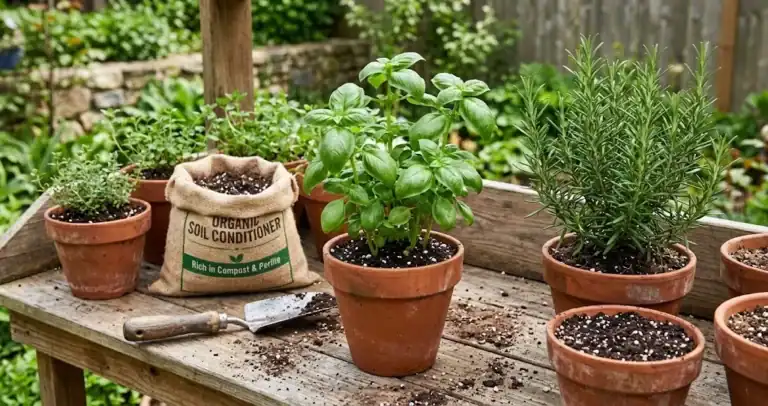
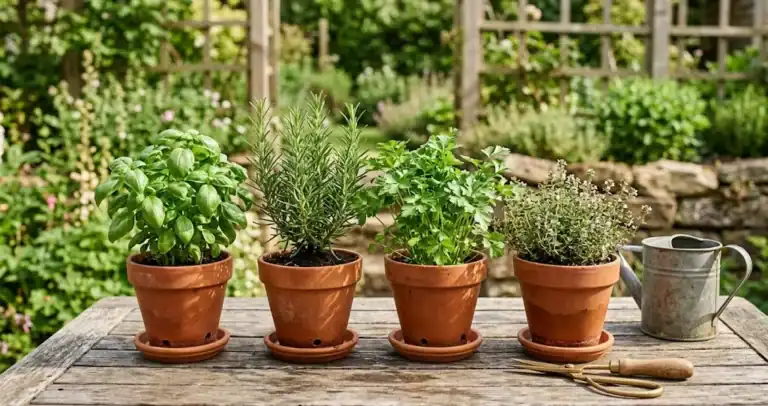
Containers and a small container garden are the right answer for balconies, paved courtyards, rentals, and anyone who wants to start small. Terracotta breathes and dries evenly, which suits Mediterranean herbs. Plastic holds moisture longer, which helps in hot climates. Any container you use must have drainage holes at the bottom; herbs fail far more often from wet feet than from dry air. Whether you plant in a garden or container, the soil and light rules apply the same way. A small herb garden in a raised planter on the patio grows just as well as one in the ground.
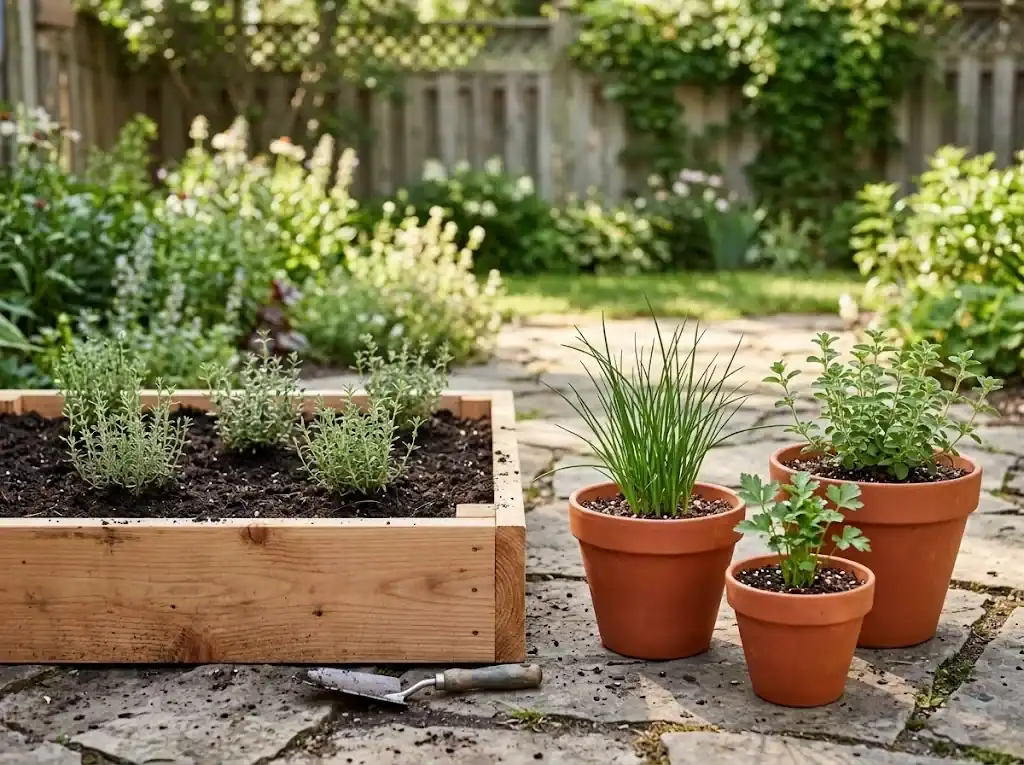
If you are growing herbs in containers, plan to refresh the potting mix every two or three years. The structure breaks down, the roots circle the pot, and the nutrients wash out with watering. A short visit to the garden centre for fresh mix is cheaper than losing a season’s growth to tired soil.
Choose herbs you will actually use
Plant what you already cook with. A thriving rosemary bush you never snip teaches you nothing. A struggling basil you reach for every week is a small daily win. The best herbs to start with are the ones your household already uses, since flavor you recognize is the easiest way to learn what fresh herbs can do.
For most kitchens, a starter set covers the work. These popular herbs and the favorite herbs of most home cooks happen to be the easiest ones to keep alive:
- Basil for pesto, pasta, and tomatoes.
- Chives for eggs, salads, and potatoes. A single chive plant produces for years.
- Thyme for roasted vegetables, beans, and stock.
- Rosemary for lamb, potatoes, and bread.
- Oregano for pizza, tomatoes, and Greek cooking.
- Mint for tea, salads, and Middle Eastern dishes. Keep it in its own pot. Mint runners take over a shared bed inside a single season.
- Flat-leaf parsley as a finish for almost everything savory.

Start with four to six herbs your household uses weekly. You can add more next season once the first round is established. It is easier to care for a small herb garden well than a large one poorly, and popular herbs like basil and cilantro are easy to grow from seed when you want to fill in.
Build the soil
Herbs do not need rich soil, but they do need soil that drains. Two practical recipes cover most situations.
For garden beds and raised beds: turn two to three inches of compost into the top six inches of soil. If your soil is heavy clay, add coarse builder’s sand or fine gravel at the same time. The goal is a mix you can poke a finger into easily, that does not crust over after rain. A well-drained soil with a little compost is the right answer for most herbs.
For containers: buy a bagged potting mix rather than garden soil. Garden soil compacts in pots. A standard peat or coir based mix with perlite or vermiculite works for most herbs. Add a handful of compost per gallon of mix for slow nutrients, and a handful of coarse sand per gallon for the Mediterranean herbs.
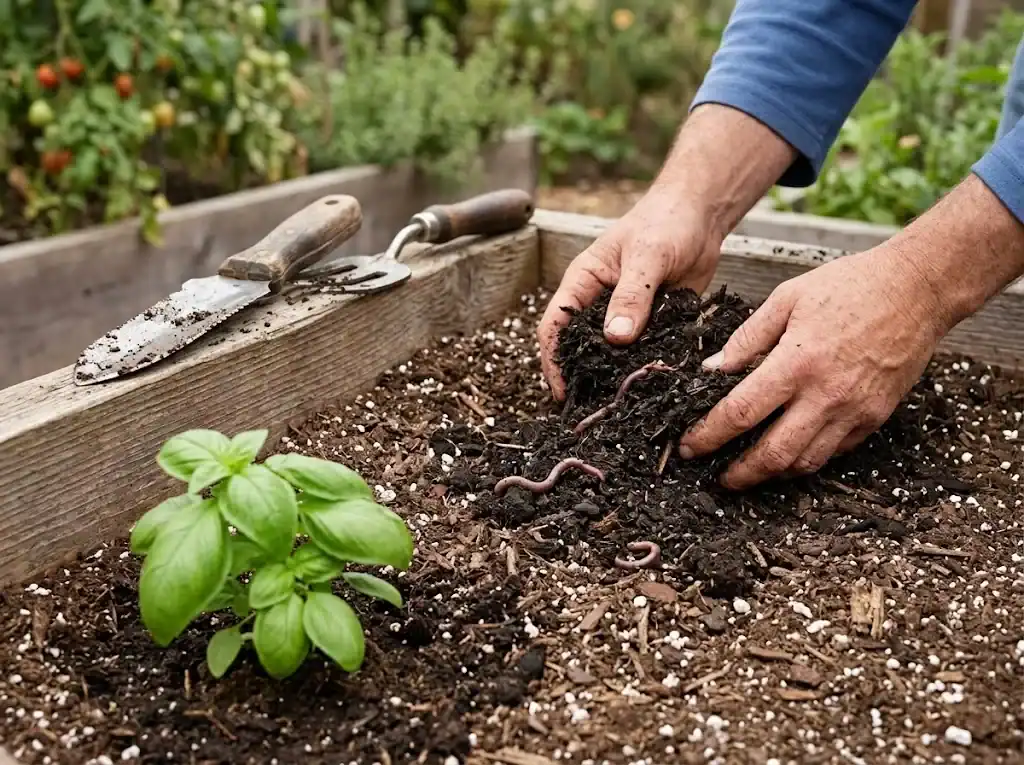
Skip the high nitrogen vegetable fertilizers. They push leafy growth at the expense of flavor, and they keep herbs leggy and weak stemmed. A light spring top dressing of compost and a single mid season liquid feed of diluted fish emulsion or seaweed is plenty. For the full picture of soil pH and how to amend heavy ground, our guide on the soil side of growing herbs walks through the science without the chemistry lecture.
Plant seeds, starter plants, or both
Each method has a place.
Starter plants from a local garden centre give you a head start on rosemary, thyme, oregano, and mint. They are usually a few dollars each and start producing within a week or two. Buy from a local nursery if you can, since plants travel better in a truck than on a shelf.
Seeds make sense for cilantro, dill, basil if you want a particular cultivar, and any annual you plan to succession sow through the season. Grow herbs from seed by sowing them shallow, in lightly moist seed starting mix, and thinning the seedlings once they have two pairs of true leaves. Cilantro and dill dislike transplanting, so direct sow them where you want them to grow.
If you are starting from scratch, focus on choosing seed that will actually germinate so the packet in your hand is fresh and the variety suits your climate. Old seed from the back of a drawer wastes a season.
Perennial herbs like thyme, oregano, rosemary, and chives can also be grown from cuttings or divisions, which is the cheapest route once you know someone with a healthy plant. A friend who lifts a chunk of thyme in early fall and hands it over is gifting years of growth.
Space the plants the way the seed packet or tag suggests, not closer. Crowded herbs compete for light and airflow, which invites fungal problems and thin, weak growth. Particular herbs like lavender especially resent close quarters and reward a little breathing room with longer life, and a mixed herb bed tends to do better than rows packed shoulder to shoulder.
Water, feed, and mulch
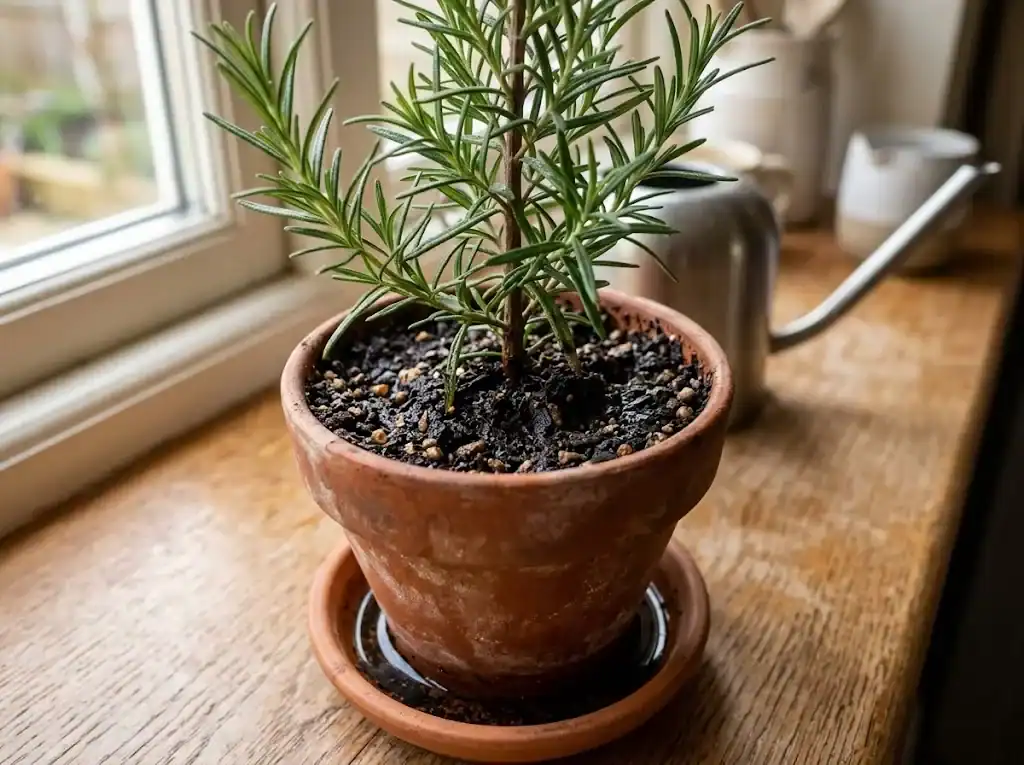
The simplest watering rule for a new herb garden: check the soil, not the calendar. Stick a finger an inch down. If it is dry, water thoroughly until water runs out the bottom of the pot or soaks into the bed. If it is still cool and damp, leave it.
Most established herbs prefer a deep soak every few days over a shallow sprinkle every day. That trains the roots to reach down for water and makes the plant more resilient when you forget once or twice. The Mediterranean herbs want this treatment most: thyme, oregano, and rosemary prefer to dry out between drinks, while leafy herbs like basil need a steadier supply.
Mulch the bed with straw, shredded leaves, or fine bark. Two inches is enough. Mulch keeps the soil from crusting, holds moisture, and keeps the leaves cleaner during heavy rain. Leave a small gap around the stems so mulch does not sit against the crown, since damp mulch against a stem invites rot.
Feed lightly. Compost in spring is enough for most perennials. Annuals like basil and cilantro benefit from a half strength liquid feed every three weeks through the growing season.
Light, season, and weather
Most culinary herbs want as much sun as your site can give. Six hours is the floor for Mediterranean herbs, eight is better. In hot summer climates, a little afternoon shade helps basil and cilantro, which bolt quickly in heat. In cool climates, give them every ray you can. Containers on wheels let you move plants with the sun as it shifts through the season.
Cold tolerance is wide ranging. Rosemary, thyme, oregano, and chives survive frost. Basil is the first to collapse when nights drop below 50 degrees Fahrenheit. Cilantro bolts as soon as days lengthen. Plan the season around what your favorites actually tolerate, not what the seed packet promises. Growing conditions that work in zone 7 fail in zone 4, so check the local extension office for last frost dates before setting out tender plants.
If you want a small garden of herbs that you can harvest through winter, grow the hardy perennials. Sage, thyme, chives, and oregano stay productive well into the cold months and bounce back stronger the following year.
Harvest without harming the plant
Regular harvesting is what makes an herb garden generous. Cut herbs often to keep the plant producing, and dry your herbs at season’s end so a summer of fresh basil carries you into winter stews. Cut early in the morning, after the dew has dried but before the day turns hot. Use sharp scissors or pruners, and never take more than a third of the plant at one time.
For leafy herbs like basil and cilantro, pinch or cut just above a pair of leaves. Two new stems will grow from that node, which doubles the harvest and keeps the plant bushy instead of leggy. The same rule applies to chives: cut the leaves low, and the clump sends up fresh shoots within days.

For woody herbs like rosemary, thyme, oregano, and sage, cut the newest growth rather than the oldest wood. The plant will branch where you cut and stay productive for years.
Flowers change the flavor. When leafy herbs send up flower spikes, the leaves turn bitter. Pinch the spikes off the moment they appear. The same goes for cilantro, which is really a leaf stage of coriander. Letting it run to flower finishes the leaf harvest but gives you coriander seed for the kitchen either way.
Common problems and quick fixes
Most herb garden problems come from one of three causes.
Yellowing lower leaves usually mean overwatering or waterlogged roots. Let the soil dry between waterings and check that containers actually drain at the bottom.
Leggy, floppy growth means not enough sun or too much nitrogen. Move containers to a brighter spot, cut the plant back by a third to encourage branching, and skip the fertilizer for the rest of the season.
Powdery white patches on mint or rosemary are fungal. Improve air flow by thinning the stems, water at the base rather than overhead, and remove the worst affected leaves. A spray of one part milk to nine parts water, applied in the morning, slows the spread on a small planting.
Aphids on the new growth wash off with a strong stream from the hose, or treat with a few drops of dish soap in a spray bottle of water. Most herbs bounce back quickly once the aphids are gone.
Build from there
A new herb garden is satisfying within weeks, and the rewards grow each season as the perennials settle in. Once you have a working kitchen garden, the next steps are fun: trying unusual varieties, drying or freezing what you cannot eat fresh, and adding pollinator friendly herbs like lavender and borage. If you want a particular herb that you cannot easily find at the garden centre, growing from seed or asking a neighbor for a cutting opens up choices you will not see on retail benches.
For a deeper walk through the wider basics of growing herbs, including propagation, watering through dry spells, and tips on growing the easiest herbs to grow in any climate, our beginner’s guide to growing an herb garden covers the wider basics of growing herbs, from site planning to keeping thyme alive through a cold winter.
Start small. Choose four to six herbs you already cook with. Give them sun, well-drained soil, and water when the soil asks for it. Within a month you will have the kind of fresh flavor that store bought herbs cannot touch, and a daily habit that quietly compounds for years. The best herb garden is the one you actually use, and the easiest one to start is the one you plant today.