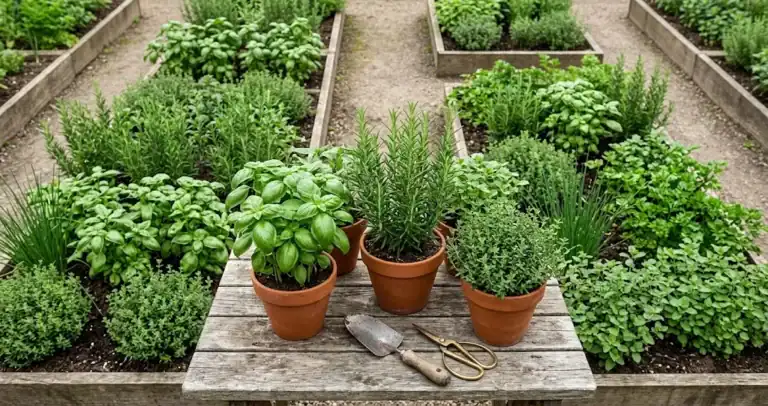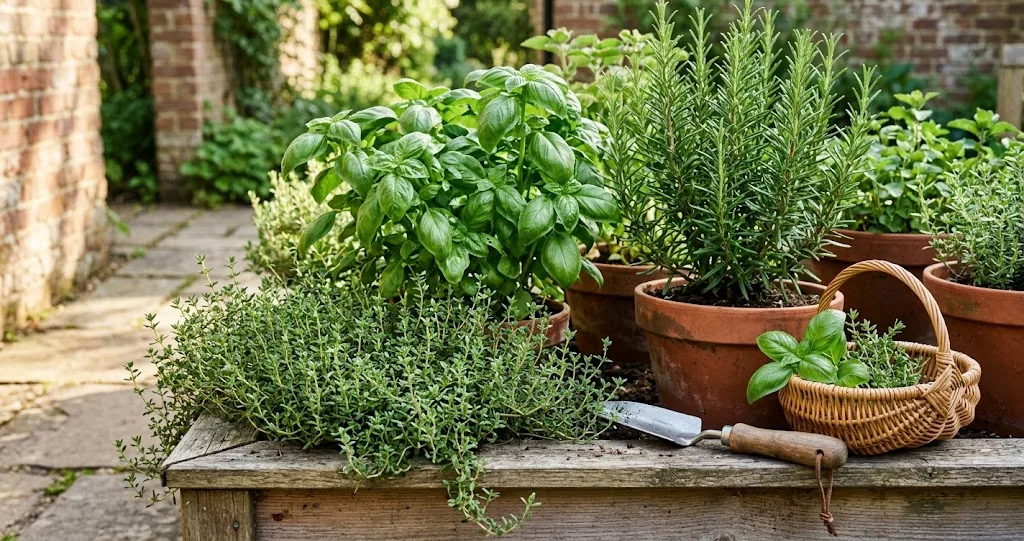
Few gardening projects offer as much immediate satisfaction as learning how to grow herbs right outside your kitchen door. Stepping outside to harvest fragrant sprigs brings vibrant depth to home cooking that dried seasonings simply cannot replicate. Whether you have a spacious backyard with garden beds, a sunny patio for potted plants, or a bright windowsill indoors, cultivating an abundance of fresh culinary herbs is an achievable goal for every gardener.
While many herbs are resilient, successful cultivation requires understanding their fundamental environmental needs. Unlike heavy-feeding vegetables that demand rich, damp ground, most culinary varieties thrive best when given generous sunlight, loose soil with excellent aeration, and moderate watering. If you are ready to start growing herbs and want a structured roadmap before setting up your space, exploring our beginner guide to planning an herb garden provides helpful context on site layouts and essential equipment.
To help you get the most flavorful harvest from your plantings throughout the growing season, here are reliable gardening tips to guide your setup, daily care, and harvest routines.
1. Choose the Ideal Location for Sunlight
Sunlight is the primary fuel for herb growth. Most culinary varieties trace their ancestry to sunny Mediterranean hillsides and open fields. These sun loving plants require steady light to synthesize the volatile essential oils responsible for their pungent flavors and aromas.
Aim to provide your herb plants with at least six to eight hours of sunlight per day. An open southern or western exposure works best for outdoor plantings. While sun loving species thrive in full sun, some leafy varieties appreciate protection from scorching afternoon sun during the peak of midsummer heat. If you live in an especially hot southern climate, providing light afternoon shade keeps delicate herb foliage tender and delays premature flowering.

2. Provide Aerated Soil and Moisture Control
If there is one universal rule in herb growing, it is that herbs hate waterlogged roots. Excess water trapped underground deprives plants of oxygen, rapidly leading to root rot and fungal infections.
Garden herbs need light, loamy soil with high porosity that allows water to pass through freely. Heavy clay soils pack down tightly, holding onto standing moisture and suffocating root systems. If your native ground contains dense clay, working in coarse sand and organic compost will dramatically improve aeration and moisture movement. For a comprehensive look at balancing soil textures and root aeration, consult our overview of soil requirements and aeration for garden herbs.
Building raised beds or setting up a dedicated raised garden bed is an effective way to bypass difficult native soil entirely. A raised bed allows you to fill the growing space with an optimal blend of topsoil, native soil, and organic matter, ensuring ideal root health for every herb from day one.
3. Start from Herb Seeds vs Nursery Seedlings Wisely
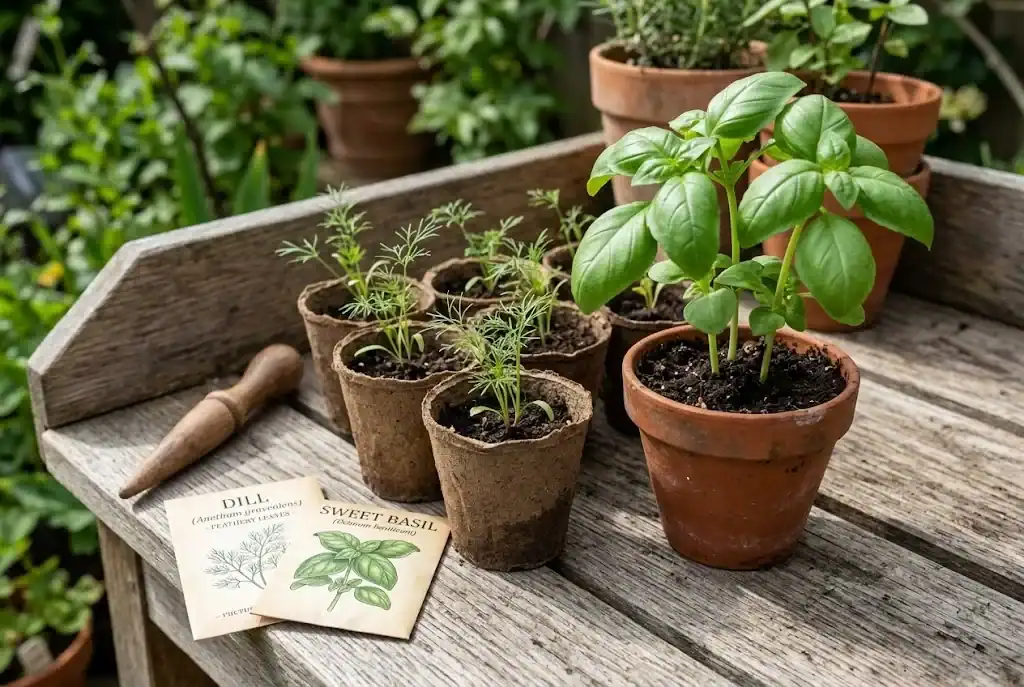
Deciding whether to start with seed packets or nursery starts depends entirely on the specific herbs you wish to cultivate. Both methods have distinct advantages depending on plant growth rates and root development.
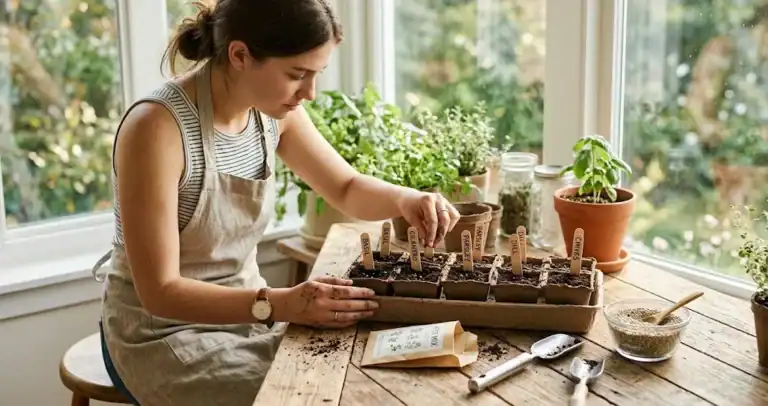
Fast-growing annuals and biennials such as cilantro, parsley, and sweet basil sprout quickly from seed and develop rapidly. Starting these varieties from seed gives you access to diverse heirloom cultivars at minimal expense. Sowing successive batches of cilantro every three to four weeks guarantees a continuous supply of fresh foliage through the season.
Conversely, slow-growing woody perennial herbs like rosemary and thyme take months to establish from seed. For these varieties, purchasing a healthy nursery seedling or taking stem cuttings saves substantial time and effort. When buying or planting, paying attention to selecting reliable herb seed varieties helps you establish vigorous, disease-resistant plants right from the start.
Always inspect young nursery starts before purchasing. Look for sturdy stems, vibrant green color, and clean root tips without signs of crowding or root circling.
4. Group Plants by Their Preferred Growing Conditions
One common mistake among new herb gardeners is planting varieties with conflicting moisture requirements together in the same bed or container. Grouping your plantings according to their water needs makes ongoing care simple and intuitive for the home gardener.
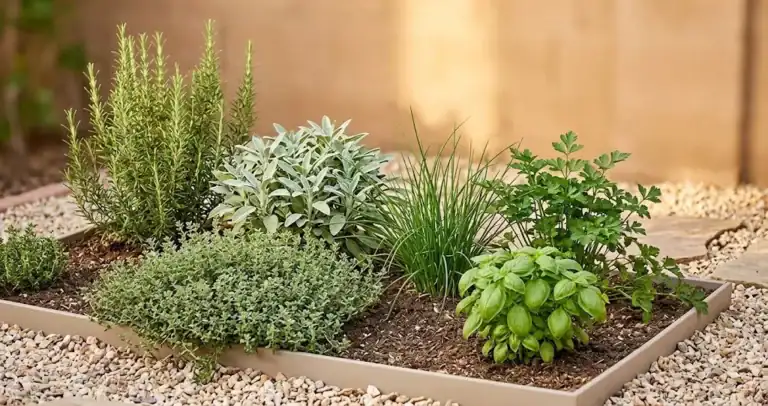
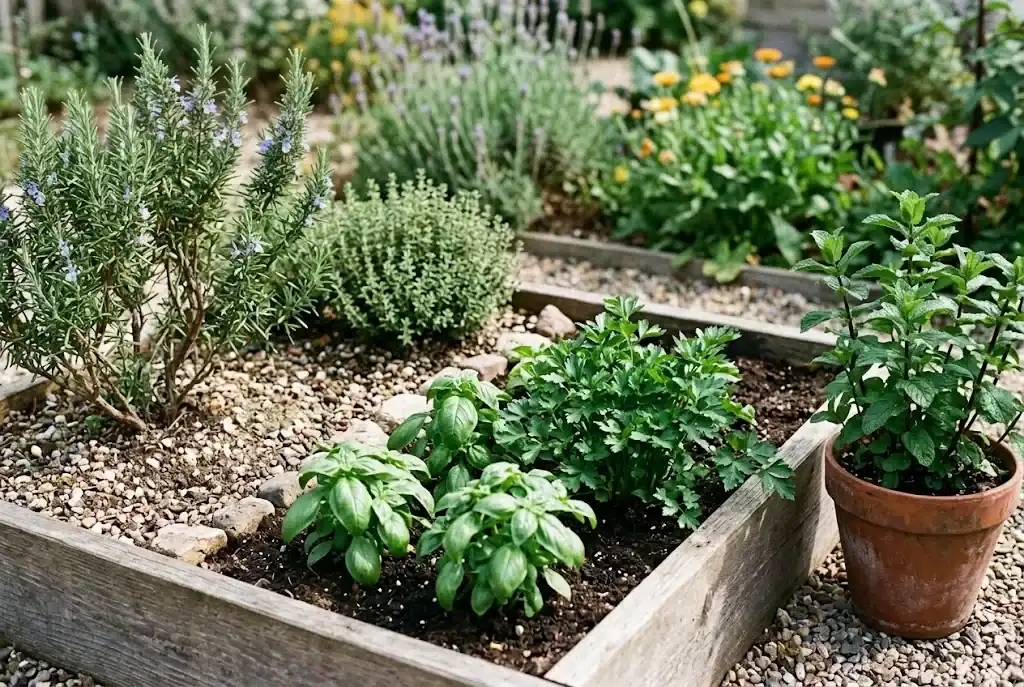
Group Mediterranean perennial herbs together in drier, gravelly sections of the garden. Rosemary, thyme, culinary sage, and oregano share identical preferences for lean soil, full sun, and modest moisture. These hardy plants easily tolerate short dry spells once established.
In contrast, leafy culinary herbs like sweet basil, Italian parsley, and cilantro require rich, moisture-retentive ground and regular watering. Keep these plants in an adjoining bed where you can supply steady moisture without overwatering nearby Mediterranean perennials.
Always isolate aggressive spreaders. Mint is a vigorous perennial that spreads rapidly via underground runners. If planted directly in an open garden bed, mint will quickly crowd out surrounding herbs. Keep mint confined to a standalone pot or buried barrier to keep its invasive roots in check.
Integrating flowering herbs alongside your vegetable garden offers valuable companion benefits. Letting a few stems of dill, chives, or borage flower produces nectar that attracts pollinators like native bees, as well as beneficial predatory insects that control destructive pests.
5. Master Container Gardening and Growing Herbs Indoors
For gardeners with limited yard space or those living in apartments, container gardening provides complete flexibility. Potted herbs can thrive on sunny decks, balconies, or stone patios near the kitchen.
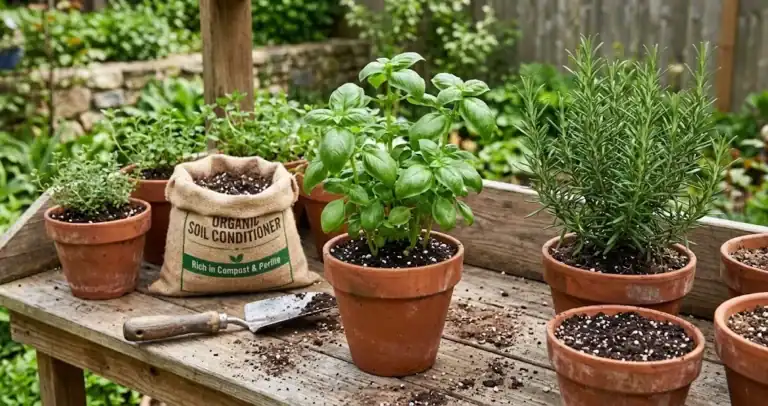
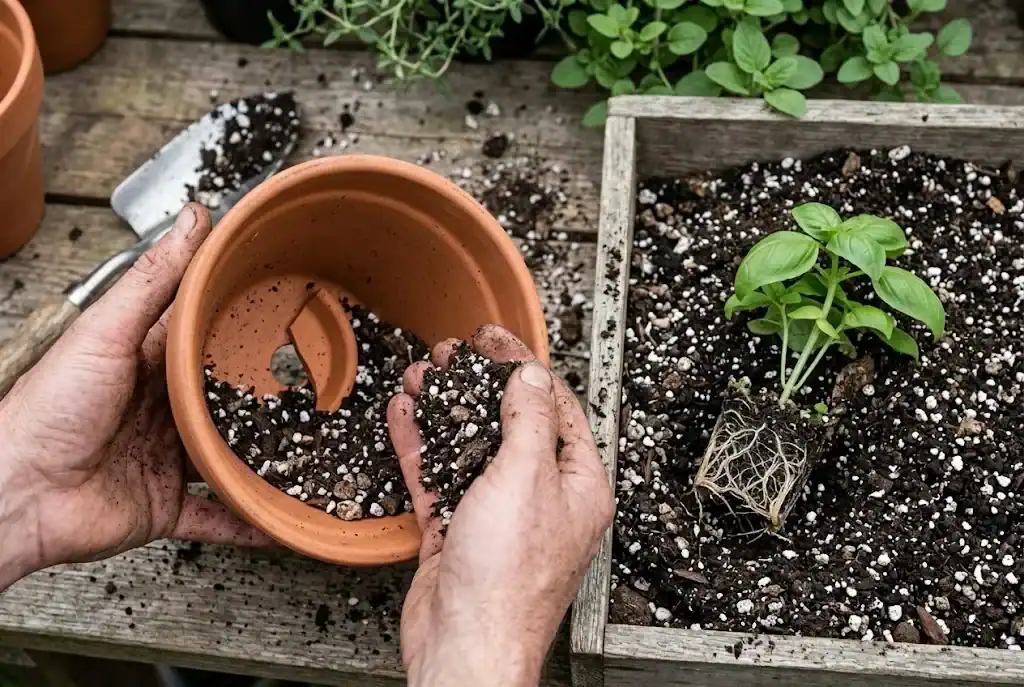
When selecting containers, proper runoff is non-negotiable. Every container herb must sit in a pot with a functional drainage hole at the base to prevent standing water. Unfinished terracotta pots are particularly advantageous because the porous clay breathes, promoting oxygen exchange around roots and preventing water stagnation.
Always fill pots with a sterile, well-aerated potting soil formulated for container growing, rather than dense garden soil from the yard. Adding perlite or coarse pumice further enhances root aeration.
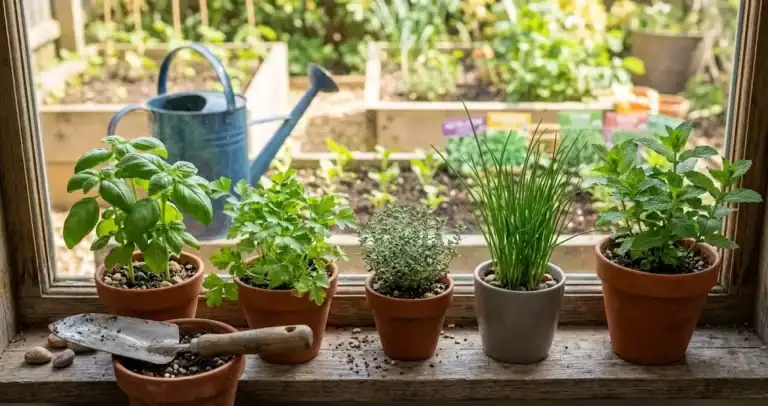
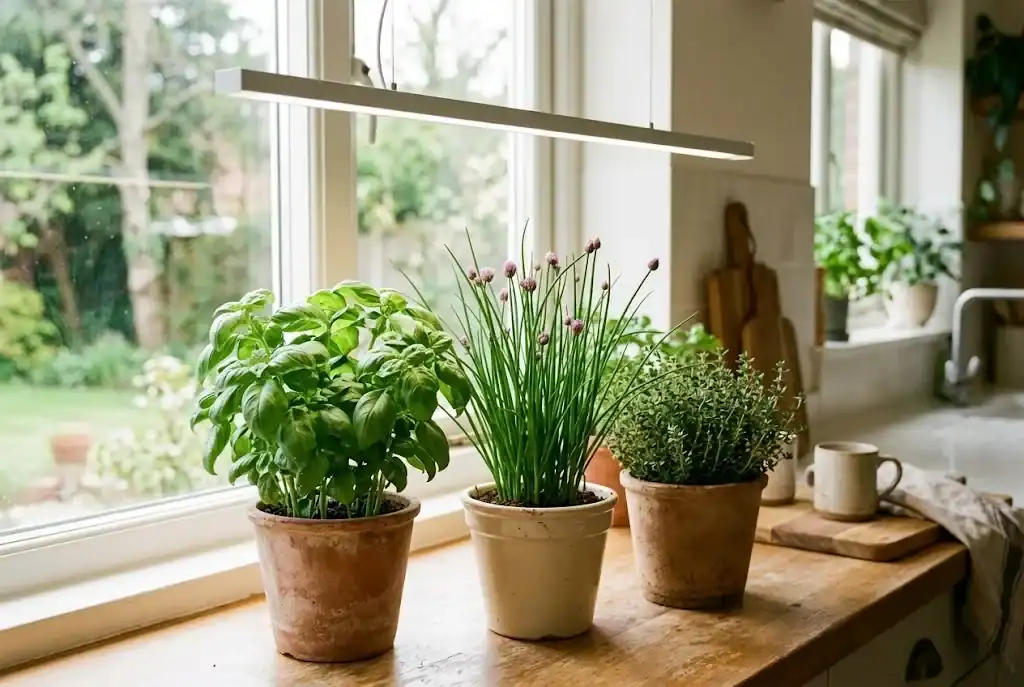
If you prefer growing herbs indoors, place your pots on a bright, south-facing windowsill in a sunny kitchen where they receive ample natural light. Because winter daylight is often insufficient, installing a compact LED grow light suspended 6 inches above your plants provides the supplemental intensity needed to keep an indoor herb healthy and leafy year-round.
6. Water and Feed with a Gentle Hand
When tending an herb garden, less is often more. Overwatering and overfeeding are far more likely to harm your plantings than benign neglect.
Practice deep watering rather than frequent shallow sprinkling. Water herbs thoroughly until moisture runs freely from the base of the pot or penetrates deeply into the bed, then wait until the top inch of soil feels dry before watering again. Applying water early in the day keeps foliage dry and discourages fungal issues.
Fertilizer requirements for culinary herbs are modest. Applying excessive nitrogen stimulates rapid, soft vegetative growth, but it significantly dilutes the concentration of aromatic oils. The result is lush foliage with weak flavor. As noted in the University of Minnesota Extension herb growing guide, moderate soil fertility yields the most concentrated herbal flavor.
A light top-dressing of organic compost or composted manure in early spring supplies adequate nutrients for in-ground plantings. For container herbs, a half-strength feeding of liquid seaweed or fish emulsion once a month during active growth maintains balanced vitality without compromising flavor.
7. Prune and Harvest Regularly to Stimulate Growth
Harvesting is not just about collecting kitchen ingredients; it is also a vital pruning technique that keeps plants compact, bushy, and productive.
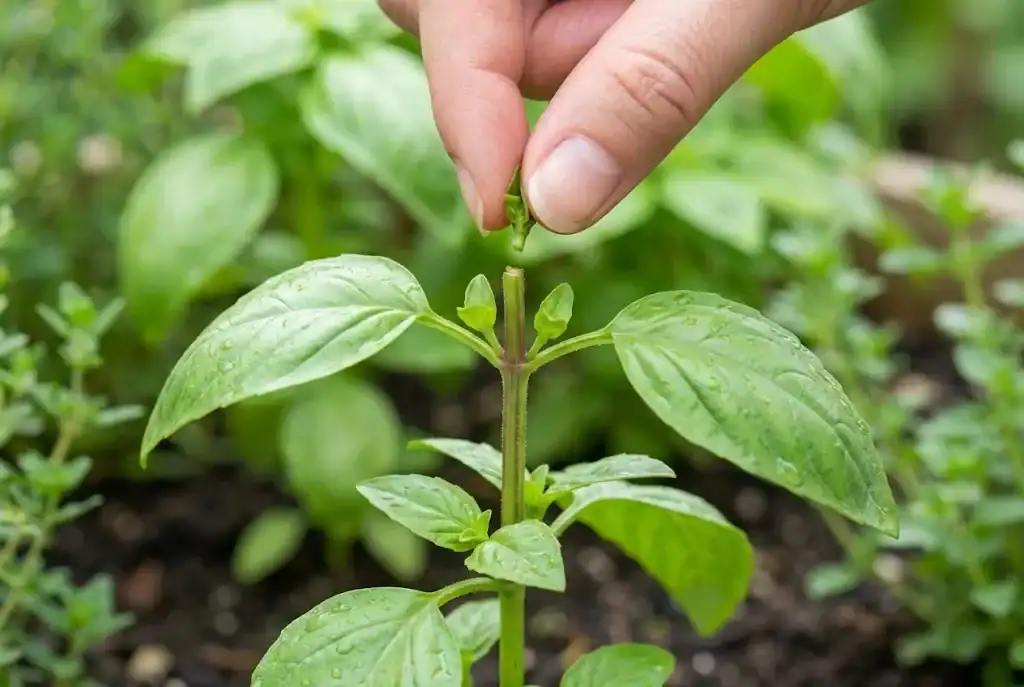
When your basil plant reaches roughly 6 inches in height, pinch the central growing tip back just above a set of leaf nodes. This simple cut interrupts apical dominance, forcing the plant to branch out into two new stems. Continuing to prune stem tips throughout summer transforms a spindly stalk into a dense, bushy herb.
Apply the same principle across your collection. Regular trimming prevents woody herbs from becoming leggy and stimulates fresh new growth. However, never remove more than one-third of a perennial plant foliage at one time, as the herb needs sufficient leaves to photosynthesize and sustain healthy roots.
Always remove emerging flower buds from culinary varieties. Once a basil plant begins to flower, foliage production drops sharply and existing leaves turn tough and bitter. Regular pinching preserves sweet leaf quality throughout the warm months. If you end up with a large harvest of basil in late summer, process the surplus into fresh pesto or freeze chopped leaves in olive oil for winter use in the kitchen.
8. Prevent Common Pests and Diseases Naturally
Because culinary herbs produce pungent essential oils, many garden pests naturally avoid them. Nevertheless, occasional pest pressure can arise, especially during periods of weather stress.
Inspect leaf undersides regularly for common pests and diseases such as spider mites, whiteflies, and aphids. If you spot a small colony of aphids feeding on tender tips, a sharp spray of water from a garden hose often knocks them off completely. For persistent outbreaks, spray affected foliage with mild insecticidal soap or diluted horticultural oil, taking care to treat in the cool evening to prevent leaf burn.
Prevent fungal issues like powdery mildew by spacing plants generously to allow continuous air circulation. Avoid overhead watering late in the afternoon, which leaves foliage damp overnight.
Frequently Asked Questions About Growing an Herb Garden
What are the easiest herbs to grow at home?
Sweet basil, chives, mint, and rosemary are relatively easy to grow for beginners. They adapt well to pots, tolerate varied weather conditions, and provide reliable harvests with basic care.
Can you grow culinary herbs indoors year-round?
Yes. Many culinary herbs continue to grow indoors when placed in a sunny window or under supplemental grow lights. Rosemary, thyme, oregano, and chives are hardy candidates that adapt smoothly to indoor conditions during winter.
Should I use fresh herbs or dried herbs for cooking?
Both have distinct roles in cooking. Fresh herbs offer vibrant aroma and delicate flavor when stirred into dishes near the end of cooking, while dried herbs deliver concentrated, deep flavor suitable for slow-simmered soups and stews.