
Few pepper names travel as far as piri piri (Capsicum frutescens). It is a small, slim, fiery bird’s eye chili that ended up on grilled chicken in Portuguese beach restaurants and in bottles on supermarket shelves worldwide. You will also see it spelled peri-peri and pilipili, and the name is used loosely enough that it is worth knowing what you are actually buying or growing. If you are comparing different types of chili peppers, this one sits in the hot but manageable part of the range, with a fruity, citrus-edged warmth that suits fish as well as chicken.
Where the Pepper Came From: the Americas, Africa, and Portugal
Like every chili pepper, the plant began in the Americas. Portuguese traders carried peppers across the Atlantic in the sixteenth century and planted them in their overseas territories, and the plants adapted so well in southern Africa that people there grew them for generations. The malagueta pepper that Portuguese ships spread to Brazil and Portugal is the same species, and Wikipedia’s malagueta entry notes that small malagueta peppers are sometimes called piri piri in Mozambique and Portugal.
The name itself is Swahili. Wikipedia’s entry on the pepper traces it to the Swahili word pilipili, meaning pepper, and the different spellings reflect how Bantu-speaking communities pronounced it. The sauce that carries the name developed inside the Portuguese Empire, probably in its southern territories, when cooks paired the peppers with lemon, garlic, and other seasonings. It became the signature taste of Angola, Mozambique, and Portugal, and the South African restaurant chain Nando’s later made it familiar around the world.
Both piri-piri and peri-peri are correct in cooking, and you will find them used interchangeably on labels. The important point is that the name describes a group of small, hot African bird’s eye peppers rather than one tightly defined cultivar.
Botany and How It Differs from Cousin Chilies
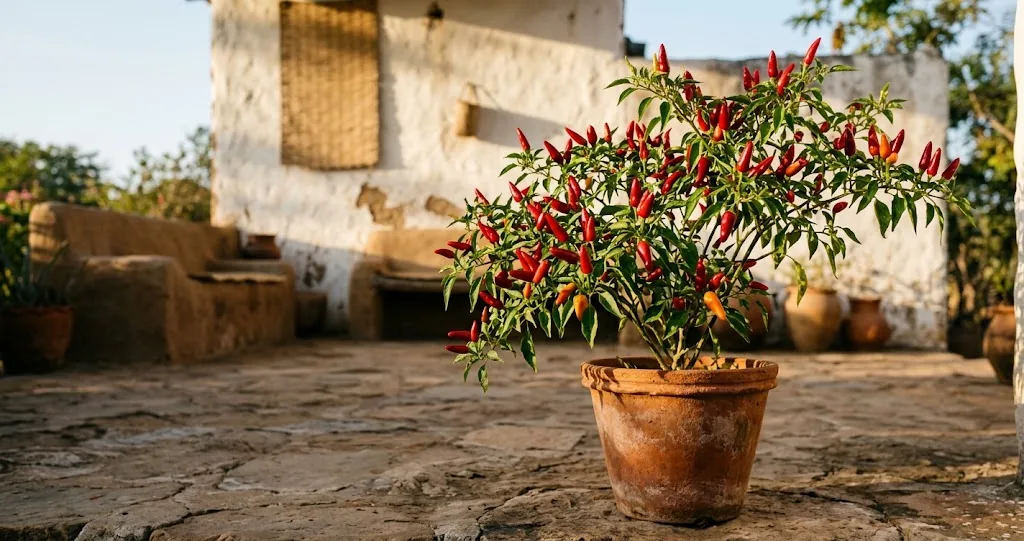
Most cooks and seed companies use the name for Capsicum frutescens, the same species as tabasco and malagueta. Some hotter selections sold under the name come from other species, and seed labels are not always reliable, so check the Latin name on the packet if you want the classic type. The plant is a perennial shrub in warm climates and is usually grown as an annual elsewhere. It reaches about 50 to 100 cm (20 to 40 inches) tall, according to a grower’s variety profile, and it carries small white flowers that turn into a heavy crop of fruit.
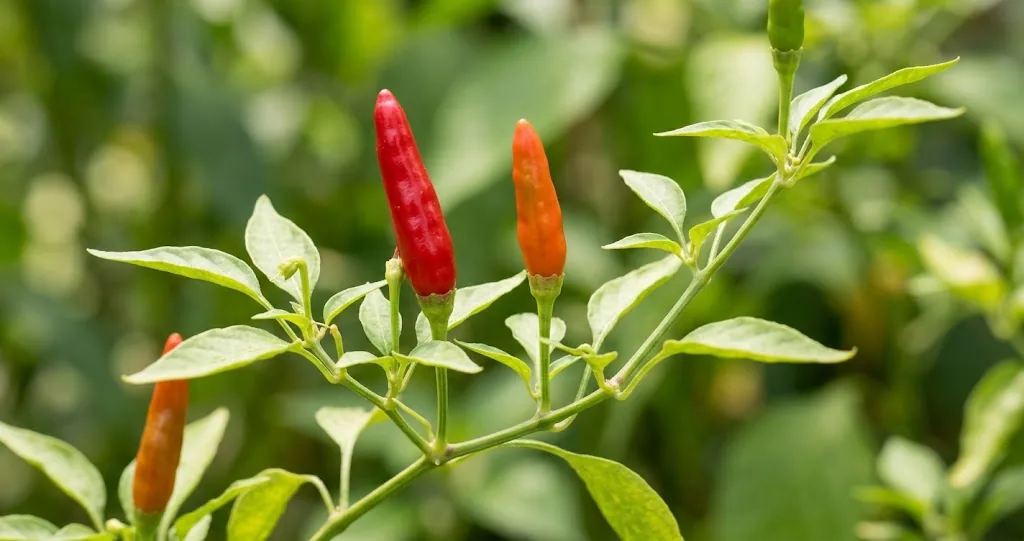
The pods are slim and tapered, about 2 to 5 cm long, with thin walls and a glossy skin. They ripen from green to bright red, and on the same bush they can point up, sideways, or hang, so pod angle is not a reliable way to identify the plant. Inside, the pale placenta carries most of the heat and holds small, flat, tan seeds. Cutting out the placenta and seeds takes the fire down considerably while keeping the fruity taste.

It is often confused with the Thai bird’s eye chili, which belongs to a different species (Capsicum annuum). The two are similar in size and heat, but these plants are usually taller and rangier, and the pods lean fruitier and more savory. If you cook Thai food as well, our guide to Thai bird’s eye chili peppers covers that plant in the same detail.
Heat Level and Taste
This pepper is very hot but not extreme. Sources generally place it at 50,000 to 175,000 on the Scoville scale, as Know the Pepper and the Wikipedia entry both report. That range is wide because the name covers several types and because growing conditions change the heat. Many seed sellers quote about 50,000 for a typical plant, which puts it above cayenne and in the same territory as Thai bird’s eye.
The flavor is what makes it worth growing. The fresh pods taste bright, grassy, and fruity with a citrus note, and the heat builds a few seconds after the first bite. When you char or cook the pods, the taste turns deeper and slightly smoky. Lemon juice and vinegar soften the bite and bring the fruit forward.
Next to habanero, it is less tropical and more savory. Next to cayenne, it is fruitier and has thinner skin that breaks down faster in a marinade. Next to jalapeño and serrano it is much hotter, but the taste stays simple and clean, which is why it works in so many kitchens.
Growing Piri Piri Peppers from Seed to Harvest
This plant needs a long warm season. Start seed indoors 10 to 12 weeks before your last spring frost, and expect roughly 80 days from transplanting to the first ripe pods. Growers report that it is forgiving, productive, and well suited to a sunny container or the corner of a vegetable bed.
- Sow seed in a fine, sterile starting mix. Cover it with about 5 mm (1/4 inch) of mix and keep it evenly moist, never waterlogged.
- Give it bottom heat. Germination is fastest at 25 to 28 degrees C (77 to 82 degrees F) and usually takes 8 to 14 days.
- Light the seedlings well. Keep grow lights 5 to 10 cm above them for 14 to 16 hours a day so the stems stay short and sturdy.
- Pot up as they grow. Move seedlings into 10 cm pots at the second set of true leaves, then into final pots of 20 to 25 cm once the roots fill the smaller container.
- Harden off before planting out. Give plants an hour outside on the first day and add an hour each day for a week.
- Plant in full sun and well-draining soil. Aim for 6 to 8 hours of direct sun, a soil pH between 6.0 and 7.0, and at least 50 cm (20 inches) between plants.
- Water steadily through flowering. Mulch the base to slow evaporation. Uneven watering causes flower drop and misshapen fruit.
- Feed lightly. Use an organic feed while the plant grows, then switch to a fruit and flower fertilizer once it sets pods. Too much nitrogen late in the season gives you leaves instead of pods.
- Support heavy plants. A short stake or a small tomato cage keeps loaded branches off the soil.
Watch for aphids on new growth, spider mites in hot dry weather, and root rot in containers that drain poorly. Pick off damaged fruit promptly and keep debris away from the base of the plant to cut down on most pest and disease pressure.
Harvesting and Safe Handling
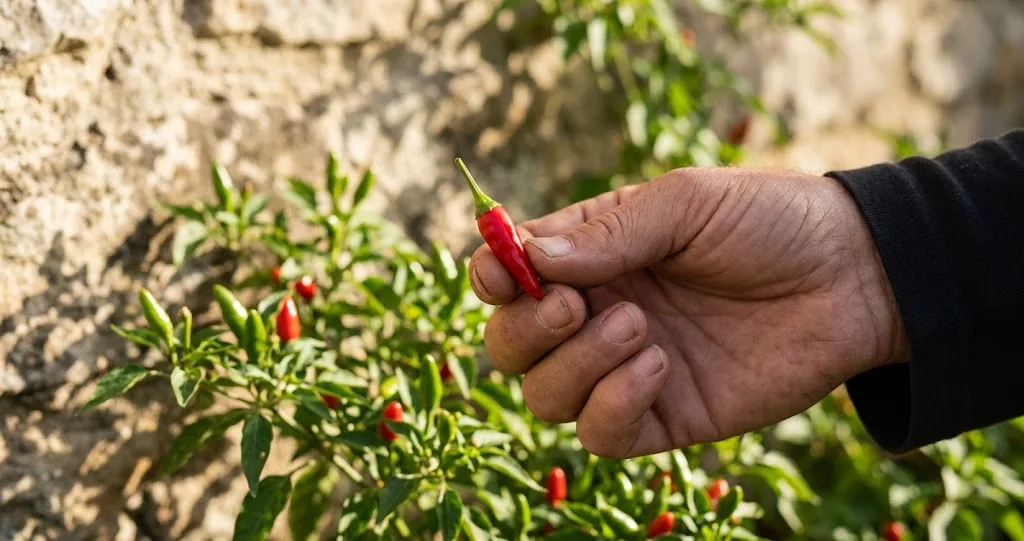
Harvest when the pods have been fully red for a few days and the skin looks glossy and taut. Cut the short stem about 5 mm above the calyx with clean snips, because pulling by hand can tear the slender branches. Regular picking keeps the plant flowering through the warm months.
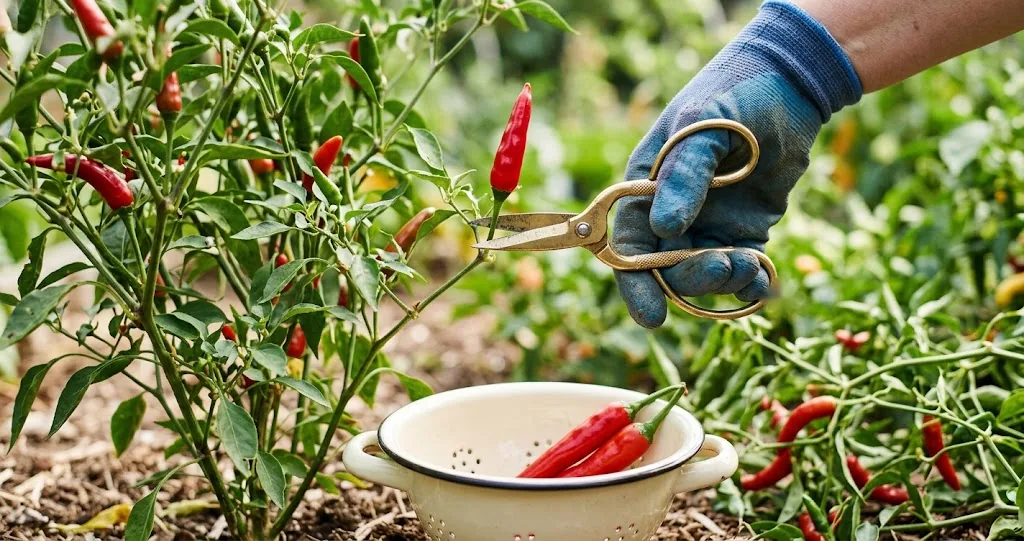
Handle the peppers with respect. The capsaicin sits mostly in the placenta and seeds and can burn skin and eyes, so wear nitrile gloves when you chop a large batch, and wash your hands, knife, and board with warm soapy water afterward. Keep your hands away from your face, and teach any children in the garden that red pods are very hot.
- Ventilate when blending raw peppers. Fumes from a blender or food processor can sting the eyes and throat, so hold a towel over the lid and pulse briefly.
- Serve the heat on the side. Let each person add their own, and do not assume a child can tolerate it.
- Clean up with soap. Wash cutting boards, knives, and counters in hot soapy water.
- Get medical help for severe reactions. Difficulty breathing or swelling of the throat is an emergency, and so is burning that does not ease.
Storing, Drying, and Preserving the Harvest
One healthy plant produces a generous crop over several weeks, so it helps to have a plan for the surplus. The thin walls dry quickly, which makes these small peppers easy to preserve.
- Fresh: Whole peppers keep for about 10 to 14 days in the refrigerator in a paper bag. Wash them just before you use them.
- Frozen: Freeze whole peppers on a parchment-lined tray, then bag them. They go straight into cooked recipes without thawing.
- Dried: Thread mature peppers onto cotton string and hang them somewhere warm, dry, and airy for two to three weeks. In a humid climate, finish them in a dehydrator at 50 to 60 degrees C (120 to 140 degrees F) until brittle. Store them in a sealed glass jar in a cool, dark cupboard.
- Piri-piri salt: Pulse dried peppers with coarse sea salt into rough red flakes and use it as a finishing salt on grilled seafood and roasted vegetables.
- Piri-piri vinegar: Drop a handful of fresh ripe peppers into a clean bottle of white wine vinegar, seal it, and refrigerate it. After two weeks the vinegar turns orange and carries a clear, sharp heat that suits dressings and quick marinades.
A word of caution about oil. Fresh garlic and fresh peppers stored in oil can grow the bacteria that cause botulism. The University of Georgia’s infused oil guidance says fresh garlic in oil must be refrigerated and discarded after four days, and it is not safe at room temperature. Do not steep fresh garlic or fresh peppers in oil on the counter, and do not keep a homemade jar of them for weeks.
Cooking with Piri Piri Peppers
The famous use is piri piri sauce. A traditional version is a thin, bright, oil-based mixture of crushed peppers, garlic, lemon juice, vinegar, olive oil, smoked paprika, and salt, often with bay leaf or oregano. It is pulsed briefly rather than pureed smooth so you keep some texture. Because it contains fresh garlic in oil, make only what you will use within four days and keep it in the refrigerator the whole time.
- Piri-piri chicken (frango piri-piri): Marinate chicken pieces in olive oil, lemon juice, garlic, smoked paprika, salt, and crushed peppers. Grill or roast until charred at the edges and the juices run clear, and serve extra on the side.
- Shrimp and white fish: Whisk a spoonful of crushed peppers into melted butter with lemon juice, garlic, and salt, and brush it over the seafood in the last minute of cooking.
- Vegetables: Toss roasted sweet potato, charred broccoli, or grilled zucchini with olive oil, a few chopped peppers, lemon zest, and flaky salt. The natural sugars in the vegetables soften the heat.
- Rice and beans: Stir a teaspoon of crushed peppers into coconut rice or a pot of simmered black beans for background warmth.
- Quick batch for one meal: Blend six ripe red peppers, three garlic cloves, the juice of one lemon, 60 ml (1/4 cup) white wine vinegar, 60 ml (1/4 cup) olive oil, one teaspoon of smoked paprika, and half a teaspoon of salt to a coarse texture. Refrigerate it and use it within four days. For more ideas, see our guide to how to make hot sauce from fresh chilies.

This pepper earns a place in a small garden, a kitchen window, and the door of the refrigerator. One plant in a sunny corner is enough to supply a season of marinades, and you can save a few ripe pods for seed to grow again next year.
