
Few small peppers carry as much cultural pride and concentrated fire as siling labuyo. Known botanically as C. frutescens, this fiery landrace from the Philippines produces tiny, upright pods that pack an astonishing punch despite their miniature stature. For generations, backyard gardeners across the archipelago have nurtured these hardy perennial shrubs along fence lines, harvesting the slender red fruits to spark everyday dipping bowls and family stews. Among diverse types of chili peppers grown in Southeast Asia, this genuine heirloom remains a distinctive national treasure prized for its sharp bite, lingering heat, and botanical resilience.

Origin and Heritage of the Wild Philippine Cultivar
The name siling labuyo comes directly from Tagalog, where the word sili refers to pepper and labuyo means wild, the same word used for the native junglefowl. Colloquially understood as a wild chili, this heirloom adapted to tropical island soils over hundreds of years after Spanish trade vessels introduced ancestral peppers from the Americas. Local names vary by language: Tagalog speakers also say chileng bundok or siling palay, Visayan speakers say katumbal, and Bikol speakers say lada.
Despite its deep cultural roots throughout the Philippines, authentic seed stock faces significant pressure. High-yielding foreign hybrids began flooding wet markets in the late twentieth century, often sold as siling labuyo even though they belong to entirely different botanical lineages. Because widespread agricultural shifts could endanger the authentic heirloom strain, the international Slow Food movement placed true siling labuyo on its Ark of Taste catalog to encourage conservation among home growers and regional farmers.
Botany and Identification: True Siling Labuyo Characteristics
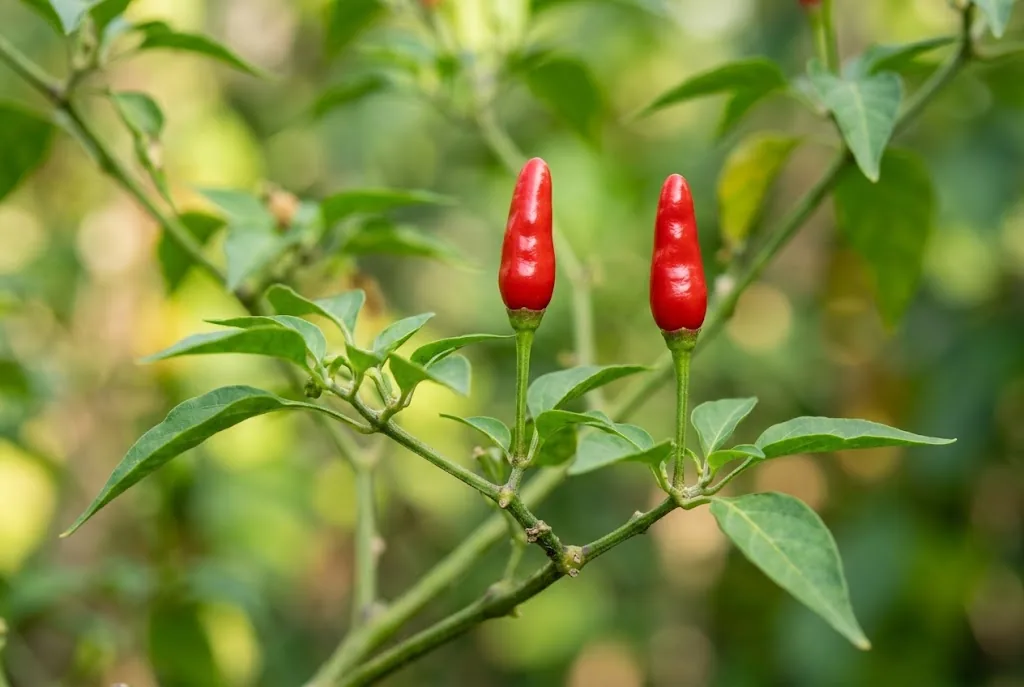
Accurate identification begins with the growth habit of the plant and the orientation of its fruit. Unlike common hanging peppers, true siling labuyo bushes bear their pods erect, pointing straight up toward the sky in dense clusters. The shrubby perennial plant grows between two and four feet tall, developing woody lower stems and dense, dark green foliage that thrives in warm, humid conditions.
The pods themselves are remarkably compact, typically measuring roughly 2 to 3 centimeters in length. They taper slightly to a blunt tip, ripening slowly from deep green to bright red when fully mature. Botanically, the blossoms feature greenish-white petals and bluish-purple anthers, a reliable visual marker separating this species from other cultivated peppers.
The most frequent confusion occurs with commercial Thai bird’s eye peppers, often sold in Philippine markets as siling labuyo or siling Taiwan. Those foreign cultivars produce longer, smoother pods that often droop downward and lack the distinctive botanical traits of native island stock. Recognizing true upright growth ensures growers cultivate genuine heritage genetics.

Heat Level and Flavor Profile: Scoville Units and Fiery Intensity
Do not let the diminutive size of these pods mislead your palate. On the recognized Scoville heat scale, tested samples consistently measure between 80,000 and 100,000 SHU, placing this pepper well above standard jalapeños and serranos. While it does not reach the searing thresholds of superhot habanero strains, its heat is immediate, sharp, and intensely direct.
The flavor profile delivers more than pure pungency. When fresh pods are sliced open, the initial sensory impression offers clean vegetal crispness followed quickly by subtle fruity undertones. Because the heat builds swiftly and lingers on the back of the palate, cooks rarely need more than one or two pods to season an entire family meal. The bright spiciness cuts through rich, savory broths without muddling the underlying aromatics of garlic, ginger, and citrus.

How to Grow Siling Labuyo from Seed to Harvest
Cultivating this heirloom shrub is straightforward, provided you meet its fundamental requirements for warmth, drainage, and direct sunshine. In tropical regions, the bush functions as a resilient perennial, producing fruit continuously for several years. In temperate climates with frosty winters, gardeners grow it as a vigorous warm-season annual or bring container plants indoors before autumn frost arrives.
- Seed starting: Sow seeds indoors six to eight weeks before your average last spring frost date. Plant seeds roughly one-quarter inch deep in a light, sterile seed-starting mix.
- Temperature and moisture: Seeds require warm soil temperatures between 75°F and 85°F (24°C to 29°C) to sprout promptly. Using an electric seedling heat mat ensures reliable germination within 14 to 21 days.
- Light requirements: As soon as seedlings emerge, provide 14 to 16 hours of bright light daily from adjustable grow lights or a sunny south-facing window to prevent tall, leggy stems.
- Potting and transplanting: When young plants develop two to three pairs of true leaves, pot them up into four-inch containers. Harden off plants gradually outdoors over seven to ten days once nighttime temperatures stay consistently above 55°F (13°C).
- Soil and containers: Plant in loose, well-draining garden soil enriched with mature compost, keeping soil pH between 6.0 and 6.8. In containers, choose a pot holding at least three to five gallons with ample bottom drainage holes.
- Watering and feeding: Allow the top inch of potting mix to dry out slightly between waterings. Feed every three to four weeks with a balanced organic liquid fertilizer formulated for flowering vegetables.

Harvesting Techniques and Safe Pod Handling
Plants generally begin producing mature pods roughly 75 to 90 days after transplanting into their final growing positions. You can pick unripe green pods when recipes demand a crisp, herbaceous bite, but allowing the fruits to turn fully crimson develops maximum heat and aromatic depth.
When harvesting, use small floral snips or sharp pruning shears to cut the slender fruit stem about a quarter-inch above the calyx. Tugging or pulling pods by hand can easily snap brittle fruiting branches or tear outer bark from the main stem. Regular harvesting every few days stimulates the bush to produce fresh blossoms and extend its productive window.
Because high capsaicin concentrations reside within the internal placenta and seeds, safe handling practices are essential. Wear nitrile gloves when slicing or crushing fresh pods to prevent chemical burns on sensitive skin. Never touch your eyes, nose, or face during kitchen preparation, and wash cutting tools and prep boards thoroughly with warm soapy water immediately after use.

Preserving and Drying the Small Red Peppers
A single established shrub can yield hundreds of fruits across a productive season, making reliable preservation methods valuable for home growers who want year-round access to home-grown heat.
- Air drying: Thanks to their thin outer walls, whole red pods dry exceptionally well. Spread clean pods in a single layer over breathable mesh screens or woven bamboo trays in a warm, dry room with good air movement for two to three weeks until crisp.
- Food dehydrator: For faster, moisture-free processing, arrange whole or halved pods on dehydrator trays set at 125°F to 135°F (52°C to 57°C). Pods become brittle and shelf-stable within eight to twelve hours. Store dried pods in airtight glass jars away from direct light.
- Freezing: Wash and thoroughly dry whole ripe pods, then package them directly into freezer-safe containers. Frozen pods slice easily without thawing and retain their intense pungency for up to a full year.
- Infused vinegars: Steep whole fresh pods alongside bruised garlic cloves and whole black peppercorns in natural sugarcane vinegar to create traditional table infusions that keep for months at room temperature.
Culinary Traditions: Dipping Sauces and Classic Filipino Dishes
In traditional cooking, this pepper serves as both an aromatic seasoning during simmering and the vital spark in homemade table sauces. Diners customize their individual spice level at the table using sawsawan, the ubiquitous dipping mixture that accompanies fried fish, roasted meats, and grilled skewers.
A classic table condiment combines crushed red pods with freshly squeezed calamansi juice and salty patis fish sauce, creating an invigorating balance of acid, salt, and heat. Cooks preparing crushed table pastes for noodles or grilled seafood often adapt a sambal recipe by grinding these tiny pods with shallots and sea salt to achieve a bright, clean paste.
In hot pots and comforting broths, whole or gently bruised pods simmer alongside ginger and chicken in fragrant chicken tinola, where tender pepper leaves known as dahon ng sili are frequently stirred in just before serving. Whether steeped in vinegar, crushed into dipping bowls, or stirred into rich coconut stews, this resilient Philippine heirloom continues to anchor authentic regional cuisine with unmistakable character.
